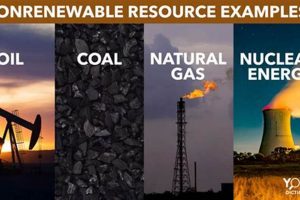
Fossil fuels, such as petroleum, are formed from the remains of ancient organisms over millions of years. This process makes them finite resources, meaning their reserves are depletable and cannot be replenished at a pace that matches human consumption. For example, the gasoline that powers many vehicles is derived from crude oil, a fossil fuel.
Petroleum-based fuels have been fundamental to global industrialization and modernization. Their high energy density makes them efficient for transportation, power generation, and manufacturing processes. Historically, the readily available and relatively inexpensive nature of these fuels facilitated economic growth and societal development across the globe. However, this reliance has also created significant challenges, including geopolitical instability related to resource control and environmental concerns stemming from combustion byproducts.
This article will further explore the complexities of energy derived from finite resources, examining the environmental impact of its extraction and use, the challenges of transitioning to alternative energy sources, and the potential for future innovations in energy production and consumption.
Given the finite nature of fossil fuels and their environmental impact, adopting strategies to reduce dependence on these resources is crucial for a sustainable future. The following tips offer practical guidance for individuals, communities, and industries seeking to lessen their reliance on petroleum-derived energy.
Tip 1: Improve Energy Efficiency: Investing in energy-efficient appliances, vehicles, and building designs can significantly reduce energy consumption. For example, choosing Energy Star certified products can lower household energy usage.
Tip 2: Explore Renewable Energy Sources: Transitioning towards renewable energy sources like solar, wind, and geothermal offers a sustainable alternative to fossil fuels. Installing solar panels on residential or commercial buildings can decrease reliance on grid electricity generated from fossil fuels.
Tip 3: Optimize Transportation: Utilizing public transportation, carpooling, cycling, or walking can reduce reliance on individual gasoline-powered vehicles. Promoting efficient public transit systems contributes to lower overall fuel consumption.
Tip 4: Support Sustainable Practices: Supporting businesses and policies that prioritize sustainability and renewable energy development encourages broader systemic change. Advocating for policies that incentivize renewable energy adoption can accelerate the transition away from fossil fuels.
Tip 5: Reduce, Reuse, and Recycle: Minimizing consumption and waste reduces the demand for products manufactured using energy derived from fossil fuels. Recycling materials lowers the energy needed to produce new goods.
Tip 6: Invest in Research and Development: Continued investment in research and development of alternative energy technologies and energy storage solutions is essential for future energy independence. Supporting research into advanced battery technology, for example, can facilitate greater utilization of renewable energy sources.
By embracing these strategies, individuals and communities can contribute to a more sustainable energy future, mitigating the environmental impact associated with finite fuel resources and promoting a more secure energy landscape.
These steps, while individually impactful, are most effective when adopted collectively. The following section will explore the broader societal implications of transitioning away from conventional fossil fuels.
1. Formation

The non-renewable nature of oil is intrinsically linked to its formation process. Derived from ancient organic matter, primarily marine organisms and plants, oil’s formation occurs over geological timescales, far exceeding the pace of human consumption. This lengthy process renders oil a finite resource, distinguishing it from renewable energy sources that replenish naturally.
- Accumulation and Burial:
The formation process begins with the accumulation of vast quantities of organic matter in sedimentary basins, typically on the ocean floor. Over time, these layers become buried under successive sediment deposits, subjecting the organic matter to increasing pressure and temperature.
- Transformation under Heat and Pressure:
As burial depth increases, temperature and pressure rise significantly. Under these conditions, the organic matter undergoes a complex series of chemical transformations, gradually breaking down into simpler hydrocarbon molecules. This process, known as diagenesis and catagenesis, spans millions of years.
- Migration and Trapping:
The newly formed hydrocarbons, less dense than the surrounding rock and water, tend to migrate upwards through porous rock formations. This upward migration continues until the hydrocarbons encounter impermeable geological traps, such as layers of dense rock or salt domes. These traps prevent further migration, accumulating the hydrocarbons into reservoirs.
- Extraction and Utilization:
These trapped hydrocarbon reservoirs, containing oil and natural gas, become targets for extraction. Drilling operations access these reservoirs, bringing the oil to the surface for processing and utilization in various applications, from fuel for transportation to feedstock for the petrochemical industry.
Understanding the geological timescale involved in oil formation underscores its finite nature. Unlike renewable energy sources that replenish within a human lifespan, oil’s formation requires millions of years, making its consumption rate unsustainable in the long term. This understanding emphasizes the critical need for transitioning towards renewable energy sources and adopting sustainable practices to ensure long-term energy security.
2. Supply

The finite and depleting nature of oil supplies is a defining characteristic of its classification as a non-renewable energy source. Unlike renewable resources like solar or wind energy, which are effectively inexhaustible on a human timescale, oil exists in limited reserves formed over millions of years. This geological timescale renders replenishment impossible at a rate that matches current consumption. Consequently, the global oil supply is continuously being depleted, raising concerns about long-term energy security and the need for alternative energy solutions.
The finite nature of oil reserves creates several significant implications. Firstly, it introduces the concept of “peak oil,” the point at which global oil production reaches its maximum and begins an inevitable decline. While the exact timing of peak oil remains debated, its eventual occurrence is widely accepted. Secondly, the scarcity of oil contributes to price volatility and geopolitical tensions, as nations compete for access to dwindling resources. For example, the oil crises of the 1970s demonstrated the disruptive economic and political consequences of oil supply limitations. Finally, the depleting supply underscores the urgency of transitioning towards sustainable energy sources to mitigate future energy shortages and environmental challenges associated with fossil fuel consumption.
Understanding the finite and depleting nature of oil supplies is crucial for informed decision-making regarding energy policy and resource management. This understanding necessitates a focus on strategies for both reducing oil dependence and diversifying energy portfolios. Investments in renewable energy technologies, improvements in energy efficiency, and the development of alternative transportation fuels become essential components of a sustainable energy future. The ongoing depletion of oil reserves reinforces the urgency of these efforts to ensure a stable and secure energy landscape for future generations.
3. Extraction

Extracting oil, a non-renewable energy source, carries significant environmental consequences throughout its lifecycle. From exploration and drilling to transportation and refining, each stage presents potential ecological disruptions. Seismic surveys used in exploration can harm marine life, while drilling operations risk spills and habitat destruction. Land-based extraction methods, such as fracking, can contaminate groundwater and release methane, a potent greenhouse gas. Pipeline construction for transport disrupts ecosystems, and refinery operations generate air and water pollution. For instance, the Deepwater Horizon oil spill in 2010 exemplified the catastrophic consequences of offshore drilling accidents, releasing millions of barrels of oil into the Gulf of Mexico, devastating marine life and coastal ecosystems.
The environmental impact of oil extraction extends beyond immediate, localized effects. Greenhouse gas emissions associated with oil extraction and combustion contribute to climate change, a global environmental challenge. Furthermore, the extraction process often requires significant land use, leading to habitat fragmentation and biodiversity loss. For example, oil sands extraction in Canada has transformed vast forested areas into open pit mines, impacting local wildlife and contributing to deforestation. These cumulative environmental impacts necessitate careful consideration of the full lifecycle costs of oil extraction and underscore the importance of transitioning to more sustainable energy sources.
Mitigating the environmental impact of oil extraction requires a multi-faceted approach. Implementing stricter environmental regulations and enforcement can minimize pollution and habitat destruction. Investing in technologies that reduce the environmental footprint of extraction, such as carbon capture and storage, can lessen greenhouse gas emissions. Furthermore, promoting energy efficiency and transitioning towards renewable energy sources represent crucial steps in reducing reliance on oil and mitigating its associated environmental risks. Addressing the environmental challenges of oil extraction requires a comprehensive strategy encompassing technological advancements, policy changes, and a shift towards sustainable energy practices.
4. Use

The utilization of oil, a non-renewable energy source, spans various applications, primarily centered around combustion for energy production, fuel for transportation, and as a feedstock for plastics manufacturing. Combustion of oil-derived fuels, such as gasoline and diesel, powers internal combustion engines in vehicles and generates electricity in power plants. This combustion process releases energy, enabling transportation and powering industrial processes. However, it also produces greenhouse gases, contributing significantly to climate change. For example, the transportation sector relies heavily on gasoline and diesel, making it a major source of carbon dioxide emissions. Oil also serves as the primary raw material for producing plastics, ubiquitous in modern society. From packaging and consumer goods to construction materials and medical devices, plastics derived from oil play a crucial role in various industries.
The widespread use of oil-derived fuels and plastics highlights the dependence of modern society on this finite resource. This reliance presents both opportunities and challenges. While oil-based products have facilitated economic growth and technological advancements, their continued use raises concerns about resource depletion and environmental sustainability. For instance, the increasing demand for plastics, coupled with the limited recyclability of many plastic types, contributes to plastic pollution, impacting ecosystems and human health. The reliance on oil for transportation fuels also poses challenges related to energy security and air quality in urban areas. The practical significance of understanding these connections lies in the need to develop and implement sustainable alternatives to oil-based products and practices.
Addressing the challenges associated with the current use of oil requires a multi-pronged approach. Developing and deploying renewable energy technologies can reduce dependence on oil for electricity generation and transportation. Promoting energy efficiency measures can minimize overall energy consumption, lessening the demand for oil-derived fuels. Furthermore, exploring and implementing bio-based alternatives to petroleum-based plastics can mitigate the environmental impact of plastic production and disposal. Transitioning towards a more sustainable future requires a fundamental shift away from reliance on oil and a concerted effort to develop and implement sustainable alternatives across various sectors.
5. Impact
Reliance on oil, a non-renewable energy source, exerts profound geopolitical and environmental influences, shaping international relations, economic policies, and the global ecological landscape. The finite nature of oil reserves and their uneven distribution across the globe contribute to resource competition and political instability. Simultaneously, the extraction, transportation, and combustion of oil pose substantial environmental risks, including habitat destruction, pollution, and climate change. Understanding these interconnected impacts is crucial for navigating the complex energy landscape and fostering a sustainable future.
- Geopolitical Instability:
Control over oil resources has historically been a source of international conflict and political tension. Nations heavily reliant on oil imports can become vulnerable to supply disruptions and price fluctuations, impacting their economic stability and national security. For example, the oil embargo of the 1970s demonstrated the disruptive power of oil as a geopolitical tool. Competition for access to remaining oil reserves can exacerbate existing tensions and create new conflicts, particularly in regions with significant oil deposits.
- Economic Dependence:
Many economies remain heavily reliant on oil, making them susceptible to price volatility and supply disruptions. Fluctuations in oil prices can trigger inflationary pressures and impact economic growth. This dependence can hinder the transition to alternative energy sources, as significant investments and infrastructure changes are required to shift away from oil-based economies. For example, countries heavily invested in oil production may face economic challenges in diversifying their energy portfolios.
- Climate Change:
The combustion of oil releases greenhouse gases, primarily carbon dioxide, contributing significantly to climate change. The resulting global warming and associated environmental changes, such as rising sea levels and extreme weather events, pose significant risks to ecosystems, human health, and global stability. The environmental consequences of oil spills and other extraction-related accidents further exacerbate these risks. For instance, the melting of Arctic ice due to climate change can open up new areas for oil exploration, creating a feedback loop that intensifies both geopolitical competition and environmental degradation.
- Environmental Degradation:
Oil extraction and transportation activities can cause significant environmental damage. Oil spills, pipeline leaks, and habitat destruction associated with drilling operations pollute ecosystems and harm wildlife. Air and water pollution from refineries and other oil-related facilities contribute to respiratory problems and other health issues. For example, oil spills can devastate marine life and coastal communities, while air pollution from refineries can impact air quality in surrounding areas.
The geopolitical and environmental impacts of oil dependence are intertwined, creating a complex web of challenges. Addressing these challenges requires a comprehensive and multifaceted approach. Transitioning towards renewable energy sources, improving energy efficiency, and promoting international cooperation on environmental protection are essential steps toward mitigating the risks associated with oil dependence. By acknowledging and addressing these interconnected impacts, nations can strive for a more sustainable and secure energy future.
Frequently Asked Questions about Non-Renewable Oil Energy
This section addresses common inquiries regarding the characteristics, implications, and future of oil as a non-renewable energy source.
Question 1: Why is oil considered a non-renewable energy source?
Oil is classified as non-renewable due to its formation process, which takes millions of years. The geological timescales involved prevent replenishment at a rate comparable to human consumption, effectively making it a finite resource.
Question 2: What are the primary environmental impacts of oil extraction and use?
Environmental impacts include habitat disruption from drilling and extraction, greenhouse gas emissions contributing to climate change, and risks of oil spills and pollution affecting ecosystems and human health.
Question 3: How does reliance on oil influence geopolitics?
Oil’s uneven global distribution and finite nature contribute to geopolitical tensions, resource competition, and economic vulnerabilities for nations dependent on oil imports.
Question 4: What are the main alternatives to oil as an energy source?
Renewable energy sources, such as solar, wind, hydro, geothermal, and biomass, offer sustainable alternatives to oil, along with advancements in nuclear energy and energy storage technologies.
Question 5: What are the challenges associated with transitioning away from oil dependence?
Transitioning away from oil requires significant infrastructure investments, technological advancements, policy changes, and economic adjustments to accommodate alternative energy sources and reduce energy consumption.
Question 6: How can individuals contribute to reducing reliance on oil?
Individuals can reduce their oil footprint by improving energy efficiency at home, adopting sustainable transportation options, supporting policies promoting renewable energy, and making conscious consumption choices.
Understanding the complexities surrounding oil as a non-renewable energy source informs responsible resource management and promotes the transition towards a more sustainable energy future. Addressing these FAQs encourages informed decision-making and collective action towards a more diversified and environmentally conscious energy landscape.
The subsequent section will delve into specific case studies illustrating the transition towards sustainable energy alternatives.
Conclusion
This exploration of non-renewable oil energy has underscored its finite nature, environmental consequences, and geopolitical implications. From its formation process over geological timescales to its pervasive use in transportation, energy production, and manufacturing, oil’s role in modern society is undeniable. However, its finite supply, coupled with the environmental risks associated with its extraction and combustion, necessitates a decisive transition towards sustainable alternatives. The challenges associated with this transition are significant, requiring substantial investments in renewable energy technologies, infrastructure development, and policy changes. Furthermore, mitigating the environmental impact of existing oil extraction and consumption practices remains a crucial priority.
The future of energy hinges on a global commitment to diversification and sustainability. Continued reliance on non-renewable oil energy presents significant risks to both environmental and geopolitical stability. Embracing innovation, investing in renewable energy sources, and promoting responsible energy consumption patterns are essential steps towards securing a sustainable energy future for generations to come. The transition beyond oil dependence represents not just a technological challenge, but a societal imperative, demanding collective action and a fundamental shift in energy production and consumption paradigms.