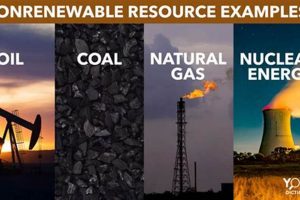
Fission-based atomic power relies on finite uranium and thorium resources. While these elements exist in relatively abundant quantities, they are not replenished on a human timescale. The process involves splitting the nuclei of these heavy atoms, releasing immense energy in the form of heat, which is then harnessed to generate electricity. For example, a typical nuclear power plant uses uranium-235 as fuel, initiating a chain reaction that produces heat to boil water and drive turbines.
This form of power generation offers a significant advantage in its high energy density and relatively low greenhouse gas emissions during operation, making it a crucial part of strategies to mitigate climate change and ensure energy security. Historically, the development of nuclear technology was driven by both military and civilian applications, leading to rapid advancements in reactor design and fuel cycle management. It plays a vital role in electricity grids worldwide, providing a stable baseload power supply that complements intermittent renewable sources.
The following sections will delve deeper into the specific aspects of fuel resources, reactor technologies, waste management, and the future prospects of this vital energy source.
Tips for Understanding Fission-Based Atomic Power
Careful consideration of several key aspects is crucial for a comprehensive understanding of fission-based atomic power. The following tips offer guidance on navigating the complexities of this energy source.
Tip 1: Recognize Resource Limitations: Uranium and thorium, the primary fuels for fission, are finite resources. Exploration and extraction require careful planning and resource management to ensure long-term sustainability.
Tip 2: Understand the Fuel Cycle: The nuclear fuel cycle encompasses all stages from mining and processing to waste disposal. Each stage presents unique technical and environmental challenges that demand rigorous oversight.
Tip 3: Consider Reactor Technologies: Different reactor designs offer varying levels of efficiency, safety, and waste production. Understanding the trade-offs between these factors is essential for informed decision-making.
Tip 4: Address Waste Management: Spent nuclear fuel remains radioactive for extended periods, requiring safe and secure long-term storage or disposal solutions. Ongoing research and development efforts seek to minimize the volume and long-term impact of this waste.
Tip 5: Acknowledge Safety and Security Concerns: Nuclear power plants require stringent safety protocols to prevent accidents and mitigate potential risks. Robust security measures are also necessary to protect against theft or misuse of nuclear materials.
Tip 6: Explore Advanced Reactor Concepts: Research into advanced reactor designs, such as Generation IV reactors, holds promise for enhanced safety, improved waste management, and increased efficiency.
Tip 7: Evaluate Economic Factors: The economic viability of nuclear power depends on factors such as construction costs, operating expenses, and fuel prices. A thorough economic assessment is vital for informed policy decisions.
By considering these key aspects, one can gain a deeper appreciation for the complexities and challenges associated with fission-based atomic power. This understanding is crucial for informed public discourse and responsible policy development.
These insights into the multifaceted nature of fission power provide a foundation for a more detailed exploration of its role in the global energy landscape.
1. Uranium Fuel

Uranium fuel forms the core of non-renewable nuclear energy production. The process hinges on the controlled fission of uranium isotopes, primarily uranium-235. This isotope possesses the unique ability to sustain a chain reaction, releasing significant energy in the process. This energy heats water, generating steam that drives turbines to produce electricity. The availability of uranium-235 directly impacts the capacity for nuclear power generation. For example, a typical 1,000 megawatt nuclear power plant requires approximately 27 tonnes of enriched uranium annually. The enrichment process increases the proportion of uranium-235 from its natural abundance of 0.7% to around 3-5%, making it suitable for sustained fission in most reactors.
The relationship between uranium fuel and non-renewable nuclear energy presents both opportunities and challenges. While uranium is relatively abundant globally, recoverable deposits of economically viable ore are concentrated in specific regions. This geographic distribution can create dependencies and influence geopolitical dynamics. Furthermore, the finite nature of uranium reserves underscores the non-renewable nature of this energy source. Exploration, extraction, and processing of uranium ore carry environmental implications, requiring careful management to minimize impacts on ecosystems and human health. Advanced reactor designs offer potential improvements in fuel efficiency and utilization, extending the lifespan of existing uranium resources. Research into alternative fuel cycles, such as thorium-based reactors, also holds promise for diversifying nuclear energy generation.
Understanding the crucial role of uranium fuel in non-renewable nuclear energy provides essential context for evaluating its long-term viability. Strategic resource management, technological advancements, and ongoing research are crucial to addressing the challenges and maximizing the benefits of this energy source. The future of nuclear energy hinges on balancing the demand for reliable electricity generation with the need for sustainable and responsible resource utilization.
2. Fission Process

Nuclear fission is the foundational process driving non-renewable nuclear energy production. It involves splitting the nucleus of a heavy atom, such as uranium-235, into smaller nuclei, releasing a tremendous amount of energy. Understanding this process is crucial for comprehending the complexities and implications of nuclear power.
- Chain Reaction:
The fission process initiates a chain reaction. When a neutron strikes a uranium-235 nucleus, it splits into smaller nuclei, releasing additional neutrons. These neutrons then strike other uranium-235 nuclei, perpetuating the reaction and generating a cascade of energy. Controlling this chain reaction is paramount for safe and sustained energy production in nuclear reactors. For instance, control rods made of neutron-absorbing materials, such as cadmium or boron, are used to regulate the rate of fission by absorbing excess neutrons.
- Energy Release:
The energy liberated during fission manifests primarily as kinetic energy of the fission products and as gamma radiation. This energy is harnessed in nuclear power plants to heat water, producing steam that drives turbines and generates electricity. The amount of energy released from a single fission event is millions of times greater than that released from a typical chemical reaction, like burning coal, highlighting the energy density advantage of nuclear power.
- Neutron Moderation:
Neutron moderation plays a vital role in sustaining the chain reaction. Neutrons released during fission are fast-moving and less likely to cause further fission. Moderators, such as water or graphite, slow down these neutrons, increasing their probability of interacting with uranium-235 nuclei. The choice of moderator influences the efficiency and design of the reactor. For example, pressurized water reactors use water as both a moderator and a coolant.
- Nuclear Waste:
The fission process generates radioactive byproducts known as nuclear waste. These byproducts include fission fragments, such as strontium-90 and cesium-137, which remain radioactive for extended periods. Safe and secure management of this waste is a critical aspect of the nuclear fuel cycle. Strategies for waste management include temporary storage in spent fuel pools, dry cask storage, and geological disposal in deep underground repositories.
These facets of the fission process are integral to the operation of non-renewable nuclear energy systems. They highlight the complexities of harnessing this powerful energy source, emphasizing the need for careful management, robust safety protocols, and ongoing research to address challenges related to waste disposal and resource limitations. Ultimately, understanding the intricacies of fission is crucial for informed decision-making regarding the role of nuclear energy in the future energy mix.
3. Energy Generation

Energy generation within the context of non-renewable nuclear energy refers to the process of converting the energy released from nuclear fission into usable electricity. This process is fundamental to the operation of nuclear power plants and plays a crucial role in meeting global energy demands. Understanding the steps involved in this conversion highlights the complexities and technical challenges associated with harnessing nuclear power.
- Heat Production:
The primary stage of energy generation involves harnessing the immense heat produced during nuclear fission. The fission process releases energy in the form of kinetic energy of fission products and gamma radiation. This heat is transferred to a coolant, typically water, which circulates within the reactor core. For example, in a pressurized water reactor (PWR), the coolant is maintained under high pressure to prevent boiling. This heated coolant serves as the primary heat source for the subsequent stages of energy generation.
- Steam Generation:
The heated coolant from the reactor core transfers its thermal energy to a secondary water loop in a steam generator. This heat exchange causes the secondary water to boil, producing steam. The steam generator acts as a barrier, preventing the radioactive coolant from directly contacting the turbine system. This separation is critical for maintaining the safety and integrity of the power plant. For instance, boiling water reactors (BWRs) generate steam directly within the reactor core, eliminating the need for a separate steam generator.
- Turbine Operation:
The high-pressure steam generated in the previous stage drives a turbine. The turbine converts the thermal energy of the steam into mechanical energy of rotation. This mechanical energy is then transferred to a generator. The turbine’s efficiency in converting thermal energy to mechanical energy directly impacts the overall efficiency of the power plant. Modern nuclear power plants utilize advanced turbine designs to maximize energy conversion.
- Electricity Generation:
The rotating turbine drives a generator, which converts the mechanical energy into electrical energy. This electricity is then stepped up to the appropriate voltage for transmission and distribution through the power grid. The generator’s capacity determines the power output of the nuclear power plant. For example, a typical 1,000 megawatt nuclear power plant can supply electricity to hundreds of thousands of homes and businesses.
These interconnected stages of energy generation within a non-renewable nuclear power plant demonstrate the complex process of converting nuclear fission energy into usable electricity. Each stage presents specific technical challenges and safety considerations. Optimizing these processes for efficiency and safety is crucial for maximizing the benefits and minimizing the risks associated with nuclear power. Furthermore, the dependence on finite uranium resources and the generation of radioactive waste highlight the inherent limitations of this energy source, emphasizing the need for continuous innovation and the exploration of alternative energy solutions.
4. Waste Management

Waste management represents a critical aspect of non-renewable nuclear energy production. The radioactive byproducts generated during fission require careful handling and long-term storage or disposal solutions to protect human health and the environment. Addressing this challenge is essential for the sustainable and responsible utilization of nuclear power.
- Spent Nuclear Fuel:
Spent nuclear fuel, the primary waste stream from nuclear reactors, contains a mixture of radioactive isotopes with varying half-lives. These isotopes emit radiation and pose a hazard if not managed properly. For example, spent fuel assemblies from a pressurized water reactor typically contain uranium, plutonium, and various fission products. These assemblies are initially stored in on-site spent fuel pools for cooling and then transferred to dry cask storage or, ideally, to a geological repository.
- High-Level Waste:
High-level waste encompasses the highly radioactive materials derived from reprocessing spent nuclear fuel. Reprocessing separates reusable materials, such as uranium and plutonium, from the waste stream, reducing the volume of high-level waste requiring disposal. However, reprocessing itself generates additional waste streams that need management. Vitrification, a process that immobilizes high-level waste in glass matrices, is often employed to prepare it for long-term storage or disposal.
- Low-Level Waste:
Low-level waste comprises materials with lower levels of radioactivity, including contaminated tools, clothing, and resins used in water purification systems. This waste stream constitutes a larger volume than high-level waste but poses a lower radiological risk. Disposal methods for low-level waste vary depending on the specific activity and include near-surface disposal in engineered landfills and shallow land burial.
- Geological Disposal:
Geological disposal is considered the most suitable long-term solution for high-level waste and spent nuclear fuel. This method involves placing the waste in deep, stable geological formations to isolate it from the biosphere for thousands of years. Sites for geological repositories are carefully selected based on rigorous geological, hydrogeological, and geochemical assessments. For instance, the Onkalo spent nuclear fuel repository in Finland is currently under construction and is designed to contain spent nuclear fuel for at least 100,000 years.
These facets of waste management highlight the complex and long-term challenges associated with non-renewable nuclear energy. Safe and responsible waste disposal requires ongoing research, technological advancements, and robust regulatory frameworks. The development and implementation of effective waste management strategies are essential for ensuring the long-term sustainability and public acceptance of nuclear power as a component of the global energy mix.
5. Safety Regulations
Safety regulations are paramount in the operation of non-renewable nuclear energy facilities. Given the potential hazards associated with radioactive materials and the complex processes involved, stringent regulatory frameworks are essential to ensure the protection of human health, the environment, and the security of nuclear materials. These regulations encompass all aspects of the nuclear fuel cycle, from mining and processing to reactor operation, waste management, and decommissioning.
- Reactor Design and Operation:
Stringent regulations govern the design, construction, and operation of nuclear reactors. These regulations address critical aspects such as reactor core design, containment structures, emergency core cooling systems, and operator training. For example, reactors are designed with multiple layers of safety systems to prevent accidents and mitigate potential consequences. Regular inspections and rigorous testing are mandatory to ensure compliance with safety standards and maintain the integrity of reactor components. These measures aim to minimize the risk of accidents like the Chernobyl disaster, where design flaws and operational errors led to a catastrophic release of radioactive materials.
- Radiation Protection:
Protecting workers, the public, and the environment from radiation exposure is a central focus of nuclear safety regulations. Limits on radiation dose rates for both occupational and public exposure are established and enforced. Monitoring systems are employed to track radiation levels within and around nuclear facilities. For instance, workers in nuclear power plants wear dosimeters to measure their cumulative radiation exposure. Regulations also mandate the safe handling and storage of radioactive materials, ensuring that exposure is kept as low as reasonably achievable (ALARA).
- Waste Management and Disposal:
Safety regulations dictate the handling, storage, and disposal of radioactive waste generated during nuclear energy production. These regulations specify requirements for waste characterization, packaging, transportation, and long-term storage or disposal. For example, high-level radioactive waste must be solidified and placed in robust containers designed to withstand extreme conditions. Geological disposal, the preferred method for long-term disposal, requires extensive site characterization and performance assessment to ensure the safe isolation of waste from the biosphere for thousands of years.
- Emergency Preparedness:
Comprehensive emergency preparedness plans are a mandatory component of nuclear safety regulations. These plans outline procedures for responding to potential accidents or emergencies at nuclear facilities. Regular drills and exercises are conducted to test the effectiveness of these plans and ensure that personnel are adequately trained to respond to various scenarios. Emergency response plans include provisions for public notification, evacuation procedures, and measures to mitigate the release of radioactive materials in the event of an accident. The Fukushima Daiichi nuclear disaster highlighted the importance of robust emergency preparedness plans, particularly in response to unforeseen natural events.
These interconnected safety regulations form a comprehensive framework for managing the risks associated with non-renewable nuclear energy. Continuous improvement in safety standards, rigorous oversight by regulatory bodies, and ongoing research into advanced reactor designs and waste management technologies are crucial for ensuring the long-term safety and sustainability of nuclear power. These stringent safety protocols are essential for maintaining public trust and supporting the responsible utilization of nuclear energy as part of the global energy mix.
6. Finite Resources
The finite nature of uranium and thorium, the primary fuel sources for conventional nuclear fission, underscores the classification of this energy source as non-renewable. While these elements exist in the Earth’s crust, their economically recoverable reserves are limited. This finite supply necessitates careful resource management and fuels the ongoing debate about the long-term sustainability of nuclear fission as a primary energy source. For example, known uranium reserves, at current consumption rates, are projected to last for several decades to a century, depending on various factors, including demand growth and technological advancements. This limited timeframe necessitates exploration for new uranium deposits and development of technologies to extract uranium from lower-grade ores, potentially with increased environmental impact. The finiteness of these resources also drives research into alternative nuclear fuel cycles, such as thorium-based reactors, and advanced reactor designs that offer higher fuel efficiency.
The connection between finite resources and non-renewable nuclear energy extends beyond the simple availability of uranium. The entire nuclear fuel cycle, from mining and milling to enrichment and fuel fabrication, relies on processes that consume energy and generate waste. Mining activities, for example, can impact local ecosystems and water resources. Furthermore, the production of nuclear fuel generates depleted uranium, a byproduct with limited applications and requiring long-term storage. These considerations add complexity to the resource equation, emphasizing the need for comprehensive life-cycle assessments of nuclear energy production.
Understanding the limitations imposed by finite resources is crucial for developing sustainable energy strategies. The dependence on finite uranium reserves necessitates a multi-faceted approach that includes optimizing current reactor technologies for improved fuel efficiency, investing in advanced reactor designs that can utilize alternative fuels or extend fuel cycles, and exploring alternative energy sources to diversify the global energy mix. The finite nature of nuclear fuel resources necessitates strategic planning and international cooperation to ensure responsible and sustainable utilization of this energy source, while simultaneously pursuing alternative and renewable energy options to meet future energy demands.
Frequently Asked Questions about Non-Renewable Nuclear Energy
This section addresses common inquiries regarding the finite nature of nuclear fuels and the implications for long-term energy production.
Question 1: How long will current uranium reserves last?
Estimates vary, but at current consumption rates, known uranium reserves are projected to last for several decades to approximately a century. However, this timeframe can be influenced by factors such as increasing energy demand, advancements in reactor technology, and the discovery of new uranium deposits.
Question 2: Why is nuclear energy considered non-renewable if uranium is relatively abundant in the Earth’s crust?
While uranium exists in the Earth’s crust, economically recoverable deposits are finite. Extracting uranium from lower-grade ores becomes increasingly challenging and costly, with potentially greater environmental impacts. The timescale for geological processes to replenish these reserves is vastly longer than human timescales, hence the non-renewable classification.
Question 3: What are the implications of finite uranium resources for the future of nuclear energy?
The finite nature of uranium necessitates a multi-pronged approach. This includes improving fuel efficiency in existing reactors, developing advanced reactor designs that can utilize alternative fuels or extend fuel cycles, exploring alternative energy sources, and implementing robust resource management strategies.
Question 4: What is the role of nuclear energy in a sustainable energy future given its non-renewable nature?
Nuclear energy’s role in a sustainable energy future is complex and subject to debate. Its low-carbon emissions profile during operation makes it a potential bridge to a future dominated by renewable energy sources. However, issues like waste management and the finite nature of uranium necessitate careful consideration and responsible long-term planning.
Question 5: Are there alternative nuclear fuels that could extend the lifespan of nuclear energy?
Research into alternative nuclear fuel cycles, such as those based on thorium, holds promise. Thorium is more abundant than uranium, and thorium-based reactors offer potential advantages in terms of waste management and proliferation resistance. However, significant technological development is still required for widespread deployment of thorium reactors.
Question 6: How does the finite nature of uranium impact the economics of nuclear power?
The price of uranium, like any commodity, is subject to market forces and can be influenced by factors such as supply and demand. As high-grade uranium deposits are depleted, extraction costs may rise, potentially impacting the economic competitiveness of nuclear power compared to other energy sources. This underscores the importance of diversifying energy sources and investing in research and development of alternative energy technologies.
The finite nature of uranium resources highlights the need for responsible resource management, technological innovation, and a balanced approach to energy planning that considers both the benefits and limitations of nuclear fission.
The subsequent section delves further into the long-term implications for global energy security and the transition to a more sustainable energy landscape.
Conclusion
This exploration of non-renewable nuclear energy has highlighted its multifaceted nature. From the intricacies of the fission process and the complexities of energy generation to the critical considerations of waste management and safety regulations, the finite nature of uranium resources frames the discourse surrounding this energy source. The benefits of relatively low-carbon electricity generation and high energy density are counterbalanced by the challenges of long-term waste disposal and the inherent limitations of a finite fuel supply. Technological advancements in reactor design, fuel cycle management, and waste disposal strategies are crucial for maximizing the potential benefits and mitigating the risks associated with this technology.
The future trajectory of non-renewable nuclear energy hinges on strategic decision-making, continuous innovation, and a commitment to responsible resource management. Balancing the need for reliable energy sources with the imperative for environmental stewardship requires a comprehensive approach that encompasses ongoing research, robust regulatory frameworks, and a diversified energy portfolio. A clear understanding of the limitations and opportunities presented by non-renewable nuclear energy is essential for charting a sustainable energy future that addresses both present needs and long-term global energy security.