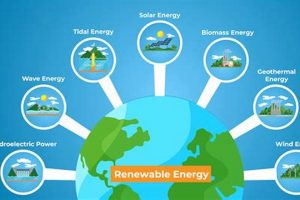
Solar power, derived from the radiant light and heat of our star, stands as a primary example of an energy form that replenishes naturally and continuously on a human timescale. Unlike finite resources such as fossil fuels, the flow of energy from the sun is consistent and predictable, barring atmospheric interference. This fundamental characteristic defines its categorization within the broader spectrum of sustainable energy options.
Harnessing solar energy offers significant advantages, including reduced reliance on non-renewable resources, decreased greenhouse gas emissions, and the potential for energy independence. Historically, various civilizations recognized the sun’s power and utilized it for heating and daylighting. Modern technologies, such as photovoltaic cells and concentrated solar power systems, allow for more efficient and widespread conversion of sunlight into usable electricity and thermal energy.
The subsequent discussion will delve into the specific methods of capturing this energy, the technological advancements driving its increased efficiency, and the challenges and opportunities associated with its integration into existing energy infrastructures globally.
Harnessing Solar Energy
Effective utilization of solar energy necessitates careful planning and informed decision-making. The following considerations are paramount for maximizing the benefits and ensuring long-term sustainability of solar energy systems.
Tip 1: Conduct a thorough site assessment. Evaluate sunlight exposure, shading, and roof orientation to optimize solar panel placement. A professional assessment can determine the most efficient configuration for energy generation.
Tip 2: Select appropriate solar panel technology. Different panel types (monocrystalline, polycrystalline, thin-film) offer varying efficiencies and cost profiles. Choose panels based on specific energy needs and available budget, considering long-term performance guarantees.
Tip 3: Invest in a quality inverter. The inverter converts direct current (DC) electricity from solar panels into alternating current (AC) for household or grid use. A reliable and efficient inverter is crucial for maximizing energy output and system longevity.
Tip 4: Understand energy storage options. Battery storage systems allow for the capture and utilization of excess solar energy during periods of low sunlight or at night. Evaluate the cost-effectiveness and suitability of battery storage based on consumption patterns and energy independence goals.
Tip 5: Ensure professional installation and maintenance. Proper installation by certified technicians is essential for system safety and optimal performance. Regular maintenance, including cleaning and inspections, will prolong the lifespan and efficiency of the solar energy system.
Tip 6: Research available incentives and rebates. Government and utility programs often provide financial incentives for solar energy adoption. Thoroughly investigate available options to reduce upfront costs and improve return on investment.
Tip 7: Monitor system performance regularly. Utilize monitoring systems to track energy generation, identify potential issues, and optimize system performance. This data-driven approach allows for proactive maintenance and ensures consistent energy output.
By carefully considering these factors, individuals and organizations can effectively harness solar power, contributing to a more sustainable energy future and realizing long-term economic and environmental benefits.
The following sections will further explore the economic and environmental aspects of solar energy, providing a comprehensive understanding of its role in the global energy landscape.
1. Inexhaustible Supply

The notion of an inexhaustible supply forms a cornerstone of defining our star as a renewable energy source. The sun’s vast reserves of hydrogen fuel, undergoing continuous nuclear fusion, generate an immense amount of energy radiated into space. This process ensures that a practically unlimited quantity of solar energy reaches Earth on a daily basis. Without this continuously replenished supply, the utilization of solar technologies such as photovoltaics and concentrated solar power would be unsustainable, rendering the sun an unreliable energy option. The sheer scale of solar energy received far exceeds global energy demands, emphasizing its potential to meet current and future energy needs.
The sustained provision of solar energy directly impacts the long-term viability of renewable energy strategies. Solar power installations, from individual rooftop panels to large-scale solar farms, rely entirely on this continuous influx of solar radiation. Investment in solar infrastructure is predicated on the understanding that the energy source will remain available for decades to come. Furthermore, technological advancements are focused on improving the efficiency of solar energy capture and storage, further enhancing the practicality and cost-effectiveness of harnessing this inexhaustible resource. For instance, the development of perovskite solar cells promises higher energy conversion rates, maximizing the utilization of available sunlight.
In conclusion, the inexhaustible nature of solar energy is fundamental to its classification as a renewable resource. This constant and abundant supply underpins the feasibility and sustainability of solar technologies and offers a pathway toward a future powered by clean, reliable energy. Addressing challenges such as intermittency and storage limitations remains crucial, but the inherent advantage of a virtually limitless energy source makes solar power a vital component of global energy transition efforts.
2. Continuous Energy Flow

The concept of continuous energy flow is intrinsically linked to the understanding of the sun’s classification as a renewable energy source. The sustained output of energy from the sun, a constant stream of photons, is what makes solar power a perpetually available resource. This contrasts sharply with finite resources like fossil fuels, which are depleted upon use.
- Sustained Nuclear Fusion
The sun’s energy originates from nuclear fusion reactions occurring within its core. These reactions, where hydrogen atoms fuse to form helium, release vast amounts of energy in the form of electromagnetic radiation. This process is self-sustaining and has been ongoing for billions of years, ensuring a consistent energy output. Without this continuous nuclear process, the sun would cease to be a viable energy source.
- Solar Irradiance and Earth’s Atmosphere
A portion of the sun’s energy reaches Earth in the form of solar irradiance. This is the power per unit area received from the sun in the form of electromagnetic radiation. While the Earth’s atmosphere absorbs and reflects some of this energy, a significant amount reaches the surface, providing a continuous stream of energy available for capture. Variations in atmospheric conditions, such as cloud cover, affect the amount of irradiance reaching specific locations, but the overall flow remains constant.
- Daily and Seasonal Variations
Although the overall energy flow from the sun is continuous, the intensity of solar radiation varies depending on the time of day and the season. These variations are due to the Earth’s rotation and axial tilt. While these factors influence the availability of solar energy at any given location and time, they do not negate the fundamental continuous nature of the energy source itself. Energy storage solutions are often implemented to mitigate these fluctuations.
- Implications for Solar Technology
The continuous flow of solar energy underpins the viability of solar technologies like photovoltaic (PV) panels and concentrated solar power (CSP) systems. PV panels directly convert sunlight into electricity, while CSP systems use mirrors to focus sunlight and generate heat, which is then used to produce electricity. Both technologies rely on the consistent availability of solar radiation to function effectively. Continued advancements in these technologies aim to increase their efficiency in capturing and converting the continuous stream of solar energy into usable forms.
The sustained and unending supply of solar energy is the defining factor in classifying the sun as a renewable resource. Its continuous flow allows for the sustained operation of solar technologies and offers a pathway to a more sustainable energy future, contingent upon advancements in energy storage and distribution to manage its inherent variability.
3. Solar Irradiance

Solar irradiance, the power per unit area received from the sun, serves as a fundamental metric for assessing the viability of solar energy as a renewable source. The intensity of solar irradiance directly dictates the energy potential that can be harnessed by solar technologies. Understanding its characteristics and variations is crucial for optimizing solar energy systems.
- Measurement and Distribution of Solar Irradiance
Solar irradiance is quantified in watts per square meter (W/m) and varies significantly across the globe. Factors influencing its distribution include latitude, altitude, cloud cover, and atmospheric conditions. Regions near the equator generally receive higher annual solar irradiance levels, making them prime locations for solar energy generation. Accurate measurement and mapping of solar irradiance are essential for site selection and resource assessment in solar power projects.
- Impact on Photovoltaic Performance
The electrical output of photovoltaic (PV) panels is directly proportional to the amount of solar irradiance incident upon their surface. Higher irradiance levels result in greater electricity generation. However, PV performance is also affected by temperature; increased panel temperature, often associated with high irradiance, can reduce efficiency. Consequently, optimizing PV system design requires considering both irradiance levels and temperature management strategies.
- Influence on Concentrated Solar Power (CSP)
Concentrated solar power plants utilize mirrors or lenses to focus sunlight onto a receiver, generating heat that drives turbines to produce electricity. The effectiveness of CSP systems is heavily dependent on direct normal irradiance (DNI), which is the amount of solar radiation arriving directly from the sun without scattering. Clear, cloudless skies are necessary for optimal DNI, making CSP systems most suitable for regions with high DNI levels, such as deserts.
- Predictability and Forecasting
While solar irradiance is a continuous resource, its intensity fluctuates due to weather patterns and seasonal changes. Accurate forecasting of solar irradiance is critical for grid integration and management of solar energy resources. Advanced weather models and satellite data are employed to predict solar irradiance levels, enabling grid operators to anticipate changes in solar power output and maintain grid stability.
The correlation between solar irradiance and the sun as a renewable energy source is undeniable. The predictable yet variable nature of solar irradiance necessitates technological advancements in energy storage and grid management to fully realize the potential of solar power. Ongoing research and development efforts are focused on improving the efficiency of solar energy conversion and enhancing the accuracy of solar irradiance forecasting, contributing to the increasing viability of solar energy as a cornerstone of global energy strategies.
4. Photovoltaic Conversion

Photovoltaic conversion constitutes a critical mechanism by which the sun’s energy is harnessed as a renewable resource. This process involves the direct transformation of sunlight into electricity using semiconductor materials. The incident photons from solar radiation excite electrons within the material, generating an electric current. The efficiency and reliability of this conversion are paramount to the economic viability and widespread adoption of solar energy.
The relationship between photovoltaic conversion and the sun as a renewable energy source is causal. The sun’s continuous emission of photons provides the energy input, while photovoltaic cells provide the means to capture and transform that energy into a usable form. Without efficient photovoltaic conversion technologies, the vast potential of solar energy would remain largely untapped. Real-world examples of this include large-scale solar farms that employ millions of photovoltaic panels to generate electricity for entire communities, demonstrating the practical significance of this conversion process. Furthermore, the development of increasingly efficient photovoltaic materials, such as perovskites and advanced silicon-based cells, underscores ongoing efforts to maximize the energy obtained from sunlight.
Ongoing research aims to enhance the durability, efficiency, and cost-effectiveness of photovoltaic conversion technologies. Challenges remain in terms of improving long-term stability, reducing manufacturing costs, and integrating solar energy into existing electrical grids. However, the fundamental role of photovoltaic conversion in capturing the sun’s energy solidifies the sun’s position as a renewable energy source, presenting a pathway toward a more sustainable energy future.
5. Thermal Applications

Thermal applications represent a significant facet of harnessing solar energy as a renewable resource. These applications involve the direct use of solar energy for heating purposes, ranging from domestic water heating to large-scale industrial processes. The fundamental principle is the absorption of solar radiation and its conversion into thermal energy, offering an alternative to fossil fuel-based heating systems. This conversion reduces carbon emissions and promotes energy independence. The connection between thermal applications and the sun’s renewable nature lies in the continuous and sustainable supply of solar radiation, enabling ongoing heat generation without depleting finite resources. An example of this is the widespread use of solar water heaters in residential buildings, which reduce reliance on conventional water heating methods, thus decreasing overall energy consumption and environmental impact.
Several thermal applications are deployed at various scales. Solar air heating systems, used in residential and commercial buildings, preheat air before it enters the HVAC system, thereby reducing the energy required for space heating. Concentrated solar power (CSP) plants utilize mirrors to focus sunlight onto a receiver, generating high-temperature heat. This heat drives steam turbines to produce electricity, representing a large-scale thermal application. Passive solar design, another thermal application, involves architectural techniques that maximize solar heat gain in winter and minimize it in summer, optimizing building energy performance naturally. The diversity of thermal applications underscores the versatility of solar energy in meeting various heating needs, contributing to energy efficiency and sustainability.
The development and adoption of solar thermal technologies face challenges, including the intermittency of solar radiation and the need for efficient energy storage solutions. However, advancements in thermal energy storage (TES) systems, such as phase-change materials and insulated tanks, are improving the reliability and cost-effectiveness of solar thermal applications. The ongoing innovation in thermal applications reinforces the sun’s role as a key player in renewable energy strategies, providing a pathway toward a cleaner and more sustainable energy future.
6. Environmental Benefits

The integration of solar energy as a primary power source yields multifaceted environmental advantages, fundamentally aligning with the principles of sustainable resource management. The shift away from fossil fuels towards solar energy inherently reduces the ecological impact associated with energy production and consumption.
- Reduced Greenhouse Gas Emissions
Solar energy generation does not directly emit greenhouse gases, such as carbon dioxide and methane, into the atmosphere. The displacement of fossil fuel-based electricity generation leads to a significant reduction in overall greenhouse gas emissions, mitigating the effects of climate change. For instance, large-scale solar farms can offset the emissions equivalent to removing thousands of vehicles from roadways, directly contributing to air quality improvements.
- Diminished Air and Water Pollution
Unlike conventional power plants that rely on combustion processes, solar energy facilities do not release harmful air pollutants like sulfur dioxide, nitrogen oxides, and particulate matter. Furthermore, solar power generation does not require substantial water resources for cooling, thereby minimizing water pollution and conserving freshwater supplies. The decreased reliance on fossil fuels reduces the risk of oil spills and other environmental accidents associated with the extraction, transportation, and processing of these resources.
- Land Use Considerations
While solar energy installations require land, they can be strategically located to minimize environmental impact. Rooftop solar panels utilize existing built environments, reducing the need for new land development. Large-scale solar farms can be sited on degraded or marginal lands, avoiding competition with agricultural or ecologically sensitive areas. Furthermore, careful planning and environmental impact assessments can mitigate potential habitat disruption and protect biodiversity.
- Resource Conservation
Solar energy relies on a virtually inexhaustible resource, reducing the dependence on finite fossil fuel reserves. This conservation of resources contributes to long-term energy security and minimizes the environmental consequences associated with resource extraction and depletion. The adoption of solar energy supports the transition to a circular economy, promoting sustainable consumption and production patterns.
These environmental benefits collectively reinforce the importance of solar energy as a sustainable and environmentally responsible energy source. The continuous advancement in solar technologies, coupled with supportive policies and incentives, further enhances its potential to mitigate climate change, protect natural resources, and contribute to a cleaner and healthier planet.
7. Future Sustainability

The long-term viability of human civilization is inextricably linked to sustainable energy practices, placing the sun as a central figure in forthcoming energy solutions. The inherent renewability of solar energy offers a pathway towards a future where energy production does not deplete finite resources or irreparably damage the environment. Future sustainability, therefore, relies heavily on the enhanced utilization and integration of solar power into global energy systems.
- Technological Advancements in Solar Efficiency
Continued research and development into more efficient solar cell technologies are crucial for maximizing energy output from available sunlight. Advancements in materials science, such as the development of perovskite solar cells and tandem solar cells, promise to significantly increase the energy conversion efficiency of photovoltaic systems. Increased efficiency reduces the land footprint required for solar installations and enhances their economic competitiveness with traditional energy sources. This technological progress is essential for making solar energy a cornerstone of future sustainability.
- Energy Storage Solutions and Grid Integration
The intermittent nature of solar energy necessitates the development of effective energy storage solutions to ensure a consistent power supply. Battery storage systems, pumped hydro storage, and thermal energy storage are among the technologies being explored to address this challenge. Seamless integration of solar energy into existing electrical grids requires sophisticated grid management systems and smart grid technologies. The deployment of these technologies will enhance the reliability and stability of solar power, enabling its widespread adoption and contribution to future sustainability.
- Decentralized Solar Energy Systems
The proliferation of decentralized solar energy systems, such as rooftop solar panels and community solar projects, offers a means to enhance energy resilience and reduce dependence on centralized power grids. These systems empower individuals and communities to generate their own clean energy, fostering greater energy independence and reducing transmission losses associated with long-distance power delivery. Decentralized solar energy contributes to a more resilient and sustainable energy infrastructure.
- Policy and Investment Frameworks
Supportive government policies, financial incentives, and investment frameworks are essential for accelerating the adoption of solar energy technologies. Policies such as feed-in tariffs, tax credits, and renewable energy mandates create a favorable environment for solar energy development. Increased public and private investment in solar energy research, development, and deployment is crucial for driving innovation and reducing costs. Robust policy and investment frameworks will enable the scaling up of solar energy to meet future energy demands sustainably.
The confluence of technological innovation, energy storage advancements, decentralized systems, and supportive policies is essential for realizing the full potential of solar energy in promoting future sustainability. As the global community seeks to transition to a cleaner and more resilient energy future, the sun stands as a readily available and fundamentally sustainable energy source, capable of meeting a significant portion of global energy needs while minimizing environmental impact.
Frequently Asked Questions
The following questions address common inquiries regarding the sun’s classification as a renewable energy source and its implications for energy production and sustainability.
Question 1: What fundamentally defines the sun as a renewable energy source?
The sun’s classification as a renewable energy source stems from its virtually inexhaustible supply of energy. Nuclear fusion within the sun continuously generates vast amounts of energy radiated into space, a fraction of which reaches Earth. This perpetual energy flow distinguishes it from finite resources like fossil fuels.
Question 2: Does solar energy truly have no environmental impact?
While solar energy is significantly cleaner than fossil fuels, it is not entirely without environmental impact. Manufacturing solar panels requires energy and resources, and large-scale solar farms can have land use implications. However, the overall environmental impact of solar energy is substantially lower than that of conventional energy sources.
Question 3: How does weather variability affect the reliability of solar energy?
Weather conditions, such as cloud cover and seasonal changes, influence the amount of solar radiation reaching the Earth’s surface, causing variability in solar energy production. Energy storage solutions and grid management strategies are essential for mitigating these fluctuations and ensuring a consistent power supply.
Question 4: Is solar energy economically viable compared to traditional energy sources?
The economic competitiveness of solar energy has improved dramatically in recent years, with solar power often being cost-competitive with or even cheaper than traditional energy sources in many regions. Government incentives, technological advancements, and economies of scale have contributed to this cost reduction.
Question 5: Can solar energy realistically meet all of global energy demands?
While solar energy has the potential to meet a significant portion of global energy demands, it is unlikely to be the sole energy source due to factors such as geographic limitations and energy storage challenges. A diversified energy mix, incorporating solar energy alongside other renewable and sustainable options, is essential for a reliable and resilient energy future.
Question 6: What are the primary challenges to widespread solar energy adoption?
Key challenges include the intermittency of solar energy, the need for improved energy storage solutions, the initial investment costs of solar systems, and the integration of solar energy into existing electrical grids. Overcoming these challenges requires ongoing innovation, supportive policies, and increased investment in solar energy technologies.
In summation, while challenges exist, the continuous nature and environmental advantages of solar power definitively qualify the sun as a critical renewable energy source, vital for building a sustainable future.
The concluding section will synthesize the core arguments and future implications related to solar energy.
Conclusion
The preceding examination confirms that the sun unequivocally qualifies as a renewable energy source. The continuous and virtually inexhaustible supply of solar radiation, coupled with advancements in technologies designed to capture and convert this energy, positions it as a cornerstone of sustainable energy strategies. Harnessing this resource mitigates reliance on finite fossil fuels, thereby reducing greenhouse gas emissions and environmental degradation.
Continued investment in research, development, and deployment of solar energy technologies is paramount to securing a sustainable energy future. Addressing challenges related to intermittency, energy storage, and grid integration will further unlock the sun’s potential to meet global energy demands while safeguarding the planet for future generations. The transition to a solar-powered world is not merely an option but a necessity for ensuring long-term environmental and economic stability.