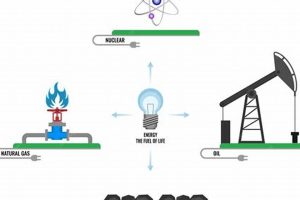
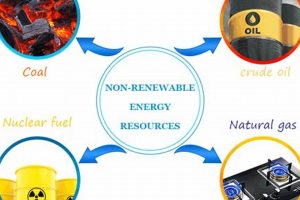
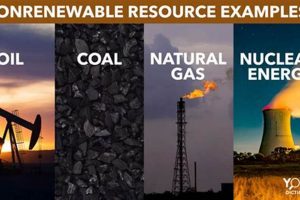
The chronicle of humanity’s utilization of energy resources like coal, oil, and natural gas reveals a long and complex relationship. From the earliest uses of coal in ancient China to the modern reliance on petroleum products, these finite resources have fueled industrialization, transportation, and technological advancements.
Harnessing these energy sources enabled unprecedented societal development, powering factories, facilitating global trade, and improving living standards. However, the reliance on non-renewable energy also brought significant consequences, including environmental pollution and geopolitical tensions stemming from resource scarcity and distribution. Understanding this historical trajectory provides crucial context for navigating the ongoing energy transition.
This exploration delves into the specific timelines and impacts associated with each major non-renewable resource, examining their discovery, utilization, and eventual consequences. It also considers the evolving societal, economic, and environmental implications of their dominance in the energy landscape, setting the stage for a discussion on the future of energy production and consumption.
Understanding Non-Renewable Energy Through History
Examining the historical trajectory of non-renewable energy consumption offers valuable insights for shaping future energy strategies. The following points provide a framework for deeper understanding.
Tip 1: Consider Early Adoption: Analyze the initial applications of specific resources. For example, coal’s early use in heating and metallurgy predates its widespread adoption for industrial power generation. This phased integration reveals evolving energy needs and technological capabilities.
Tip 2: Examine Geographic Distribution: The uneven global distribution of resources like oil and natural gas has profoundly influenced geopolitical landscapes. Studying historical conflicts and alliances related to resource access provides crucial context for contemporary international relations.
Tip 3: Analyze Technological Advancements: Technological innovations, such as the development of the internal combustion engine and enhanced extraction techniques, dramatically increased the demand and accessibility of non-renewable resources. Understanding these advancements is essential for evaluating their impact.
Tip 4: Evaluate Environmental Consequences: The historical record demonstrates the escalating environmental impacts of non-renewable energy consumption. Tracing the emergence of pollution awareness and environmental regulations provides insights into societal responses to these challenges.
Tip 5: Study Economic Impacts: Non-renewable resources have played a pivotal role in economic development. Examining historical economic booms and busts linked to resource availability and price fluctuations offers valuable lessons for economic planning.
Tip 6: Consider Social and Cultural Shifts: The availability of abundant and affordable energy has shaped social structures and cultural practices. Exploring these shifts offers a deeper understanding of the societal implications of energy transitions.
By considering these historical perspectives, one can gain a more nuanced understanding of the complexities associated with non-renewable energy, informing more sustainable energy choices for the future.
This historical analysis provides a foundation for understanding the current energy landscape and the imperative for transitioning towards more sustainable energy solutions. The following section will delve deeper into specific case studies of non-renewable resources.
1. Early Wood Utilization

While often overlooked in discussions of non-renewable energy, early wood utilization represents a foundational stage in humanity’s relationship with combustible resources. Understanding its historical context provides crucial insights into subsequent reliance on other non-renewable sources like coal, oil, and natural gas. Wood’s accessibility and widespread availability shaped early civilizations and laid the groundwork for later energy transitions.
- Fuel for Basic Needs:
Wood served as the primary fuel source for heating, cooking, and rudimentary industrial processes like metallurgy. Its combustion provided the energy necessary for survival and early technological development. Examples include charcoal production for metalworking and wood-fired kilns for pottery and brickmaking. This reliance established the fundamental link between energy consumption and societal advancement.
- Deforestation and Localized Resource Depletion:
Intensive wood use, particularly in densely populated areas, led to localized deforestation. This resource depletion forced communities to explore alternative fuel sources and fostered an early understanding of the finite nature of certain energy resources. This experience foreshadowed the challenges associated with later dependence on non-renewable fuels.
- Technological Innovation Driven by Wood Scarcity:
The limitations of wood as a fuel source spurred innovation. The development of more efficient wood-burning stoves and the exploration of alternative fuels like peat and coal were direct responses to wood scarcity. This demonstrates how resource constraints can drive technological change in energy production and consumption.
- Social and Environmental Impacts:
Early wood utilization had significant societal and environmental consequences. Indoor air pollution from wood smoke posed health risks, while deforestation altered landscapes and impacted local ecosystems. These early examples highlight the potential environmental and health impacts associated with energy consumption, a theme that continues with subsequent non-renewable resources.
Examining early wood utilization provides a valuable lens through which to understand the broader history of non-renewable energy. It illustrates the cyclical nature of resource exploitation, technological adaptation, and the enduring tension between energy needs and environmental sustainability. This historical context underscores the importance of learning from past experiences to navigate the ongoing transition towards sustainable energy solutions.
2. Coal's Industrial Revolution Role

Coal’s emergence as a dominant energy source profoundly shaped the Industrial Revolution, marking a pivotal chapter in the history of non-renewable energy. Its abundance and energy density fueled unprecedented technological advancements, transforming manufacturing, transportation, and societal structures. Examining coal’s role during this period provides crucial insights into the complex interplay between energy, technology, and societal change.
- Powering Industrial Processes:
Coal replaced wood and water as the primary fuel for industrial processes. Its higher energy output enabled larger-scale production in factories, powering steam engines that drove machinery in textile mills, mines, and other industries. This shift dramatically increased production capacity and spurred economic growth, but also concentrated populations in urban centers and created new social classes.
- Transforming Transportation:
Coal-powered steam engines revolutionized transportation. Steam locomotives and steamships facilitated the movement of goods and people over longer distances and at faster speeds, expanding trade networks and connecting previously isolated communities. This increased mobility had profound impacts on global commerce and cultural exchange.
- Fueling Urbanization and Population Growth:
Coal-powered industries attracted workers to urban centers, leading to rapid urbanization and population growth. This concentration of people created new social and economic challenges, including overcrowding, sanitation issues, and the rise of industrial slums. These societal shifts underscore the broader impacts of energy transitions on human populations.
- Environmental Consequences and Early Pollution:
The widespread burning of coal led to significant air pollution in industrial cities. Smog and soot became common occurrences, posing health risks and impacting the environment. This early experience with industrial pollution marked the beginning of a growing awareness of the environmental consequences associated with non-renewable energy consumption.
Coal’s role in the Industrial Revolution demonstrates the transformative power of energy transitions. While it fueled significant economic and technological progress, it also introduced new social and environmental challenges. This historical context provides valuable lessons for managing current and future energy transitions, particularly as societies grapple with the need to balance energy demands with environmental sustainability.
3. Petroleum's Rise in Transportation

The rise of petroleum as a dominant fuel source profoundly reshaped transportation systems and marked a crucial turning point in the history of non-renewable energy. This transformation, driven by the development of the internal combustion engine and the discovery of vast oil reserves, ushered in an era of unprecedented mobility and fundamentally altered global landscapes. Understanding this historical shift is essential for comprehending the modern world’s dependence on fossil fuels.
The internal combustion engine’s efficiency and adaptability made it ideal for powering automobiles, airplanes, and other forms of transportation. This technological breakthrough coincided with the discovery and exploitation of significant oil reserves, providing a readily available and energy-dense fuel source. The resulting boom in automobile production and the expansion of road networks drastically changed urban planning, commuting patterns, and global trade. Examples include the Ford Model T’s impact on personal car ownership and the development of interstate highway systems. This shift from coal-powered steam engines to petroleum-fueled internal combustion engines significantly accelerated the pace of life and the movement of goods and people, shrinking distances and connecting previously isolated communities.
The consequences of petroleum’s dominance in transportation are multifaceted. While enabling unprecedented mobility and economic growth, it also contributed to air and water pollution, dependence on finite resources, and geopolitical conflicts over oil reserves. The rise of petroleum illustrates the complex interplay between technological innovation, resource availability, and societal transformation within the broader context of non-renewable energy history. This understanding informs current efforts to transition towards more sustainable transportation solutions, as societies grapple with the environmental and economic challenges posed by fossil fuel dependence.
4. Natural Gas for Heating/Power

Natural gas emerged as a significant energy source for heating and power generation relatively recently compared to coal and oil. Its adoption accelerated in the latter half of the 20th century, driven by factors such as its perceived cleanliness compared to coal, advancements in pipeline infrastructure, and the development of efficient gas turbine technology. This integration of natural gas into the energy mix represents a distinct phase in the history of non-renewable energy, with both advantages and drawbacks. The increased availability of natural gas provided a fuel source for residential and commercial heating, replacing coal and oil in many applications. In power generation, natural gas-fired power plants offered greater flexibility and lower emissions than coal-fired plants, contributing to a shift in electricity generation. Examples include the conversion of many residential heating systems from oil to natural gas and the construction of combined-cycle gas turbine power plants, which offer high efficiency in converting natural gas to electricity.
The rise of natural gas also influenced geopolitical dynamics, as new pipelines and liquefied natural gas (LNG) terminals facilitated international trade in natural gas. This created new interdependencies and occasionally exacerbated existing geopolitical tensions. Moreover, while considered cleaner than coal, natural gas combustion still produces greenhouse gases, contributing to climate change. The extraction of natural gas through hydraulic fracturing (“fracking”) also raised environmental concerns related to water contamination and induced seismicity. The development of unconventional gas resources, such as shale gas, further altered the energy landscape, increasing supply and impacting global gas prices. This development exemplified how technological advancements can reshape the availability and utilization of non-renewable resources.
Understanding the role of natural gas within the broader history of non-renewable energy provides critical context for contemporary energy discussions. Its adoption represents a trade-off between reduced air pollution compared to coal and continued reliance on fossil fuels. The environmental impacts of natural gas extraction and combustion, coupled with the recognition of its contribution to climate change, necessitate a transition toward more sustainable energy solutions. Examining the trajectory of natural gas utilization provides valuable insights for shaping future energy policies and navigating the complex transition to a decarbonized energy system.
5. Environmental Consequences Emergence
The emergence of environmental consequences is inextricably linked to the history of non-renewable energy. Exploitation of these resources, while fueling industrialization and societal development, has generated substantial environmental damage. This cause-and-effect relationship underscores the inherent tension between energy demands and ecological sustainability. Understanding this historical connection is crucial for shaping future energy policies and mitigating the ongoing impacts of non-renewable resource use.
The combustion of fossil fuelscoal, oil, and natural gasreleases greenhouse gases, primarily carbon dioxide, into the atmosphere. This process, central to energy production from these resources, is a primary driver of climate change. The resulting global warming contributes to rising sea levels, extreme weather events, and disruptions to ecosystems. Furthermore, extraction processes, such as coal mining and hydraulic fracturing, can cause habitat destruction, water contamination, and land subsidence. Examples include acid rain caused by sulfur dioxide emissions from coal-fired power plants, oil spills devastating marine ecosystems, and air pollution contributing to respiratory illnesses in densely populated areas. These tangible consequences demonstrate the direct link between non-renewable energy use and environmental degradation.
Recognition of these environmental consequences has spurred the development of environmental regulations, technological innovations aimed at reducing emissions, and a growing movement towards renewable energy sources. However, the legacy of non-renewable energy use presents ongoing challenges. Addressing climate change, mitigating pollution, and restoring damaged ecosystems require sustained efforts and a fundamental shift in energy production and consumption patterns. The historical connection between environmental damage and non-renewable energy underscores the urgency of transitioning to a sustainable energy future. This understanding offers valuable lessons for mitigating future environmental risks and ensuring the long-term health of the planet.
Frequently Asked Questions
This section addresses common inquiries regarding the historical use of non-renewable energy sources, aiming to provide clear and concise information.
Question 1: When did humanity begin using non-renewable energy sources?
While the widespread use of non-renewable energy is a relatively recent phenomenon, early utilization of coal dates back to ancient China. However, significant exploitation began during the Industrial Revolution.
Question 2: Why did societies transition from wood to coal?
Coal offered a higher energy density than wood, enabling larger-scale industrial processes and more efficient power generation. This transition coincided with technological advancements that facilitated coal extraction and utilization.
Question 3: How did petroleum transform transportation systems?
The development of the internal combustion engine, coupled with the discovery and exploitation of oil reserves, revolutionized transportation. Petroleum-fueled vehicles offered greater speed and efficiency compared to earlier modes of transport.
Question 4: What are the primary environmental concerns associated with non-renewable energy?
Combustion of non-renewable resources releases greenhouse gases, contributing to climate change. Extraction processes can also cause habitat destruction, water contamination, and other environmental damage.
Question 5: What role did natural gas play in the evolving energy landscape?
Natural gas became a prominent fuel source for heating and power generation, offering a perceived cleaner alternative to coal. However, its combustion still contributes to greenhouse gas emissions, and extraction methods pose environmental risks.
Question 6: Why is understanding the history of non-renewable energy important today?
Examining past energy transitions provides valuable insights into the complex relationship between energy use, technological development, and environmental consequences. This historical perspective informs current efforts to transition towards sustainable energy solutions.
Understanding the historical context of non-renewable energy use is crucial for navigating the challenges and opportunities presented by the current energy transition.
The following section will explore the future of energy and the transition to renewable sources.
Conclusion
Exploration of the historical trajectory of non-renewable energy resources reveals a complex narrative of technological advancement, economic growth, and escalating environmental consequences. From early wood utilization to the dominance of coal, oil, and natural gas, these finite resources have shaped societies and profoundly altered the planet. This historical analysis underscores the inherent tension between energy demands and environmental sustainability, highlighting the critical need for a fundamental shift in energy production and consumption patterns.
The legacy of non-renewable energy utilization presents significant challenges for future generations. Addressing climate change, mitigating pollution, and transitioning to sustainable energy systems require a global commitment to innovation, policy reform, and responsible resource management. Understanding the historical context of non-renewable energy provides valuable lessons for navigating this complex transition and shaping a future powered by sustainable and equitable energy solutions. The imperative now lies in leveraging this historical understanding to forge a path toward a more sustainable energy future.