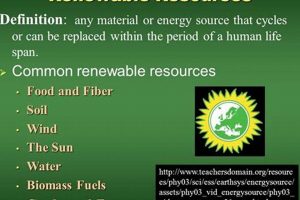
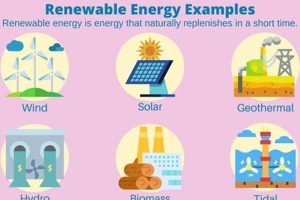
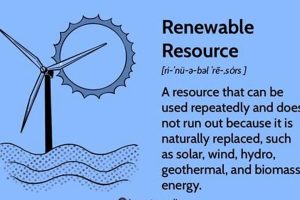
These sources are naturally replenished on a human timescale. They derive from processes that are constantly renewed, ensuring their availability for future use. Examples include solar radiation, wind, geothermal heat, and hydropower, all harnessed to generate power.
Their significance lies in their potential to reduce dependence on finite fossil fuels and mitigate environmental impacts. They offer a cleaner alternative, lessening greenhouse gas emissions and contributing to a more sustainable energy future. Historically, societies have utilized these methods in rudimentary forms, such as windmills and watermills, but modern technology allows for efficient and large-scale utilization.
The following sections will delve into the specific types, technological advancements, economic viability, and policy implications associated with these inexhaustible energy sources. A detailed examination of each energy category will provide a comprehensive understanding of their role in a global transition towards a cleaner energy landscape.
Understanding Renewable Energy Sources
Effective utilization requires a thorough understanding of its inherent characteristics and implementation strategies.
Tip 1: Assess Resource Availability: Conduct a detailed evaluation of the availability of the specific resource in the intended location. Solar irradiance, wind speeds, and geothermal gradients vary significantly geographically, impacting project feasibility.
Tip 2: Evaluate Technological Maturity: Different conversion technologies possess varying levels of development. Prioritize technologies with proven track records of reliability and efficiency for large-scale deployment.
Tip 3: Consider Grid Integration Challenges: Address the intermittency associated with certain options, such as solar and wind. Implement energy storage solutions or diversify the supply mix to ensure grid stability.
Tip 4: Analyze Economic Viability: Perform a comprehensive cost-benefit analysis, factoring in capital costs, operating expenses, and potential revenue streams. Investigate available government incentives and subsidies to improve project economics.
Tip 5: Address Environmental Impacts: Minimize potential negative consequences such as habitat disruption, water usage, and visual impacts. Implement mitigation strategies during project planning and operation.
Tip 6: Engage Stakeholders: Cultivate support from local communities, policymakers, and environmental organizations. Transparency and open communication can facilitate project acceptance and expedite regulatory approvals.
Tip 7: Prioritize Energy Efficiency: Complement the adoption of sustainable power sources with energy efficiency measures. Reducing overall energy demand minimizes the scale and cost of transitioning to a clean energy system.
Implementing these strategies maximizes the benefits of renewable energy, contributing to a cleaner, more sustainable, and resilient energy future.
The following sections will provide in-depth analyses of specific types, exploring their potential and challenges in greater detail.
1. Replenishment Rate

The speed at which a source renews itself is a critical determinant in its categorization as a sustainable energy option. It directly affects the resource’s long-term availability and, therefore, its viability as an alternative to finite resources. The rate must equal or exceed the rate of consumption for the source to be considered truly renewable.
- Solar Energy Replenishment
Solar energy is continuously replenished by the sun, providing a virtually inexhaustible source. The rate of energy received from the sun far exceeds current global energy consumption. This constant supply ensures solar power’s reliability and sustainability, making it a cornerstone of any renewable energy strategy. Its only constraint is the availability of technology to harness it effectively.
- Wind Energy Dynamics
Wind patterns, driven by solar heating and Earth’s rotation, are consistently replenished. While wind speed and availability may fluctuate regionally and seasonally, the overall atmospheric processes that generate wind are ongoing. Therefore, the availability of wind is constantly renewed, making wind energy a reliable renewable source, albeit one requiring strategic placement of turbines.
- Hydropower Regeneration Cycle
Hydropower depends on the water cycle, where evaporation, precipitation, and runoff continuously replenish water reservoirs. This cyclical process ensures a steady flow of water for generating electricity. However, the replenishment rate can be affected by climate change, potentially impacting the long-term viability of hydropower in certain regions. Reservoir management is crucial for maintaining consistent power generation.
- Geothermal Energy Stability
Geothermal energy taps into the Earth’s internal heat, which is slowly replenished by radioactive decay within the planet. Although the replenishment rate is slower compared to solar or wind, the vastness of the Earth’s thermal energy reservoir ensures its availability for extended periods. Careful management of geothermal resources is essential to prevent depletion of specific geothermal reservoirs.
The consideration of the renewal rate for each power source is vital for assessing its long-term contribution to a sustainable energy mix. It ensures that energy policies and infrastructure investments are aligned with resources that are continuously and reliably available, reducing reliance on finite resources and fostering a more resilient energy future.
2. Natural Processes

The genesis and perpetual availability of replenishable energy sources are intrinsically linked to ongoing natural processes. Understanding these processes is fundamental to comprehending the very nature of these resources and ensuring their sustainable utilization.
- Solar Irradiance and Atmospheric Dynamics
The Suns energy, driving atmospheric and oceanic currents, is a primary natural process. This energy is harnessed directly through photovoltaic cells and indirectly through wind and wave energy conversion technologies. Fluctuations in solar irradiance, modulated by atmospheric conditions, directly impact the output of these technologies and necessitate sophisticated grid management strategies.
- The Hydrological Cycle and Hydroelectric Power
Evaporation, precipitation, and runoff constitute the hydrological cycle, a continuous process that replenishes water reservoirs essential for hydroelectric power generation. This cycle is influenced by climate patterns and watershed management, affecting the reliability and capacity of hydropower facilities. Changes in precipitation patterns can significantly alter the availability of this energy source.
- Geothermal Gradients and Tectonic Activity
The Earth’s internal heat, generated by radioactive decay and primordial heat, creates geothermal gradients exploited for electricity generation and direct heating. Tectonic activity and volcanic processes play a role in maintaining these gradients, influencing the location and intensity of geothermal resources. Sustainable extraction practices are crucial to ensure the longevity of geothermal reservoirs.
- Biomass Conversion and Photosynthesis
Photosynthesis, the process by which plants convert sunlight into chemical energy, forms the basis of biomass energy. Agricultural practices, forestry management, and waste processing influence the availability and sustainability of biomass feedstocks. Efficient conversion technologies, such as combustion, gasification, and anaerobic digestion, are employed to extract energy from biomass while minimizing environmental impacts.
These examples underscore the inextricable link between naturally occurring phenomena and the concept of sustainable power sources. A comprehensive assessment of these processes, including their variability and susceptibility to climate change, is essential for developing effective and sustainable energy strategies. Understanding the environmental feedback loops associated with each energy source is also crucial for minimizing unintended consequences and maximizing the benefits of these cleaner energy options.
3. Sustainability

Sustainability serves as a guiding principle in evaluating energy sources, ensuring long-term availability and minimal environmental impact. Its integration with the definition of power sources that are naturally replenished is essential for securing a stable and environmentally conscious energy future.
- Environmental Stewardship
Environmental stewardship encompasses the responsible management of natural resources to minimize ecological damage. Sustainable practices aim to reduce carbon emissions, protect biodiversity, and prevent pollution. The deployment of sustainably sourced options, such as solar farms designed to minimize habitat disruption and wind farms strategically placed to avoid bird migration routes, reflects this commitment.
- Economic Viability
Economic viability involves creating energy solutions that are cost-effective and competitive with traditional fossil fuels. Sustainable options require ongoing investment in research and development to reduce costs and improve efficiency. This includes initiatives like government subsidies for renewable energy projects and tax incentives for businesses adopting clean energy technologies.
- Social Equity
Social equity emphasizes fair access to energy resources and the benefits of sustainable energy projects for all communities. Sustainable initiatives should prioritize job creation, community engagement, and energy affordability, particularly in underserved areas. This might involve establishing community-owned solar cooperatives or implementing energy efficiency programs for low-income households.
- Resource Management
Resource management focuses on the responsible use of natural resources, ensuring their availability for future generations. Sustainable energy practices require careful planning and management of resources like water, land, and raw materials used in energy production. This encompasses practices like minimizing water usage in hydropower facilities and responsibly sourcing materials for solar panel manufacturing.
These facets of sustainability are intertwined with the concept of energy sources that replenish naturally, shaping the trajectory towards a cleaner, more equitable, and resilient energy future. The successful integration of these principles ensures that energy systems not only meet current needs but also safeguard the well-being of future generations and the health of the planet.
4. Resource Availability

The prevalence and accessibility of resources directly influence the feasibility and scalability of utilizing power sources that replenish naturally. The economic and logistical practicality of harnessing these sources hinges on their geographical distribution and abundance.
- Geographic Distribution and Regional Potential
The suitability of particular replenishable energy technologies is heavily influenced by geographic location. Regions with high solar irradiance are ideal for solar power generation, whereas areas with consistent wind patterns support wind energy projects. The regional concentration of geothermal resources determines the viability of geothermal power plants. Resource mapping and assessment are essential for identifying optimal locations for development.
- Intermittency and Variability Challenges
Many are subject to intermittency and variability due to natural weather patterns. Solar energy production fluctuates with cloud cover and daylight hours, while wind energy depends on wind speed and direction. This variability poses challenges for grid integration and requires energy storage solutions or diversification with other energy sources. The predictable nature of tidal energy offers a more consistent output compared to solar and wind.
- Technological Limitations and Extraction Efficiency
Technological advancements play a crucial role in maximizing resource utilization. The efficiency of solar panels, wind turbines, and geothermal power plants determines the amount of energy that can be extracted from available resources. Continued research and development are necessary to improve extraction efficiency and reduce the cost of harnessing these resources. Material science innovations are vital for increasing the lifespan and performance of energy infrastructure.
- Land Use and Environmental Considerations
The development of renewable energy projects often requires significant land use, raising environmental concerns. Large-scale solar farms and wind farms can impact ecosystems and wildlife habitats. Careful planning and mitigation strategies are essential to minimize environmental impacts. Offshore wind farms and floating solar installations offer alternative solutions that reduce land use requirements.
Considering these aspects of resource availability is crucial for formulating effective strategies for utilizing power sources that are naturally replenished. A comprehensive understanding of resource characteristics, technological limitations, and environmental considerations is essential for achieving a sustainable and reliable energy future.
5. Environmental Impact

The consideration of environmental impact is paramount when evaluating energy sources, particularly those classified as sources that replenish naturally. While often perceived as environmentally benign, each source possesses specific ecological considerations that merit careful assessment.
- Greenhouse Gas Emissions Reduction
A primary benefit is the potential to substantially reduce greenhouse gas emissions compared to fossil fuels. Solar, wind, and hydropower generate electricity without directly emitting carbon dioxide or other pollutants. However, lifecycle emissions, including manufacturing, transportation, and decommissioning, must be considered in a comprehensive analysis. These lifecycle emissions are generally lower than those associated with fossil fuel-based power generation.
- Land Use Considerations
Many require significant land area for energy generation facilities. Solar farms, wind farms, and biomass plantations can impact ecosystems, displace agricultural land, and alter landscapes. Careful site selection, land management practices, and co-location strategies are essential to minimize these impacts. Offshore wind farms and rooftop solar installations offer alternatives with reduced land footprint.
- Water Resource Utilization
Hydropower, geothermal, and some biomass energy systems require water resources for electricity generation or fuel production. Hydropower dams can alter river flows, impact aquatic ecosystems, and affect water availability for other uses. Geothermal power plants may require water for cooling, and biomass production can place demands on water resources for irrigation. Sustainable water management practices are essential to minimize these impacts.
- Impacts on Wildlife and Biodiversity
Energy infrastructure can pose risks to wildlife and biodiversity. Wind turbines can cause bird and bat collisions, while hydropower dams can impede fish migration. Biomass plantations can lead to habitat loss and reduced biodiversity. Mitigation measures, such as bird diverters on wind turbines and fish ladders on dams, can help reduce these impacts. Careful planning and environmental impact assessments are crucial for minimizing harm to wildlife and ecosystems.
A thorough assessment of environmental impacts across the entire lifecycle is crucial for determining the true sustainability of each energy source that is naturally replenished. Balancing the benefits of reduced greenhouse gas emissions with potential ecological consequences is essential for making informed decisions about energy policy and infrastructure development. The pursuit of genuinely sustainable energy solutions necessitates continuous innovation and rigorous environmental monitoring.
6. Energy Security

Energy security, defined as the uninterrupted availability of energy sources at an affordable price, is intrinsically linked to the utilization of resources that are naturally replenished. Dependence on finite fossil fuels exposes nations to price volatility and geopolitical instability. A diversified energy portfolio that emphasizes inexhaustible energy sources strengthens a nation’s energy independence and resilience.
- Diversification of Energy Supply
Reliance on a single energy source, particularly imported fossil fuels, creates vulnerability to supply disruptions and price fluctuations. Integrating a variety of sustainable options, such as solar, wind, hydro, and geothermal, diversifies the energy mix and reduces dependence on any single fuel source. Germany’s Energiewende, aimed at transitioning to a sustainable energy system, exemplifies this approach by incorporating a mix of renewable technologies.
- Reduced Exposure to Geopolitical Risks
Fossil fuel resources are concentrated in specific geographic regions, making importing nations susceptible to geopolitical instability and supply chain disruptions. Developing domestic that replenish naturally reduces dependence on these regions and strengthens a nation’s energy independence. Countries with abundant solar or wind resources can leverage these assets to enhance their energy security and reduce vulnerability to international political events.
- Price Stability and Predictability
Fossil fuel prices are subject to significant volatility due to market speculation, geopolitical events, and supply disruptions. The cost of many that replenish naturally, such as solar and wind, is largely determined upfront during project construction. This provides greater price stability and predictability over the long term, shielding consumers and businesses from fluctuating energy costs. Long-term power purchase agreements (PPAs) for sustainable options further enhance price stability.
- Infrastructure Resilience and Decentralization
Centralized fossil fuel-based power generation systems are vulnerable to single points of failure, such as pipeline disruptions or power plant outages. Distributed that replenish naturally, such as rooftop solar panels and microgrids, enhance grid resilience and reduce the risk of widespread blackouts. Decentralized energy systems provide greater redundancy and flexibility, improving the ability to withstand disruptions and maintain a reliable energy supply.
These facets highlight the critical role in bolstering energy security by mitigating risks associated with fossil fuel dependence. Investing in and developing domestic replenishable resources fosters greater energy independence, reduces exposure to price volatility and geopolitical instability, and enhances the resilience of energy infrastructure.
7. Technological Advancement

Technological advancement is inextricably linked to the enhanced viability and widespread adoption of resources that are naturally replenished. The definition of these resources, once relegated to niche applications due to inefficiency and high cost, is now being reshaped by ongoing innovations in materials science, energy storage, and grid management. Progress in these areas is enabling the more effective harnessing and integration of intermittent sources like solar and wind power, broadening their applicability and contributing to a more sustainable energy future. For example, the development of more efficient photovoltaic cells allows for increased energy capture from the same surface area, lowering the cost per kilowatt-hour and making solar energy more competitive with traditional fossil fuels. Similarly, advancements in wind turbine design, such as taller towers and larger rotor diameters, enable the capture of stronger and more consistent wind resources, improving energy output and reducing intermittency.
Beyond energy generation, innovations in energy storage, such as lithium-ion batteries and pumped hydro storage, are critical for addressing the variability of solar and wind power. These technologies allow for the storage of excess energy generated during peak production periods for use during periods of low output, ensuring a more reliable and consistent energy supply. Furthermore, advancements in smart grid technologies, including advanced sensors, communication networks, and data analytics, facilitate the more efficient management and distribution of resources that replenish naturally. Smart grids enable real-time monitoring of energy demand and supply, allowing for dynamic adjustments to grid operations to optimize the use of intermittent resources and maintain grid stability. The practical significance of these advancements is evident in the increasing penetration of options that replenish naturally in power grids around the world.
In conclusion, technological advancement is a vital catalyst in realizing the full potential of energy sources that are naturally replenished. The ongoing development and deployment of more efficient, cost-effective, and reliable technologies are essential for overcoming the challenges associated with harnessing and integrating intermittent resources. These advances not only redefine the practicality of sources that replenish naturally but also pave the way for a more sustainable and secure energy future. Challenges remain, particularly in the development of long-duration energy storage solutions and the optimization of grid infrastructure, but continued investment in research and development is crucial for accelerating the transition to a cleaner energy landscape.
Frequently Asked Questions
The following questions address common inquiries and misconceptions surrounding sources that replenish naturally, providing clear and concise explanations of key concepts.
Question 1: What distinguishes sources that replenish naturally from other energy sources?
These sources are defined by their ability to be replenished within a human lifespan. This contrasts with finite sources like fossil fuels, which require millions of years to form.
Question 2: Are sources that replenish naturally entirely free of environmental impact?
While generally having a lower environmental impact than fossil fuels, they are not entirely benign. Land use, water consumption, and impacts on wildlife are potential concerns that must be addressed.
Question 3: How does intermittency affect the reliability of sources that replenish naturally?
The intermittent nature of solar and wind energy poses challenges for grid stability. Energy storage solutions and diversified energy portfolios are crucial for mitigating these fluctuations.
Question 4: Are sources that replenish naturally economically competitive with fossil fuels?
The cost of these sources has decreased significantly in recent years, making them increasingly competitive with fossil fuels. Government subsidies, technological advancements, and economies of scale are further driving down costs.
Question 5: What role do sources that replenish naturally play in mitigating climate change?
These sources are essential for reducing greenhouse gas emissions and mitigating climate change. Transitioning to a energy system based on sources that replenish naturally is crucial for achieving global climate goals.
Question 6: What are the primary challenges to widespread adoption of sources that replenish naturally?
Challenges include intermittency, infrastructure limitations, land use conflicts, and the need for policy support. Overcoming these challenges requires ongoing innovation, strategic planning, and public-private partnerships.
These Q&A pairs highlight the multifaceted nature and underline the need for a comprehensive and informed approach to their development and deployment. Understanding these factors is essential for maximizing the benefits of sources that replenish naturally and ensuring a sustainable energy future.
The subsequent section will explore policy implications and incentives related to the utilization of resources that replenish naturally.
Defining a Sustainable Energy Future
The preceding analysis has underscored the multifaceted implications of defining energy resources as naturally replenished. This definition is not merely a semantic exercise but a critical framework for shaping sustainable energy policy, guiding technological innovation, and informing responsible resource management. The characteristics of replenishment rate, reliance on natural processes, considerations for sustainability, resource availability, environmental impact, contribution to energy security, and the impetus for technological advancement are all inextricably linked to the ultimate goal of a cleaner, more resilient energy system.
The challenges inherent in transitioning to a energy economy are significant, but the potential benefits are transformative. Continued research, strategic investment, and a commitment to sustainable practices are essential to realizing a future where energy production is both environmentally sound and economically viable. The choices made today will determine the energy landscape of tomorrow and the well-being of generations to come. A comprehensive understanding of the multifaceted nature of sources that replenish naturally is paramount in this endeavor.
![Guide to What Energy Resources Are Renewable [+Future] | Renewable Energy Solutions for a Sustainable Future | Clean & Green Power](https://pplrenewableenergy.com/wp-content/uploads/2026/03/th-516-300x200.jpg "Guide to What Energy Resources Are Renewable [+Future] Renewable Energy Solutions for a Sustainable Future | Clean & Green Power")