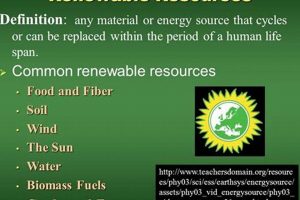
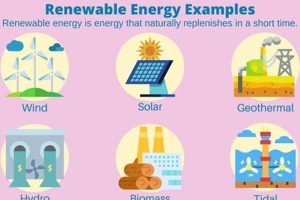
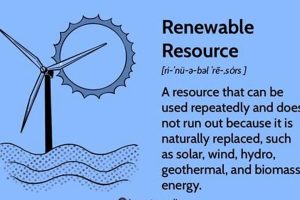
Energy sources that replenish naturally and are virtually inexhaustible are categorized as sustainable power options. These include solar power, captured from sunlight using photovoltaic cells or concentrated solar power systems; wind energy, converted from the kinetic energy of wind using turbines; hydroelectric power, derived from the flow of water in rivers and dams; geothermal energy, harvested from the Earth’s internal heat; and biomass energy, obtained from organic matter like plants and waste. These represent a pathway towards energy independence and diversification.
Harnessing power from sustainable sources offers significant environmental and economic advantages. It reduces reliance on fossil fuels, diminishing greenhouse gas emissions and mitigating climate change. Further benefits include enhanced energy security through decentralized generation, creation of green jobs, and reduced air and water pollution. Historically, these approaches have evolved from small-scale applications to large-scale grid integration, demonstrating their expanding viability and potential.
The following sections will delve deeper into the characteristics, applications, and future prospects of various sustainable power methodologies, offering a comprehensive overview of their role in shaping a cleaner and more sustainable energy landscape.
Considerations for Maximizing Renewable Energy Utilization
Optimizing the implementation and effectiveness of sustainable power systems requires careful planning and strategic execution. The following guidelines offer critical insights for stakeholders seeking to enhance the adoption and impact of these technologies.
Tip 1: Prioritize Resource Assessment: Thoroughly evaluate the availability and consistency of renewable resources at the intended site. Detailed solar irradiance studies, wind resource mapping, hydrological surveys, and geothermal gradient analysis are essential for determining the feasibility and potential output of specific installations.
Tip 2: Optimize Technology Selection: Select the most appropriate technological solutions based on resource characteristics, site constraints, and energy demand profiles. This includes evaluating the efficiency, reliability, and cost-effectiveness of different photovoltaic panel types, wind turbine designs, hydroelectric turbine configurations, and geothermal power plant technologies.
Tip 3: Implement Smart Grid Integration: Integrate variable power sources effectively into the existing electrical grid using smart grid technologies. Advanced metering infrastructure, real-time monitoring systems, and responsive load management strategies are crucial for maintaining grid stability and maximizing the utilization of intermittent power generation.
Tip 4: Encourage Energy Storage Solutions: Incorporate energy storage systems, such as battery storage, pumped hydro storage, or thermal energy storage, to mitigate the intermittency of variable power resources. Storage solutions enable the dispatch of energy when needed, enhancing grid reliability and reducing curtailment of excess generation.
Tip 5: Foster Policy and Regulatory Support: Advocate for supportive policies and regulations that incentivize the development and deployment of sustainable power projects. Feed-in tariffs, tax credits, renewable portfolio standards, and streamlined permitting processes can significantly accelerate the transition to a cleaner energy economy.
Tip 6: Promote Community Engagement and Education: Engage local communities in the planning and implementation of projects to ensure social acceptance and address potential concerns. Educational initiatives can raise awareness about the benefits of sustainable power and encourage public support for these technologies.
Tip 7: Invest in Research and Development: Support ongoing research and development efforts to improve the efficiency, reduce the cost, and enhance the reliability of sustainable power technologies. Innovation is essential for unlocking the full potential of sustainable power and achieving a carbon-neutral energy system.
By adhering to these considerations, stakeholders can accelerate the transition to a sustainable energy future, maximizing the environmental and economic benefits associated with these resources.
The subsequent sections will examine the economic considerations related to sustainable power technologies and address common misconceptions surrounding their feasibility and reliability.
1. Solar photovoltaic systems

Solar photovoltaic systems represent a key element within the portfolio of sustainable power options. Their ability to directly convert solar radiation into electrical energy positions them as a pivotal technology in mitigating reliance on fossil fuels and promoting environmental sustainability.
- Photovoltaic Effect and Semiconductor Materials
The underlying principle of solar photovoltaic systems is the photovoltaic effect, which occurs when photons from sunlight strike a semiconductor material, such as silicon. This interaction generates electron-hole pairs, creating an electric current. The efficiency of this conversion is dependent on the properties of the semiconductor material and the design of the solar cell. Crystalline silicon, thin-film technologies, and emerging perovskite materials are commonly used, each offering varying levels of efficiency and cost.
- System Components and Integration
A complete solar photovoltaic system comprises solar panels, inverters, mounting structures, and wiring. Solar panels, composed of multiple interconnected solar cells, capture sunlight and generate direct current (DC) electricity. Inverters convert the DC electricity into alternating current (AC) electricity, suitable for use in homes and businesses. These systems can be integrated into buildings (building-integrated photovoltaics or BIPV), mounted on rooftops, or deployed in ground-mounted solar farms, demonstrating their versatility and scalability.
- Grid Interconnection and Energy Storage
Solar photovoltaic systems can be connected to the electrical grid, allowing excess electricity to be fed back into the grid and credited to the system owner. Grid interconnection requires adherence to safety standards and the installation of appropriate metering equipment. Energy storage systems, such as batteries, can be integrated with solar photovoltaic systems to store excess electricity for later use, mitigating the intermittency of solar power and enhancing grid stability. This is important for areas with frequent cloud cover.
- Environmental and Economic Considerations
The utilization of solar photovoltaic systems offers significant environmental benefits, including reduced greenhouse gas emissions, air pollution, and water consumption compared to fossil fuel-based power generation. Economically, solar photovoltaic systems can provide long-term cost savings through reduced electricity bills and potential revenue from grid interconnection. However, the initial investment cost and the land use requirements for large-scale solar farms remain important considerations.
The integration of solar photovoltaic systems into the energy landscape represents a move toward a more sustainable and resilient power infrastructure. Their increasing affordability and improving efficiency, coupled with supportive policies and technological advancements, solidify their role in shaping the future of energy production and reducing dependence on finite resources.
2. Wind Turbine Technology

Wind turbine technology represents a significant category among sustainable power options, converting the kinetic energy of wind into electrical energy. Its widespread deployment is a key factor in reducing reliance on fossil fuels and promoting a diversified energy portfolio.
- Aerodynamic Design and Energy Capture
The efficiency of wind turbines hinges on the aerodynamic design of their blades. These blades are engineered to capture the maximum amount of wind energy by creating lift, similar to an airplane wing. The rotational force generated by the wind drives a generator located within the turbine nacelle, producing electricity. Examples include horizontal-axis turbines, the most common type, and vertical-axis turbines, which offer advantages in certain environments. This capture process is fundamental to the operation of wind farms.
- Components of a Wind Turbine System
A complete wind turbine system comprises several essential components: the rotor blades, the nacelle (housing the generator, gearbox, and other control systems), the tower, and the foundation. The tower elevates the nacelle and rotor blades to access stronger winds at higher altitudes. The generator converts mechanical energy into electrical energy, while the gearbox, if present, adjusts the rotational speed to optimize generator performance. These systems work together to deliver efficient electrical power.
- Onshore vs. Offshore Wind Farms
Wind turbines are deployed in both onshore and offshore environments. Onshore wind farms are typically located in areas with consistent wind resources, such as plains and mountain ridges. Offshore wind farms, situated in coastal waters, capitalize on stronger and more consistent winds but require more robust construction and maintenance. An example of a large onshore wind farm is the Roscoe Wind Farm in Texas, while the Hornsea Wind Farm in the North Sea is a prominent offshore project. Both types contribute substantially to renewable energy production.
- Grid Integration and Power Smoothing
Integrating wind power into the electrical grid presents challenges due to the intermittent nature of wind. Advanced grid management techniques, such as forecasting wind patterns and utilizing energy storage solutions, help to mitigate these challenges. Power smoothing technologies, like battery storage systems or flywheels, can stabilize the output of wind farms and ensure a more consistent supply of electricity. This integration is essential for widespread adoption of wind power.
The operational principles and varying applications of wind turbine technology reflect its versatility as a resource. From individual turbines powering homes to large-scale wind farms contributing to national grids, this sustainable power option demonstrates significant potential for a cleaner energy future.
3. Hydroelectric power generation

Hydroelectric power generation constitutes a substantial component within the realm of sustainable power options. Its inclusion stems from its reliance on the continuous hydrological cycle, making it a renewable resource provided water management is sustainable. The fundamental principle involves harnessing the potential energy of water stored at a height, converting it to kinetic energy as it flows through turbines, ultimately generating electricity. The construction of dams and reservoirs, such as the Three Gorges Dam in China and the Itaipu Dam on the Brazil-Paraguay border, serves to accumulate water and regulate its flow, ensuring a consistent supply for power generation. Without sustainable water management practices, the long-term viability of hydroelectric power faces potential challenges.
The significance of hydroelectric power lies in its ability to provide a stable and dispatchable source of electricity, especially valuable for balancing intermittent sources like solar and wind. It is not without its environmental consequences, however. The construction of dams can lead to habitat destruction, altered river ecosystems, and displacement of human populations. Mitigation strategies, such as fish ladders, environmental flows, and sediment management, are crucial for minimizing the negative impacts. Small-scale hydroelectric projects, often referred to as run-of-river systems, present a more environmentally benign alternative, diverting a portion of the river’s flow to power turbines without significant impoundment.
In summary, hydroelectric power generation embodies a complex interplay between harnessing a renewable resource and managing environmental considerations. Its effectiveness as a component of sustainable power strategies is predicated on responsible planning, sustainable water practices, and the implementation of mitigation measures to minimize ecological disruption. Continuous improvement in dam design, turbine efficiency, and environmental stewardship is crucial for ensuring the long-term sustainability of hydroelectric power within a balanced power portfolio.
4. Geothermal energy extraction

Geothermal energy extraction stands as a significant element among sources within renewable power portfolios. Tapping into the Earth’s internal heat, it offers a continuous and largely weather-independent alternative to traditional power generation. Understanding its extraction processes is critical for assessing its role as a sustainable solution.
- Hydrothermal Resources and Power Generation
Hydrothermal resources, characterized by reservoirs of hot water and steam, serve as the primary source for geothermal power generation. Power plants utilize this steam to drive turbines, producing electricity. Examples include dry steam plants, flash steam plants, and binary cycle plants, each suited to different resource temperatures. The Geysers in California exemplify a dry steam field, providing a significant portion of the state’s renewable power.
- Enhanced Geothermal Systems (EGS)
Enhanced Geothermal Systems (EGS) expand the potential of geothermal energy by accessing heat resources in dry or impermeable rock formations. This process involves injecting water into the subsurface to create artificial reservoirs. The heated water is then extracted and used for power generation. EGS technology broadens the applicability of geothermal resources to regions without natural hydrothermal activity, such as areas in Europe and North America.
- Direct Use Applications
Beyond power generation, geothermal energy finds direct use applications in heating and cooling. Geothermal heat pumps circulate fluid through underground loops to extract or dissipate heat, providing efficient temperature control for buildings. Geothermal district heating systems distribute hot water to multiple buildings for space heating and industrial processes. Iceland’s extensive use of geothermal energy for heating exemplifies this direct application.
- Environmental Considerations and Sustainability
Geothermal energy extraction presents environmental challenges, including potential induced seismicity, greenhouse gas emissions, and land use impacts. Sustainable practices involve careful site selection, reservoir management, and mitigation of emissions. Closed-loop systems and reinjection of geothermal fluids help minimize environmental footprint. The long-term viability of geothermal energy depends on responsible resource management.
The multifaceted aspects of geothermal energy extraction, from harnessing hydrothermal resources to developing enhanced geothermal systems and exploring direct use applications, showcase its versatility and potential. Responsible environmental stewardship is paramount for ensuring that geothermal energy plays a sustainable role in the renewable power landscape.
5. Biomass energy conversion

Biomass energy conversion represents a significant category within the realm of sustainable power options. Its inclusion is predicated on the use of organic matter, derived from plants and animals, as a fuel source. This distinguishes it from fossil fuels, which are finite and contribute significantly to greenhouse gas emissions.
- Combustion and Heat Generation
The most direct method of biomass energy conversion involves combustion, where organic matter is burned to release heat. This heat can be used for heating buildings, generating steam for industrial processes, or powering turbines to produce electricity. Examples include wood-burning stoves for residential heating and large-scale biomass power plants utilizing agricultural residues or dedicated energy crops. While efficient, combustion can result in air pollution, necessitating advanced emission control technologies.
- Gasification and Syngas Production
Gasification is a thermochemical process that converts biomass into a gaseous fuel called syngas. This syngas can then be used in internal combustion engines, gas turbines, or fuel cells to generate electricity. It can also be further processed into liquid fuels or chemicals. An example is the gasification of wood chips to produce syngas for powering a combined heat and power (CHP) system. Gasification offers higher efficiencies and lower emissions compared to direct combustion, but requires more complex technology.
- Anaerobic Digestion and Biogas Production
Anaerobic digestion is a biological process in which microorganisms break down organic matter in the absence of oxygen, producing biogas. Biogas is primarily composed of methane and carbon dioxide and can be used for heating, electricity generation, or upgraded to biomethane for injection into the natural gas grid. Examples include anaerobic digesters treating livestock manure, wastewater sludge, or food waste. Anaerobic digestion provides a waste management solution while simultaneously producing a valuable energy source.
- Liquid Biofuels Production
Biomass can be converted into liquid biofuels, such as ethanol and biodiesel, which can replace or supplement gasoline and diesel fuel in transportation. Ethanol is typically produced from starch-rich crops like corn, while biodiesel is produced from vegetable oils, animal fats, or algae. Examples include corn ethanol plants in the United States and biodiesel plants processing soybean oil. Liquid biofuels offer a pathway to reduce reliance on petroleum-based fuels, but their sustainability depends on factors such as land use, water consumption, and energy inputs.
Biomass energy conversion, encompassing combustion, gasification, anaerobic digestion, and liquid biofuels production, offers diverse pathways for utilizing organic matter as a resource. When managed sustainably, considering factors like feedstock sourcing, land use, and emissions control, it can be a valuable contributor to diversified energy portfolios and reduced greenhouse gas emissions.
Frequently Asked Questions
The following section addresses common inquiries regarding sustainable power sources, providing factual information and clarifying widespread misconceptions.
Question 1: What constitutes a truly sustainable power resource?
A truly sustainable power resource is characterized by its ability to replenish naturally within a human timescale and its minimal environmental impact across its entire life cycle, from extraction to disposal.
Question 2: Is solar energy a consistently reliable power source?
The reliability of solar energy is contingent upon geographic location and weather conditions. While solar radiation is abundant, its availability fluctuates. Energy storage solutions and grid integration strategies are crucial for ensuring a stable power supply.
Question 3: Does wind energy pose a threat to avian populations?
Wind turbines can pose a risk to birds and bats, although the extent varies depending on turbine placement and design. Mitigation measures, such as careful site selection and operational adjustments, can minimize these impacts.
Question 4: Is hydroelectric power generation universally environmentally benign?
Hydroelectric power generation, while renewable, can have significant environmental consequences. Dam construction can alter river ecosystems, disrupt fish migration, and displace human populations. Sustainable water management practices are essential.
Question 5: Is geothermal energy accessible in all regions?
Geothermal energy is geographically constrained, with economically viable resources concentrated in areas with volcanic activity or high geothermal gradients. Enhanced geothermal systems (EGS) seek to expand access to geothermal energy in other regions.
Question 6: Are liquid biofuels a carbon-neutral energy source?
The carbon neutrality of liquid biofuels is dependent upon sustainable agricultural practices and land-use considerations. Deforestation and intensive fertilizer use can negate the climate benefits of biofuels.
In summation, sustainable power technologies present a diverse array of options, each with inherent advantages and limitations. A comprehensive understanding of these factors is essential for informed decision-making and effective implementation.
The subsequent section will address the economic considerations associated with the adoption of sustainable power sources and explore the potential for large-scale deployment.
Conclusion
This exploration of “what are renewable energy resources examples” underscores their critical role in transitioning towards a sustainable energy future. Solar photovoltaic systems, wind turbine technology, hydroelectric power generation, geothermal energy extraction, and biomass energy conversion each offer distinct pathways for mitigating reliance on fossil fuels. Their diverse characteristics and varying degrees of environmental impact necessitate careful consideration and strategic implementation.
The widespread adoption of “what are renewable energy resources examples” demands sustained research and development, supportive policies, and responsible resource management. Recognizing the complexities and nuances inherent in these technologies is paramount for achieving a cleaner and more resilient energy landscape. The imperative lies in fostering innovation and promoting informed decision-making to unlock the full potential of these sustainable alternatives.
![Guide to What Energy Resources Are Renewable [+Future] | Renewable Energy Solutions for a Sustainable Future | Clean & Green Power](https://pplrenewableenergy.com/wp-content/uploads/2026/03/th-516-300x200.jpg "Guide to What Energy Resources Are Renewable [+Future] Renewable Energy Solutions for a Sustainable Future | Clean & Green Power")