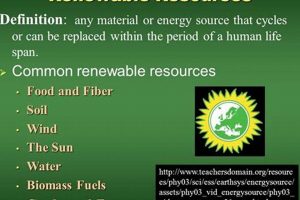
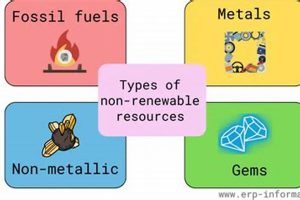
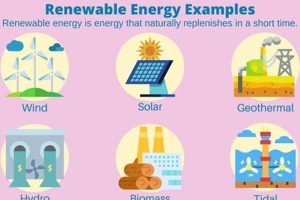
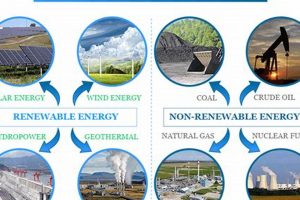
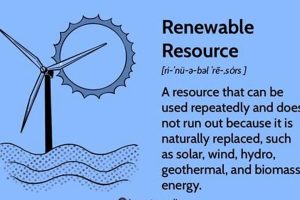
Harnessing power from naturally replenishing sources offers a sustainable path to energy production. Examples include the sun’s radiant energy captured by photovoltaic cells, wind’s kinetic energy converted by turbines, and water’s potential energy transformed through hydroelectric dams. These energy sources share the characteristic of being naturally replenished on a human timescale.
Adopting these methods for electricity generation, heating, and transportation presents numerous advantages. It diminishes dependence on finite fossil fuels, reduces greenhouse gas emissions contributing to climate change, and fosters energy security. Historically, these technologies have seen periods of increased interest, often driven by concerns about resource depletion and environmental degradation, with recent advancements making them increasingly cost-competitive.
This discussion will delve into solar energy, wind power, and hydropower, exploring their operational principles, advantages and disadvantages, and current status within the global energy landscape. Each represents a crucial element in the transition toward a cleaner and more sustainable energy future.
Optimizing the Implementation of Renewable Energy
Maximizing the effective utilization of these energy alternatives requires strategic planning and informed decision-making. The following outlines key considerations for successful integration.
Tip 1: Conduct a Thorough Resource Assessment: Before investing, meticulously evaluate the available potential. Solar radiation levels, wind patterns, and hydrological data should be analyzed to determine project feasibility and optimize resource utilization.
Tip 2: Prioritize Energy Efficiency Measures: Reducing overall consumption minimizes the energy demand needing to be met, increasing the impact of renewable sources. Implement energy-efficient technologies in buildings, transportation, and industry.
Tip 3: Implement Smart Grid Technologies: Integrating these sources into the existing power grid requires advanced control systems. Smart grids optimize energy distribution, improve reliability, and manage the intermittent nature of certain energy sources.
Tip 4: Develop Energy Storage Solutions: Addressing the intermittent nature is critical. Battery storage, pumped hydro storage, and thermal energy storage enhance grid stability and ensure continuous energy supply even when sunlight or wind is limited.
Tip 5: Establish Supportive Policy Frameworks: Governments play a crucial role in promoting adoption. Implementing feed-in tariffs, tax incentives, and renewable energy mandates creates a favorable investment climate and accelerates deployment.
Tip 6: Invest in Research and Development: Continuous innovation is essential to improve efficiency, reduce costs, and develop new applications. Funding research into advanced materials, grid integration technologies, and energy storage is critical.
Tip 7: Consider Lifecycle Costs: While initial investment may be higher, the long-term operational costs are often significantly lower. Evaluating the full lifecycle cost, including maintenance and decommissioning, provides a more accurate assessment of economic viability.
These considerations provide a framework for maximizing the effectiveness and long-term sustainability of these renewable energy implementations. By focusing on resource assessment, efficiency, grid integration, energy storage, and supportive policies, a cleaner and more secure energy future can be realized.
The article will now proceed to explore the impact of policy decisions on promoting these environmentally conscious energy solution.
1. Abundant Availability

The inherent and continuous replenishment of resources defines the viability of solar energy, wind power, and hydropower. Without this characteristic, they would be categorized as finite, losing their status as a sustainable alternative to fossil fuels. Solar radiation, driven by nuclear fusion in the sun, is practically limitless on human timescales. Wind, generated by solar heating of the atmosphere, is a constantly renewed phenomenon. Hydropower relies on the Earth’s water cycle, a process powered by solar energy and gravitational forces that continually replenishes water sources.
The importance of continuous renewal is illustrated by the sheer scale of global energy consumption. Were solar panels dependent on a finite supply of specialized material or wind turbines reliant on a gradually depleted kinetic energy source, these technologies would offer only a temporary respite from dependence on fossil fuels. Instead, these three energy technologies are dependent on naturally replenishing sources, they offer the potential for sustained energy output for generations. The Sahara Desert receives enough solar energy each year to power the entire world. Similarly, the combined potential of global wind resources significantly exceeds present energy demands. Practical significance lies in the long-term energy security fostered by their utilization.
In conclusion, the abundant availability of the primary energy source is not merely a characteristic but a foundational requirement for sustainable energy. The consistent energy from the sun, wind, and water cycle ensures long-term viability. It distinguishes sustainable solutions from transitional measures and underscores the importance of investing in the advancement and broader implementation of these key energy sources. Challenges remain in efficiently capturing and distributing this energy, but the vast potential outweighs the obstacles.
2. Reduced Emissions

A direct consequence of harnessing solar energy, wind power, and hydropower is a significant reduction in greenhouse gas emissions compared to traditional fossil fuel-based energy generation. Fossil fuel combustion releases carbon dioxide, methane, and other pollutants into the atmosphere, contributing to climate change and air pollution. The reliance on renewable sources substantially mitigates this environmental burden. Solar photovoltaic systems, wind turbines, and hydroelectric dams, during their operational phases, produce minimal to zero emissions. This characteristic fundamentally distinguishes them as environmentally preferable energy alternatives.
The impact of emission reduction extends beyond mitigating climate change. Improved air quality contributes directly to public health benefits, reducing respiratory illnesses and associated healthcare costs. Consider the example of Germany’s Energiewende, a transition to renewable energy sources. While facing challenges, the shift towards solar and wind power has measurably decreased air pollution in urban areas. Similarly, regions with high hydropower utilization, such as Norway, benefit from exceptionally low carbon emissions in their electricity sector. The implementation of renewable energy technologies represents a tangible step toward cleaner air, healthier populations, and a more sustainable future.
Challenges remain in the complete decarbonization of energy systems. The manufacturing and installation of renewable energy infrastructure still involve some emissions, albeit significantly lower than those associated with fossil fuels. Furthermore, the intermittent nature of solar and wind power requires energy storage solutions and grid modernization to ensure a reliable energy supply. Despite these complexities, the demonstrable reduction in emissions achieved through renewable energy utilization provides a compelling impetus for continued investment and policy support. The long-term environmental and public health benefits are clear, solidifying the vital role that they play in mitigating climate change and creating a healthier planet.
3. Energy Security

The strategic advantage of diversified and domestic energy sources is enhanced energy security. Dependence on imported fossil fuels exposes nations to price volatility and geopolitical instability. Integrating solar, wind, and hydropower into the energy mix mitigates these risks by leveraging resources within a country’s borders. Reduced reliance on external fuel supplies strengthens a nation’s independence and control over its energy future.
Consider Germany, a nation historically reliant on Russian natural gas. The ongoing conflict in Ukraine has highlighted the vulnerabilities of this dependency, accelerating Germany’s push towards solar and wind power. Similarly, Brazil’s extensive use of hydropower, supplemented by growing solar and wind capacity, provides a degree of energy independence unattainable with a fossil fuel-centric model. These examples illustrate how investment in renewable energy resources translates directly into greater national energy security. A diverse energy portfolio, incorporating locally sourced resources, reduces the impact of global market fluctuations and geopolitical events.
Achieving complete energy independence through renewable sources presents considerable challenges, including infrastructure development, energy storage solutions, and grid modernization. However, even partial displacement of fossil fuel imports with domestic renewable energy enhances energy security. A strategic commitment to these energy alternatives is not merely an environmental imperative but a fundamental component of national security and economic stability. The ability to generate power from readily available resources strengthens resilience and fosters a more secure energy future.
4. Technological Advancement
Progress in materials science, engineering, and information technology is directly correlated with the improved efficiency and cost-effectiveness of solar energy, wind power, and hydropower systems. Higher-efficiency photovoltaic cells convert a greater percentage of sunlight into electricity, while advanced wind turbine designs extract more kinetic energy from wind. Innovative hydroelectric technologies, such as pumped hydro storage and run-of-river systems, optimize water resource utilization while minimizing environmental impact. These advancements reduce the levelized cost of energy, making these energy solutions more economically competitive with fossil fuels.
Consider the evolution of solar panel technology. Early photovoltaic cells were expensive and inefficient. However, research into new materials like perovskites and thin-film semiconductors has resulted in panels that are both more efficient and cheaper to produce. Similarly, wind turbine technology has advanced from small, inefficient designs to massive turbines with longer blades and sophisticated control systems, enabling greater energy capture even in low-wind conditions. Hydropower technology benefits from advancements in turbine design and dam construction, improving efficiency and reducing the environmental footprint of these facilities. The practical application of these improvements is evident in the increasing deployment of projects globally and their ability to compete with traditional power sources.
Continuous innovation in technologies related to energy storage and grid integration is also critical. As these energy solutions become more prevalent, the ability to store excess energy and integrate it reliably into the existing power grid becomes paramount. Advancements in battery technology, smart grid systems, and control algorithms are essential to overcome the intermittency challenges associated with solar and wind power, ensuring stable and dependable energy supply. Investment in research and development remains crucial for maintaining the momentum of these advances, further reducing costs, improving efficiency, and facilitating the widespread adoption of sustainable energy practices.
5. Grid Integration

Effective grid integration is fundamental to realizing the full potential of solar energy, wind power, and hydropower. These energy sources often generate electricity intermittently, depending on weather conditions and time of day. The electrical grid, designed historically for dispatchable power plants, requires adaptation to accommodate these variable generation patterns. The ability to seamlessly integrate renewable energy into the grid is essential for maintaining a stable and reliable electricity supply. Without it, the benefits of clean energy may be limited by grid constraints and curtailed generation.
The challenges of grid integration are multifaceted. Voltage fluctuations, frequency variations, and congestion on transmission lines can arise from the unpredictable nature of solar and wind power. Modernization of grid infrastructure, including the deployment of smart grid technologies, is necessary to address these issues. Smart grids utilize advanced sensors, communication networks, and control systems to monitor and manage energy flow in real-time. Energy storage solutions, such as battery storage and pumped hydro, play a vital role in mitigating intermittency by storing excess energy during periods of high generation and releasing it when demand exceeds supply. In Denmark, a country with a high penetration of wind power, advanced grid management techniques and interconnection with neighboring grids are crucial for ensuring a stable electricity supply. Another example is California, where grid operators are actively working to integrate large-scale solar power by implementing demand response programs and investing in energy storage.
In conclusion, grid integration is not merely an adjunct to the adoption of solar, wind, and hydropower but an essential prerequisite for their widespread and effective deployment. Overcoming the technical and economic hurdles associated with grid modernization is paramount to unlocking the full potential of these energy sources and transitioning towards a cleaner, more sustainable energy future. Strategic investment in smart grid technologies, energy storage, and transmission infrastructure is necessary to ensure that renewable energy can reliably power homes, businesses, and industries.
6. Economic Viability

The economic viability of solar energy, wind power, and hydropower dictates their potential for widespread adoption and their ability to compete with traditional fossil fuel-based energy sources. While environmental benefits are widely acknowledged, long-term sustainability depends on economic competitiveness. An examination of key facets reveals the complexities involved.
- Levelized Cost of Energy (LCOE)
LCOE represents the average net present cost of electricity generation for a power plant over its lifetime. Decreasing LCOE is crucial for widespread adoption. Solar and wind have seen substantial reductions in LCOE due to technological advancements, economies of scale, and supportive government policies. Recent reports indicate that in many regions, the LCOE of new solar and wind projects is competitive with or even lower than that of new coal or natural gas plants. For example, large-scale solar projects in the Middle East have achieved record-low LCOE values. The LCOE of hydropower is more site-specific, depending on factors like dam construction costs and water availability.
- Incentive Programs and Policy Support
Government policies play a vital role in promoting the economic viability. Feed-in tariffs, tax credits, and renewable energy mandates create a favorable investment climate. Feed-in tariffs guarantee a fixed price for renewable energy fed into the grid, providing long-term revenue certainty for project developers. Tax credits reduce the initial capital costs of renewable energy projects, making them more attractive to investors. Renewable energy mandates, such as renewable portfolio standards (RPS), require utilities to source a certain percentage of their electricity from renewable sources, creating demand. The Inflation Reduction Act in the United States, for example, provides substantial tax credits for renewable energy projects, driving down costs and accelerating deployment.
- Grid Integration Costs
Integrating variable energy resources like solar and wind into the existing electricity grid incurs additional costs. Upgrading transmission infrastructure, deploying energy storage solutions, and implementing smart grid technologies are necessary to manage the intermittent nature of these energy sources. These grid integration costs can impact the overall economic viability. Energy storage technologies, such as batteries and pumped hydro, are becoming increasingly cost-effective, helping to mitigate the intermittency challenge. Advanced grid management techniques, like dynamic line rating and forecasting, can also improve the efficiency and reliability of grid operations.
- Job Creation and Economic Development
The deployment creates new jobs and stimulate economic development in local communities. Manufacturing, installation, maintenance, and project development generate employment opportunities. Furthermore, provides revenue streams for landowners and communities through lease payments and tax revenues. The growth of renewable energy industries has led to the creation of numerous jobs in manufacturing, installation, and project development. Rural communities, in particular, can benefit from the economic opportunities. Careful planning and workforce development programs are necessary to maximize these benefits.
These interrelated facets demonstrate that the economic viability is not solely determined by the initial costs but also by the long-term operational benefits, government support mechanisms, and associated economic development. Continued technological advancements, supportive policies, and innovative grid integration strategies are essential for ensuring that these energy solutions can compete with and ultimately displace fossil fuels, creating a sustainable and prosperous energy future.
7. Environmental impacts

The extraction and utilization of energy inherently involve environmental consequences, including the adoption of energy, necessitate careful evaluation and mitigation of their impacts. While generally regarded as environmentally benign compared to fossil fuels, solar, wind, and hydropower are not entirely without ecological footprints. Examining the environmental effects is crucial for ensuring that renewable energy deployment is genuinely sustainable.
Solar energy projects, particularly large-scale photovoltaic farms, require significant land areas. The conversion of natural habitats to solar farms can displace wildlife, disrupt ecosystems, and alter land use patterns. Careful site selection, minimizing habitat fragmentation, and implementing mitigation measures, such as creating wildlife corridors, are necessary. Wind farms also pose environmental challenges. Bird and bat mortality due to collisions with turbine blades is a concern. Strategic siting of wind farms away from migratory routes, implementing deterrent systems, and employing blade design modifications can reduce these impacts. Hydropower projects can alter river ecosystems, affecting fish migration, water quality, and sediment transport. The construction of dams can inundate land, displace communities, and disrupt natural river flows. Run-of-river hydropower projects, which divert water without creating large reservoirs, offer a less disruptive alternative, but they still require careful planning to minimize ecological effects. Life Cycle Assessment (LCA) can be used to compare different renewable energy technologies and help mitigate their respective environmental issues, and can offer insight on the most pressing concern of those different ways.
The environmental impacts, though generally less severe than those associated with fossil fuels, require careful consideration and proactive mitigation. Understanding the specific impacts of each technology and implementing best practices for site selection, design, and operation is crucial for ensuring that the transition to a energy future is environmentally sustainable. Ongoing research and monitoring are necessary to assess the long-term ecological effects and refine mitigation strategies. By acknowledging and addressing these environmental concerns, the true potential of these solutions can be realized while minimizing harm to the natural world.
Frequently Asked Questions about “3 renewable resources”
This section addresses commonly encountered inquiries and misconceptions regarding solar energy, wind power, and hydropower.
Question 1: Are solar, wind, and hydropower truly sustainable, given their resource intensity?
Sustainability requires a holistic assessment. While manufacturing solar panels and wind turbines necessitates materials and energy, the operational phase produces minimal to no emissions. Life cycle assessments indicate that the overall environmental impact is significantly lower than that of fossil fuels. Responsible sourcing of materials and efficient manufacturing processes are crucial for maximizing sustainability.
Question 2: Can energy solutions reliably meet current global energy demands?
meeting global energy demands requires a multi-faceted approach. Increasing energy efficiency, deploying energy storage solutions, and modernizing grid infrastructure are essential for integrating variable sources like solar and wind. While completely replacing fossil fuels presents challenges, these energy solutions can play a substantial role in decarbonizing the energy sector.
Question 3: What are the primary limitations of renewable energy technologies?
Intermittency, grid integration challenges, and land use requirements constitute the primary limitations. Solar and wind power generation fluctuate depending on weather conditions and time of day. Modernizing grid infrastructure, implementing energy storage, and utilizing smart grid technologies can help mitigate intermittency. Large-scale projects require substantial land areas, necessitating careful site selection and land management practices.
Question 4: Are energy systems economically viable without government subsidies?
The long-term economic viability of projects is contingent upon continued technological advancements, economies of scale, and supportive policies. As costs decrease and efficiency improves, many solutions are becoming increasingly competitive with fossil fuels, even without subsidies. Government support can accelerate deployment and promote innovation, but the ultimate goal is to achieve market competitiveness.
Question 5: How does hydropower compare to solar and wind in terms of environmental impact?
Hydropower projects can have significant environmental impacts, including alteration of river ecosystems, displacement of communities, and changes to water quality. While solar and wind also have environmental consequences, they are generally less disruptive than large-scale hydropower projects. Run-of-river hydropower projects offer a less environmentally damaging alternative, but they still require careful planning and mitigation measures.
Question 6: What is the role of energy storage in enabling wider adoption?
Energy storage is crucial for mitigating the intermittency of solar and wind. Battery storage, pumped hydro storage, and thermal energy storage enable the storage of excess energy during periods of high generation and its release when demand exceeds supply. Advancements in energy storage technologies are essential for ensuring a reliable and stable electricity supply.
These FAQs highlight that, while possessing immense potential, successful integration requires a strategic and nuanced approach. Addressing these common questions is key to promoting understanding and fostering effective decision-making in the transition toward a cleaner energy future.
The article now transitions to a discussion on the future trajectory of solar, wind, and hydropower and the impact on the landscape.
Conclusion
This exposition has detailed core aspects of solar energy, wind power, and hydropower: their abundance, lower emissions, contributions to energy security, technological evolution, the need for effective grid integration, economic factors, and environmental considerations. These elements, collectively, frame the potential for a transition toward more sustainable energy systems. It underscores the intricate balance between realizing the benefits of cleaner energy and managing the environmental, economic, and technical challenges involved.
The sustained development and responsible implementation of these energy sources remains essential for mitigating climate change, enhancing energy independence, and fostering long-term economic stability. Continued research, policy support, and technological innovation will ultimately determine the extent to which these renewable avenues contribute to a secure and environmentally conscious future for energy production and consumption globally.
![Guide to What Energy Resources Are Renewable [+Future] | Renewable Energy Solutions for a Sustainable Future | Clean & Green Power](https://pplrenewableenergy.com/wp-content/uploads/2026/03/th-516-300x200.jpg "Guide to What Energy Resources Are Renewable [+Future] Renewable Energy Solutions for a Sustainable Future | Clean & Green Power")