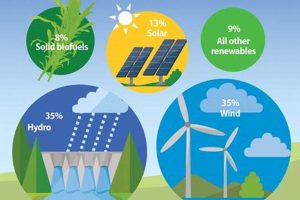
Powering electric vehicles using electricity generated from sources like solar, wind, hydro, and geothermal offers a cleaner transportation alternative. For instance, a homeowner might charge their vehicle using electricity generated by rooftop solar panels, effectively offsetting greenhouse gas emissions from transportation. This approach contrasts with charging from a grid primarily supplied by fossil fuels.
Decoupling transportation from fossil fuel dependence is crucial for mitigating climate change and improving air quality. Clean energy-powered transportation reduces reliance on finite resources and bolsters energy independence. Historically, vehicle charging has relied on electricity generated primarily from fossil fuels. The growing adoption of renewable energy sources presents an opportunity to fundamentally shift transportation toward a sustainable model.
The following sections will explore the various renewable energy sources applicable to vehicle electrification, the infrastructure required to support widespread adoption, and the economic and environmental benefits of this paradigm shift. Further discussion will address the challenges and opportunities associated with integrating renewable energy into the transportation sector.
Tips for Sustainable Electric Vehicle Charging
Maximizing the environmental benefits of electric vehicles requires thoughtful charging practices. The following tips offer guidance on minimizing environmental impact and supporting a cleaner transportation future.
Tip 1: Explore Time-of-Use (TOU) Electricity Rates: TOU rates offer lower electricity prices during off-peak hours, often coinciding with periods of higher renewable energy generation. Charging during these times reduces costs and supports grid stability.
Tip 2: Consider Home Solar Installation: Generating electricity on-site through solar panels provides a direct, clean energy source for vehicle charging, significantly reducing reliance on the grid.
Tip 3: Research Green Power Programs: Many utility companies offer green power programs, allowing consumers to support renewable energy development and ensure their electricity consumption is matched by renewable generation.
Tip 4: Utilize Smart Charging Technologies: Smart charging optimizes charging schedules based on factors like renewable energy availability, grid demand, and individual driver needs, maximizing efficiency and minimizing environmental impact.
Tip 5: Advocate for Renewable Energy Policies: Supporting policies that incentivize renewable energy development and deployment accelerates the transition to a cleaner energy grid, ultimately benefiting electric vehicle charging.
Tip 6: Choose Certified Green Charging Stations: When utilizing public charging infrastructure, opt for stations certified to utilize renewable energy sources. This helps promote the expansion of sustainable charging networks.
Tip 7: Monitor and Optimize Charging Habits: Tracking energy consumption during charging sessions allows for adjustments to charging times and strategies, promoting more efficient and environmentally conscious practices.
By implementing these strategies, drivers can actively contribute to a more sustainable transportation ecosystem. These actions not only minimize individual environmental impact but also support the broader transition to a cleaner energy future.
In conclusion, transitioning to sustainable transportation requires a multifaceted approach encompassing both vehicle technology and charging infrastructure. The combination of electric vehicles and renewable energy sources offers a powerful pathway towards a cleaner, more resilient transportation sector.
1. Reduced Emissions

Transportation represents a significant source of greenhouse gas emissions. Transitioning to electric vehicles charged with renewable energy offers a crucial pathway for decarbonizing this sector and mitigating climate change. Reduced emissions are a central benefit of this approach, impacting air quality, public health, and the overall environmental footprint of transportation.
- Tailpipe Emission Elimination
Electric vehicles produce zero tailpipe emissions, eliminating the release of pollutants like nitrogen oxides and particulate matter, which contribute to respiratory problems and smog. When charged with renewable energy, the entire fuel cycle becomes significantly cleaner, minimizing the overall environmental impact of vehicle operation. This contrasts sharply with conventional internal combustion engine vehicles that directly release harmful pollutants into the atmosphere.
- Lifecycle Emissions Reduction
While the manufacturing of electric vehicles and renewable energy infrastructure involves some emissions, lifecycle assessments demonstrate a substantial reduction in overall greenhouse gas emissions compared to gasoline-powered vehicles. As renewable energy penetration increases within the electricity grid, the emissions associated with EV charging further decrease, moving toward a near-zero-emission transportation system. For example, an EV charged with solar power has a significantly lower carbon footprint than a comparable gasoline vehicle.
- Air Quality Improvement
Reduced emissions from electric vehicles translate directly to improved air quality, particularly in urban areas. Lower concentrations of pollutants like nitrogen dioxide and particulate matter lead to fewer respiratory illnesses and a healthier environment for all. The widespread adoption of EVs powered by renewable energy can contribute significantly to achieving cleaner air in densely populated regions.
- Climate Change Mitigation
The transportation sector is a major contributor to greenhouse gas emissions, driving climate change. By transitioning to electric vehicles charged with renewable energy, significant reductions in carbon dioxide emissions can be achieved, helping to mitigate the long-term impacts of climate change. This shift supports global efforts to limit global warming and its associated consequences.
The reduced emissions associated with renewable energy-powered EV charging offer significant environmental and public health benefits. This transition represents a critical step towards a sustainable transportation future, lessening the impact on the planet and creating healthier communities.
2. Grid Stability

Maintaining a stable electricity grid is crucial for reliably powering homes, businesses, and essential services. Integrating electric vehicle (EV) charging, particularly when powered by renewable energy sources, presents both challenges and opportunities for grid stability. Managing the increased electricity demand from EVs while accommodating the fluctuating nature of renewable energy generation requires careful planning and innovative solutions.
- Demand-Side Management
Matching EV charging patterns with periods of high renewable energy generation, such as during sunny or windy periods, can enhance grid stability. Demand-side management strategies, including time-of-use electricity rates and smart charging technologies, incentivize charging during off-peak hours or when renewable energy supply is abundant. For example, charging EVs overnight when wind power generation is typically high can reduce strain on the grid during peak daytime hours. This approach minimizes the need for additional fossil fuel-based power plants to meet increased demand.
- Vehicle-to-Grid (V2G) Technology
V2G technology allows EVs to not only draw power from the grid but also return stored energy back to the grid during periods of high demand. This bidirectional flow of energy can help stabilize the grid by providing a flexible energy resource. For instance, during peak demand periods, a fleet of V2G-enabled EVs could collectively discharge stored energy back into the grid, reducing the need for peaking power plants. This contributes to grid resilience and reduces reliance on less sustainable energy sources.
- Energy Storage Solutions
Integrating energy storage systems, such as batteries, with renewable energy generation and EV charging infrastructure further enhances grid stability. These systems store excess renewable energy generated during periods of low demand and release it when demand increases or renewable generation is low. For example, a solar farm paired with battery storage can provide a consistent energy supply to EV charging stations even when sunlight is unavailable, smoothing out fluctuations in renewable energy generation and ensuring a reliable charging experience.
- Grid Modernization
Upgrading grid infrastructure, including transmission lines and distribution networks, is essential for accommodating the increased electricity demand from EV charging and integrating renewable energy sources effectively. Modernizing the grid enhances its capacity to handle fluctuating loads and ensures efficient distribution of renewable energy. This includes implementing smart grid technologies that optimize energy flow, monitor grid conditions, and enhance grid resilience.
Successfully integrating EV charging with renewable energy requires a holistic approach that considers grid stability. By leveraging demand-side management, V2G technology, energy storage solutions, and grid modernization, a reliable and sustainable transportation ecosystem can be realized. These strategies not only enhance grid stability but also contribute to a cleaner and more resilient energy future.
3. Energy Independence

Energy independence represents a critical aspect of national security and economic stability. The transportation sector’s heavy reliance on fossil fuels creates vulnerabilities to price volatility and geopolitical instability. Transitioning to electric vehicles (EVs) charged with renewable energy offers a pathway to reduce this dependence and enhance energy security.
- Reduced Reliance on Foreign Oil
Electric vehicles decouple transportation from dependence on foreign oil, a finite resource subject to global market fluctuations and geopolitical tensions. By utilizing domestically generated renewable energy for EV charging, nations can reduce their reliance on imported fossil fuels, enhancing energy security and reducing vulnerability to external disruptions. This shift towards domestic energy sources strengthens national energy independence.
- Diversification of Energy Sources
Renewable energy sources like solar, wind, and hydro power offer diverse energy options, reducing reliance on a single fuel source. This diversification enhances energy resilience by mitigating the impact of disruptions to any one energy supply. Charging EVs with a mix of renewable energy sources creates a more robust and adaptable transportation system less susceptible to supply chain vulnerabilities.
- Localized Energy Production
Renewable energy generation can be decentralized, with resources like solar panels installed on rooftops and wind turbines deployed in local communities. This localized energy production reduces reliance on large, centralized power plants and strengthens community energy independence. Charging EVs with locally generated renewable energy empowers communities to take control of their energy needs and reduce reliance on external energy sources.
- Enhanced Grid Resilience
Integrating renewable energy sources and EV charging infrastructure can enhance grid resilience. Distributed generation and energy storage systems can provide backup power during grid outages, ensuring continued operation of essential services and reducing the impact of disruptions. For example, EVs equipped with vehicle-to-grid (V2G) technology can provide power back to the grid during emergencies, further enhancing grid stability and resilience.
By transitioning to EVs powered by renewable energy, nations and communities can strengthen their energy independence, reduce reliance on foreign fossil fuels, and create a more resilient and sustainable transportation system. This shift not only enhances energy security but also contributes to a cleaner and more stable energy future.
4. Cost Savings

Electric vehicle (EV) charging powered by renewable energy sources offers significant cost savings opportunities compared to conventional gasoline-powered vehicles. These savings stem from several factors, including lower fuel costs, reduced maintenance expenses, and potential financial incentives. The economic advantages of renewable energy-powered EV charging contribute to the overall affordability and accessibility of sustainable transportation.
The most direct cost saving arises from the lower cost of electricity compared to gasoline. Renewable energy sources, particularly solar and wind power, can further reduce fuel costs by providing a low-cost or even free source of electricity for EV charging. Homeowners with solar panel installations can effectively charge their EVs with self-generated electricity, significantly reducing or eliminating their reliance on grid-supplied power and associated costs. Furthermore, time-of-use (TOU) electricity rates offer lower prices during off-peak hours, often coinciding with periods of high renewable energy generation. By strategically charging EVs during these off-peak hours, consumers can further minimize their electricity expenses. For example, charging an EV overnight when electricity demand is low and wind power generation is typically high can result in substantial cost savings compared to charging during peak daytime hours.
Beyond fuel cost reductions, EVs generally have lower maintenance requirements than gasoline-powered vehicles. The absence of a complex internal combustion engine eliminates the need for oil changes, spark plug replacements, and other routine maintenance procedures associated with traditional vehicles. This reduced maintenance translates to lower overall operating costs for EV owners. Additionally, various government incentives, such as tax credits and rebates, are often available for purchasing EVs and installing home charging equipment, further enhancing the economic attractiveness of sustainable transportation. These financial incentives can significantly reduce the upfront costs associated with transitioning to EVs and renewable energy-powered charging. In summary, the cost savings associated with renewable energy-powered EV charging contribute significantly to the financial viability and broader adoption of sustainable transportation. Lower fuel and maintenance costs, combined with potential financial incentives, make EVs an increasingly attractive and accessible option for consumers seeking both economic and environmental benefits. This transition towards more affordable and sustainable transportation options is essential for mitigating climate change and promoting a cleaner energy future.
5. Technological Advancements
Technological advancements play a crucial role in the ongoing evolution and effectiveness of renewable energy-powered EV charging. These advancements span several key areas, impacting charging infrastructure, energy storage, grid management, and the vehicles themselves. Understanding these advancements is essential for realizing the full potential of sustainable transportation.
Battery technology advancements directly impact EV range, charging times, and overall performance. Higher energy density batteries allow for longer driving ranges between charges, addressing range anxiety and expanding the practicality of EVs. Faster charging capabilities, enabled by advancements in battery chemistry and charging infrastructure, minimize downtime and enhance the convenience of EV ownership. Solid-state batteries, currently under development, promise even greater energy density, faster charging, and improved safety compared to conventional lithium-ion batteries. For instance, advancements in battery cooling systems enable faster charging rates without compromising battery longevity. Similarly, the development of smart charging algorithms optimizes charging speeds based on battery state and grid conditions, further enhancing charging efficiency and minimizing strain on the grid. The integration of bidirectional charging capabilities, also known as vehicle-to-grid (V2G) technology, allows EVs to not only draw power from the grid but also return stored energy back to the grid, offering grid stabilization services and creating new revenue opportunities for EV owners. This bidirectional energy flow transforms EVs into mobile energy storage units, enhancing grid flexibility and resilience.
Advancements in smart grid technologies optimize energy distribution, enabling more efficient integration of renewable energy sources and managing the increased electricity demand from EV charging. Smart grids utilize real-time data and advanced analytics to predict and respond to fluctuations in energy supply and demand, ensuring grid stability and maximizing the utilization of renewable energy. These technologies also facilitate demand-side management strategies, such as time-of-use electricity pricing and dynamic load management, which incentivize EV charging during off-peak hours or periods of high renewable energy generation. This coordinated approach optimizes resource utilization and minimizes the need for new power plant construction. Furthermore, advancements in renewable energy forecasting improve the accuracy of predicting solar and wind power generation, enabling grid operators to more effectively integrate these intermittent resources and maintain grid stability. The continued development and deployment of these technologies are essential for realizing a truly sustainable and efficient transportation ecosystem. Addressing challenges such as interoperability between different charging networks and ensuring cybersecurity within smart grid systems remains crucial for widespread adoption and long-term success. Overcoming these obstacles requires ongoing research, collaboration, and investment in technological innovation, paving the way for a future where renewable energy-powered EV charging is seamlessly integrated into a resilient and sustainable energy infrastructure.
6. Infrastructure Development

Widespread adoption of electric vehicle (EV) charging powered by renewable energy hinges critically on robust infrastructure development. This encompasses not only the expansion of charging networks but also the enhancement of renewable energy generation and grid modernization. The interconnectedness of these elements is crucial for a seamless and sustainable transition to electrified transportation.
Expanding charging infrastructure requires strategic deployment of charging stations in accessible locations, catering to diverse driver needs. This includes public charging stations along highways and in urban areas, as well as residential charging solutions for home charging. Furthermore, different charging levels, from Level 1 slow charging to Level 3 fast charging (DC fast charging), must be considered to accommodate varying charging requirements. The availability of fast charging stations along major transportation corridors is essential for long-distance travel, alleviating range anxiety and promoting EV adoption for longer journeys. In urban environments, a dense network of conveniently located charging stations is necessary to support daily commutes and errands. Integrating charging infrastructure with existing commercial locations, such as retail centers and workplaces, can enhance accessibility and convenience for EV drivers. Real-world examples include initiatives by some cities to install charging stations in public parking garages and partner with businesses to deploy charging infrastructure in their parking lots. Such efforts are essential for encouraging EV adoption and supporting the transition to sustainable transportation.
Beyond charging stations, infrastructure development must encompass renewable energy generation and grid modernization. Increased renewable energy capacity is essential for supplying clean electricity to power EV charging. This includes investments in solar farms, wind turbine installations, and other renewable energy projects. Grid modernization efforts, such as upgrading transmission lines and implementing smart grid technologies, are necessary to manage the increased electricity demand from EV charging and integrate renewable energy sources effectively. Smart grids enable dynamic load management, optimizing energy distribution and minimizing strain on the grid. These advancements contribute to a more resilient and efficient energy system capable of supporting widespread EV adoption. Challenges remain, including the need for significant investment in infrastructure development, ensuring equitable access to charging facilities, and addressing potential grid capacity limitations. Overcoming these challenges requires coordinated efforts from governments, utilities, and private sector stakeholders. The successful development of a comprehensive charging and renewable energy infrastructure is paramount for realizing the full potential of sustainable transportation and achieving a cleaner energy future.
7. Policy Support
Policy support plays a pivotal role in accelerating the transition to electric vehicle (EV) charging powered by renewable energy. Effective policies create an enabling environment that incentivizes investment, fosters innovation, and drives consumer adoption of sustainable transportation solutions. These policies encompass a range of instruments, from financial incentives to regulatory mandates, working in concert to promote the widespread deployment of renewable energy-powered EV charging infrastructure.
- Financial Incentives
Financial incentives, such as tax credits, rebates, and grants, can significantly reduce the upfront costs associated with purchasing EVs, installing home charging equipment, and deploying public charging infrastructure. These incentives stimulate consumer demand for EVs and encourage businesses to invest in charging networks. For example, federal tax credits in some countries incentivize EV purchases, while state and local rebates may further reduce the cost of home charging station installations. These incentives make EVs and charging infrastructure more financially attractive, accelerating their adoption and contributing to the growth of the renewable energy sector.
- Renewable Portfolio Standards (RPS)
RPS policies mandate that a certain percentage of electricity generation within a jurisdiction must come from renewable energy sources. These policies create a market for renewable energy, driving investment in solar, wind, and other clean energy projects. The increased availability of renewable energy supports the decarbonization of the transportation sector by providing clean electricity for EV charging. For instance, a state with an RPS requiring 50% renewable energy by 2030 creates a regulatory framework that promotes the development of renewable energy projects, indirectly supporting the growth of EV charging infrastructure powered by clean sources.
- Building Codes and Zoning Regulations
Building codes and zoning regulations can be instrumental in promoting EV charging infrastructure deployment. Requiring new construction projects, such as residential buildings and commercial developments, to include EV charging provisions ensures that charging infrastructure is integrated into the built environment from the outset. This proactive approach facilitates convenient access to charging for residents and employees, fostering EV adoption and supporting the growth of renewable energy-powered charging networks. For example, a city might require new apartment buildings to include a certain number of EV charging stations per parking space, or mandate that new office buildings provide charging facilities for employees. These regulations help create a future-proof infrastructure that supports the increasing number of EVs on the road.
- Emission Standards and Regulations
Stringent emission standards for vehicles encourage automakers to invest in electric vehicle technologies and accelerate the transition away from gasoline-powered vehicles. These regulations create a market pull for EVs, driving innovation and increasing the availability of electric models. As the demand for EVs grows, so too does the demand for charging infrastructure, including renewable energy-powered charging solutions. California’s Zero Emission Vehicle (ZEV) mandate, which requires automakers to sell a certain percentage of zero-emission vehicles, serves as a prime example of how emission regulations can stimulate the market for EVs and indirectly promote the growth of renewable energy-powered charging infrastructure. Such regulations are crucial for driving technological advancements and accelerating the transition to a sustainable transportation system.
The synergistic interplay of these policy instruments is crucial for creating a comprehensive ecosystem that supports the growth of renewable energy-powered EV charging. By addressing both the supply and demand sides of the equation, policymakers can effectively accelerate the transition to sustainable transportation, reduce emissions, enhance energy independence, and create a cleaner energy future. Furthermore, policy support can foster innovation in areas such as battery technology, smart charging solutions, and grid modernization, further enhancing the efficiency and effectiveness of renewable energy-powered EV charging.
Frequently Asked Questions
The following addresses common inquiries regarding electric vehicle charging with renewable energy sources.
Question 1: How does charging an electric vehicle with renewable energy differ from charging with conventional grid electricity?
Charging an EV with renewable energy sources, such as solar or wind power, significantly reduces or eliminates greenhouse gas emissions associated with electricity generation. Conventional grid electricity often relies on fossil fuels, contributing to air pollution and climate change.
Question 2: Is charging an EV with renewable energy more expensive?
Not necessarily. While the initial investment in renewable energy infrastructure, such as solar panels, may be significant, the long-term operational costs are typically lower due to reduced or eliminated fuel expenses. Furthermore, government incentives and time-of-use electricity rates can further reduce charging costs.
Question 3: What infrastructure is required for charging an EV with renewable energy?
Depending on the chosen approach, infrastructure may include home charging stations, access to public charging networks powered by renewable energy, or on-site renewable energy generation systems, such as rooftop solar panels coupled with battery storage.
Question 4: How can one ensure their EV is being charged with renewable energy at a public charging station?
Look for charging stations certified by reputable organizations that verify the use of renewable energy sources. Some charging networks provide transparency regarding their energy sources, allowing users to select stations powered by renewable energy. Additionally, some utility companies offer green power programs that allow customers to support renewable energy development.
Question 5: Does charging an EV with renewable energy truly make a difference in terms of environmental impact?
Yes. Lifecycle assessments of EVs demonstrate significantly lower greenhouse gas emissions compared to gasoline-powered vehicles, even when accounting for emissions associated with battery production and electricity generation. Charging with renewable energy further reduces emissions, contributing to cleaner air and climate change mitigation.
Question 6: What are the challenges associated with widespread adoption of renewable energy-powered EV charging?
Challenges include the need for continued expansion of charging infrastructure, grid modernization to accommodate increased electricity demand, and further development of renewable energy generation capacity. Addressing interoperability issues between charging networks and ensuring cybersecurity within smart grid systems are also critical.
Transitioning to renewable energy-powered EV charging offers significant environmental and economic benefits. Addressing these common questions helps clarify the advantages and challenges associated with this sustainable transportation solution.
Further exploration of specific renewable energy sources applicable to EV charging will follow in the next section.
EV Charging with Renewable Energy
This exploration of EV charging with renewable energy has highlighted the critical intersection of transportation and clean energy. Decarbonizing the transportation sector is essential for mitigating climate change, and integrating renewable energy sources into EV charging infrastructure offers a viable pathway towards this goal. Key benefits encompass reduced emissions, enhanced grid stability, increased energy independence, and potential cost savings for consumers. Technological advancements in battery technology, smart charging systems, and grid modernization are continuously improving the efficiency and effectiveness of renewable energy-powered EV charging. Furthermore, supportive policies play a crucial role in accelerating the transition by incentivizing investment, fostering innovation, and driving consumer adoption.
The transition to sustainable transportation requires a concerted effort from governments, industry stakeholders, and individuals. Continued investment in renewable energy infrastructure, grid modernization, and research and development is essential for realizing the full potential of EV charging with renewable energy. The widespread adoption of this approach represents not just a shift in transportation technology but a fundamental step towards a cleaner, more sustainable, and energy-independent future.