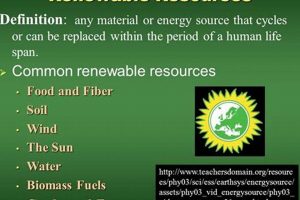
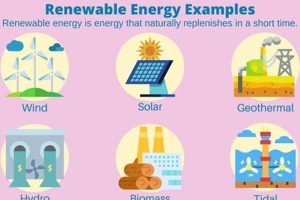
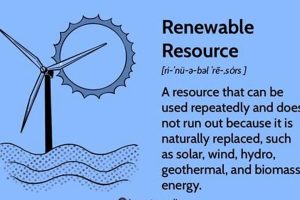
Sources of energy that are naturally replenished on a human timescale are considered sustainable. These resources derive from processes that are constantly renewed by solar, geothermal, or gravitational forces. Common examples include sunlight, wind, flowing water, the Earth’s internal heat, and biomass.
Utilizing these energy sources offers numerous advantages, primarily reducing dependence on finite fossil fuels. This shift mitigates greenhouse gas emissions and combats climate change. Throughout history, societies have harnessed some of these sources; however, recent technological advancements have significantly increased their efficiency and accessibility, paving the way for a more sustainable energy future.
The following sections will explore specific categories of these sustainable energy options, detailing their operational mechanisms, environmental impacts, and potential for widespread adoption. This will cover solar power, wind energy, hydropower, geothermal energy, and bioenergy, among others.
Optimizing the Implementation of Sustainable Energy Technologies
The successful integration of energy sources derived from natural and replenished processes necessitates careful planning and execution across various sectors. These tips provide guidance for maximizing efficiency and minimizing potential drawbacks.
Tip 1: Diversify Energy Portfolio: Reliance on a single sustainable option creates vulnerabilities. Geographic constraints or seasonal variations can impact availability. A diversified approach, incorporating multiple sustainable options, ensures a more stable and resilient energy supply. For example, combining solar and wind power can offset periods of low sunlight or wind speed.
Tip 2: Prioritize Energy Efficiency: Reducing overall energy consumption minimizes the need for extensive infrastructure development. Implementing energy-efficient technologies in buildings, transportation, and industrial processes is crucial. Examples include improved insulation, efficient lighting, and optimized machinery.
Tip 3: Invest in Energy Storage: Intermittency is a characteristic of many sustainable resources. Energy storage solutions, such as batteries, pumped hydro storage, and thermal storage, bridge the gap between energy generation and demand. This enhances grid stability and reliability.
Tip 4: Develop Smart Grids: Smart grids utilize advanced technologies to monitor and manage energy flow. This enables efficient distribution, reduces energy waste, and facilitates the integration of distributed energy sources. Real-time data and automated control systems are essential components.
Tip 5: Consider Lifecycle Environmental Impact: Evaluate the entire lifecycle of sustainable energy technologies, including manufacturing, transportation, installation, operation, and decommissioning. Address potential environmental concerns associated with material extraction, waste disposal, and land use.
Tip 6: Foster Public-Private Partnerships: Collaboration between government, industry, and research institutions accelerates innovation and deployment. Public funding can support research and development, while private investment drives commercialization and scale-up.
Tip 7: Implement Supportive Policies: Government policies play a critical role in promoting adoption. Incentives, regulations, and carbon pricing mechanisms can create a level playing field and encourage investment in sustainable alternatives.
Effective implementation of these sustainable energy technologies hinges on a holistic approach that considers environmental, economic, and social factors. Proactive planning and continuous monitoring are essential for achieving long-term sustainability goals.
The subsequent sections will delve into specific strategies for mitigating the challenges associated with the transition to a sustainable energy economy.
1. Solar radiation capture

Solar radiation capture is a fundamental component of several sustainable energy options. It directly underpins solar power technologies, contributing substantially to electricity generation and thermal energy applications. The process involves converting sunlight into usable energy, typically through photovoltaic (PV) cells that generate electricity or solar thermal collectors that heat water or air. The effectiveness of this capture determines the overall efficiency and viability of solar-based energy systems. A direct consequence of optimized capture is a reduction in reliance on fossil fuels for electricity production, thus mitigating greenhouse gas emissions.
Real-world examples illustrate the impact of efficient solar radiation capture. Large-scale solar farms utilize extensive arrays of PV panels to supply power to entire communities, demonstrating the potential for solar energy to replace conventional power plants. Furthermore, concentrated solar power (CSP) plants employ mirrors to focus sunlight onto a receiver, generating high-temperature heat that drives turbines and produces electricity. Additionally, residential solar panel installations enable homeowners to generate their own power, reducing their carbon footprint and energy costs. The significance of this ability to harness the constant influx of solar energy cannot be overstated as climate change continues to pose an urgent threat.
In conclusion, solar radiation capture is integral to diverse sustainable applications and plays a key role in reducing our dependence on finite resources. While challenges persist, such as intermittency and storage limitations, ongoing technological advancements aim to improve capture efficiency, reduce costs, and enhance energy storage capabilities. Continued focus on optimizing solar radiation capture is vital for expanding the contribution of sunlight to the global energy mix and achieving broader sustainability goals, for the better types of renewable resource utilization.
2. Wind kinetic conversion

Wind kinetic conversion represents a significant pathway within the broader landscape of sustainable energy resource utilization. It involves transforming the energy inherent in wind motion into a usable form, primarily electricity, through the use of wind turbines. The efficiency and scalability of this process are critical factors in determining its contribution to a diversified energy portfolio.
- Aerodynamic Design and Turbine Efficiency
The aerodynamic design of wind turbine blades directly influences the amount of wind energy that can be captured. Blades are engineered to maximize lift and minimize drag, optimizing the conversion of kinetic energy into rotational motion. Modern turbines incorporate advanced materials and control systems to adjust blade pitch and yaw, ensuring optimal performance across varying wind speeds. The efficiency of this conversion directly impacts the electricity generated and the overall economic viability of wind energy projects.
- Grid Integration and Stability
Integrating wind-generated electricity into existing power grids presents challenges related to intermittency and grid stability. Wind patterns are inherently variable, which can lead to fluctuations in electricity supply. To address this, grid operators employ sophisticated forecasting techniques, energy storage solutions, and smart grid technologies. Effective grid integration is essential for ensuring a reliable and consistent flow of electricity from wind power facilities.
- Environmental Considerations and Mitigation Strategies
Wind energy projects can have environmental impacts, including potential effects on wildlife, noise pollution, and visual aesthetics. Careful site selection and mitigation strategies are crucial for minimizing these impacts. Environmental impact assessments are conducted to evaluate potential risks, and mitigation measures, such as bird diverters and noise barriers, are implemented to protect local ecosystems and communities. Balancing environmental protection with energy production is a key consideration in wind energy development.
- Offshore Wind Energy Potential
Offshore wind farms offer significant potential for electricity generation due to higher and more consistent wind speeds compared to land-based installations. However, offshore projects involve greater capital costs and technical challenges. Technological advancements in turbine design, installation methods, and underwater cable infrastructure are driving the growth of offshore wind energy. The development of offshore wind resources represents a substantial opportunity to expand sustainable energy capacity.
These facets highlight the complexity involved in harnessing wind’s kinetic energy effectively. As technology advances and deployment costs decrease, wind kinetic conversion continues to expand its role as a cornerstone of sustainable energy strategies, playing an increasingly vital part in diversified resource mixtures worldwide.
3. Hydropower potential
Hydropower potential, as a crucial subset of sustainable energy options, directly reflects the capacity of water resources to generate electricity. This potential is intrinsically linked to topographical features, precipitation patterns, and the availability of suitable locations for dam construction or run-of-river systems. The realization of hydropower potential hinges on converting the potential energy of water stored at elevation into kinetic energy, which then drives turbines to produce electricity. The effectiveness of this conversion is directly proportionate to the height differential (head) and the volume of water flow. Consequently, regions with abundant rainfall and mountainous terrain typically exhibit high hydropower potential, significantly contributing to sustainable energy supplies. A tangible example is the Three Gorges Dam in China, which harnesses the Yangtze River’s vast flow to generate substantial electricity, thereby decreasing reliance on coal-fired power plants. Moreover, smaller-scale hydropower facilities, like those along the Rhine River in Europe, demonstrate the viability of run-of-river systems to supply power to local communities while minimizing environmental disruption.
Quantifying hydropower potential requires detailed hydrological surveys and engineering assessments. These evaluations analyze river discharge rates, reservoir storage capacities, and environmental impacts. Implementing hydropower projects necessitates rigorous adherence to environmental regulations to mitigate potential adverse effects on aquatic ecosystems, sediment transport, and local communities. Practical applications of hydropower extend beyond electricity generation, encompassing irrigation, flood control, and water supply. Multi-purpose dam projects, such as the Aswan High Dam in Egypt, exemplify the integrated management of water resources to address diverse societal needs. The integration of hydropower with other sustainable sources, like solar and wind, can create a more resilient and diversified energy grid. This synergy mitigates the intermittency challenges associated with solar and wind, leveraging hydropower’s dispatchable nature to provide a stable baseload power supply.
In summary, hydropower potential stands as a vital component in the pursuit of sustainable energy, offering a mature and reliable technology to harness the energy of water. While challenges related to environmental impact and social considerations must be carefully addressed, hydropower’s role in providing clean, renewable electricity remains significant. The development of environmentally responsible hydropower projects, coupled with effective grid integration and multi-purpose water resource management, will be critical in achieving a balanced and sustainable energy future. Future expansion of hydropower should focus on minimizing environmental impacts through innovative technologies such as fish ladders and careful reservoir management.
4. Geothermal heat extraction
Geothermal heat extraction constitutes a significant type of sustainable resource utilization, deriving energy from the Earth’s internal thermal gradient. This extraction process taps into the heat stored within the Earth’s crust, a resource continuously replenished by radioactive decay and residual heat from the planet’s formation. The direct consequence of harnessing geothermal energy is the reduction of reliance on fossil fuels, thereby mitigating greenhouse gas emissions and promoting environmental sustainability. Iceland, for instance, exemplifies the practical application of this approach, generating a substantial portion of its electricity and heating from geothermal sources. This demonstrates the capability of geothermal energy to serve as a dependable and baseload power source, unlike intermittent renewables such as solar and wind. The understanding of geothermal heat extraction’s potential is thus crucial for the development of robust and diversified sustainable energy portfolios.
Further analysis reveals diverse methods for geothermal heat extraction, tailored to geological conditions and resource temperatures. High-temperature resources, typically found in volcanically active regions, are suitable for electricity generation using steam turbines. Lower-temperature resources can be utilized for direct-use applications, such as district heating, agricultural processes, and industrial heating. Enhanced Geothermal Systems (EGS) represent an innovative approach that expands the accessibility of geothermal energy by creating artificial reservoirs in hot, dry rock formations. An example of direct-use application can be seen in Klamath Falls, Oregon, where geothermal energy heats homes, businesses, and even melts snow on sidewalks. These practical applications underscore the versatility and adaptability of geothermal technology across varying scales and geographic contexts. The economic viability of these systems hinges on factors such as drilling costs, resource availability, and technological efficiency.
In conclusion, geothermal heat extraction represents a valuable sustainable energy resource that offers a reliable and environmentally sound alternative to fossil fuels. The challenges associated with geothermal development, including geological uncertainties and initial capital investment, are outweighed by the long-term benefits of reduced emissions, energy independence, and diversified energy supplies. Continued innovation in drilling techniques, resource assessment, and EGS technologies will be vital for unlocking the full potential of geothermal energy and integrating it into the global energy mix, ensuring sustained environmental and resource protection. The future of energy independence could rely significantly on how well geothermal energy heat extraction resources is harnessed.
5. Biomass organic conversion

Biomass organic conversion represents a critical link within the spectrum of sustainable energy options. As a process, it transforms organic matter into usable energy forms, thereby harnessing a perpetually renewable resource. The rationale for its inclusion among sustainable sources lies in the cyclical nature of biomass production: plants absorb atmospheric carbon dioxide during growth, and this carbon is subsequently released upon combustion or decomposition. If biomass is sustainably managed, new plant growth offsets these emissions, resulting in a closed carbon cycle. Examples of biomass conversion include the combustion of wood for heat, the fermentation of crops into biofuels like ethanol, and the anaerobic digestion of organic waste to produce biogas. These applications illustrate the tangible impact of biomass conversion in reducing reliance on fossil fuels.
The significance of biomass conversion as a component of sustainable options extends beyond carbon neutrality. It also addresses waste management challenges by converting agricultural residues, municipal solid waste, and other organic byproducts into valuable energy resources. For instance, many wastewater treatment plants employ anaerobic digesters to convert sewage sludge into biogas, which can then be used to generate electricity or heat. Furthermore, advanced biofuel technologies are being developed to produce sustainable aviation fuel from non-food feedstocks, thereby reducing the carbon footprint of air travel. The practical implications of these advancements are considerable, offering pathways towards a more circular and resource-efficient economy.
In conclusion, biomass organic conversion is an integral type of renewable resource with a direct impact on mitigating climate change, reducing waste, and diversifying energy portfolios. While challenges remain regarding the sustainability of biomass sourcing and the efficiency of conversion processes, ongoing research and technological advancements continue to enhance its viability. The judicious utilization of biomass resources, coupled with responsible land management practices, holds substantial promise for fostering a more sustainable energy future, with better types of renewable resource.
6. Tidal energy harvesting

Tidal energy harvesting represents a specific category within the broader classification of renewable resources. It leverages the predictable rise and fall of ocean tides to generate electricity. This method capitalizes on the gravitational forces exerted by the Moon and Sun, resulting in a cyclical movement of water. The kinetic energy inherent in this tidal flow is then captured using various technologies, such as tidal turbines or barrages, converting it into electrical power. Tidal energy’s predictable nature distinguishes it from other renewable sources like solar and wind, which are subject to greater variability. For example, the Sihwa Lake Tidal Power Station in South Korea demonstrates the ability of tidal barrages to provide a consistent baseload power supply. The recognition of tidal energy harvesting as a type of renewable resource stems from its reliance on a perpetually replenishing natural phenomenon, thereby reducing dependence on finite fossil fuels.
The practical applications of tidal energy harvesting extend beyond large-scale power generation. Tidal stream generators, similar to underwater wind turbines, can be deployed in areas with strong tidal currents to provide localized power. These generators minimize environmental impact compared to traditional barrages. Moreover, research is underway to develop innovative energy storage solutions to address the intermittency associated with tidal cycles. The integration of tidal energy into existing power grids necessitates advanced grid management technologies to accommodate the predictable, yet fluctuating, energy supply. Successful implementation requires detailed environmental impact assessments to mitigate potential effects on marine ecosystems and coastal environments. Tidal energy projects must also consider navigation safety and potential conflicts with other maritime activities.
In summary, tidal energy harvesting constitutes a noteworthy facet of renewable resources, offering a predictable and sustainable means of electricity generation. The technology presents challenges related to cost, environmental impact, and scalability. However, ongoing technological advancements and increased investment in tidal energy projects promise to unlock its full potential. As global energy demand increases and the need for sustainable alternatives becomes more urgent, tidal energy harvesting will likely play an increasingly important role in diversified energy portfolios, alongside other well-established forms of renewable energy like solar, wind and hydropower.
7. Wave mechanical power

Wave mechanical power, a subset within the broader category of renewable resources, specifically denotes the energy harnessed from ocean surface waves. Its connection to other renewable sources stems from the fundamental principle of capturing naturally replenishing kinetic energy. In this instance, the movement of waves, driven by wind and ultimately solar energy, provides the mechanical force necessary for conversion into electricity. Wave mechanical power, therefore, contributes to a diversified sustainable energy portfolio, reducing reliance on finite fossil fuels and mitigating greenhouse gas emissions. The importance of wave energy lies in its potential for consistent power generation in coastal regions, providing a reliable alternative to intermittent sources such as solar and wind power. For example, the Mutriku Breakwater Power Plant in Spain demonstrates the practical application of wave energy conversion, supplying electricity to the local grid using oscillating water column technology.
Further analysis reveals diverse wave energy conversion technologies, including point absorbers, attenuators, oscillating water columns, and overtopping devices. Each technology employs different mechanisms to capture wave energy and convert it into electricity. Oscillating water columns, like the one used at Mutriku, create an air pressure differential that drives a turbine. Point absorbers utilize the vertical motion of waves to drive a generator. Attenuators are long floating structures that flex with wave motion, generating electricity. Overtopping devices allow waves to crest over a reservoir, releasing water to turn a turbine. The practical applications of wave energy are geographically constrained to coastal areas with significant wave activity, but the potential for power generation is substantial, particularly in regions with consistent wave climates.
In conclusion, wave mechanical power represents a valuable component of sustainable energy options. While challenges related to technology development, cost competitiveness, and environmental impact remain, ongoing research and development efforts are focused on improving wave energy conversion efficiency and reducing costs. Continued investment in wave energy technologies will likely lead to increased deployment and integration into global energy systems, alongside other established sources. The development of resilient coastal communities can be made possible by further incorporating ocean mechanical power and renewable resources into regional sustainability plans.
Frequently Asked Questions
The following questions address common inquiries and misconceptions regarding various types of renewable resource and their sustainable utilization.
Question 1: What distinguishes renewable resources from non-renewable resources?
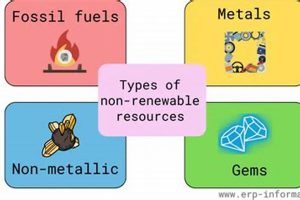
Renewable resources are replenished naturally on a human timescale, such as solar, wind, and hydropower. Non-renewable resources, like fossil fuels and minerals, exist in finite quantities and are depleted upon extraction.
Question 2: Are all sustainable options entirely environmentally benign?
No. All energy technologies have environmental impacts. Hydropower can alter river ecosystems, and biomass combustion releases emissions. Proper planning and mitigation are essential to minimize adverse effects.
Question 3: How does energy storage impact the viability of intermittent sustainable options?
Energy storage technologies, such as batteries and pumped hydro, address the intermittency of solar and wind by storing excess energy for later use, enhancing grid stability and reliability.
Question 4: What role does government policy play in promoting the adoption of these resources?
Government policies, including incentives, regulations, and carbon pricing, create a favorable market environment for sustainable options, encouraging investment and deployment.
Question 5: Is it feasible to transition entirely to sustainable options for energy production?
A complete transition requires significant investment, technological advancements, and societal changes. A diversified approach, incorporating multiple renewable sources and energy efficiency measures, is crucial.
Question 6: How do different renewable energy types impact land use and biodiversity?
Sustainable options require varying amounts of land, which can affect ecosystems. Careful site selection, environmental impact assessments, and mitigation strategies are necessary to minimize habitat disruption.
Understanding the nuances of sustainable options and their implementation is vital for making informed decisions about energy policy and infrastructure development.
The subsequent sections will explore specific strategies for optimizing the integration of renewable resource types into existing energy systems.
Conclusion
This exposition has detailed various sustainable energy resources, emphasizing their operational mechanics, environmental implications, and deployment challenges. From solar radiation capture to wave mechanical power, each resource presents a distinct pathway toward reducing dependence on finite fossil fuels and mitigating climate change. Successful implementation requires careful consideration of factors such as intermittency, land use, and grid integration.
The transition to a sustainable energy future necessitates a comprehensive and informed approach. Continued research, technological innovation, and supportive policy frameworks are crucial for realizing the full potential of these resources. A concerted effort to embrace and expand the utilization of sustainable options is vital for ensuring a stable, environmentally sound, and economically viable energy landscape for generations to come.
![Guide to What Energy Resources Are Renewable [+Future] | Renewable Energy Solutions for a Sustainable Future | Clean & Green Power](https://pplrenewableenergy.com/wp-content/uploads/2026/03/th-516-300x200.jpg "Guide to What Energy Resources Are Renewable [+Future] Renewable Energy Solutions for a Sustainable Future | Clean & Green Power")