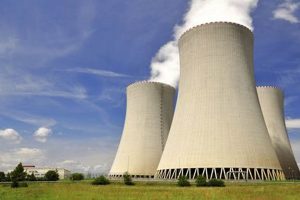
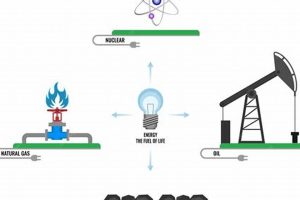
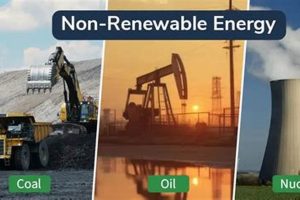
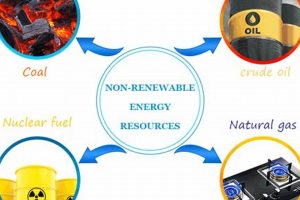
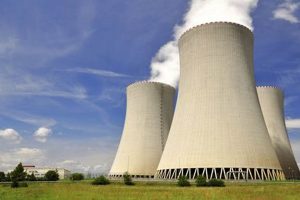
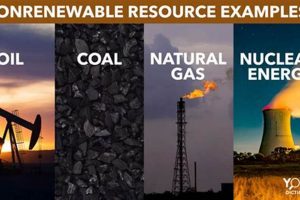
Finite resources like fossil fuels (coal, oil, and natural gas) and nuclear fuels (uranium) present significant challenges. Their extraction and utilization often lead to environmental damage, including habitat destruction, water pollution, and air pollution contributing to climate change. The combustion of fossil fuels releases greenhouse gases, primarily carbon dioxide, which trap heat in the atmosphere. Nuclear power generation, while not directly emitting greenhouse gases, produces radioactive waste that requires long-term storage and poses safety risks.
Understanding the limitations of these energy sources is crucial for transitioning to a sustainable energy future. Historically, reliance on non-renewable energy has fueled industrialization and economic growth. However, the long-term consequences of their continued use, including resource depletion and environmental degradation, necessitate a shift toward cleaner, renewable alternatives. This shift is essential not only for mitigating the effects of climate change but also for ensuring energy security and affordability in the future.
Further exploration will delve into the specific drawbacks of each non-renewable energy source, examining their environmental impact, economic implications, and the challenges associated with their eventual phase-out.
Tips for Mitigating the Impacts of Finite Energy Sources
Reducing reliance on finite energy resources is crucial for environmental sustainability and long-term energy security. The following tips offer practical strategies to minimize the negative consequences associated with these resources.
Tip 1: Invest in Energy Efficiency: Improving energy efficiency in buildings, transportation, and industrial processes reduces overall energy demand, thus lessening the need for finite resources. This can include better insulation, more efficient appliances, and optimized industrial equipment.
Tip 2: Support Renewable Energy Development: Transitioning to renewable energy sources like solar, wind, hydro, and geothermal power offers a sustainable alternative to finite resources. Supporting policies and investments that promote renewable energy development is essential.
Tip 3: Advocate for Sustainable Transportation: Promoting public transportation, cycling, walking, and electric vehicles reduces reliance on fossil fuels for transportation, a significant source of greenhouse gas emissions.
Tip 4: Promote Responsible Consumption: Reducing overall energy consumption through mindful choices, such as purchasing energy-efficient products and minimizing waste, contributes to lessening the demand for finite resources.
Tip 5: Support Carbon Capture and Storage Technologies: While still under development, carbon capture and storage technologies offer the potential to capture carbon dioxide emissions from power plants and industrial facilities, preventing their release into the atmosphere. Continued research and development in this area are crucial.
Tip 6: Advocate for Policy Changes: Supporting policies that incentivize renewable energy, discourage the use of finite resources, and promote energy efficiency is essential for driving a systemic shift towards a sustainable energy future.
Tip 7: Educate and Raise Awareness: Increasing public awareness about the environmental and economic consequences of relying on finite resources empowers individuals to make informed choices and advocate for change.
By implementing these strategies, individuals, communities, and governments can contribute to reducing the negative impacts of finite energy sources and pave the way for a sustainable energy future.
These individual and collective efforts are vital steps in addressing the challenges posed by finite resources and ensuring a sustainable future.
1. Resource Depletion

Resource depletion is a fundamental disadvantage of relying on non-renewable energy sources. These resources, formed over geological timescales, are finite and consumed at rates far exceeding their natural replenishment. This inherent limitation poses significant challenges for long-term energy security and necessitates a transition to sustainable alternatives.
- Finite Reserves:
Non-renewable energy sources exist in limited quantities. Fossil fuels like coal, oil, and natural gas, and nuclear fuels like uranium, are extracted from the Earth’s crust. Once these reserves are exhausted, they are not readily replaceable. This finite nature creates concerns about future energy availability and price volatility as readily accessible reserves dwindle.
- Extraction Challenges:
As easily accessible reserves are depleted, extraction becomes increasingly complex and costly. Accessing remaining resources often requires more intensive technologies, such as deep-sea drilling or hydraulic fracturing (“fracking”), which can have significant environmental impacts, including habitat destruction and water contamination. The increasing difficulty of extraction further exacerbates the economic challenges associated with resource depletion.
- Supply Chain Disruptions:
Dependence on finite resources can lead to vulnerabilities in energy supply chains. Geopolitical instability, natural disasters, or technical difficulties in extraction can disrupt the flow of resources, impacting energy availability and prices. This vulnerability highlights the need for diversified and resilient energy systems based on renewable resources.
- Intergenerational Equity:
Rapid depletion of non-renewable resources raises ethical concerns about intergenerational equity. Current consumption patterns may deprive future generations of access to these resources, limiting their opportunities for development and prosperity. A sustainable energy future requires considering the long-term implications of resource use and ensuring equitable access to energy for all.
The depletion of non-renewable resources underscores the urgent need for a transition to sustainable energy systems. Continued reliance on finite resources poses significant risks to energy security, economic stability, and environmental sustainability. Investing in renewable energy sources, improving energy efficiency, and promoting responsible consumption patterns are crucial steps in mitigating the consequences of resource depletion and ensuring a sustainable energy future.
2. Environmental Pollution

Environmental pollution represents a significant disadvantage associated with non-renewable energy sources. Extraction, processing, and utilization of these resources contribute to various forms of pollution, impacting air, water, and land quality, with far-reaching consequences for ecosystems and human health. Understanding the specific pollutants and their impacts is crucial for evaluating the true cost of non-renewable energy.
- Air Pollution:
Combustion of fossil fuels releases harmful pollutants into the atmosphere, including particulate matter, sulfur dioxide, nitrogen oxides, and carbon monoxide. These pollutants contribute to respiratory problems, cardiovascular disease, and other health issues. Additionally, the release of greenhouse gases, primarily carbon dioxide, from fossil fuel combustion is the leading driver of climate change.
- Water Pollution:
Extraction and transportation of non-renewable resources can lead to water contamination. Oil spills, for example, can have devastating impacts on marine ecosystems. Fracking, a technique used to extract natural gas, can contaminate groundwater with chemicals. Coal mining operations often generate acid mine drainage, polluting rivers and streams with heavy metals and other toxic substances.
- Land Degradation:
Mining activities associated with coal and uranium extraction can cause significant land degradation. Strip mining removes entire mountaintops, destroying habitats and altering landscapes. The disposal of coal ash, a byproduct of coal combustion, poses risks of groundwater contamination and soil pollution. Uranium mining can leave behind radioactive tailings that pose long-term environmental risks.
- Plastic Pollution:
While not directly a form of energy production, plastic production relies heavily on fossil fuels as a raw material. The proliferation of plastic waste, which persists in the environment for centuries, contributes to pollution of oceans, landfills, and ecosystems. Addressing plastic pollution requires reducing reliance on fossil fuel-based plastics and transitioning to more sustainable alternatives.
The environmental pollution associated with non-renewable energy sources presents a compelling case for transitioning to cleaner, more sustainable alternatives. The cumulative effects of air, water, and land pollution pose significant risks to human health, ecosystem integrity, and the planet’s long-term sustainability. Moving towards a future powered by renewable energy offers a pathway to mitigate these environmental challenges and ensure a healthier planet for generations to come.
3. Climate Change Contribution

Combustion of fossil fuelscoal, oil, and natural gasreleases substantial quantities of greenhouse gases, primarily carbon dioxide, into the atmosphere. This release is a principal driver of anthropogenic climate change. The accumulation of these gases traps heat, leading to a warming planet and associated consequences: rising sea levels, altered precipitation patterns, increased frequency and intensity of extreme weather events, and ocean acidification. Methane, another potent greenhouse gas, is released during natural gas extraction and transportation, further exacerbating the climate impact.
The magnitude of climate change contribution distinguishes it as a critical disadvantage of non-renewable energy. While other disadvantages, such as air and water pollution, present localized challenges, climate change carries global implications. The long-term consequences of a warming planet pose systemic risks to ecosystems, economies, and human societies worldwide. For example, rising sea levels threaten coastal communities and infrastructure, while changes in precipitation patterns can disrupt agricultural practices and water resources. The scale and scope of these impacts underscore the urgency of transitioning away from fossil fuels.
Understanding the link between non-renewable energy and climate change is fundamental for effective climate action. Mitigating climate change requires a significant reduction in greenhouse gas emissions. This necessitates a global shift toward renewable energy sources, improvements in energy efficiency, and adoption of sustainable land management practices. Recognizing climate change as a central disadvantage of non-renewable energy provides a strong impetus for policy changes, technological innovation, and behavioral shifts necessary to address this global challenge. The transition to a sustainable energy future is not merely an environmental imperative but a critical step in safeguarding the planet’s future.
4. Habitat Destruction

Habitat destruction represents a significant environmental consequence associated with non-renewable energy extraction and utilization. The pursuit of these resources often leads to profound alterations and degradation of natural environments, impacting biodiversity, ecosystem services, and the overall health of the planet. Exploring the specific ways in which non-renewable energy contributes to habitat destruction reveals a critical dimension of its environmental impact.
- Fossil Fuel Extraction:
Fossil fuel extraction activities, including coal mining, oil drilling, and natural gas fracking, directly impact habitats in several ways. Mountaintop removal mining for coal obliterates entire ecosystems, while oil spills contaminate marine and coastal environments, harming wildlife and disrupting delicate ecological balances. Fracking operations require clearing land for well pads and access roads, fragmenting habitats and disrupting wildlife migration patterns.
- Pipeline Construction:
Transporting fossil fuels often necessitates extensive pipeline networks that traverse diverse landscapes. Pipeline construction requires clearing vegetation, disrupting soil stability, and fragmenting habitats. These disruptions can impede wildlife movement, isolate populations, and increase vulnerability to predators and environmental stressors. Pipeline leaks and spills pose additional threats to surrounding ecosystems and water resources.
- Uranium Mining:
Uranium mining, essential for nuclear power generation, also contributes to habitat destruction. Mining operations can lead to deforestation, soil erosion, and contamination of water sources with heavy metals and radioactive materials. These impacts disrupt local ecosystems and pose long-term risks to wildlife and human populations.
- Infrastructure Development:
Non-renewable energy production often requires extensive infrastructure development, including power plants, refineries, and transmission lines. Construction of these facilities can lead to habitat loss, fragmentation, and degradation. The cumulative impact of these infrastructure projects can significantly alter landscapes and disrupt ecological processes.
The cumulative impact of these activities underscores the significant contribution of non-renewable energy to habitat destruction. Loss of biodiversity, disruption of ecosystem services, and increased vulnerability of species are among the far-reaching consequences. Transitioning to renewable energy sources, coupled with responsible land management practices, offers a crucial pathway to mitigate habitat destruction and protect the planet’s biodiversity for future generations. The environmental cost of non-renewable energy necessitates a shift towards more sustainable energy solutions.
5. Geopolitical Instability

The uneven distribution of non-renewable energy resources globally contributes significantly to geopolitical instability. Nations with abundant reserves, such as oil-rich countries, wield considerable economic and political influence, while nations lacking these resources face energy dependence and vulnerability. This dependence can lead to political tensions, conflicts over resource control, and price volatility, impacting international relations and potentially leading to regional or global instability. Control over vital energy resources can become a strategic objective, influencing foreign policy decisions and potentially fueling conflicts. Furthermore, the revenues generated from non-renewable resource exports can be used to fund authoritarian regimes or support armed conflicts, exacerbating existing tensions.
Consider, for example, the historical influence of oil-producing nations in the Middle East. Control over these resources has shaped international relations, alliances, and conflicts for decades. The reliance of many industrialized nations on these resources creates complex geopolitical dynamics. Disruptions to oil supplies, whether due to political instability or natural disasters, can trigger price spikes and economic repercussions globally. Similarly, competition for access to resources in the Arctic region highlights the potential for geopolitical tensions as melting ice opens up new areas for exploration and exploitation.
Understanding the link between non-renewable energy and geopolitical instability is crucial for informed policymaking. Diversifying energy sources, promoting energy independence, and fostering international cooperation on energy security are essential strategies for mitigating these risks. Transitioning to renewable energy sources not only addresses environmental concerns but also offers the potential to reduce dependence on volatile global energy markets, promoting greater stability and security. Recognizing the geopolitical implications of non-renewable energy underscores the importance of pursuing sustainable energy solutions as a pathway toward a more secure and equitable future.
6. Health Impacts
Non-renewable energy sources contribute significantly to a range of adverse health outcomes, representing a substantial public health burden. The connection between these energy sources and health impacts arises primarily through air and water pollution generated during resource extraction, processing, and combustion. Understanding these health consequences is crucial for evaluating the full cost of non-renewable energy and informing public health policy.
Combustion of fossil fuels releases particulate matter, nitrogen oxides, sulfur dioxide, and other harmful pollutants into the atmosphere. These pollutants contribute to respiratory illnesses, such as asthma and bronchitis, cardiovascular diseases, and certain types of cancer. Children, the elderly, and individuals with pre-existing health conditions are particularly vulnerable to these effects. For example, studies have linked exposure to air pollution from coal-fired power plants to increased rates of respiratory hospitalizations and premature mortality. Furthermore, extraction activities like coal mining and oil and gas drilling can contaminate water sources, posing risks of exposure to heavy metals and other toxic substances, leading to developmental problems and chronic illnesses. The proximity of these operations to communities often exacerbates health disparities and raises environmental justice concerns.
Addressing the health impacts of non-renewable energy requires a multifaceted approach. Transitioning to cleaner energy sources, such as solar and wind power, is paramount. Implementing stricter air and water quality standards, investing in pollution control technologies, and promoting energy efficiency measures can further mitigate these health risks. Additionally, understanding the specific health consequences associated with different energy sources informs targeted public health interventions and promotes community resilience. Recognizing the health impacts as a significant disadvantage of non-renewable energy underscores the urgency of transitioning to a sustainable energy future that prioritizes both environmental and human well-being.
7. Economic Volatility

Economic volatility represents a significant disadvantage associated with reliance on non-renewable energy sources. The inherent characteristics of these resources, including finite supply, fluctuating extraction costs, and geopolitical influences, contribute to price instability and economic vulnerability. This volatility poses challenges for businesses, consumers, and governments, impacting investment decisions, energy planning, and overall economic stability. Understanding the connection between non-renewable energy and economic volatility is crucial for informed policymaking and promoting a more stable and sustainable energy future.
Fluctuations in global energy markets directly impact the price of non-renewable resources, creating uncertainty for businesses and consumers. Sudden price spikes can disrupt budgets, impacting profitability and household expenses. This volatility makes long-term financial planning challenging, particularly for energy-intensive industries. For example, the price of oil, a key commodity in transportation and manufacturing, can fluctuate significantly based on geopolitical events, supply disruptions, or changes in global demand. These fluctuations can lead to ripple effects throughout the economy, impacting transportation costs, manufacturing prices, and overall inflation. Furthermore, reliance on non-renewable resources exposes economies to geopolitical risks. Dependence on imports from politically unstable regions can create vulnerabilities to supply disruptions and price manipulations, impacting energy security and economic stability. Diversification of energy sources and investments in renewable energy offer pathways to mitigate these risks and promote greater energy independence.
The economic implications of non-renewable energy extend beyond price volatility. Environmental and health costs associated with these resources, such as air and water pollution and climate change impacts, represent substantial economic burdens. These costs include healthcare expenses, environmental remediation efforts, and losses in productivity due to climate-related disruptions. Transitioning to a sustainable energy system based on renewable resources offers opportunities for economic growth, job creation, and enhanced energy security. Investments in renewable energy technologies, energy efficiency measures, and smart grid infrastructure can stimulate economic activity, create new employment opportunities, and reduce reliance on volatile fossil fuel markets. Recognizing economic volatility as a key disadvantage of non-renewable energy underscores the importance of pursuing sustainable energy policies that promote both economic stability and environmental sustainability.
Frequently Asked Questions about the Disadvantages of Non-Renewable Energy
This section addresses common inquiries regarding the drawbacks of non-renewable energy sources, providing concise and informative responses.
Question 1: How does reliance on non-renewable energy contribute to climate change?
Combustion of fossil fuels releases greenhouse gases, primarily carbon dioxide, trapping heat and leading to global warming and associated climate change impacts.
Question 2: What are the primary environmental impacts of non-renewable energy extraction?
Extraction activities can lead to habitat destruction, water pollution from spills and chemical leaks, and air pollution from released toxins and particulate matter.
Question 3: Why is resource depletion a concern with non-renewable energy?
Non-renewable resources exist in finite quantities and are consumed at rates far exceeding their natural replenishment, raising concerns about future energy security.
Question 4: How does non-renewable energy contribute to geopolitical instability?
Uneven global distribution of these resources can create dependencies, leading to political tensions, conflicts over resource control, and price volatility.
Question 5: What are the health consequences associated with non-renewable energy use?
Air and water pollution from non-renewable energy contribute to respiratory illnesses, cardiovascular problems, and other health issues, posing a significant public health burden.
Question 6: How does dependence on non-renewable energy lead to economic volatility?
Fluctuating prices of fossil fuels and geopolitical factors create economic uncertainty, impacting businesses, consumers, and overall market stability.
Understanding the multifaceted disadvantages of non-renewable energy is essential for informed decision-making and the transition to a sustainable energy future. Consideration of these drawbacks highlights the importance of investing in renewable energy technologies and promoting responsible energy consumption patterns.
For further exploration, the following section delves into the specific advantages of transitioning to renewable energy alternatives.
Conclusion
Exploration of the disadvantages inherent in non-renewable energy sources reveals a compelling case for transformative change. From the environmental degradation caused by pollution and habitat destruction to the geopolitical instabilities fueled by resource scarcity, the reliance on finite energy sources presents significant challenges. Furthermore, the health impacts associated with air and water pollution, coupled with the economic volatility driven by fluctuating fuel prices, underscore the unsustainable nature of the current energy landscape. The finite nature of these resources ultimately necessitates a shift toward alternative solutions.
The transition away from non-renewable energy represents not merely an environmental imperative but a fundamental necessity for long-term global well-being. Investing in renewable energy technologies, promoting energy efficiency, and fostering responsible consumption patterns are crucial steps toward a sustainable future. This transition requires collective action, encompassing policy changes, technological innovation, and individual choices. The urgency of this shift cannot be overstated; the future of the planet hinges on a decisive move toward sustainable energy solutions.