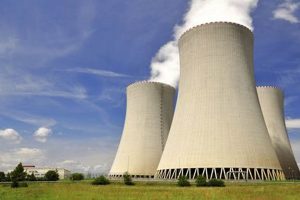
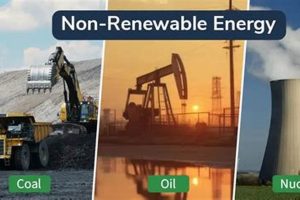
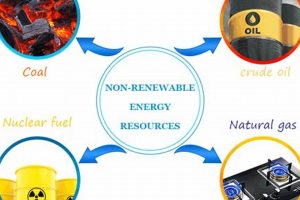
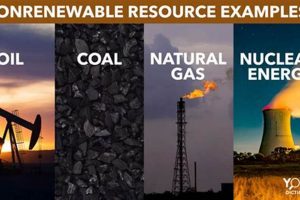
Nuclear power relies on the fission of uranium, a finite resource extracted from the Earth. While the process itself doesn’t directly consume large quantities of fossil fuels, the available uranium supply is not limitless and is, therefore, considered non-renewable. Reprocessing spent nuclear fuel and exploring alternative fuels like thorium can extend the lifespan of nuclear power, but these technologies face various challenges and are not yet widely implemented.
Understanding the limitations of uranium supplies is crucial for long-term energy planning. The availability and accessibility of this resource directly impact the future viability of nuclear energy production. Historically, concerns about resource depletion have driven research into alternative energy sources and more efficient reactor designs. Proper management of uranium mining and processing, including minimizing environmental impacts and ensuring safe disposal of nuclear waste, is essential for responsible utilization of this resource.
This finite nature of nuclear fuel leads to important discussions about the future of energy production. Further exploration into alternative reactor designs, fuel cycles, and the role of nuclear energy within a diverse energy portfolio are all key areas for continued research and development. The following sections will delve deeper into the complexities of nuclear fuel cycles, waste management strategies, and the comparative analysis with other energy sources.
Tips for Addressing the Non-Renewable Nature of Nuclear Energy
The finite nature of uranium, the primary fuel for nuclear fission, necessitates careful consideration of resource management and alternative energy strategies. The following tips offer insights into navigating the challenges and opportunities presented by this reality.
Tip 1: Support Research and Development of Advanced Reactor Designs: Exploring alternative reactor designs, such as breeder reactors, can potentially extend the lifespan of uranium resources by converting non-fissile uranium-238 into fissile plutonium-239.
Tip 2: Invest in Thorium Fuel Cycle Research: Thorium, a more abundant element than uranium, represents a potential alternative nuclear fuel. Research into thorium fuel cycles could significantly reduce dependence on uranium.
Tip 3: Advocate for Responsible Uranium Mining Practices: Minimizing the environmental impact of uranium mining and ensuring worker safety are crucial aspects of sustainable resource utilization.
Tip 4: Promote Advanced Recycling and Reprocessing Techniques: Improving the efficiency of spent nuclear fuel reprocessing can reduce the demand for new uranium and minimize nuclear waste.
Tip 5: Diversify Energy Portfolios: Reducing reliance on any single energy source, including nuclear, through a diversified energy mix that incorporates renewables and other low-carbon technologies is essential for long-term energy security.
Tip 6: Encourage International Collaboration: Sharing best practices and research findings across borders can accelerate the development and deployment of sustainable nuclear energy solutions.
Implementing these strategies can help mitigate the challenges associated with the finite nature of uranium resources and ensure the responsible and sustainable use of nuclear energy.
These considerations are critical for informing policy decisions and guiding future research directions in the field of nuclear energy. The concluding section will summarize the key takeaways and offer final perspectives on the long-term implications of nuclear energy’s dependence on finite resources.
1. Uranium

The non-renewable nature of nuclear energy stems directly from the finite nature of uranium, its primary fuel source. Uranium, like fossil fuels, is a geological resource extracted from the Earth. While abundant compared to some other elements, economically viable uranium deposits are limited. This finite supply dictates that continuous extraction will eventually lead to depletion, rendering nuclear fission unsustainable in the long term. The rate of consumption relative to discovery of new deposits determines the timeframe of this depletion, impacting long-term energy planning and necessitating the exploration of alternative energy sources.
Consider, for example, the reliance of many countries on imported uranium. Geopolitical factors can influence access to these resources, affecting price volatility and energy security. Furthermore, the concentration of known, high-grade uranium deposits in specific regions of the world raises concerns about resource accessibility and potential for resource conflicts. The limited availability of easily accessible uranium underscores the inherent limitations of relying solely on conventional nuclear fission for future energy needs.
The finite nature of uranium resources necessitates a multifaceted approach to energy production. Strategies must include responsible resource management, ongoing research into alternative fuel cycles (such as thorium), and the development of advanced reactor technologies that maximize fuel efficiency. Understanding the limitations imposed by a finite uranium supply provides crucial context for evaluating the long-term role of nuclear energy within a sustainable global energy portfolio.
2. Fuel Availability

Fuel availability plays a crucial role in the non-renewable classification of nuclear energy. While uranium exists in the Earth’s crust, not all of it is readily accessible or economically viable to extract. High-grade uranium ore, which is most efficient for nuclear fuel production, is concentrated in specific geographical locations. This uneven distribution creates dependencies on imports for many countries, raising geopolitical concerns and potential supply chain vulnerabilities. Furthermore, the exploration and development of new uranium mines face significant technical, economic, and environmental challenges. These limitations on fuel availability directly impact the long-term sustainability of nuclear power generation, reinforcing its non-renewable status.
Consider, for example, the fluctuations in uranium prices influenced by global supply and demand dynamics. A sudden disruption in supply from a major uranium-producing country could significantly affect the cost of nuclear fuel, impacting the economic viability of nuclear power plants. Moreover, the process of uranium mining and milling itself has environmental consequences, including land disturbance, water contamination, and greenhouse gas emissions. These factors, coupled with the finite nature of uranium reserves, highlight the inherent limitations of fuel availability in sustaining nuclear energy indefinitely.
Understanding the limitations of fuel availability is essential for developing realistic energy strategies. Diversification of energy sources, investment in research and development of advanced reactor designs that can utilize alternative fuels (like thorium), and improved efficiency in uranium utilization are crucial steps toward mitigating the challenges posed by the finite nature and uneven distribution of this essential resource. Addressing fuel availability constraints is integral to ensuring the long-term viability and sustainability of nuclear energy within a broader, diversified energy mix.
3. Extraction Limitations
Extraction limitations contribute significantly to the non-renewable nature of nuclear energy. Uranium, the primary fuel for nuclear reactors, is a finite resource found within the Earth’s crust. However, accessing and extracting this uranium presents numerous challenges, both technical and economic. High-grade uranium ore, the most efficient type for fuel production, is not uniformly distributed and often located in geologically challenging environments. This necessitates complex and costly extraction methods, which can increase the price of uranium and limit the overall amount that can be economically recovered. Moreover, as easily accessible deposits are depleted, the industry must turn to lower-grade ores, further exacerbating extraction challenges and requiring more energy-intensive processing. These extraction limitations directly constrain the availability of nuclear fuel, reinforcing its classification as a non-renewable resource.
Consider, for instance, in-situ leaching (ISL) mining, a technique used to extract uranium from deep underground deposits. While ISL can access otherwise unreachable uranium, it raises environmental concerns regarding potential groundwater contamination. Open-pit mining, another extraction method, requires extensive land disturbance and can leave behind large tailing ponds containing radioactive waste. These environmental impacts and technical complexities associated with various extraction methods further restrict the feasibility of uranium mining, influencing its availability and cost. The declining quality of accessible ore bodies over time also necessitates larger-scale mining operations to produce the same amount of fuel, exacerbating the environmental footprint and economic costs.
Understanding these extraction limitations is crucial for accurately assessing the long-term viability of nuclear energy. Technological advancements in extraction and processing techniques may offer some improvements, but they cannot alter the fundamental finite nature of uranium resources. The inherent challenges in accessing and extracting uranium contribute significantly to its non-renewable classification, necessitating careful consideration of its role within a sustainable energy future. The development and implementation of alternative energy sources and improved reactor technologies capable of utilizing different fuel cycles remain crucial for mitigating the constraints imposed by uranium extraction limitations.
4. Geological Constraints

Geological constraints play a significant role in the non-renewable nature of nuclear energy. The distribution, concentration, and accessibility of uranium deposits within the Earth’s crust impose limitations on the long-term viability of nuclear power generation. These constraints influence not only the current availability of uranium but also the future potential for discovering and exploiting new resources. Understanding these geological factors is crucial for evaluating the sustainability of nuclear energy and developing effective long-term energy strategies.
- Distribution of Uranium Deposits
Uranium is not uniformly distributed across the globe. Economically viable deposits are concentrated in specific regions, creating geopolitical implications and potential supply vulnerabilities for countries reliant on imports. This uneven distribution necessitates international cooperation and careful resource management to ensure equitable access and mitigate potential resource conflicts. The geographical limitations on uranium distribution directly impact its availability and accessibility for nuclear fuel production.
- Concentration of Uranium Ore
The concentration of uranium within ore bodies significantly impacts the economic feasibility of extraction. High-grade ores are preferred due to their efficiency in fuel production, but they are less common than lower-grade deposits. As high-grade reserves are depleted, the industry must resort to processing increasing quantities of lower-grade ore, requiring more energy and resources, and generating more waste. This declining ore grade contributes to the rising costs and environmental impact of uranium extraction, further emphasizing the finite nature of readily available fuel for nuclear power.
- Accessibility of Uranium Deposits
The geological setting of uranium deposits often poses significant challenges for extraction. Some deposits are located deep underground, requiring complex and costly methods like in-situ leaching. Others are found in environmentally sensitive areas, where mining operations can have substantial ecological consequences. These accessibility challenges impact the economic viability and environmental sustainability of uranium extraction, influencing the overall availability and cost of nuclear fuel.
- Exploration and Discovery Challenges
Discovering new uranium deposits is becoming increasingly challenging. Exploration efforts require significant investment and often face geological uncertainties. The rate of discovery has not kept pace with consumption in recent years, raising concerns about the long-term availability of uranium resources. The geological limitations on finding new, economically viable uranium deposits further underscore the finite nature of this fuel source and its implications for the future of nuclear energy.
These geological constraints collectively highlight the finite and geographically limited nature of uranium resources. They significantly impact the long-term sustainability of nuclear energy, necessitating a balanced approach to resource management, ongoing exploration efforts, and the development of alternative energy sources. Recognizing these geological limitations is crucial for formulating realistic energy policies and promoting a diversified energy portfolio to meet future global energy demands.
5. Reprocessing Challenges
Reprocessing spent nuclear fuel is often touted as a way to extend the lifespan of uranium resources and reduce the volume of nuclear waste. However, significant challenges associated with reprocessing reinforce the non-renewable nature of nuclear energy. While reprocessing can recover fissile materials like plutonium and uranium from spent fuel, it doesn’t eliminate the need for fresh uranium entirely, nor does it fully address the issue of long-lived radioactive waste. The complexities and limitations of reprocessing technologies contribute to the overall challenge of achieving a truly sustainable nuclear fuel cycle.
- Technical Complexity and Cost
Reprocessing spent nuclear fuel involves intricate chemical separation processes that are technically complex and expensive. Constructing and operating reprocessing plants requires significant upfront investment and specialized expertise. The high costs associated with these facilities can make reprocessing economically less attractive compared to using fresh uranium fuel, especially when uranium prices are relatively low. This economic barrier limits the widespread adoption of reprocessing technologies, hindering the potential to extend the use of existing uranium resources.
- Proliferation Risks
Reprocessing generates plutonium, a material that can be used in nuclear weapons. This raises concerns about nuclear proliferation and the potential diversion of plutonium for illicit purposes. Stringent international safeguards and security measures are necessary to mitigate these risks, adding further complexity and cost to reprocessing operations. The proliferation concerns associated with plutonium production can limit the political and social acceptability of reprocessing, despite its potential benefits for resource extension.
- Waste Management Issues
While reprocessing reduces the volume of high-level radioactive waste, it does not eliminate it entirely. The separated fission products still require long-term storage or disposal in geological repositories. Moreover, reprocessing generates its own waste streams, including liquid and solid waste containing radioactive materials. Managing these waste streams adds to the overall complexity and cost of the nuclear fuel cycle, and it doesn’t fundamentally alter the need for safe and secure long-term waste disposal solutions.
- Limited Global Capacity
Currently, only a few countries possess operational commercial-scale reprocessing facilities. This limited global capacity restricts the widespread implementation of reprocessing as a strategy for managing spent nuclear fuel. The lack of readily available reprocessing services further reinforces the reliance on fresh uranium and limits the potential for maximizing the utilization of existing nuclear resources. Expanding reprocessing capacity would require substantial investment and international cooperation, facing significant technical, economic, and political hurdles.
These challenges associated with reprocessing spent nuclear fuel highlight the complexities of achieving a closed nuclear fuel cycle and underscore the non-renewable nature of nuclear energy. While reprocessing offers potential benefits in terms of resource extension and waste reduction, it does not eliminate the fundamental reliance on finite uranium resources. The technical, economic, and political hurdles associated with reprocessing reinforce the importance of considering nuclear energy within the context of a diversified energy portfolio that incorporates renewable and other sustainable energy sources.
Frequently Asked Questions
This section addresses common inquiries regarding the classification of nuclear energy as a non-renewable resource.
Question 1: If nuclear power doesn’t burn fossil fuels, why is it considered non-renewable?
Nuclear power relies on the fission of uranium, a finite element extracted from the Earth. While the energy generation process itself doesn’t emit greenhouse gases like fossil fuel combustion, the limited supply of uranium dictates its non-renewable status. Like fossil fuels, uranium is extracted, processed, and eventually consumed, making it a finite resource.
Question 2: How much uranium is left, and how long will it last?
Estimates of remaining uranium resources vary based on factors such as extraction technology and market prices. At current consumption rates, known reserves could last for several decades to a century. However, future demand, exploration discoveries, and advancements in reactor technology will influence the actual timeframe.
Question 3: Can’t reprocessing spent nuclear fuel make nuclear energy renewable?
Reprocessing can extend the lifespan of uranium resources by extracting remaining fissile material from spent fuel. However, it does not eliminate the need for new uranium entirely and presents technical, economic, and proliferation challenges. Therefore, while reprocessing can improve fuel efficiency, it does not make nuclear energy fully renewable.
Question 4: Are there alternatives to uranium for nuclear power?
Thorium is a potential alternative nuclear fuel that is more abundant than uranium. Research and development into thorium fuel cycles are underway, but technological hurdles remain before it can be widely implemented. Other advanced reactor designs, like breeder reactors, also offer potential for improved fuel utilization.
Question 5: How does the non-renewable nature of nuclear energy impact energy planning?
The finite nature of uranium resources necessitates careful planning for long-term energy security. Diversification of energy sources, including renewable energy technologies, is essential to mitigate the risks associated with depleting uranium reserves. Investing in research and development of alternative nuclear fuels and reactor designs is also crucial.
Question 6: Does the non-renewable nature of nuclear energy diminish its role in mitigating climate change?
While non-renewable, nuclear power is a low-carbon energy source that can contribute to reducing greenhouse gas emissions. Its role in mitigating climate change depends on careful consideration of factors such as waste management, safety, and the development of sustainable fuel cycles. A balanced approach that incorporates a diverse mix of energy sources, including renewables, is crucial for addressing climate change effectively.
Understanding the non-renewable nature of nuclear energy is fundamental for informed decision-making about its role in a sustainable energy future. The finite nature of uranium resources underscores the need for responsible resource management, continued innovation in reactor technology and fuel cycles, and a diversified approach to energy production.
The following section explores the comparative analysis of nuclear energy with other energy sources, considering both renewable and non-renewable alternatives.
Conclusion
The exploration of nuclear energy’s non-renewable nature reveals its dependence on finite uranium resources. Geological constraints, extraction limitations, and the complexities of reprocessing all contribute to this classification. While technological advancements offer potential for improved fuel utilization and waste reduction, they cannot alter the fundamental limitation of a finite fuel source. Nuclear fission, despite its low-carbon emissions during energy generation, ultimately relies on a resource subject to depletion, impacting long-term sustainability.
The future of nuclear energy hinges on strategic resource management, continuous innovation in reactor technology and fuel cycles, and a balanced approach to energy diversification. Recognizing the non-renewable nature of nuclear power necessitates a comprehensive evaluation of its role within a sustainable global energy portfolio. Further exploration of alternative energy sources and a commitment to responsible resource utilization remain crucial for ensuring long-term energy security and environmental stewardship.