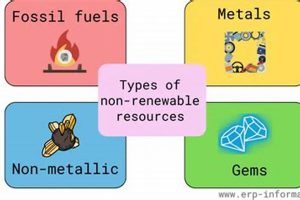
Materials that cannot be replenished at the same rate they are consumed are classified as finite assets. These substances, formed over geological timescales, offer energy and raw materials critical to modern society. Examples include fossil fuels like coal, petroleum, and natural gas, as well as nuclear fuels such as uranium.
The utilization of these geological deposits has propelled industrial and technological advancements, providing abundant and relatively inexpensive power. Their extraction and refinement have shaped global economies and influenced geopolitical landscapes. However, the finite nature of these supplies, coupled with environmental consequences associated with their usage, underscores the importance of resource management and the exploration of alternative energy solutions.
This article will delve into the characteristics, extraction processes, applications, and environmental impacts associated with these depletable reserves. Each category presents unique challenges and opportunities concerning their utilization and potential replacement by sustainable alternatives. Examination of these factors provides a foundation for informed decision-making regarding energy policy and environmental stewardship.
Considerations for Management of Depletable Energy Sources
Effective stewardship of finite geological reserves requires careful planning and responsible practices to maximize their utility and minimize negative consequences. The following points highlight critical considerations for resource management.
Tip 1: Optimize Extraction Efficiency: Implement advanced technologies and techniques to maximize the yield from existing reserves. This minimizes waste and extends the lifespan of available resources. Examples include enhanced oil recovery methods and improved mining techniques.
Tip 2: Invest in Exploration and Discovery: Continuously explore for new deposits through geological surveys and advanced imaging technologies. Discovery of new reserves can temporarily alleviate supply constraints, providing time to develop alternative energy sources.
Tip 3: Prioritize Efficient Utilization: Implement energy-efficient technologies and practices across all sectors to reduce overall consumption. This includes improving building insulation, utilizing efficient appliances, and promoting public transportation.
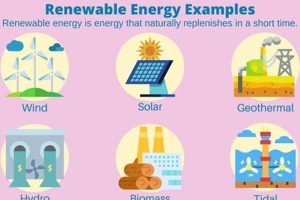
Tip 4: Diversify Energy Sources: Reduce dependence on a single type of resource by diversifying the energy mix. Integrate renewable sources such as solar, wind, and geothermal energy to mitigate the depletion of finite reserves.
Tip 5: Develop Carbon Capture and Storage (CCS) Technologies: Invest in CCS technologies to mitigate the environmental impacts associated with the combustion of carbon-based fuels. Capturing and storing carbon emissions reduces greenhouse gas concentrations in the atmosphere.
Tip 6: Implement Stricter Environmental Regulations: Enforce stringent environmental regulations to minimize pollution and environmental damage associated with the extraction, transportation, and processing of geological deposits. This protects ecosystems and human health.
Tip 7: Promote Responsible Consumption: Encourage responsible consumption habits through public awareness campaigns and economic incentives. Reducing individual and collective demand can significantly extend the availability of these finite resources.
Careful management of these geological deposits is essential to ensure a stable energy supply and mitigate the adverse environmental effects of their extraction and consumption. A multi-faceted approach that emphasizes efficiency, diversification, and environmental responsibility is crucial for a sustainable energy future.
The subsequent sections will provide a deeper exploration of alternative energy solutions and their potential to replace these depletable reserves.
1. Fossil Fuel Formation

The genesis of fossil fuelscoal, petroleum, and natural gasis intrinsically linked to the classification of these materials as finite geological deposits. These substances are derived from the anaerobic decomposition of deceased organisms, predominantly plant matter in the case of coal and marine organisms for petroleum and natural gas. This transformation occurs over millions of years under immense pressure and heat within the Earth’s crust. The extended timescales required for their creation render them non-renewable in the context of human consumption patterns. Coal formation, for instance, involves the accumulation of plant debris in swamp environments, followed by compaction and chemical alteration under geological forces. Similarly, petroleum and natural gas originate from the remains of microscopic marine organisms that settle on the ocean floor, undergo burial, and subsequent conversion into hydrocarbons.
Understanding the geological processes responsible for the formation of these resources is crucial for assessing their availability, distribution, and potential extraction methods. The knowledge of depositional environments, structural geology, and geochemical transformations informs exploration efforts and resource evaluation. For example, the presence of source rocks, reservoir rocks, and cap rocks is essential for the accumulation of petroleum and natural gas. Furthermore, the thermal maturity of organic matter determines the type and quality of hydrocarbons generated. The Permian Basin in the United States, a prolific oil and gas producing region, owes its existence to the accumulation of organic-rich sediments in a restricted marine basin, followed by burial and thermal maturation over geological time.
The protracted formation timeline of fossil fuels and their classification as finite geological deposits underscores the urgency of transitioning toward sustainable energy alternatives. Given the environmental consequences associated with their combustion and the limited supply of these resources, it becomes imperative to pursue energy strategies that prioritize renewable energy sources and energy efficiency. Comprehending the origins of these substances highlights the need for responsible resource management and the adoption of policies that promote a sustainable energy future.
2. Extraction Methodologies

The methodologies employed for extracting geological deposits are intrinsically linked to the type of resource being targeted and significantly impact the environment. The selection of a particular extraction method depends on factors such as the depth of the deposit, geological characteristics of the surrounding area, and economic feasibility. The following methodologies are commonly associated with specific finite assets.
- Surface Mining
Surface mining, also known as open-pit mining, is employed to extract resources located near the Earth’s surface. This method involves removing overlying soil and rock, known as overburden, to expose the resource. Examples include coal mining in Wyoming’s Powder River Basin and the extraction of bitumen from oil sands in Alberta, Canada. Surface mining operations can result in significant landscape alteration, habitat destruction, and water contamination due to runoff and erosion. The ecological consequences necessitate careful reclamation and mitigation efforts.
- Underground Mining
Underground mining is used to extract geological deposits located deep beneath the surface. This method involves constructing tunnels and shafts to access the resource. Examples include coal mining in Appalachia and the extraction of uranium ore in Saskatchewan, Canada. Underground mining poses risks to worker safety, including potential for mine collapses, explosions, and exposure to hazardous gases. It can also lead to subsidence, groundwater contamination, and acid mine drainage, impacting water quality and ecosystem health.
- Conventional Oil and Gas Drilling
Conventional drilling involves creating boreholes to access reservoirs of oil and natural gas trapped beneath the Earth’s surface. This method relies on natural pressure or pumping to extract the resource. Examples include oil fields in Texas and natural gas fields in the Gulf of Mexico. Conventional drilling operations can result in habitat fragmentation, spills, and leaks, potentially contaminating soil and water resources. The release of methane, a potent greenhouse gas, during drilling and production contributes to climate change.
- Unconventional Oil and Gas Extraction (Fracking)
Hydraulic fracturing, commonly known as fracking, is an unconventional method used to extract oil and natural gas from shale formations. This method involves injecting a mixture of water, sand, and chemicals under high pressure to fracture the rock and release the resource. Examples include shale gas extraction in Pennsylvania’s Marcellus Shale and oil extraction in North Dakota’s Bakken Formation. Fracking operations can result in groundwater contamination, induced seismicity, and air pollution. The disposal of wastewater generated during fracking poses significant environmental challenges.
The diversity of extraction methodologies underscores the complexity of resource management and the necessity for environmentally responsible practices. Each method presents unique challenges and requires careful consideration of potential environmental impacts. The adoption of best management practices, strict regulatory oversight, and continuous technological innovation are essential to mitigate the adverse effects associated with the extraction of geological deposits.
3. Energy Conversion
The utilization of non-renewable resources fundamentally relies on processes of energy conversion. These processes transform the inherent chemical or nuclear energy stored within these resources into usable forms such as electricity, heat, or mechanical work. The efficiency and environmental impact of these conversions are critical considerations for resource management and energy policy. Combustion, a primary energy conversion method for fossil fuels, involves the rapid oxidation of carbon and hydrogen atoms, releasing thermal energy that can be harnessed to generate steam, power turbines, and produce electricity. Nuclear fission, employed for uranium-based fuels, involves splitting atoms, releasing vast amounts of thermal energy to create steam and generate electricity. These conversion processes, while providing significant energy output, also produce pollutants and greenhouse gases, contributing to environmental degradation and climate change.
The efficiency of energy conversion processes dictates the amount of useful energy extracted from a non-renewable resource. Carnot efficiency limits the maximum possible efficiency of thermal power plants, highlighting the inherent inefficiencies of energy conversion processes that rely on heat engines. Combined cycle gas turbine (CCGT) plants improve efficiency by utilizing waste heat from gas turbines to generate additional electricity. Nuclear power plants, while not emitting greenhouse gases during operation, face challenges regarding the safe disposal of nuclear waste, necessitating long-term storage solutions. Research and development efforts are focused on improving the efficiency of energy conversion processes and mitigating their environmental impacts. Carbon capture and storage technologies aim to capture carbon dioxide emissions from power plants and store them underground, reducing greenhouse gas emissions. Advanced nuclear reactor designs seek to improve fuel utilization and reduce waste generation.
Understanding the connection between energy conversion and geological assets underscores the importance of investing in research and development of cleaner and more efficient energy technologies. The environmental consequences associated with energy conversion necessitate a transition toward sustainable energy sources and practices. Improving energy efficiency, adopting carbon capture technologies, and developing advanced nuclear reactor designs are crucial steps in mitigating the environmental impacts of energy conversion. A comprehensive approach that encompasses technological innovation, policy interventions, and behavioral changes is essential for ensuring a sustainable energy future.
4. Environmental Impact

The exploitation of geological deposits presents a multitude of environmental ramifications that extend across various ecosystems and geographical scales. The extraction, processing, and combustion of these assets introduce pollutants into the air, water, and soil, disrupting ecological balance and posing risks to human health. Acid rain, originating from sulfur dioxide emissions from coal-fired power plants, acidifies lakes and damages forests. Oil spills, such as the Deepwater Horizon incident, devastate marine ecosystems, impacting wildlife and coastal communities. The long-term consequences of these disruptions necessitate stringent environmental regulations and responsible management practices.
Climate change, driven by greenhouse gas emissions from the combustion of fossil fuels, represents a global challenge. The increasing concentration of carbon dioxide and other greenhouse gases in the atmosphere traps heat, leading to rising global temperatures, sea-level rise, and altered weather patterns. The melting of glaciers and ice sheets threatens water resources and coastal populations. Extreme weather events, such as hurricanes and droughts, intensify, causing economic losses and displacement. The transition to renewable energy sources and the implementation of carbon mitigation strategies are essential to address climate change and mitigate its adverse effects. Deforestation to clear land for mining operations contributes to habitat loss and reduces carbon sequestration capacity, further exacerbating climate change.
Addressing the environmental impacts associated with geological deposits requires a comprehensive approach that integrates technological innovation, policy interventions, and societal awareness. The development of cleaner technologies, such as carbon capture and storage, can reduce greenhouse gas emissions from fossil fuel power plants. Environmental regulations can limit pollution and ensure responsible resource management. Public awareness campaigns can promote energy conservation and sustainable consumption patterns. Collaboration among governments, industries, and communities is essential to mitigate the environmental impacts associated with the utilization of finite geological assets and to promote a transition towards a sustainable future.
5. Geopolitical Significance

The distribution of geological reserves significantly shapes international relations and power dynamics. Nations possessing substantial reserves of energy resources often wield considerable economic and political influence. Control over these reserves translates into leverage in international negotiations, impacting trade agreements, security alliances, and foreign policy decisions. For example, the Organization of the Petroleum Exporting Countries (OPEC), comprised of nations with significant oil reserves, exerts influence on global oil prices and production levels, impacting economies worldwide. This dynamic contributes to both cooperation and competition among nations, as access to reliable energy supplies is a crucial determinant of economic stability and national security. Historically, competition for access to resources has fueled conflicts and shaped geopolitical alliances, underscoring the strategic importance of these assets.
Furthermore, the reliance on finite geological deposits introduces vulnerabilities for nations that are heavily dependent on imports. Energy security becomes a paramount concern, driving the pursuit of diversification strategies and the development of indigenous resources. Nations lacking substantial geological reserves often forge strategic partnerships with resource-rich countries or invest in alternative energy technologies to mitigate their dependence. The development of shale gas resources in the United States, for instance, has reduced its reliance on imported natural gas, altering its geopolitical position in the global energy market. Simultaneously, the transit routes for these resources, such as pipelines and shipping lanes, become strategic assets, requiring protection and potentially leading to geopolitical tensions.
In conclusion, the interplay between geological reserves and geopolitical dynamics is a complex and multifaceted phenomenon. The uneven distribution of these assets creates both opportunities and challenges for nations worldwide. Understanding this dynamic is essential for formulating effective energy policies, promoting international cooperation, and mitigating potential conflicts. The ongoing transition towards renewable energy sources represents a potential shift in the geopolitical landscape, as access to sunlight, wind, and geothermal resources is more evenly distributed than geological reserves. However, the control of critical minerals required for renewable energy technologies introduces new geopolitical considerations, underscoring the enduring significance of resources in international affairs.
6. Resource Depletion

The progressive exhaustion of geological deposits is a defining characteristic of these finite geological assets. The rate at which these materials are extracted and consumed far exceeds the rate at which they are naturally replenished, leading to a decline in available reserves. This phenomenon has significant implications for energy security, economic stability, and environmental sustainability.
- Peak Production and Declining Reserves
The concept of peak production signifies the point in time when the maximum rate of extraction for a particular resource is reached, after which production inevitably declines. The Hubbert curve, a model often applied to oil production, illustrates this phenomenon. Once peak production is surpassed, reserves diminish, leading to increased scarcity and higher prices. The decline in easily accessible reserves necessitates the development of more challenging and costly extraction methods, further impacting the economic viability of these geological deposits.
- Economic Scarcity and Price Volatility
As geological deposits become increasingly depleted, their economic scarcity intensifies, leading to price volatility and economic instability. Fluctuations in the supply and demand of these materials can have profound effects on global markets and national economies. Dependence on increasingly expensive geological deposits can strain national budgets and hinder economic growth. The need for secure and affordable access to these assets drives geopolitical competition and can lead to international conflicts.
- Environmental Degradation from Exploitation
The pursuit of geological deposits, particularly in remote or environmentally sensitive areas, often results in significant environmental degradation. Mining operations can lead to deforestation, habitat destruction, and water contamination. Oil spills can devastate marine ecosystems and coastal communities. The combustion of these resources releases greenhouse gases, contributing to climate change and its associated environmental impacts. The trade-offs between resource exploitation and environmental protection necessitate careful consideration and sustainable management practices.
- Technological Innovation and Resource Extension
Technological advancements can play a role in extending the lifespan of geological deposits and mitigating the impacts of depletion. Enhanced oil recovery techniques can increase the yield from existing oil fields. Improved mining technologies can access previously unrecoverable reserves. However, technological solutions are not a panacea. They often come with their own environmental and economic costs and cannot indefinitely offset the finite nature of these geological resources.
The facets of resource depletion are interconnected and underscore the urgency of transitioning towards sustainable energy and materials management strategies. The finite nature of these geological deposits, coupled with the environmental and economic consequences of their exploitation, necessitates a shift towards renewable energy sources, circular economy principles, and responsible consumption patterns. Understanding the dynamics of resource depletion is crucial for informed decision-making and ensuring a sustainable future.
Frequently Asked Questions about Finite Geological Assets
This section addresses common inquiries regarding finite geological assets, providing insights into their nature, utilization, and environmental impacts.
Question 1: What distinguishes a finite geological asset from a renewable resource?
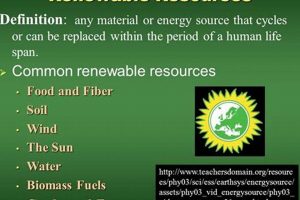
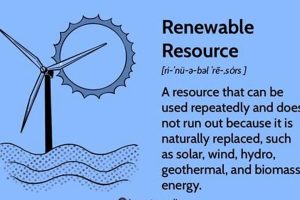
Finite geological assets are characterized by their formation over geological timescales, rendering their rate of replenishment significantly slower than the rate of human consumption. Conversely, renewable resources are naturally replenished within a human lifespan, such as solar, wind, and hydropower.
Question 2: What are the primary categories of finite geological assets utilized for energy production?
The main categories encompass fossil fuels (coal, petroleum, and natural gas) and nuclear fuels (uranium). These substances store energy derived from ancient organic matter or nuclear processes, which is released through combustion or nuclear fission.
Question 3: What environmental consequences are associated with the extraction and utilization of geological deposits?
Exploitation of geological deposits leads to environmental consequences, including habitat destruction, water and air pollution, greenhouse gas emissions, and potential for accidents such as oil spills or mine collapses. These impacts can disrupt ecosystems, contribute to climate change, and pose risks to human health.
Question 4: How does the uneven distribution of geological reserves impact global geopolitics?
The uneven distribution of geological reserves influences international relations, creating dependencies, trade imbalances, and potential conflicts. Nations with abundant reserves often wield considerable economic and political influence, while those lacking domestic sources may rely on imports, potentially compromising their energy security.
Question 5: What strategies can be implemented to mitigate the depletion of geological assets and transition towards a sustainable energy future?
Mitigation strategies include improving energy efficiency, diversifying energy sources through the integration of renewables, developing carbon capture and storage technologies, and implementing stricter environmental regulations. These measures aim to reduce reliance on geological deposits and minimize environmental damage.
Question 6: What is the role of technological innovation in extending the lifespan of geological deposits?
Technological innovations, such as enhanced oil recovery and advanced mining techniques, can improve extraction efficiency and access previously unrecoverable reserves. However, technology alone cannot overcome the inherent finite nature of these resources. A comprehensive approach that includes demand reduction and the development of alternative energy sources is essential.
These responses clarify the core concepts and concerns associated with finite geological assets, highlighting the need for informed decision-making and sustainable practices.
The following section will summarize the key aspects of managing finite geological assets and exploring alternative solutions.
Conclusion
The preceding analysis has examined the multifaceted nature of geological deposits, encompassing their formation, extraction, energy conversion, environmental impact, geopolitical significance, and resource depletion. This comprehensive overview demonstrates the inherent limitations and challenges associated with reliance on these finite resources. It underscores the critical need for a transition to sustainable energy alternatives.
The responsible management of geological deposits requires a multi-pronged approach that prioritizes energy efficiency, diversification of energy sources, technological innovation, and stringent environmental regulations. Failure to address these imperatives will result in continued environmental degradation, economic instability, and geopolitical tensions. Investment in renewable energy technologies and a commitment to sustainable practices are essential for ensuring a secure and equitable energy future.
![Guide to What Energy Resources Are Renewable [+Future] | Renewable Energy Solutions for a Sustainable Future | Clean & Green Power](https://pplrenewableenergy.com/wp-content/uploads/2026/03/th-516-300x200.jpg "Guide to What Energy Resources Are Renewable [+Future] Renewable Energy Solutions for a Sustainable Future | Clean & Green Power")