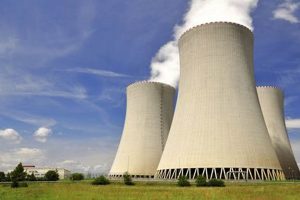
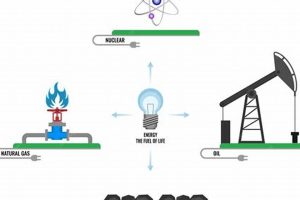
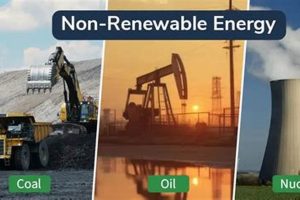
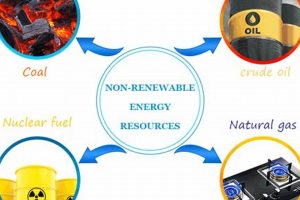
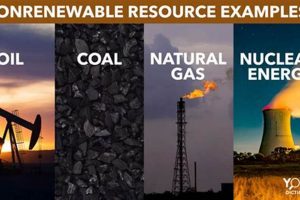
Resources classified as finite and unable to replenish at a rate commensurate with consumption possess distinct traits. These energy sources are typically derived from geological processes that occur over vast timescales, resulting in concentrated deposits of fuels like coal, petroleum, and natural gas. For example, coal forms from ancient plant matter subjected to immense pressure and heat over millions of years. Uranium, the fuel for nuclear fission, is another example, mined from specific geological formations.
The concentrated nature of these energy sources has historically fueled industrialization and societal development by providing a readily accessible, high-density power source. This accessibility has enabled advancements in transportation, manufacturing, and electricity generation, significantly impacting global economies and living standards. However, the finite nature of these resources presents significant long-term challenges, including price volatility due to scarcity, geopolitical implications related to resource control, and environmental concerns stemming from extraction and combustion processes.
Further exploration will delve into the specific categories of these finite resources, examining their formation, extraction methods, environmental impacts, and the ongoing transition to more sustainable alternatives.
Understanding Finite Energy Resources
Effective resource management requires a thorough understanding of the defining characteristics of finite energy sources. The following tips provide insights for informed decision-making and responsible energy consumption.
Tip 1: Recognize the finite nature. Depletion is inevitable. Unlike renewable sources like solar or wind, these resources exist in limited quantities and are not replenished on a human timescale. Planning for eventual scarcity is crucial.
Tip 2: Consider extraction impacts. Obtaining these resources often involves environmentally disruptive processes, such as mining, drilling, and hydraulic fracturing. These activities can have significant consequences for ecosystems, water resources, and air quality.
Tip 3: Account for geopolitical factors. Uneven global distribution of these resources can lead to political instability and economic competition. Supply disruptions and price volatility are potential risks.
Tip 4: Evaluate energy efficiency. Maximizing the efficient use of these finite resources is essential to prolong their availability. Investing in energy-efficient technologies and practices can reduce consumption and mitigate environmental impacts.
Tip 5: Explore alternative energy sources. Transitioning to renewable energy options offers a long-term solution to the challenges posed by finite resource depletion. Diversifying energy portfolios is a key strategy for sustainable development.
Tip 6: Understand the economic implications. Price fluctuations and resource scarcity can significantly impact national economies. Developing strategies for economic diversification and resilience is critical.
Tip 7: Promote responsible consumption. Individual choices play a role in managing resource depletion. Adopting sustainable practices and reducing energy consumption contribute to collective resource conservation.
Understanding the characteristics of finite energy sources is essential for navigating the complexities of global energy systems. By considering these factors, individuals, industries, and governments can make more informed choices regarding energy consumption, resource management, and the transition to a sustainable energy future.
This knowledge base provides a foundation for informed discussion and action concerning the future of energy production and consumption.
1. Finite Resources

The finite nature of non-renewable energy resources is a defining characteristic, shaping their utilization, economic impact, and environmental consequences. Understanding this inherent limitation is crucial for developing sustainable energy strategies.
- Resource Depletion:
Non-renewable resources exist in fixed quantities and are consumed faster than natural processes can replenish them. This depletion necessitates ongoing exploration for new reserves and drives the need for alternative energy solutions. For instance, proven oil reserves are estimated to last for a limited number of decades at current consumption rates.
- Supply Chain Vulnerability:
Concentrated reserves, often geographically limited, create vulnerabilities in energy supply chains. Geopolitical instability or natural disasters can disrupt access, leading to price volatility and energy security concerns. The reliance of many nations on a few oil-producing regions exemplifies this vulnerability.
- Economic Implications:
The finite nature of these resources influences market dynamics, affecting prices and investment decisions. Resource scarcity can lead to economic competition and trade imbalances. The historical fluctuations in oil prices demonstrate the economic impact of finite resource availability.
- Environmental Consequences:
Extraction and utilization of finite resources often have substantial environmental impacts. Mining activities can disrupt ecosystems, while combustion of fossil fuels releases greenhouse gasses, contributing to climate change. The environmental costs associated with coal mining illustrate these consequences.
The finite nature of these resources underscores the urgency of transitioning to renewable energy sources. Continued reliance on finite resources necessitates careful management, technological advancements in extraction and utilization efficiency, and a global commitment to sustainable energy practices. Failure to address these challenges poses significant risks to both economic stability and the environment.
2. High Energy Density
High energy density is a defining characteristic of non-renewable energy sources, significantly impacting their widespread utilization and societal implications. This attribute refers to the amount of energy stored per unit volume or mass of a fuel. Fossil fuels, for example, possess significantly higher energy densities compared to most renewable alternatives. This concentration of energy facilitates efficient storage, transportation, and power generation. The high energy density of gasoline, for instance, enables vehicles to travel considerable distances on a single tank, while the compact nature of coal allows for efficient energy production in thermal power plants.
The practical significance of high energy density extends across various sectors. In transportation, it enables long-range travel and efficient freight movement. In industrial processes, it provides the intense heat required for manufacturing and refining. The high energy output from relatively small quantities of fuel also makes these sources suitable for portable power generation, as seen in generators and backup power systems. However, this characteristic also contributes to challenges. The combustion of high-energy-density fuels typically releases substantial greenhouse gases, contributing to climate change. Moreover, the reliance on these concentrated energy sources often necessitates extensive infrastructure for extraction, processing, and distribution, potentially impacting local environments and communities.
Understanding the implications of high energy density is crucial for evaluating the role of non-renewable resources in the energy landscape. While this characteristic has historically driven industrial development and facilitated technological advancements, it also underscores the need for a transition to more sustainable energy solutions. Balancing the benefits of high energy density with the environmental and social costs associated with non-renewable resource extraction and utilization remains a critical challenge in the pursuit of a sustainable energy future.
3. Extraction Impacts
Extraction impacts represent a significant facet of non-renewable energy characteristics. The processes required to access and retrieve these resourceswhether mining for coal, drilling for oil and natural gas, or extracting uranium for nuclear powerinevitably disrupt natural environments and ecosystems. These impacts manifest in various forms, creating a complex web of environmental and social consequences. For example, mountaintop removal mining for coal drastically alters landscapes, disrupts hydrological systems, and impacts biodiversity. Similarly, offshore oil drilling carries the risk of spills, which can have devastating effects on marine life and coastal communities.
The scale of these impacts varies depending on the resource being extracted and the specific methods employed. Hydraulic fracturing, commonly used in natural gas extraction, raises concerns about groundwater contamination and induced seismicity. Uranium mining, while producing fuel for a low-carbon energy source, generates radioactive waste that requires careful management and long-term storage. These extraction activities not only affect the immediate environment but can also contribute to broader issues, such as air and water pollution, habitat loss, and greenhouse gas emissions. The burning of fossil fuels extracted through these processes further exacerbates climate change, adding another layer of complexity to the environmental impact equation. Understanding these impacts is crucial for assessing the true cost of non-renewable energy and for promoting responsible resource management practices.
Minimizing and mitigating extraction impacts requires a multi-pronged approach. Technological advancements, such as improved drilling techniques and reclamation strategies, can play a role in reducing environmental damage. Regulatory frameworks and stringent environmental standards are essential for enforcing responsible practices within the industry. Furthermore, transitioning to renewable energy sources offers a long-term solution by reducing dependence on finite resources and their associated extraction impacts. Recognizing extraction impacts as an integral component of non-renewable energy characteristics provides a foundation for informed decision-making, responsible resource management, and the pursuit of sustainable energy solutions.
4. Greenhouse Gas Emissions

A fundamental connection exists between greenhouse gas emissions and the characteristics of non-renewable energy sources. Combustion of fossil fuelscoal, oil, and natural gasreleases substantial quantities of greenhouse gases, primarily carbon dioxide (CO2), methane (CH4), and nitrous oxide (N2O), into the atmosphere. This release is a direct consequence of the chemical composition of these fuels, which are primarily composed of carbon and hydrogen. When burned, these elements react with oxygen, producing energy and releasing CO2 as a byproduct. Methane, a more potent greenhouse gas than CO2, can leak during natural gas extraction and transportation. The extraction and processing of these resources also contribute to emissions, though to a lesser extent than combustion. For example, coal mining operations release methane trapped within coal seams, while oil refining processes can emit various volatile organic compounds.
The significance of greenhouse gas emissions as a component of non-renewable energy characteristics is profound. These emissions are the primary driver of anthropogenic climate change, leading to a range of environmental consequences, including global warming, sea-level rise, and extreme weather events. The cumulative impact of these emissions poses a significant threat to ecosystems, human health, and global economies. Furthermore, the long atmospheric lifetime of CO2 means that the effects of these emissions persist for centuries, underscoring the long-term implications of reliance on non-renewable energy sources. The Intergovernmental Panel on Climate Change (IPCC) has established a clear link between human activities, particularly fossil fuel combustion, and observed climate change, emphasizing the urgency of addressing greenhouse gas emissions.
Addressing the challenge of greenhouse gas emissions from non-renewable energy sources requires a multifaceted approach. Transitioning to renewable energy sources, such as solar, wind, and hydro, is crucial for decarbonizing the energy sector. Improving energy efficiency in various sectors, from transportation to buildings, can significantly reduce energy demand and thus emissions. Carbon capture and storage technologies, while still under development, offer the potential to capture CO2 emissions from power plants and industrial facilities, preventing their release into the atmosphere. Policy measures, such as carbon pricing and emissions trading schemes, can create economic incentives for emissions reductions. Understanding the inherent link between greenhouse gas emissions and non-renewable energy characteristics provides a critical foundation for developing effective strategies to mitigate climate change and transition towards a sustainable energy future.
5. Established Infrastructure

Established infrastructure represents a significant factor intertwined with the utilization of non-renewable energy sources. Decades of investment and development have created extensive networks dedicated to the extraction, processing, distribution, and consumption of these resources. This existing infrastructure plays a crucial role in the continued reliance on non-renewable energy, influencing energy markets, economic policies, and technological development. Understanding the connection between established infrastructure and non-renewable energy characteristics is essential for navigating the complexities of energy transitions and developing sustainable energy strategies.
- Extraction and Processing Facilities:
Extensive networks of mines, oil rigs, refineries, and processing plants form the backbone of non-renewable energy extraction. These facilities represent substantial capital investments and employ specialized workforces. The presence of these established systems creates economic inertia, favoring continued reliance on existing resources. For example, regions with established coal mining industries often face economic challenges when transitioning to alternative energy sources due to job losses and the need for retraining.
- Transportation and Distribution Networks:
Pipelines, tanker fleets, rail systems, and power grids facilitate the movement of non-renewable energy resources and the delivery of electricity generated from these sources. These vast networks represent significant sunk costs and influence energy pricing and accessibility. The extensive network of oil pipelines across continents, for instance, influences global oil trade and pricing dynamics.
- Power Generation Infrastructure:
Power plants designed specifically for fossil fuels, such as coal-fired and natural gas-fired power stations, represent substantial investments and contribute significantly to electricity generation capacity. Adapting or replacing these facilities for alternative energy sources requires further investment and technological development. Many countries rely heavily on existing coal-fired power plants for baseload electricity generation, posing challenges for integrating renewable energy sources.
- End-Use Technologies and Appliances:
Combustion engines in vehicles, industrial furnaces, and residential heating systems designed for non-renewable fuels represent a significant component of end-use energy consumption. Replacing these technologies with alternatives requires consumer adoption, technological innovation, and supporting infrastructure. The dominance of gasoline-powered vehicles on roads worldwide illustrates the prevalence of end-use technologies dependent on non-renewable energy.
The established infrastructure surrounding non-renewable energy sources presents both opportunities and challenges. While it provides a readily available energy supply and supports existing economic activities, it can also hinder the transition to more sustainable energy systems. Decarbonizing the energy sector requires not only developing new technologies and renewable energy sources but also adapting or replacing existing infrastructure. Understanding the complex interplay between established infrastructure and non-renewable energy characteristics is crucial for developing effective energy policies, fostering innovation, and navigating the transition towards a sustainable energy future.
6. Price Volatility

Price volatility is an inherent characteristic of non-renewable energy resources, significantly impacting global markets and economies. Several factors contribute to this volatility, stemming from the finite nature of these resources and the complex geopolitical landscape surrounding their extraction and distribution. The finite supply of fossil fuels creates a susceptibility to supply disruptions. Geopolitical events, natural disasters, or unexpected production shortfalls can significantly impact availability, leading to rapid price fluctuations. For example, political instability in a major oil-producing region can trigger price spikes in the global oil market, affecting transportation costs and energy prices worldwide. Demand fluctuations also play a crucial role. Economic growth in emerging markets can drive increased energy demand, putting upward pressure on prices. Conversely, economic downturns can lead to reduced demand and price declines. The inherent inelasticity of demand for energy, particularly in the short term, exacerbates price swings. Consumers often have limited ability to adjust energy consumption rapidly in response to price changes, making the market more susceptible to volatility.
The importance of price volatility as a component of non-renewable energy characteristics lies in its wide-ranging impact. Fluctuating energy prices can disrupt national economies, affecting businesses, consumers, and government budgets. Price volatility can also hinder long-term investment in energy infrastructure, as companies face uncertainty in forecasting future costs and returns. This volatility further emphasizes the need for diversification of energy sources and the development of renewable energy technologies. The 2008 oil price spike, for example, highlighted the vulnerability of economies heavily reliant on imported oil and spurred investment in renewable energy alternatives. Similarly, the recent volatility in natural gas prices underscores the interconnectedness of global energy markets and the importance of energy security.
Understanding the dynamics of price volatility in the context of non-renewable energy is crucial for informed decision-making. Governments can implement policies to mitigate price shocks, such as strategic reserves and energy efficiency programs. Businesses can adopt strategies to manage energy price risk, such as hedging and long-term supply contracts. Consumers can benefit from understanding price drivers and adopting energy-saving practices. Recognizing price volatility as an intrinsic characteristic of non-renewable resources underscores the broader need for a transition to a more stable and sustainable energy future based on diversified resources and reduced reliance on finite, volatile commodities.
7. Geopolitical Implications

Geopolitical implications are inextricably linked to the characteristics of non-renewable energy resources. The uneven distribution of these resources globally creates dependencies and power dynamics that shape international relations, trade, and security. Control over vital resources like oil and natural gas confers significant economic and political leverage. Nations with abundant reserves can influence global markets, while resource-dependent nations face vulnerabilities to supply disruptions and price fluctuations. This dynamic fosters competition and can be a source of international tension. The Organization of the Petroleum Exporting Countries (OPEC), for example, exerts considerable influence on global oil prices due to its members’ collective control over a significant portion of global oil reserves. Similarly, pipeline routes for natural gas transport become strategic assets, influencing relationships between transit countries and resource consumers. Access to uranium, crucial for nuclear power, is another dimension of this geopolitical interplay, with concerns surrounding nuclear proliferation and the security of nuclear materials adding further complexity.
The importance of geopolitical implications as a component of non-renewable energy characteristics stems from the potential for resource-driven conflicts and the impact on global stability. Competition for dwindling resources can exacerbate existing tensions between nations, while resource scarcity can fuel internal conflicts within states. The historical scramble for colonies in resource-rich regions exemplifies this dynamic. Furthermore, reliance on non-renewable resources can create economic dependencies that influence foreign policy decisions. Nations reliant on energy imports may face pressure to maintain favorable relations with supplier countries, even if those relationships conflict with other national interests. The diversification of energy sources and the development of renewable energy technologies offer a pathway to mitigate these geopolitical risks by reducing dependence on concentrated resources controlled by a limited number of nations. The ongoing transition to renewable energy is thus not only an environmental imperative but also a strategic move to enhance energy security and reduce geopolitical vulnerabilities.
Understanding the geopolitical implications associated with non-renewable energy is crucial for navigating the complexities of international relations and promoting global stability. Policymakers must consider the strategic implications of resource dependence and develop strategies to diversify energy supplies and promote energy independence. International cooperation on energy issues, including resource management and technology development, is essential for mitigating resource-driven conflicts and fostering a more secure and sustainable energy future. Recognizing the intricate link between geopolitics and non-renewable energy characteristics provides a framework for informed decision-making, promoting responsible resource management, and mitigating the risks associated with resource competition in a world grappling with the challenges of energy transition and climate change.
Frequently Asked Questions
This section addresses common inquiries regarding the characteristics of non-renewable energy sources, providing concise and informative responses.
Question 1: Why are these energy sources considered “non-renewable”?
These resources are classified as non-renewable due to their finite nature. Formation takes millions of years, meaning their replenishment rate is significantly slower than the rate of consumption. Effective management strategies are essential given their limited availability.
Question 2: What are the primary environmental concerns associated with these resources?
Combustion releases greenhouse gases, contributing to climate change. Extraction processes, like mining and drilling, can disrupt ecosystems, pollute water sources, and degrade air quality. Responsible resource management and exploration of alternative energy sources are essential to mitigate these impacts.
Question 3: How does the finite nature of these resources affect global energy security?
Uneven global distribution and finite reserves create dependencies and vulnerabilities in energy supply chains. Geopolitical tensions and price volatility are potential consequences, emphasizing the need for diversified energy portfolios and strategic resource management.
Question 4: What role does energy density play in the utilization of these resources?
High energy density makes these resources efficient for transportation, power generation, and various industrial processes. However, this characteristic also contributes to their environmental impact, highlighting the importance of responsible use and exploration of alternatives.
Question 5: What economic factors are influenced by the characteristics of these energy sources?
Price volatility, resource scarcity, and geopolitical dynamics influence market stability and investment decisions. Developing strategies for economic resilience and exploring alternative energy options are essential for long-term economic sustainability.
Question 6: How does established infrastructure impact the transition to renewable energy sources?
Existing infrastructure designed for non-renewable resources presents both opportunities and challenges. While it supports current energy needs, it requires adaptation or replacement to accommodate renewable energy integration. Strategic investments and policy frameworks are essential to facilitate this transition.
Understanding the defining characteristics of non-renewable energy sources is crucial for informed decision-making in the face of global energy challenges. Careful resource management, technological advancements, and a commitment to sustainable practices are vital for navigating the complexities of energy transition and ensuring a secure and sustainable energy future.
Further exploration will delve into specific examples of non-renewable energy sources, examining their individual characteristics, extraction methods, and environmental impacts.
Non-Renewable Energy Characteristics
Exploration of non-renewable energy characteristics reveals a complex interplay of factors shaping their utilization, impact, and future role in the global energy landscape. Finite reserves, high energy density, and established infrastructure contribute to their continued prevalence, while extraction impacts, greenhouse gas emissions, price volatility, and geopolitical implications underscore the inherent challenges associated with their reliance. The finite nature necessitates careful resource management and emphasizes the urgency of transitioning towards more sustainable alternatives. High energy density, while advantageous for various applications, carries environmental consequences requiring mitigation. Established infrastructure, a testament to past investments, presents both opportunities and obstacles in the pursuit of energy transition. Price volatility introduces economic uncertainties, and geopolitical dynamics influence international relations and energy security.
The inherent limitations and consequential impacts associated with non-renewable energy characteristics necessitate a fundamental shift in energy production and consumption patterns. Transitioning towards a sustainable energy future requires a multifaceted approach encompassing technological innovation, policy frameworks, and international cooperation. Diversification of energy portfolios, investment in renewable energy technologies, and responsible resource management are crucial for mitigating the challenges associated with non-renewable energy sources and ensuring a secure and environmentally sustainable energy future for generations to come. The future of energy hinges on a global commitment to address these challenges and embrace sustainable alternatives.