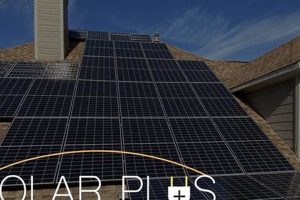
Energy derived from the sun’s radiation is a renewable source that can be converted into usable forms such as electricity, heat, and chemical energy. This conversion is typically achieved through technologies like photovoltaic cells, which directly convert sunlight into electricity, or solar thermal systems, which use sunlight to heat water or air. An example includes rooftop panels generating electricity for a household, or large-scale solar farms feeding power into the grid.
The utilization of this radiant power offers considerable advantages, notably the reduction of greenhouse gas emissions associated with fossil fuel combustion. Its widespread adoption contributes significantly to mitigating climate change and enhancing energy security by diversifying energy sources. Historically, harnessing this power dates back to ancient civilizations employing sunlight for heating and lighting, but modern advancements have led to increasingly efficient and cost-effective technologies.
Subsequent sections will delve into the various methods of capturing and converting this resource, explore the economic aspects of its implementation, and analyze its environmental impact in greater detail. The discussion will also address the challenges and opportunities associated with wider adoption, including storage solutions and grid integration strategies.
Harnessing Radiant Power
Effective utilization requires careful planning and implementation. The following tips outline critical aspects to consider when integrating this renewable resource.
Tip 1: Assess Solar Resource Availability: Conduct a thorough assessment of the solar irradiance at the installation site. This involves analyzing historical weather data, considering shading factors, and determining the optimal angle and orientation for solar panel placement to maximize energy capture.
Tip 2: Select Appropriate Technology: Choose the most suitable technology based on specific needs and applications. Photovoltaic (PV) systems are ideal for electricity generation, while solar thermal systems are effective for heating water or air. Consider factors such as efficiency, cost, and lifespan when making the selection.
Tip 3: Optimize System Design: Ensure the system is designed to meet the energy demands of the intended application. This involves accurately sizing the system components, including solar panels, inverters, and storage batteries, to ensure efficient and reliable operation.
Tip 4: Implement Energy Storage Solutions: Incorporate energy storage solutions, such as batteries, to address the intermittent nature of solar power. This allows for continuous power supply during periods of low sunlight or at night, enhancing the system’s reliability and reducing reliance on the grid.
Tip 5: Ensure Proper Installation and Maintenance: Adhere to industry best practices for installation and maintenance. Regular inspections, cleaning, and timely repairs are crucial for maintaining optimal performance and extending the lifespan of the system. Engaging qualified professionals for these tasks is recommended.
Tip 6: Monitor System Performance: Implement a monitoring system to track energy production, identify potential issues, and optimize system performance. This data can be used to identify areas for improvement and ensure the system is operating efficiently.
These considerations are fundamental for maximizing the benefits of capturing radiant power. Strategic planning and diligent execution are key to realizing its full potential as a sustainable energy source.
The subsequent discussion will explore specific applications and innovations in radiant energy technologies.
1. Radiant Light

Radiant light, a form of electromagnetic radiation emitted by the sun, constitutes a primary component of the energy source in question. Without this emission, the utilization of the sun’s power would be impossible. The process of energy generation, whether through photovoltaic cells or concentrated solar power systems, fundamentally relies on the absorption and conversion of this radiant light. Its intensity and spectral composition directly influence the efficiency and output of harvesting technologies. For example, areas with higher solar irradiance, which is a measure of the radiant light received per unit area, generally exhibit greater potential for harvesting. The availability and intensity of radiant light directly dictate the feasibility and economic viability of harnessing the energy source within any given region.
Photovoltaic panels, a common application, exemplify this connection. These panels utilize semiconductors to convert photons, the particles that comprise radiant light, into electrical energy. The number of photons that strike the panel’s surface, as well as their energy levels, are directly proportional to the amount of electricity generated. Similarly, concentrated solar power systems employ mirrors to focus radiant light onto a receiver, generating heat to drive turbines and produce electricity. In both cases, the characteristics of the light, namely its intensity and wavelength distribution, are critical factors in determining the system’s overall performance. The spectral distribution impacts the semiconductors efficiency in generating electron-hole pairs.
The interplay between radiant light and the source itself underscores the importance of understanding its properties and characteristics. Variations in light intensity and spectrum due to atmospheric conditions, geographic location, and time of day necessitate adaptive technologies and strategies. By optimizing the capture and conversion of the sun’s radiant light, technological advancements can enhance energy yield, reduce costs, and expand the accessibility of this renewable resource. Further research into materials that can efficiently absorb and convert a wider spectrum of radiant light is paramount for improving the efficacy and economic viability of this form of renewable energy.
2. Electromagnetic Radiation

Electromagnetic radiation from the sun constitutes the energy source for what is commonly described as solar power. Understanding the properties and behavior of this radiation is fundamental to the effective capture and conversion of solar energy.
- Spectrum Composition
The electromagnetic radiation from the sun spans a broad spectrum, including ultraviolet (UV), visible light, and infrared (IR) wavelengths. Different solar energy technologies are designed to capture and convert specific portions of this spectrum. For example, photovoltaic cells primarily target the visible and near-infrared regions, while solar thermal systems can utilize a broader range, including infrared radiation, to generate heat. The efficiency of these technologies is directly influenced by the spectral composition of the incoming radiation.
- Photon Energy
Electromagnetic radiation is composed of photons, each carrying a specific amount of energy that is inversely proportional to its wavelength. Higher-energy photons (shorter wavelengths) can induce photochemical reactions, such as those occurring in the atmosphere, while lower-energy photons (longer wavelengths) primarily contribute to thermal heating. Solar energy technologies leverage these differences to convert electromagnetic energy into various forms, including electricity and heat. A key consideration is that a specific photon energy, which is determined by the bandgap of material must be present to energize and move the electrons.
- Atmospheric Attenuation
As solar electromagnetic radiation traverses the Earth’s atmosphere, it undergoes attenuation due to absorption and scattering by atmospheric gases, aerosols, and clouds. This attenuation affects both the intensity and spectral distribution of the radiation reaching the Earth’s surface. Accurate modeling of atmospheric attenuation is critical for predicting the performance of solar energy systems and optimizing their placement. Locations with clearer skies and lower atmospheric pollution generally receive higher levels of solar irradiance.
- Wave-Particle Duality
Electromagnetic radiation exhibits wave-particle duality, behaving as both a wave and a stream of particles (photons). This duality is essential for understanding the interaction of solar radiation with matter. The wave nature of radiation is relevant for phenomena like diffraction and interference, which can be harnessed to concentrate sunlight. The particle nature is pertinent to processes such as the photoelectric effect, which underlies the operation of photovoltaic cells. This combined understanding allows for design and creation of next-generation solar capturing technologies.
The characteristics of electromagnetic radiation dictate the potential and limitations of solar energy technologies. Continued research into materials and methods that can more efficiently capture and convert this radiation across the electromagnetic spectrum is essential for advancing the use of solar energy as a viable and sustainable energy source.
3. Renewable Resource

The fundamental nature of solar energy as a renewable resource is intrinsically linked to its definition. This renewability stems from its source: the sun, a celestial body with a vast and continuous energy output. Unlike finite resources such as fossil fuels, solar radiation is replenished constantly, making it an inexhaustible supply on human timescales. This characteristic is paramount in considering solar energy as a sustainable solution to global energy demands. The ongoing supply dictates the feasibility of long-term investment and development in solar technologies. Without this inherent renewability, solar energy would not be considered a viable alternative to depleting sources.
The practical implications of solar energy’s renewability are far-reaching. Its use reduces reliance on fossil fuels, mitigating greenhouse gas emissions and contributing to climate change mitigation efforts. Examples of this can be seen in large-scale solar farms powering entire cities, and individual households generating their own electricity through rooftop panels. Furthermore, the renewability of solar energy fosters energy independence, allowing regions and nations to reduce their dependence on external energy sources. The European Union’s increasing investment in solar and wind energy is a prime example of this strategy to secure its energy future. As technology improves and costs decrease, the utilization of solar energy as a renewable resource continues to expand, demonstrating its increasing significance in the global energy landscape. The economic impact is clear as technology improves and infrastructure spreads creating jobs throughout.
In summary, the designation of solar energy as a renewable resource is not merely a descriptive term; it is a defining characteristic that underpins its value and potential. Its inexhaustible supply drives its relevance as a sustainable energy solution, influencing policy decisions, technological advancements, and global energy strategies. While challenges remain in terms of energy storage and grid integration, the fundamental renewability of solar energy positions it as a crucial component of a sustainable energy future.
4. Clean Energy
The designation of solar energy as “clean energy” highlights a critical attribute in the context of defining its value and significance. This descriptor emphasizes the minimal environmental impact associated with its generation and utilization, differentiating it from conventional energy sources that contribute substantially to pollution and climate change. Its classification is a foundational aspect and integral to its attractiveness as a sustainable energy solution.
- Absence of Greenhouse Gas Emissions
Unlike fossil fuels, solar energy generation does not directly produce greenhouse gases such as carbon dioxide, methane, and nitrous oxide. This characteristic significantly reduces its contribution to global warming and climate change. Lifecycle analyses that consider manufacturing, transportation, and decommissioning of solar infrastructure reveal a substantially lower carbon footprint compared to coal, oil, or natural gas power plants. Its mitigation is a driving factor behind the adoption of solar technologies in countries committed to emissions reduction targets.
- Minimal Air and Water Pollution
Traditional energy sources often release harmful pollutants into the air and water, leading to respiratory problems, acid rain, and water contamination. Solar energy, conversely, generates electricity or heat with minimal emissions of these pollutants. While manufacturing processes may involve some industrial byproducts, the operational phase of solar energy systems is characterized by significantly reduced air and water pollution. Its decreased use of water creates a sustainable practice.
- Resource Conservation
The extraction, processing, and transportation of fossil fuels involve significant resource depletion and environmental disruption. Solar energy, however, relies on a readily available and virtually inexhaustible resource: sunlight. By harnessing this energy, dependence on finite and environmentally damaging resources is reduced. Land use is still necessary, either rooftops, brownfields, or remote areas, mitigating the extraction of raw materials and infrastructure.
- Reduced Environmental Risk
The processes associated with fossil fuel extraction and transportation, such as oil spills and coal mining accidents, pose significant environmental risks. Solar energy systems, while not entirely free of risk, generally present a lower potential for large-scale environmental disasters. The decentralized nature of many solar installations enhances energy security and reduces vulnerability to disruptions caused by centralized power plants. The potential for technological failures are less.
These facets collectively underscore why solar energy is designated as “clean energy.” The reduced environmental impact, coupled with its renewable nature, positions it as a critical component of a sustainable energy future. The attributes inherent in its designation drive its increased adoption, supporting the global shift towards a cleaner and more sustainable energy system.
5. Global Irradiance

Global irradiance, defined as the total solar radiation incident on a surface, is a critical parameter directly influencing the efficacy of harnessing the energy derived from the sun. It incorporates both direct and diffuse components of solar radiation. The strength of radiation received at a specific location directly impacts the performance of any solar energy system. Lower irradiance levels translate to reduced energy production and potentially lower economic viability for the project. Higher annual irradiance creates a better overall annual return on investment for solar generation.
The influence of global irradiance extends to technology selection. Regions with high direct irradiance may favor concentrated solar power (CSP) systems, while areas with predominantly diffuse radiation may opt for photovoltaic (PV) panels. Accurate assessment of global irradiance, through meteorological data analysis and site-specific measurements, is essential for system design and performance forecasting. Without such data, the economic and environmental benefits are difficult to assess. It affects the total number of solar panels to be installed in a certain area or facility. In Germany, the amount of solar irradiance is significantly less than many areas of Africa. Thus the overall number of panels to produce the same amount of electricity is different for each location.
The relationship between global irradiance and the feasibility of solar energy projects is direct. Understanding the resource available, quantified by global irradiance measurements, is a cornerstone of investment decisions, technological choices, and long-term sustainability assessments. The availability of such data ensures project planning and resource optimization. Therefore, measuring Global Irradiance contributes greatly to the Definition of solar energy, the effectiveness of its systems, and the economic viability for future expansion.
6. Energy Conversion
Energy conversion represents a pivotal process in the context of what is defined as energy from the sun. It is the mechanism by which the suns radiant energy is transformed into usable forms of power, such as electricity or heat. Without energy conversion technologies, the sun’s radiation would remain an untapped resource. Photovoltaic cells exemplify this process by directly converting photons from sunlight into electrical energy through the photoelectric effect. Solar thermal systems, conversely, use sunlight to heat a working fluid, which in turn drives a turbine to generate electricity. The efficiency and effectiveness of these technologies directly impact the viability and scalability of this energy source. The advancement of new materials, such as Perovskite films and solid-state inverters are essential to improving the current technology. These advancements contribute greatly to the overall definition of solar energy.
The practical significance of energy conversion is apparent in diverse applications across various scales. Residential rooftop solar panels provide homeowners with clean electricity, reducing dependence on the grid and lowering energy costs. Large-scale solar farms contribute significantly to national energy grids, providing a renewable alternative to fossil fuel-based power plants. Solar water heating systems offer an energy-efficient solution for domestic hot water needs, reducing reliance on conventional heating methods. In remote areas, off-grid solar systems provide a sustainable source of electricity for lighting, communication, and other essential services, improving the quality of life for communities with limited access to the grid. Additionally, concentrated solar power plants generate electricity by focusing solar thermal energy to drive turbines for massive electrical generation and distribution.
The ongoing research and development in energy conversion technologies are essential for overcoming the challenges associated with the definition of solar energy. Increasing the efficiency of photovoltaic cells, improving the storage capabilities of solar thermal systems, and reducing the cost of these technologies are crucial steps towards making this form of renewable energy a more competitive and widely adopted energy source. Continued advancements, such as thin-film solar cells and advanced solar concentrators, will drive down the cost and improve the performance. Improved energy conversion is an integral component that makes the definition of solar energy even more viable and essential.
Frequently Asked Questions Regarding Solar Energy Definitions
This section addresses common inquiries concerning the fundamental definition of solar energy and its practical implications.
Question 1: What constitutes the primary distinction between solar energy and other renewable energy sources?
Solar energy is directly derived from electromagnetic radiation emitted by the sun. Other renewable sources, such as wind or hydropower, are often indirectly linked to solar energy through atmospheric and hydrological processes.
Question 2: How does atmospheric interference impact the definition and utilization of solar power?
Atmospheric components such as clouds, aerosols, and gases absorb and scatter solar radiation, thus diminishing its intensity and altering its spectral composition. This phenomenon necessitates accurate modeling for optimizing system performance and site selection.
Question 3: What are the dominant energy conversion technologies currently employed in harnessing sun-derived energy?
Photovoltaic (PV) cells, which directly convert sunlight into electricity, and solar thermal systems, which utilize solar radiation to heat a working fluid for electricity generation or direct heating purposes, represent the most prevalent methods.
Question 4: Why is assessment of global irradiance crucial for effective solar energy deployment?
Global irradiance, the total solar radiation received on a surface, determines the potential energy output of a solar installation. Accurate measurement and analysis of this parameter are essential for system design, performance prediction, and economic feasibility assessments.
Question 5: How does the classification of solar energy as “clean energy” influence its role in global sustainability initiatives?
As “clean energy”, the sun is characterized by minimal greenhouse gas emissions and air or water pollution during operation, contributing to climate change mitigation, public health improvement, and environmental preservation efforts. Its environmental benefits justify its adoption and the development of new systems to use it.
Question 6: What factors should be considered when evaluating the long-term economic viability of solar energy investments?
Factors include initial capital costs, ongoing maintenance expenses, energy production rates based on local irradiance levels, government incentives, electricity prices, and system lifespan. A comprehensive cost-benefit analysis is essential for informed decision-making.
In summary, a thorough understanding of the underlying principles and practical considerations of the resource is imperative for its efficient and sustainable utilization.
The following segment will delve into the future prospects and potential challenges associated with the continued development and deployment of this alternative energy source.
The Definition of Solar Energy
This exploration has delineated the multi-faceted nature of the power derived from the sun, emphasizing its status as a renewable and relatively clean energy source. Discussions have encompassed radiant light, electromagnetic radiation, renewability, environmental impact, global irradiance considerations, and the mechanics of energy conversion. The preceding analysis underlines the critical role of each element in fully grasping the fundamental aspects and realizing the potential of sun-based electricity generation.
Continued innovation in materials science, energy storage, and grid integration is essential to fully realize the widespread adoption of solar technologies. A sustained commitment to research, development, and strategic investment will be vital to address existing challenges and capitalize on the opportunities presented by this readily available and sustainable energy resource. Understanding and applying this definition remains paramount for guiding future energy policies and ensuring a more sustainable energy future.


![Why Solar is a Renewable Source of Energy [Benefits] | Renewable Energy Solutions for a Sustainable Future | Clean & Green Power](https://pplrenewableenergy.com/wp-content/uploads/2026/04/th-454-300x200.jpg "Why Solar is a Renewable Source of Energy [Benefits] Renewable Energy Solutions for a Sustainable Future | Clean & Green Power")