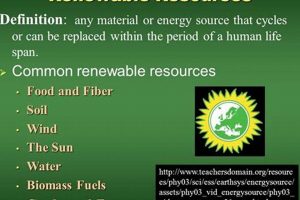
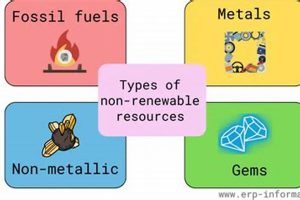
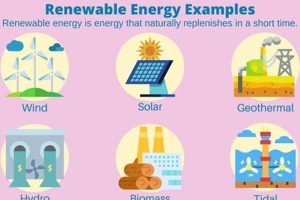
Natural resources are categorized based on their replenishment rate. One category encompasses those which are naturally replenished on a human timescale, such as solar, wind, and hydro power. These sources can be used repeatedly because they are naturally replaced. Conversely, another category includes resources that exist in finite quantities or are replenished at rates far exceeding human lifespans. Examples of this include fossil fuels like coal, oil, and natural gas, as well as minerals. Once these are depleted, they are either not replaceable or require millions of years to form.
The distinction between these resource types is paramount for sustainability. Utilizing the former minimizes environmental impact, reduces reliance on finite reserves, and promotes long-term energy security. Historically, societies have relied heavily on the latter to fuel industrial development and economic growth. However, the continued extraction and consumption of these finite resources leads to environmental degradation, climate change, and resource scarcity, highlighting the urgent need to transition toward sustainable alternatives.
The following sections will delve into the specific characteristics of each resource type, examining their formation, extraction methods, environmental consequences, and potential for contributing to a sustainable energy future. Further discussion will address the role of technological advancements, policy interventions, and individual actions in facilitating this crucial transition.
Strategies for Resource Management
Effective resource management is crucial for a sustainable future, requiring a comprehensive understanding of resource availability and consumption patterns.
Tip 1: Prioritize Resource Diversification: Reduce reliance on single finite sources by exploring a range of sustainable alternatives. This minimizes vulnerability to supply disruptions and price volatility associated with depleting assets.
Tip 2: Invest in Energy Efficiency: Implement technologies and practices that minimize energy waste. This reduces overall resource demand and extends the lifespan of existing reserves, while lowering operational costs.
Tip 3: Promote Sustainable Consumption: Encourage responsible consumption patterns through education and policy initiatives. This reduces overall demand and promotes a more equitable distribution of available resources.
Tip 4: Support Research and Development: Invest in technological advancements that improve extraction methods, enhance the efficiency of renewable sources, and develop innovative storage solutions. This accelerates the transition toward a sustainable resource ecosystem.
Tip 5: Implement Circular Economy Principles: Embrace strategies that minimize waste and maximize resource utilization. This involves designing products for durability, recyclability, and reuse, reducing the need for virgin resource extraction.
Tip 6: Establish Clear Regulatory Frameworks: Develop robust regulations that promote responsible resource management, incentivize sustainable practices, and penalize environmentally damaging activities. This creates a level playing field and encourages long-term sustainability.
Tip 7: Foster International Collaboration: Encourage cooperation among nations to share best practices, coordinate research efforts, and address global resource challenges. This promotes a more unified and effective approach to resource management.
Implementing these strategies is essential for achieving long-term resource security, mitigating environmental impacts, and fostering a sustainable future for generations to come.
The article will conclude with a discussion of the broader implications of resource management and the role of individual responsibility in achieving a sustainable future.
1. Replenishment Rate

Replenishment rate serves as a defining characteristic in the classification of natural resources, fundamentally differentiating between those categorized as renewable and those considered non-renewable. It dictates the long-term availability of a resource and, consequently, influences its suitability for sustainable utilization.
- Renewable Resource Replenishment
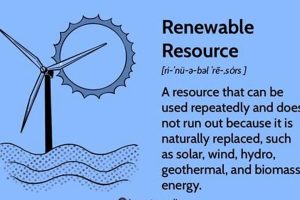
Renewable resources are defined by their ability to be replenished within a human lifetime. This replenishment occurs through natural processes, such as solar radiation continually reaching the Earth, wind patterns driven by atmospheric conditions, and the water cycle renewing freshwater sources. The rate of consumption should ideally be balanced by the rate of replenishment to ensure long-term availability. Solar, wind, geothermal, and hydropower are examples.
- Non-Renewable Resource Depletion
Non-renewable resources, conversely, exist in finite quantities or are replenished over geological timescales vastly exceeding human lifespans. Extraction of these resources inherently leads to depletion, as the rate of consumption far outstrips the rate of natural regeneration. Fossil fuels, such as coal, oil, and natural gas, exemplify this category; their formation required millions of years of geological processes, and their consumption irreversibly diminishes the available supply.
- Impact of Consumption Rate
The relationship between consumption rate and replenishment rate dictates the sustainability of resource use. When consumption rates exceed replenishment rates, even resources traditionally considered renewable can become depleted or degraded. Overfishing, deforestation, and groundwater depletion exemplify instances where unsustainable consumption undermines the renewability of otherwise sustainable resources.
- Technological Influences
While replenishment rate is a natural characteristic, technological advancements can influence the availability and accessibility of resources. Improved extraction techniques can increase the short-term supply of non-renewable resources, but at the cost of accelerating depletion. Conversely, technologies that enhance the efficiency of renewable energy generation can increase the effective supply of these resources and reduce reliance on finite reserves.
In summary, replenishment rate is a crucial determinant in assessing the long-term sustainability of resource utilization. Understanding this principle is essential for developing strategies that prioritize the use of renewable resources, manage the depletion of non-renewable resources responsibly, and foster a more sustainable relationship with the natural environment. By aligning consumption patterns with natural replenishment rates, societies can mitigate the risks of resource scarcity and promote long-term environmental health.
2. Finite Availability

The concept of finite availability is central to differentiating resources. It directly informs whether a resource is categorized as non-renewable. The crucial element is that these resources exist in limited quantities on Earth. Their formation processes typically span geological timescales, rendering replenishment insignificant from a human perspective. Extraction and consumption, therefore, inevitably lead to depletion. This characteristic compels careful management to avoid exhausting usable supplies, impacting economic stability, and causing geopolitical tension. Fossil fuelscoal, oil, and natural gasexemplify this reality. Their use as primary energy sources highlights the challenges societies face as reserves dwindle and alternative energy sources are sought.
Understanding finite availability influences policy decisions and technological innovation. Recognizing the limited supply motivates investment in renewable energy technologies, aiming to reduce reliance on depleting resources. Governments enact regulations to control extraction rates, encourage energy efficiency, and promote resource conservation. For instance, strategic petroleum reserves are established to buffer against supply disruptions, illustrating proactive measures taken to manage the challenges posed by the limited availability of essential resources. The mining of rare earth minerals, vital for electronics and renewable energy technologies, presents another example. Their geographically concentrated deposits underscore the strategic importance of managing finite reserves and diversifying supply chains.
In summary, finite availability dictates the fundamental unsustainability of relying solely on these resources. The concept compels a transition towards sustainable practices. Addressing the challenges linked to limited availability demands a multifaceted approach, including technological innovation, policy adjustments, and conscious consumption patterns. Such a comprehensive approach is essential for securing long-term resource security and mitigating the environmental consequences associated with the extraction and use of these materials.
3. Environmental Impact

The environmental impact associated with resource utilization serves as a critical differentiator between resource categories. The extraction, processing, and consumption of natural resources result in varying degrees of environmental degradation. Understanding these impacts is essential for making informed decisions about resource management and transitioning towards more sustainable practices.
- Air and Water Pollution
The combustion of fossil fuels releases greenhouse gases, contributing to climate change, and air pollutants, impacting human health and ecosystems. Mining activities and oil spills contaminate water sources, harming aquatic life and potentially affecting drinking water supplies. Conversely, renewable energy sources, such as solar and wind power, generate electricity with minimal air and water pollution.
- Habitat Destruction and Land Use
The extraction of non-renewable resources often involves significant habitat destruction through mining, deforestation, and infrastructure development. Renewable energy installations, while generally less impactful, can also require substantial land areas, particularly for large-scale solar and wind farms. Sustainable land management practices are crucial for mitigating these impacts and minimizing the ecological footprint of energy production.
- Resource Depletion and Waste Generation
The extraction of non-renewable resources leads to the depletion of finite reserves, potentially causing resource scarcity and economic instability. Additionally, the processing and consumption of these resources generate significant amounts of waste, including hazardous materials, posing environmental and health risks. Renewable energy sources, while relying on raw materials for manufacturing, generally produce less waste during operation and can be recycled or repurposed at the end of their lifespan.
- Climate Change Contribution
The burning of fossil fuels is the primary driver of anthropogenic climate change. The release of greenhouse gases traps heat in the atmosphere, leading to rising temperatures, altered weather patterns, and sea-level rise. Transitioning towards renewable energy sources is essential for reducing greenhouse gas emissions and mitigating the impacts of climate change. The carbon footprint associated with resource utilization must be considered in assessing the overall environmental sustainability of different energy systems.
In summary, the environmental impacts associated with resource utilization vary significantly between renewable and non-renewable resources. While renewable energy sources offer a pathway towards a more sustainable future, minimizing their environmental footprint through careful planning and responsible management is crucial. Integrating environmental considerations into resource management strategies is essential for preserving ecosystems, protecting human health, and mitigating the impacts of climate change. This underscores the importance of promoting a shift towards renewable resources and sustainable consumption patterns.
4. Energy Security

Energy security, defined as the uninterrupted availability of energy sources at an affordable price, is intrinsically linked to the selection and management of natural resources. The reliance on different resource typesrenewable versus non-renewableprofoundly influences a nation’s or region’s energy security posture.
- Diversification of Energy Sources
Diversifying the energy mix is a cornerstone of energy security. Over-reliance on a single non-renewable source, like oil, exposes a nation to price volatility and supply disruptions stemming from geopolitical instability or resource depletion. Integrating renewable sources, such as solar, wind, and geothermal, mitigates these risks by providing domestically available, often geographically distributed, alternatives. Countries with diversified energy portfolios are demonstrably more resilient to external shocks.
- Geopolitical Stability and Resource Control
Access to non-renewable resources often involves complex geopolitical dynamics. Nations reliant on imported fossil fuels are vulnerable to political leverage exerted by exporting countries. This can lead to strained international relations and increased security risks. Conversely, renewable energy resources are typically more evenly distributed geographically, reducing dependence on specific nations and fostering greater energy independence. Nations investing heavily in renewable energy enhance their strategic autonomy.
- Infrastructure Resilience and Decentralization
Centralized energy systems, particularly those reliant on single non-renewable sources, are susceptible to large-scale disruptions from natural disasters, cyberattacks, or infrastructure failures. Renewable energy systems, especially when deployed in a distributed manner (e.g., rooftop solar panels), enhance infrastructure resilience. Decentralization provides redundancy and reduces the impact of localized disruptions. Microgrids powered by renewable energy can provide essential services during grid outages, enhancing community resilience.
- Long-Term Price Stability
The price of non-renewable resources is subject to volatility driven by supply and demand imbalances, geopolitical events, and depletion concerns. Renewable energy sources, once installed, have significantly lower operating costs, as they are not subject to fuel price fluctuations. This price stability provides greater predictability for consumers and businesses, fostering economic growth and energy affordability in the long term. Levelized Cost of Energy (LCOE) analyses demonstrate the increasing competitiveness of renewable energy compared to fossil fuels.
In summary, energy security is inextricably linked to the choices made regarding resource utilization. A strategic shift towards diversified energy portfolios, emphasizing renewable sources, is crucial for enhancing energy independence, mitigating geopolitical risks, bolstering infrastructure resilience, and ensuring long-term price stability. This transition is not merely an environmental imperative but also a fundamental component of national security and economic stability.
5. Sustainability Implications

The distinction between resource categories carries profound sustainability implications that extend beyond mere energy production. The reliance on non-renewable resources inherently contradicts the principles of sustainability, defined by meeting the needs of the present without compromising the ability of future generations to meet their own needs. The extraction and consumption of finite resources leads to their depletion, diminishing the resource base available to future societies. This scarcity can lead to economic hardship, social unrest, and international conflict. Furthermore, the environmental consequences associated with the use of non-renewable resources degrade ecosystems, reduce biodiversity, and contribute to climate change, further jeopardizing the well-being of future generations. The unsustainable exploitation of these sources poses significant long-term challenges to both environmental integrity and societal stability, as demonstrated by the environmental degradation in regions heavily reliant on fossil fuel extraction.
Conversely, the utilization of renewable resources aligns more closely with sustainability principles. These resources are naturally replenished, ensuring their availability for future use, provided that consumption rates remain within sustainable limits. The lower environmental impact associated with renewable energy sources minimizes ecosystem degradation and reduces contributions to climate change. Investments in renewable energy infrastructure can create sustainable economic opportunities, fostering local employment and reducing reliance on resource-dependent economies. Examples include the growth of solar panel manufacturing and installation industries in regions transitioning away from coal mining. However, it is crucial to acknowledge that even renewable energy sources are not without their sustainability challenges. These include land use considerations, raw material requirements for manufacturing, and the potential environmental impacts of large-scale projects, such as hydropower dams.
In summary, the sustainability implications of resource utilization are far-reaching and demand careful consideration. While the transition towards renewable resources offers a pathway towards a more sustainable future, a holistic approach is required. This approach must address not only the environmental impacts of energy production but also the social and economic dimensions of resource management. Prioritizing resource efficiency, promoting sustainable consumption patterns, and investing in research and development are essential components of this transition. Failing to address these sustainability implications will result in long-term environmental degradation, resource scarcity, and compromised well-being for future generations. Therefore, a commitment to sustainable resource management is crucial for safeguarding both the environment and human society.
Frequently Asked Questions
This section addresses common inquiries regarding the categorization of natural resources, providing concise explanations to clarify key concepts.
Question 1: What distinguishes between renewable and non-renewable resources?
The fundamental distinction lies in the replenishment rate. Renewable resources are naturally replenished within a human lifespan, while non-renewable resources exist in finite quantities or are replenished over geological timescales exceeding human lifespans.
Question 2: Can a renewable resource become non-renewable?
Yes, if the rate of consumption consistently exceeds the rate of natural replenishment, even renewable resources can become depleted or degraded, effectively functioning as non-renewable within a specific context.
Question 3: Are all renewable energy sources environmentally benign?
No, while renewable energy sources generally have lower environmental impacts than fossil fuels, they can still have adverse effects. Hydropower dams, for example, can disrupt ecosystems, and large-scale solar farms require significant land use.
Question 4: How does the finite availability of non-renewable resources affect global economies?
The finite availability of these resources can lead to price volatility, geopolitical competition, and economic instability as reserves dwindle and extraction becomes more challenging.
Question 5: What role does technology play in resource management?
Technology plays a crucial role by improving extraction efficiency, enhancing the performance of renewable energy systems, and developing innovative energy storage solutions. It also enables more efficient utilization and recycling of materials, extending resource lifespan.
Question 6: What are the key policy interventions that promote sustainable resource management?
Effective policy interventions include carbon pricing mechanisms, renewable energy mandates, energy efficiency standards, and regulations that promote responsible resource extraction and waste management.
This FAQ section has clarified the key differences, challenges, and opportunities associated with renewable and non-renewable resources. A thorough understanding of these principles is essential for informed decision-making and sustainable resource management.
The next section will explore specific examples of renewable and non-renewable resources in greater detail, highlighting their unique characteristics and applications.
Understanding Resource Categorization
The preceding exploration of what is renewable and non renewable resources underscores a fundamental dichotomy impacting planetary sustainability. One encompasses resources replenished on human timescales, facilitating continued use with responsible management. The other represents finite reserves, the extraction of which inevitably leads to depletion and environmental consequences. The implications of this distinction are far-reaching, impacting energy security, economic stability, and long-term ecological health.
Recognizing what is renewable and non renewable resources serves as a call to action. The transition towards sustainable practices demands a commitment to resource diversification, technological innovation, and responsible consumption patterns. Failure to address this imperative jeopardizes future generations. A concerted global effort is required to safeguard resources and foster a more sustainable future.
![Guide to What Energy Resources Are Renewable [+Future] | Renewable Energy Solutions for a Sustainable Future | Clean & Green Power](https://pplrenewableenergy.com/wp-content/uploads/2026/03/th-516-300x200.jpg "Guide to What Energy Resources Are Renewable [+Future] Renewable Energy Solutions for a Sustainable Future | Clean & Green Power")