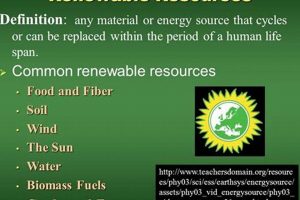
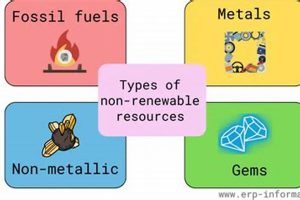
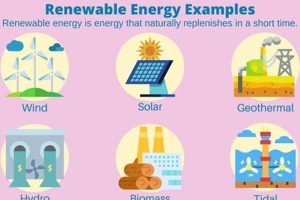
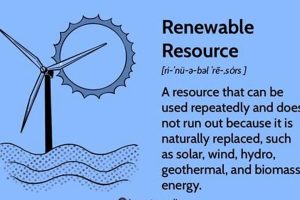
Naturally replenishing energy sources are derived from processes that are virtually inexhaustible. Examples include solar radiation, wind, geothermal heat, and water movement. These sources stand in contrast to fossil fuels and nuclear materials, which are finite and deplete with use.
Harnessing these continually available energy forms offers several advantages. It mitigates reliance on politically volatile or environmentally damaging fuel extraction. Furthermore, it decreases greenhouse gas emissions, contributing to the mitigation of climate change and enhancing long-term energy security. Historically, societies have utilized some of these methods, such as wind power for sailing and water power for milling, but modern technologies enable more efficient and widespread application.
This discussion will delve into specific categories of these replenishing energy supplies, examining the technologies used to capture and convert their potential into usable power, and considering the challenges and opportunities associated with their widespread adoption.
Optimizing the Integration of Replenishable Energy Sources
Effective strategies are crucial to maximize the benefits and minimize the challenges associated with implementing power generated from sustainable and naturally recurring sources.
Tip 1: Prioritize Grid Modernization: Investing in smart grid technologies enhances the capacity to integrate variable generation sources, such as solar and wind, ensuring grid stability and reducing curtailment.
Tip 2: Diversify Energy Portfolio: Employing a mix of various source types, like solar, wind, hydro, and geothermal, mitigates the risks associated with intermittency and regional variations.
Tip 3: Incentivize Energy Storage: Supporting the development and deployment of energy storage solutions, such as batteries and pumped hydro, allows for the capture and dispatch of energy generated when it is most abundant to times when it is needed most.
Tip 4: Streamline Permitting Processes: Reducing bureaucratic hurdles and shortening project development timelines facilitates the faster deployment of replenishable energy projects.
Tip 5: Invest in Research and Development: Continued funding for research and development leads to technological advancements, increased efficiency, and reduced costs for emerging technologies in this sector.
Tip 6: Encourage Community Engagement: Actively engaging local communities in project planning and development fosters acceptance and ensures that projects align with local needs and values.
Tip 7: Establish Clear Policy Frameworks: Implementing stable and predictable policies, such as renewable portfolio standards and carbon pricing mechanisms, provides long-term investment certainty.
By focusing on these strategies, governments, businesses, and individuals can unlock the full potential of replenishable energy sources, contributing to a cleaner, more secure, and sustainable energy future.
The following sections will further explore the challenges and prospects of widespread adoption of these technologies and their impact on energy markets.
1. Solar photovoltaic systems

Solar photovoltaic (PV) systems are a critical component within the category of renewable energy resources. Their ability to directly convert sunlight into electricity positions them as a key technology in mitigating reliance on fossil fuels and promoting energy sustainability.
- Photon Absorption and Electron Excitation
Solar PV cells utilize semiconductor materials, typically silicon, to absorb photons from sunlight. When a photon strikes the semiconductor, it excites an electron, creating an electron-hole pair. This excitation generates an electrical current that can be harnessed for power. This direct conversion process is distinct from thermal solar technologies that first convert sunlight to heat.
- Module and Array Configurations
Individual solar cells are interconnected and encapsulated to form modules, which are then grouped together to create arrays. These arrays can be deployed on rooftops, ground-mounted installations, or integrated into building materials. The configuration allows for scalability, from small residential systems to large-scale utility power plants. An example is the deployment of rooftop solar panels on residential buildings, providing homeowners with a source of clean electricity.
- Grid Integration and Energy Storage
Integrating solar PV systems with the electrical grid requires careful consideration of intermittency. As sunlight varies throughout the day and weather conditions fluctuate, energy storage solutions, such as batteries, are crucial for ensuring a consistent and reliable power supply. Furthermore, smart grid technologies facilitate the efficient distribution of electricity generated from dispersed solar PV installations. A real-world example is the combination of solar PV with battery storage in remote communities, offering energy independence and reducing reliance on diesel generators.
- Environmental and Economic Considerations
Solar PV systems offer significant environmental benefits, including reduced greenhouse gas emissions and air pollution, when compared to fossil fuel-based power generation. The economic considerations encompass the initial installation costs, ongoing maintenance expenses, and the long-term return on investment through reduced electricity bills and potential revenue from selling excess power back to the grid. Government incentives, such as tax credits and rebates, often play a significant role in promoting solar PV adoption.
The integration of solar PV systems into global energy infrastructure represents a tangible step toward diversifying resource types and promoting environmentally sound energy practices. Their continued technological advancement and cost reduction solidify their place as a cornerstone within the sustainable energy landscape.
2. Wind turbine installations

Wind turbine installations represent a significant category within replenishable energy resources. The kinetic energy of wind, a naturally recurring phenomenon, is harnessed by these installations and converted into electrical power, thereby mitigating reliance on non-renewable fossil fuels. The operational principle involves wind driving the rotation of turbine blades, which in turn drives a generator to produce electricity. These installations are strategically positioned in locations with consistent and high wind speeds, such as open plains, coastal regions, and mountain passes. An example is the large-scale wind farms situated in the Texas panhandle, contributing significantly to the state’s power grid.
Wind turbine installations provide several benefits in reducing greenhouse gas emissions, promoting energy independence, and stimulating local economies through job creation and infrastructure development. However, challenges exist, including visual and noise pollution, potential impacts on wildlife, and intermittency in power generation due to fluctuations in wind speed. Technological advancements are continuously addressing these concerns, such as the development of quieter turbines and improved energy storage solutions. For instance, offshore wind farms, while more expensive to construct, often experience higher and more consistent wind speeds, enhancing power output and reducing visual impact on populated areas. The development of better forecasting of wind patterns is improving integration into power grids and reducing reliance on peak shaving techniques.
Wind turbine installations are critical components in the energy transition towards a sustainable and low-carbon future. Their efficient and responsible deployment is a key factor in achieving environmental targets, ensuring energy security, and fostering economic growth. Continued research, innovation, and policy support are essential to maximize the potential of wind power and address its associated challenges, ensuring that wind turbine installations remain an environmentally sound and economically viable source of clean energy.
3. Hydroelectric power generation

Hydroelectric power generation is a well-established and significant category within naturally replenishing power sources. This method utilizes the potential energy of water stored at higher elevations to drive turbines and generate electricity, providing a continuous source of power under suitable hydrological conditions. The discussion below details several facets essential to understanding its relevance and implementation.
- Dam Construction and Reservoir Management
Hydroelectric facilities typically involve the construction of dams to create reservoirs, allowing for the controlled release of water to power turbines. Reservoir management is crucial for balancing electricity generation with environmental concerns such as maintaining downstream water flow, managing sediment buildup, and preserving aquatic habitats. Examples include the Hoover Dam in the United States and the Three Gorges Dam in China, each exhibiting unique engineering challenges and ecological impacts.
- Turbine Technology and Efficiency
The efficiency of hydroelectric power generation is largely dependent on the turbine technology employed. Various turbine types, such as Francis, Kaplan, and Pelton turbines, are selected based on the specific hydraulic head and flow rate characteristics of the site. Continuous improvements in turbine design and materials are aimed at maximizing energy conversion efficiency and minimizing environmental impacts such as fish mortality. Modern designs incorporating variable-speed generators allow for greater flexibility in responding to fluctuating grid demands.
- Environmental Impact and Mitigation Strategies
Hydroelectric power generation is not without environmental consequences. Dam construction can lead to habitat destruction, altered river ecosystems, and methane emissions from flooded vegetation. Mitigation strategies include the implementation of fish ladders to facilitate fish migration, the release of environmental flows to mimic natural hydrological patterns, and the careful management of reservoir water quality. The development of run-of-river hydroelectric projects, which minimize or eliminate reservoir creation, represents an alternative approach with reduced environmental impact.
- Grid Integration and Reliability
Hydroelectric power plants can provide both base-load and peak-load electricity, enhancing grid stability and reliability. Their ability to rapidly adjust power output makes them valuable for balancing fluctuations in electricity supply from other renewable sources like solar and wind. Integration with smart grid technologies allows for optimized dispatch of hydroelectric power in response to real-time demand and supply conditions. Pumped storage hydroelectric facilities, which pump water uphill to a reservoir during periods of low demand and release it to generate electricity during peak demand, further enhance grid stability and provide energy storage capabilities.
Hydroelectric power generation remains a cornerstone of worldwide renewable electricity production, but its continued expansion necessitates careful consideration of environmental and social impacts, coupled with ongoing technological advancements to maximize efficiency and sustainability. Run-of-river systems can further contribute to this sector with less environmental impact.
4. Geothermal energy extraction

Geothermal energy extraction constitutes a significant category within the broader field of naturally replenishing resources, owing to its origin from the Earth’s internal heat. The continuous decay of radioactive isotopes in the Earth’s core and mantle generates a persistent thermal gradient, making geothermal energy a virtually inexhaustible resource. This inherent renewability positions geothermal extraction as a viable alternative to fossil fuels. A key aspect of this extraction is the access to this heat which can be near the surface in the form of hot springs, geysers or steam vents, or deeper underground.
The practical application of geothermal resources varies based on the geological characteristics of a site. In regions with accessible high-temperature geothermal reservoirs, such as Iceland and parts of the western United States, geothermal power plants generate electricity by using steam to drive turbines. These plants provide a consistent baseload power supply, unaffected by weather conditions. In areas with lower-temperature geothermal resources, heat pumps are employed to provide heating and cooling for residential and commercial buildings. An illustrative example is the extensive use of geothermal heating in Reykjavik, Iceland, where a substantial portion of the city’s heating demand is met by geothermal energy.
The integration of geothermal energy extraction within the types of renewable resources offers considerable benefits, including reduced greenhouse gas emissions and diminished reliance on finite fuel reserves. However, challenges exist, such as the potential for induced seismicity, land use impacts, and the depletion of geothermal reservoirs if extraction rates exceed recharge rates. Responsible resource management and ongoing technological advancements are essential to maximizing the long-term sustainability and environmental compatibility of geothermal energy extraction, ensuring its continued contribution to a diversified energy portfolio. Environmental monitoring and sustainable practices will be crucial to the continued viability of geothermal energy.
5. Biomass energy conversion

Biomass energy conversion occupies a distinct position within the spectrum of naturally replenishing power sources. This category leverages organic matter, derived from recently living organisms or their byproducts, to generate energy. The process involves converting the stored chemical energy in biomass into usable forms such as heat, electricity, or biofuels. Biomass sources encompass a wide range of materials, including wood, agricultural residues, energy crops, and organic waste. The inherent renewability stems from the potential for biomass to be replenished through sustainable agricultural practices and responsible waste management, distinguishing it from finite fossil fuels.
The practical implementation of biomass energy conversion varies depending on the specific feedstock and conversion technology employed. Direct combustion, such as burning wood in stoves or power plants, is a common method for generating heat and electricity. Anaerobic digestion, a process involving the breakdown of organic matter by microorganisms in the absence of oxygen, produces biogas, a methane-rich fuel that can be used for heating, electricity generation, or transportation. Biofuel production, involving the conversion of biomass into liquid fuels like ethanol and biodiesel, offers an alternative to petroleum-based transportation fuels. Examples include the use of corn ethanol in gasoline blends in the United States and the production of biodiesel from vegetable oils in Europe.
Biomass energy conversion contributes to several environmental and economic benefits, including reduced greenhouse gas emissions compared to fossil fuels, diversified energy supply, and support for rural economies through agricultural and forestry activities. However, challenges exist, such as potential impacts on land use, water resources, and biodiversity, as well as the need for sustainable biomass sourcing practices. Responsible biomass energy conversion requires careful consideration of these factors, coupled with ongoing technological advancements to improve conversion efficiency and minimize environmental impacts, ensuring its sustainable integration within the types of renewable resources.
Frequently Asked Questions About Types of Renewable Resources
The following provides answers to commonly asked questions regarding replenishable energy sources and related technologies.
Question 1: What distinguishes replenishable energy from other energy sources?
Renewable energy is derived from natural processes that are replenished at a rate equal to or faster than their rate of consumption. This contrasts with fossil fuels, which are finite and deplete with use.
Question 2: What are the primary categories of replenishable energy?
The main categories include solar, wind, hydroelectric, geothermal, and biomass. Each harnesses different natural processes for energy production.
Question 3: Is replenishable energy universally applicable?
The suitability of specific replenishable energy technologies depends on geographical location, resource availability, and grid infrastructure. Factors such as solar irradiance, wind speed, and geothermal gradients influence their feasibility.
Question 4: How reliable are replenishable energy sources given their intermittent nature?
The reliability of certain replenishable energy sources, such as solar and wind, can be affected by weather conditions. Energy storage solutions and grid modernization efforts are essential for ensuring continuous power supply.
Question 5: What are the environmental considerations associated with replenishable energy deployment?
While offering environmental benefits compared to fossil fuels, replenishable energy projects can have environmental impacts. These can include habitat disruption, visual pollution, and water resource usage. Careful planning and mitigation strategies are crucial.
Question 6: What is the role of policy and incentives in promoting replenishable energy adoption?
Policy and incentives, such as renewable portfolio standards, tax credits, and carbon pricing mechanisms, play a key role in accelerating the adoption of replenishable energy technologies. Stable and predictable policies provide long-term investment certainty.
In summary, understanding the characteristics, applicability, and potential impacts of each type is essential for effective energy planning and sustainable development.
The subsequent sections will consider the future prospects of these resources.
Conclusion
The preceding exploration of “types of renewable resources” has delineated the diverse array of energy sources available, ranging from solar and wind to hydroelectric, geothermal, and biomass. Each offers unique benefits and challenges with respect to implementation, scalability, and environmental impact. The transition to a sustainable energy future necessitates a comprehensive understanding of these resources and their potential contributions to a diversified energy portfolio.
The ongoing advancement of technologies associated with these resources, coupled with strategic policy initiatives, holds the key to unlocking their full potential. A commitment to research, responsible resource management, and thoughtful deployment is crucial to realizing a future where energy production aligns with environmental stewardship and long-term energy security. Continued evaluation and refinement of strategies will be essential to ensure the effective integration of these resources into the global energy landscape.
![Guide to What Energy Resources Are Renewable [+Future] | Renewable Energy Solutions for a Sustainable Future | Clean & Green Power](https://pplrenewableenergy.com/wp-content/uploads/2026/03/th-516-300x200.jpg "Guide to What Energy Resources Are Renewable [+Future] Renewable Energy Solutions for a Sustainable Future | Clean & Green Power")