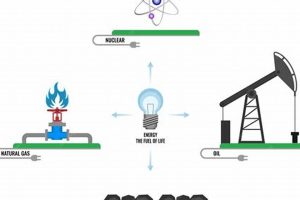
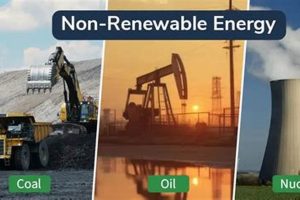
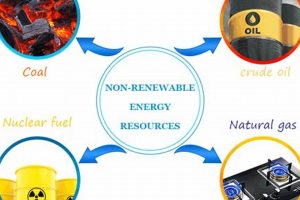
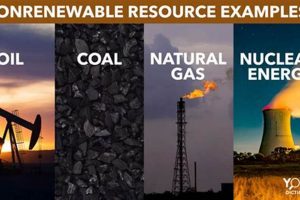
Non-renewable energy resources originate from geological processes that take millions of years. Fossil fuels, such as coal, oil, and natural gas, are derived from ancient organic matterplants and animalssubjected to immense pressure and heat beneath the Earth’s surface. Uranium, the fuel for nuclear power, is a naturally occurring radioactive element extracted from specific rock formations.
These resources have played a pivotal role in global industrialization, providing a relatively inexpensive and readily available energy source to power transportation, manufacturing, and electricity generation. Historically, their abundance and energy density fueled economic growth and societal development. However, finite reserves and environmental consequences associated with their extraction and use necessitate a transition towards more sustainable energy sources.
This discussion will further explore the distinct origins of each non-renewable energy type, analyzing the geological formations and processes involved, and examining the environmental implications of their utilization.
Understanding Non-Renewable Energy Sources
Careful consideration of the origins and impacts of non-renewable energy is crucial for informed decision-making regarding energy consumption and policy.
Tip 1: Recognize the finite nature of these resources. Fossil fuels and uranium exist in limited quantities. Depletion necessitates exploration of alternative energy sources and responsible resource management.
Tip 2: Understand the environmental consequences. Extraction and combustion of fossil fuels release greenhouse gases, contributing to climate change. Nuclear power generation produces radioactive waste requiring long-term storage solutions.
Tip 3: Consider the geopolitical implications. Uneven distribution of non-renewable resources can lead to political instability and resource conflicts. Diversification of energy sources enhances energy security.
Tip 4: Explore energy efficiency measures. Reducing energy consumption through technological advancements and behavioral changes lessens reliance on non-renewable resources.
Tip 5: Support the development of renewable energy technologies. Transitioning towards solar, wind, hydro, and geothermal energy offers a sustainable path for future energy needs.
Tip 6: Advocate for responsible resource management. Regulations and policies that promote sustainable extraction practices and minimize environmental damage are essential.
Understanding the origin, limitations, and environmental consequences of non-renewable energy sources allows for informed choices and fosters a more sustainable energy future.
This awareness empowers individuals, communities, and policymakers to actively participate in the transition towards a cleaner and more secure energy landscape.
1. Ancient Organic Matter

Ancient organic matter plays a fundamental role as the primary source material for most non-renewable energy resources. Understanding its transformation over geological timescales is crucial to comprehending the origin, limitations, and environmental implications of these energy sources. This section explores the key facets of this connection.
- Fossil Fuel Formation
Fossil fuelscoal, oil, and natural gasoriginate from the remains of ancient plants and organisms. Coal forms predominantly from terrestrial plant matter subjected to immense pressure and heat over millions of years. Oil and natural gas, on the other hand, typically derive from marine organisms deposited on the ocean floor and subsequently transformed under similar geological conditions. The chemical composition of these fuels reflects their biological origins, consisting primarily of hydrocarbonscompounds of hydrogen and carbonderived from the original organic molecules.
- Geological Processes and Timescales
The transformation of ancient organic matter into usable energy resources requires specific geological processes occurring over vast timescales. These processes involve burial under layers of sediment, compaction, and exposure to elevated temperatures and pressures. The specific conditions and duration of these processes influence the type of fuel formed. For instance, coal formation generally involves less intense heat and pressure compared to oil and gas formation. These lengthy timescales highlight the non-renewable nature of these resources, as their replenishment rate is negligible compared to current consumption rates.
- Energy Content and Release
The energy stored within fossil fuels represents captured solar energy from millions of years ago, initially converted into chemical energy through photosynthesis by plants and algae. This stored energy is released through combustion, a chemical reaction that combines the hydrocarbons with oxygen to produce heat, carbon dioxide, and water. The energy density of fossil fuelsthe amount of energy stored per unit volume or massis relatively high, making them efficient energy sources for various applications. However, this combustion process also releases greenhouse gases, contributing to climate change.
- Resource Distribution and Availability
The distribution of fossil fuel deposits is uneven across the globe, reflecting the specific geological conditions required for their formation. This uneven distribution has significant geopolitical and economic implications, influencing energy security and international relations. Furthermore, the finite nature of these resources underscores the necessity of exploring and transitioning to renewable energy sources to ensure long-term energy sustainability.
The origin of non-renewable energy in ancient organic matter highlights the interconnectedness of geological processes, biological life, and energy resources. Recognizing this dependence on finite resources emphasizes the imperative of transitioning towards a sustainable energy future based on renewable sources.
2. Geological Processes
Geological processes are fundamental to the formation of non-renewable energy resources. These processes, occurring over millions of years, transform organic matter into the concentrated energy sources utilized globally. The type of non-renewable energy resource formedcoal, oil, natural gas, or uraniumdepends on the specific geological conditions and the original organic material. For example, coal formation requires terrestrial plant matter subjected to intense pressure and heat within the Earth’s crust. Oil and natural gas typically originate from marine organisms buried under layers of sediment on the ocean floor, undergoing anaerobic decomposition and subsequent thermogenic maturation at higher temperatures and pressures. Uranium, unlike fossil fuels, is derived from the radioactive decay of uranium isotopes within specific rock formations.
The role of geological processes extends beyond the initial formation of these resources. Subsequent tectonic activity, such as faulting and folding, can influence the location and accessibility of these deposits. For instance, geological traps, formed by structural changes in rock formations, are crucial for accumulating and concentrating oil and natural gas reserves. Understanding these processes is essential for exploration and extraction activities. Moreover, the geological context influences the environmental impact of resource extraction. Mining for coal and uranium can lead to land degradation and water contamination, while drilling for oil and gas poses risks of spills and groundwater pollution. The specific geological formations also determine the feasibility and safety of carbon capture and storage technologies for mitigating greenhouse gas emissions.
Understanding the geological processes responsible for non-renewable energy formation is critical for responsible resource management, environmental protection, and the development of sustainable energy strategies. This knowledge informs exploration efforts, extraction techniques, and environmental impact assessments. Furthermore, recognizing the finite nature of these geologically formed resources underscores the importance of transitioning towards renewable energy sources.
3. Fossil Fuels

Fossil fuels represent a significant portion of non-renewable energy resources, originating from ancient organic matter transformed over geological timescales. Understanding their formation, composition, and extraction is crucial for comprehending the broader context of non-renewable energy sources and their implications.
- Formation Process
Fossil fuelscoal, oil, and natural gasderive from the remains of prehistoric plants and organisms. Coal forms primarily from terrestrial plant matter subjected to intense pressure and heat over millions of years. Oil and natural gas typically originate from marine organisms deposited on the ocean floor, undergoing anaerobic decomposition and subsequent thermogenic maturation. This transformation process concentrates the energy stored within the organic matter, resulting in energy-rich hydrocarbons.
- Geological Occurrence
Fossil fuel deposits are found within specific geological formations. Coal often occurs in layered sedimentary rock sequences, reflecting its terrestrial origin. Oil and natural gas accumulate in porous and permeable rock formations, often trapped beneath impermeable layers. These geological traps are crucial for concentrating commercially viable reserves. The location and accessibility of these deposits are influenced by tectonic activity, such as faulting and folding, which can create or disrupt these trapping structures.
- Extraction Methods
Extraction methods vary depending on the type of fossil fuel and its geological setting. Coal is typically extracted through mining, either surface or underground. Oil and natural gas extraction involves drilling wells to access the reservoir rock formations. Various techniques, such as hydraulic fracturing (“fracking”), can enhance extraction efficiency. These extraction processes have associated environmental impacts, including land disturbance, habitat disruption, and the potential for water and air pollution.
- Energy Conversion
Fossil fuels are primarily used for energy generation through combustion. This process releases the stored chemical energy as heat, which can be directly utilized or converted into electricity. Combustion, however, also produces greenhouse gases, notably carbon dioxide, contributing to climate change. Other applications include the production of plastics, fertilizers, and other industrial materials, further highlighting the significant role fossil fuels play in modern society.
The origin and utilization of fossil fuels are intrinsically linked to geological processes and the Earth’s history. Their formation over vast timescales and their uneven distribution across the globe have significant implications for energy security, geopolitics, and environmental sustainability. Recognizing the finite nature of these resources and their environmental impact underscores the importance of transitioning towards renewable energy sources for a secure and sustainable energy future.
4. Uranium Ore

Uranium ore stands distinct from fossil fuels as a source of non-renewable energy, yet its formation and utilization share the common thread of geological processes and finite availability. Understanding the nature of uranium ore, its extraction, and its role in nuclear power generation provides critical insights into the broader landscape of non-renewable energy sources.
- Geological Occurrence and Formation
Uranium, a naturally occurring radioactive element, is found in various geological formations. Uranium ore refers to rock formations containing economically recoverable concentrations of uranium minerals. These deposits often occur in igneous, metamorphic, and sedimentary rocks, formed through geological processes over millions of years. The concentration of uranium in these ores is typically low, requiring specific extraction and processing techniques.
- Mining and Extraction
Uranium mining involves extracting uranium ore from the Earth’s crust. Different mining methods, including open-pit, underground, and in-situ leaching, are employed depending on the depth and characteristics of the ore deposit. In-situ leaching involves injecting a solution into the ore body to dissolve the uranium, which is then pumped to the surface for processing. These extraction processes have environmental implications, including land disturbance, water contamination, and the generation of radioactive waste.
- Processing and Enrichment
After extraction, uranium ore undergoes processing to concentrate the uranium and convert it into a usable form for nuclear fuel. This process typically involves milling the ore into a fine powder and then chemically separating the uranium from other elements. The resulting uranium concentrate, known as yellowcake, still requires further enrichment to increase the proportion of the fissile isotope uranium-235, necessary for sustaining a nuclear chain reaction in power plants.
- Nuclear Fuel and Energy Generation
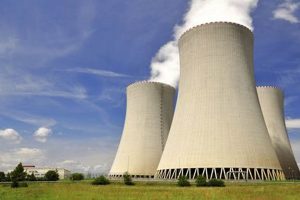
Enriched uranium is fabricated into fuel rods used in nuclear reactors. Nuclear fission, the splitting of uranium atoms, releases a tremendous amount of energy in the form of heat. This heat is used to generate steam, which drives turbines to produce electricity. While nuclear power generation does not directly emit greenhouse gases, it produces radioactive waste that requires long-term storage and management, posing environmental and safety challenges.
Uranium ore, despite its distinct origin and utilization compared to fossil fuels, exemplifies the finite nature and environmental considerations associated with non-renewable energy sources. Its extraction and processing have environmental impacts, and the resulting radioactive waste requires careful management. Understanding these aspects is crucial for informed decision-making regarding energy policy and the pursuit of sustainable energy alternatives.
5. Finite Resources

The finite nature of non-renewable energy resources is intrinsically linked to their origins. Fossil fuelscoal, oil, and natural gasderive from ancient organic matter accumulated and transformed over geological timescales spanning millions of years. This process is non-repeatable within human timescales, rendering these resources finite. Similarly, uranium, the fuel for nuclear power, originates from specific geological formations containing uranium ore. The concentration of uranium in these ores is limited, and extraction processes are resource-intensive. The Earth’s reserves of these resources are finite; continuous extraction and consumption inevitably lead to depletion. For instance, proven oil reserves, while subject to revision with exploration, represent a finite quantity. Once consumed, these reserves cannot be replenished within a timeframe relevant to human civilization.
This finite nature has profound implications for energy security, economic stability, and environmental sustainability. Dependence on finite resources necessitates careful resource management, exploration of alternative energy sources, and development of sustainable energy strategies. The uneven distribution of these resources across the globe also contributes to geopolitical complexities and potential resource conflicts. Consider the historical reliance on coal for industrialization, which led to significant environmental degradation and resource depletion in certain regions. The current transition towards renewable energy sources reflects a growing awareness of the limitations and long-term consequences of relying on finite resources.
Understanding the finite nature of non-renewable energy resources is fundamental for shaping responsible energy policies and fostering a sustainable energy future. Recognizing that these resources are not inexhaustible underscores the importance of diversification, conservation, and investment in renewable energy technologies. This understanding promotes a shift away from a linear, extractive model of energy production towards a circular, sustainable model that minimizes environmental impact and ensures long-term energy security.
6. Deep Earth Deposits

Deep earth deposits are fundamental to the origin of non-renewable energy resources. The term encompasses the geological formations and processes responsible for the accumulation and concentration of these resources over millions of years. Fossil fuelscoal, oil, and natural gasoriginate from organic matter buried deep within the Earth’s crust. This organic matter undergoes transformation under conditions of high pressure and temperature, resulting in the formation of hydrocarbons. The specific geological conditions, including the type of organic matter, the depth of burial, and the temperature and pressure regime, influence the type of fossil fuel formed. For instance, coal formation typically occurs in terrestrial environments with abundant plant matter, while oil and natural gas formation often occurs in marine environments rich in microscopic organisms. The depth of these deposits necessitates specialized extraction techniques, such as drilling and mining, which have associated environmental and economic costs. For example, deepwater oil drilling poses significant technical challenges and environmental risks.
Uranium, another non-renewable energy source, also originates from deep earth deposits. Uranium ore, the source of nuclear fuel, is found in specific geological formations where uranium minerals have concentrated over geological time. These deposits can occur in various rock types, including igneous, metamorphic, and sedimentary rocks, and are often associated with specific geological structures, such as faults and unconformities. The extraction of uranium ore involves mining operations, which can have significant environmental impacts, including land disturbance, water contamination, and the generation of radioactive waste. The depth and geological setting of these deposits influence the choice of mining method and the associated environmental considerations. Consider the challenges associated with safely extracting uranium from deep underground deposits, requiring specialized techniques and stringent safety measures to minimize environmental risks.
The dependence on deep earth deposits for non-renewable energy resources highlights several critical considerations. The extraction of these resources presents technical challenges and environmental risks, necessitating careful planning and mitigation strategies. Furthermore, the finite nature of these deposits underscores the need for responsible resource management and the development of sustainable energy alternatives. The geological processes that formed these deposits over millions of years cannot be replicated within human timescales, emphasizing the finite nature of these resources. Transitioning towards a sustainable energy future requires a shift away from dependence on these deep earth deposits and towards renewable energy sources that do not rely on finite geological resources.
Frequently Asked Questions
This section addresses common inquiries regarding the origins and implications of non-renewable energy resources, providing concise and informative responses.
Question 1: What distinguishes renewable from non-renewable energy?
Renewable energy sources, such as solar, wind, and hydro, replenish naturally within a human timescale. Non-renewable resources, like fossil fuels and uranium, are finite and derived from geological processes requiring millions of years.
Question 2: How does coal form?
Coal originates from ancient terrestrial plant matter subjected to immense pressure and heat over geological timescales, transforming into a carbon-rich sedimentary rock.
Question 3: What is the origin of oil and natural gas?
Oil and natural gas typically form from the remains of marine organisms deposited on the ocean floor, undergoing anaerobic decomposition and thermogenic maturation under specific temperature and pressure conditions.
Question 4: Where is uranium found?
Uranium, essential for nuclear power, is found in uranium ore, a type of rock containing economically recoverable concentrations of uranium minerals. These deposits occur in various geological formations worldwide.
Question 5: Why are non-renewable resources considered finite?
Non-renewable resources exist in limited quantities and are depleted through extraction and consumption. Their formation takes millions of years, rendering them non-replenishable within a human timescale.
Question 6: What are the environmental implications of utilizing non-renewable energy?
Extraction and combustion of fossil fuels release greenhouse gases, contributing to climate change. Nuclear power generation produces radioactive waste requiring long-term storage solutions. All non-renewable resource extraction has environmental impacts.
Understanding the origins and limitations of non-renewable resources is crucial for informed decision-making regarding energy consumption and policy. Transitioning towards sustainable energy alternatives is essential for long-term energy security and environmental preservation.
Further exploration of specific non-renewable resources and their associated environmental impacts can be found in subsequent sections.
Non-Renewable Energy Sources
Non-renewable energy resources originate from geological processes operating over vast timescales. Fossil fuelscoal, oil, and natural gasderive from ancient organic matter transformed under specific conditions of heat and pressure within the Earth’s crust. Uranium, the fuel for nuclear power, is extracted from uranium ore deposits found in various geological formations. The location, formation, and extraction of these resources have significant environmental, economic, and geopolitical implications.
The finite nature of these geologically derived energy sources necessitates a transition towards sustainable alternatives. Continued reliance on non-renewable resources presents challenges related to resource depletion, climate change, and geopolitical instability. A shift towards renewable energy sources, coupled with responsible resource management and energy efficiency measures, is crucial for ensuring a secure and sustainable energy future.