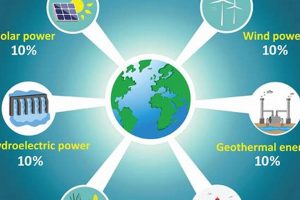
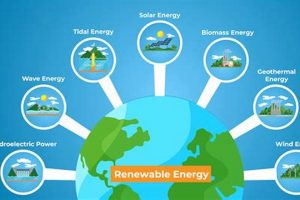
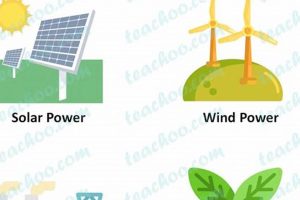
Resources that naturally replenish themselves over a human timescale are considered a sustainable energy alternative. These resources are derived from natural processes, such as sunlight, wind, tides, and geothermal heat. Common examples include solar power generated through photovoltaic cells, wind energy harnessed by turbines, hydroelectric power derived from flowing water, and geothermal energy tapped from the Earth’s internal heat.
The utilization of these sustainable resources presents several advantages. Reduced greenhouse gas emissions, diversification of energy supplies, and decreased dependence on finite fossil fuels are key benefits. Historically, societies have harnessed renewable resources like wind and water power for mechanical tasks. However, modern technological advancements have significantly expanded the potential and efficiency of these energy alternatives, making them viable solutions for large-scale power generation.
The following discussion will delve into specific types of sustainable energy resources, exploring their operational principles, current applications, and potential for future development. It will also examine the challenges and opportunities associated with each resource, including intermittency, geographic limitations, and technological advancements that are driving innovation in the field.
Harnessing Sustainable Energy Resources
Successful integration of sources that can renew naturally requires careful planning and execution. The following guidelines provide insights for maximizing the benefits and mitigating potential challenges associated with these energy alternatives.
Tip 1: Conduct a Thorough Resource Assessment: Before investing in any sustainable energy system, a comprehensive assessment of the available resources is crucial. For instance, solar energy projects require detailed irradiance data, while wind energy farms necessitate accurate wind speed and direction measurements.
Tip 2: Prioritize Energy Efficiency: Reducing energy consumption is paramount. Implementing energy-efficient technologies and practices minimizes the demand for power, thereby decreasing the overall reliance on both conventional and alternative energy sources. Energy audits and efficiency upgrades are valuable first steps.
Tip 3: Invest in Energy Storage Solutions: The intermittent nature of some energy sources, such as solar and wind, necessitates robust energy storage solutions. Battery storage systems, pumped hydro storage, and thermal energy storage are viable options for ensuring a reliable and continuous power supply.
Tip 4: Integrate Smart Grid Technologies: Smart grids facilitate the efficient distribution and management of energy, enabling better integration of variable sources. Smart meters, advanced sensors, and communication networks optimize energy flow and improve grid stability.
Tip 5: Explore Hybrid Energy Systems: Combining different types of sustainable sources can enhance reliability and reduce dependence on a single resource. A hybrid system might integrate solar, wind, and energy storage, providing a more consistent and diversified power supply.
Tip 6: Support Policy and Regulatory Frameworks: Supportive government policies and regulations are essential for promoting the adoption of sustainable energy. Incentives, tax credits, and clear permitting processes can encourage investment and accelerate the transition to a cleaner energy future.
Tip 7: Engage with the Community: Public acceptance and support are crucial for the success of projects utilizing energy that can renew naturally. Engaging with local communities, addressing their concerns, and providing educational opportunities can foster a positive environment for development.
By implementing these considerations, stakeholders can effectively harness the potential of energy alternatives, contributing to a more sustainable and resilient energy future.
The subsequent sections will provide a detailed overview of the economic and environmental impacts of widespread adoption, offering a comprehensive understanding of its long-term implications.
1. Solar Power

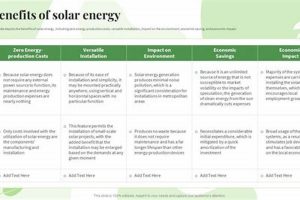
Solar power represents a prominent and increasingly vital component within the broader category of resources that can renew naturally. The conversion of sunlight into usable energy, primarily through photovoltaic (PV) cells, positions it as a direct and abundant source. The fundamental cause-and-effect relationship is evident: sunlight, a constantly available resource, is captured and transformed into electricity. This process minimizes reliance on finite fossil fuels and their associated environmental consequences. The importance of solar power stems from its potential to significantly reduce carbon emissions, contributing to climate change mitigation efforts. For instance, large-scale solar farms in regions with high solar irradiance, such as the Mojave Desert, generate substantial amounts of electricity, powering entire communities and industries.
Practical applications of solar power extend beyond large-scale installations. Distributed generation, through rooftop solar panels on homes and businesses, empowers individuals and organizations to generate their own electricity, reducing their dependence on centralized power grids. Moreover, solar-powered devices, such as water heaters and lighting systems, offer off-grid solutions in remote areas, enhancing access to essential services. Advancements in solar technology are continually improving efficiency and reducing costs, further solidifying solar power’s role in a diversified energy portfolio. For example, the development of perovskite solar cells promises higher efficiency at lower production costs compared to traditional silicon-based cells.
In summary, solar power constitutes a critical element within the domain of naturally replenishing energy sources, driven by its direct conversion of sunlight into electricity. Its importance lies in mitigating climate change, reducing reliance on fossil fuels, and enabling both large-scale and distributed energy generation. While challenges related to intermittency and energy storage remain, ongoing technological advancements and policy support continue to enhance solar power’s practical significance in a sustainable energy future.
2. Wind Energy
Wind energy constitutes a significant component within the category of naturally replenishing energy sources. Its relevance stems from the direct conversion of kinetic energy from wind into electricity, offering a viable alternative to fossil fuel-based generation. Wind’s ubiquitous presence across geographical regions positions it as a critical resource for diversified energy portfolios.
- Wind Turbine Technology
Wind turbine technology is the core of harnessing wind energy. Horizontal-axis turbines are commonly employed, featuring blades that rotate to drive a generator. The efficiency of these turbines depends on blade design, tower height, and generator capacity. Offshore wind farms, for example, leverage stronger and more consistent wind resources, often utilizing larger turbines with greater power output compared to land-based installations. These technological advancements directly contribute to the effectiveness of wind energy as a sustainable option.
- Intermittency and Grid Integration
The intermittent nature of wind poses a challenge to grid stability. Wind speed fluctuations impact electricity generation, requiring sophisticated grid management strategies. Integrating wind energy into the electrical grid necessitates forecasting tools, energy storage solutions, and flexible generation resources to balance supply and demand. Smart grid technologies, such as advanced sensors and control systems, facilitate the smooth integration of wind power, ensuring a reliable electricity supply.
- Environmental Considerations
While a clean energy source, wind energy development is not without environmental considerations. Potential impacts on wildlife, particularly birds and bats, require careful siting and mitigation strategies. Noise pollution from turbine operation can also affect nearby communities. Environmental impact assessments are crucial for minimizing these effects and ensuring the responsible development of wind energy projects. The implementation of bird and bat deterrent systems, as well as optimized turbine placement, can mitigate adverse impacts.
- Economic Viability and Policy Support
The economic viability of wind energy has improved significantly due to technological advancements and economies of scale. Government policies, such as tax incentives and renewable energy standards, play a critical role in promoting wind energy development. These policies encourage investment, reduce costs, and create a stable market for wind-generated electricity. Long-term power purchase agreements (PPAs) between wind energy developers and utilities provide revenue certainty, further enhancing the financial feasibility of wind projects.
These interconnected facets illustrate wind energy’s crucial role in the realm of naturally replenishing energy sources. Its dependence on a readily available natural resource, coupled with ongoing technological advancements and supportive policy frameworks, positions it as a vital component of a sustainable energy future. Addressing the challenges associated with intermittency and environmental impacts through innovative solutions will further enhance the contribution of wind power to a cleaner and more reliable energy system.
3. Hydropower

Hydropower is a major component among naturally replenishing energy sources, utilizing the kinetic energy of flowing water to generate electricity. The fundamental principle rests on the cause-and-effect relationship between water flow and power generation: the force of water, channeled through turbines, drives generators to produce electricity. The importance of hydropower lies in its high efficiency and reliability compared to other renewable options. For example, the Hoover Dam in the United States generates a substantial amount of electricity, providing a stable power supply to surrounding regions.
Practical applications of hydropower extend beyond large dams. Run-of-river hydropower plants, which divert a portion of a river’s flow without significant reservoir storage, minimize environmental impact while still generating electricity. Pumped storage hydropower, where water is pumped uphill to a reservoir during off-peak hours and released to generate electricity during peak demand, serves as an energy storage mechanism. The integration of hydropower into existing water management systems, such as irrigation canals, offers opportunities for distributed power generation. The practicality of hydropower also relies on geographical factors, as regions with significant river systems and elevation changes are best suited for its deployment.
In summary, hydropower plays a critical role within the spectrum of energy resources that can renew naturally, leveraging the energy of flowing water for electricity generation. Its efficiency, reliability, and adaptability to various scales make it a valuable component of a diversified energy portfolio. While environmental considerations associated with large dams require careful management, advancements in smaller-scale and run-of-river technologies are expanding hydropower’s potential for sustainable power generation.
4. Geothermal

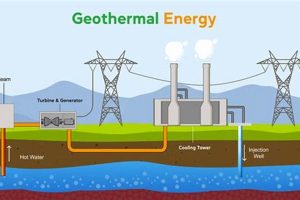
Geothermal energy represents a significant component of the group of energy resources that naturally replenish. This resource harnesses thermal energy from the Earth’s interior, a continuous process fueled by radioactive decay in the planet’s core. The cause-and-effect relationship is direct: heat from the Earth’s interior drives hydrothermal systems or is directly extracted to generate electricity or provide heating and cooling. The importance of geothermal lies in its continuous availability, independent of weather conditions that affect solar and wind power. Iceland, for instance, utilizes geothermal resources extensively for both electricity generation and district heating, demonstrating its practical application and contribution to energy independence.
Practical applications of geothermal energy vary depending on the resource’s temperature. High-temperature resources are suitable for electricity generation, while lower-temperature resources can be used for direct heating applications, such as greenhouses, aquaculture, and industrial processes. Geothermal heat pumps, which utilize shallow ground temperatures, provide efficient heating and cooling for residential and commercial buildings. Enhanced Geothermal Systems (EGS) expand the potential of geothermal energy by creating artificial reservoirs in hot, dry rocks, enabling geothermal power generation in regions without natural hydrothermal resources. This technological advancement enhances the practical significance and geographic reach of geothermal energy.
In summary, geothermal energy constitutes a critical element among naturally replenishing energy sources, providing a consistent and reliable power source derived from the Earth’s internal heat. Its importance lies in its continuous availability and versatility in various applications, ranging from electricity generation to direct heating. While challenges related to exploration and initial capital costs exist, ongoing technological advancements and supportive policies continue to enhance geothermal energy’s practicality in a sustainable energy future.
5. Biomass Energy

Biomass energy represents a crucial intersection within the broader domain of energy resources that naturally replenish. It involves the conversion of organic matter, derived from plants and animals, into usable energy forms. This process positions biomass as a potentially significant contributor to a diversified and sustainable energy portfolio.
- Feedstock Diversity and Availability
Biomass encompasses a wide array of feedstocks, including agricultural residues, forestry byproducts, dedicated energy crops, and organic waste. This diversity enhances its potential for widespread application. For instance, corn stover, the residual plant matter after harvesting corn, can be converted into biofuels. Similarly, wood chips and pellets from forestry operations serve as fuel for heating and power generation. The availability of diverse feedstocks mitigates dependence on any single resource, enhancing the resilience of biomass energy systems.
- Conversion Technologies
Various conversion technologies transform biomass into usable energy. Direct combustion involves burning biomass to generate heat, often used for electricity production or heating. Gasification converts biomass into a combustible gas mixture, which can then be used in gas turbines or internal combustion engines. Anaerobic digestion decomposes organic matter in the absence of oxygen, producing biogas, a mixture of methane and carbon dioxide, suitable for electricity generation or as a transportation fuel. Pyrolysis involves heating biomass in the absence of oxygen to produce bio-oil, biochar, and syngas. Each technology offers distinct advantages depending on the feedstock and desired end-product.
- Carbon Neutrality Considerations
The carbon neutrality of biomass energy is a subject of ongoing discussion. While biomass combustion releases carbon dioxide, proponents argue that this carbon was originally absorbed from the atmosphere during plant growth. Therefore, if biomass is sustainably harvested and replanted, the net carbon emissions can be near zero. However, factors such as land-use change, transportation of biomass, and inefficiencies in conversion processes can affect the overall carbon footprint. Sustainable harvesting practices and efficient conversion technologies are essential for maximizing the carbon benefits of biomass energy.
- Environmental and Economic Impacts
Biomass energy production can have both positive and negative environmental and economic impacts. On the positive side, it can reduce reliance on fossil fuels, decrease greenhouse gas emissions, and provide economic opportunities for rural communities. However, unsustainable harvesting practices can lead to deforestation, soil degradation, and biodiversity loss. Competition between biomass production and food crops can also raise concerns about food security. Careful planning and sustainable management practices are necessary to mitigate these risks and maximize the environmental and economic benefits of biomass energy.
The multifaceted nature of biomass energy necessitates careful consideration of feedstock selection, conversion technologies, carbon accounting, and environmental impacts. When implemented sustainably, biomass energy can play a valuable role in diversifying the energy supply and reducing reliance on fossil fuels. However, achieving its full potential requires continuous innovation, supportive policies, and a commitment to sustainable management practices.
6. Ocean Energy

Ocean energy represents a significant, though less developed, subset of naturally replenishing energy resources. Its connection to the overarching concept stems from its derivation from perpetual oceanic processes: waves, tides, temperature gradients, and salinity differences. These phenomena, driven by solar and lunar forces, create energy reservoirs that can be harnessed with minimal depletion. Ocean energy’s importance as a naturally replenishing resource lies in its vast potential and geographic diversity; coastal regions worldwide possess varying degrees of ocean energy resources, offering a distributed and resilient energy alternative. For instance, the tidal barrage at La Rance in France demonstrates the long-term viability of tidal energy conversion, while wave energy converters deployed off the coast of Scotland highlight ongoing technological advancements in harnessing wave power. These installations contribute to reducing reliance on finite fossil fuels, mitigating greenhouse gas emissions, and enhancing energy security.
Practical applications of ocean energy vary depending on the specific resource being harnessed. Tidal energy, predictable and reliable, is best suited for electricity generation via tidal barrages or submerged turbines. Wave energy converters, ranging from oscillating water columns to point absorbers, capture the kinetic energy of waves and transform it into electricity. Ocean thermal energy conversion (OTEC) utilizes the temperature difference between warm surface water and cold deep water to drive a heat engine and generate electricity. Salinity gradient power, also known as osmotic power, harnesses the energy released when freshwater mixes with saltwater. These technologies are at different stages of development, with tidal energy being the most mature and OTEC and salinity gradient power still in the early stages of commercialization. Further research and development are crucial to improve the efficiency, reliability, and cost-effectiveness of these technologies.
In summary, ocean energy is an important part of energy resources that are able to replenish naturally, deriving its power from the ongoing motion and thermal properties of the world’s oceans. Its significance stems from its vast potential and contribution to diversified energy portfolios. Although challenges related to technology maturity, environmental impacts, and economic viability remain, ongoing research, development, and supportive policies are paving the way for ocean energy to play an increasing role in a sustainable energy future.
7. Sustainability

Sustainability serves as the overarching framework for evaluating and implementing energy resources that naturally replenish. Its relevance lies in ensuring that the deployment of these resources does not compromise the environment, economy, or societal well-being of present and future generations. The effective integration of these sources hinges upon adhering to sustainability principles throughout the energy lifecycle, from resource extraction to waste disposal.
- Environmental Stewardship
Environmental stewardship is a cornerstone of sustainability, emphasizing the minimization of ecological impacts associated with energy production. This includes mitigating habitat disruption, reducing greenhouse gas emissions, and preventing pollution of air and water resources. For instance, the responsible siting of wind farms, considering bird migration patterns and noise pollution, exemplifies environmental stewardship. Similarly, the sustainable harvesting of biomass, avoiding deforestation and soil degradation, is crucial for maintaining ecosystem health. Careful environmental impact assessments and mitigation strategies are essential for ensuring that deployment of resources that can renew naturally aligns with ecological preservation.
- Economic Viability
Economic viability is essential for the long-term adoption and scalability of energy resources that naturally replenish. These energy sources must be cost-competitive with traditional fossil fuels or benefit from supportive policies that level the playing field. For example, the declining costs of solar photovoltaic technology have made it increasingly competitive with conventional electricity generation. Furthermore, the creation of green jobs and the stimulation of local economies through renewable energy projects contribute to economic sustainability. Long-term financial planning and effective policy support are necessary for ensuring the economic sustainability of these projects.
- Social Equity
Social equity involves ensuring that the benefits and burdens of energy production are distributed fairly across all segments of society. This includes providing access to affordable and reliable energy for underserved communities, promoting community engagement in energy planning, and addressing potential social impacts of energy projects, such as displacement or noise pollution. For instance, community-owned renewable energy projects can empower local residents and promote energy independence. Additionally, ensuring that energy transitions do not disproportionately affect vulnerable populations is crucial for achieving social equity. Inclusive decision-making processes and targeted support programs can contribute to a just and equitable energy transition.
- Resource Management
Effective resource management is critical for the long-term availability and reliability of energy sources that can renew naturally. This includes managing water resources for hydropower, preventing overexploitation of geothermal resources, and ensuring the sustainable harvesting of biomass. For example, maintaining adequate water flow in rivers and streams is essential for the sustainable operation of hydropower plants. Similarly, careful monitoring and management of geothermal reservoirs are necessary to prevent depletion and maintain resource longevity. Sustainable resource management practices are vital for ensuring that these energy alternatives continue to provide reliable energy services for future generations.
By integrating these facets of sustainability, energy systems based on resources that renew naturally can contribute to a more resilient, equitable, and environmentally responsible energy future. Continuous monitoring, adaptive management, and ongoing technological innovation are essential for optimizing the sustainability performance of these energy sources. The pursuit of sustainability provides a framework for navigating the complex trade-offs inherent in energy transitions and ensuring that energy choices benefit both present and future generations.
Frequently Asked Questions
The following addresses common inquiries and clarifies pertinent aspects surrounding energy sources that can naturally renew.
Question 1: What distinguishes a resource of this nature from a non-renewable resource?
Resources in this category replenish naturally within a human timescale, implying sustainability. Non-renewable resources, such as fossil fuels, exist in finite quantities and cannot be replenished once consumed.
Question 2: Is it correct to assume all resources that replenish naturally are entirely without environmental impact?
No, while generally considered cleaner than fossil fuels, each resource in this category has potential environmental impacts. Hydropower can alter river ecosystems, wind farms may affect bird populations, and biomass production can lead to deforestation if not managed sustainably.
Question 3: What are the primary limitations hindering the widespread adoption of energy sources that can renew naturally?
Intermittency, particularly with solar and wind power, requires energy storage solutions and grid modernization. Geographic limitations restrict the applicability of certain resources, such as geothermal and hydropower. Initial capital costs can also be a barrier.
Question 4: Are energy resources that replenish naturally economically competitive with fossil fuels?
The economic competitiveness varies depending on the specific resource, geographic location, and technological advancements. Solar and wind power have become increasingly competitive in recent years, particularly with government subsidies and tax incentives. However, some resources, such as ocean energy, require further cost reductions to become economically viable.
Question 5: What role does government policy play in promoting the deployment of resources that can renew naturally?
Government policies, such as renewable energy standards, tax credits, and feed-in tariffs, are crucial for incentivizing investment in and deployment of energy sources in this category. Regulations that promote grid access and streamline permitting processes also play a vital role.
Question 6: How do technological advancements influence the potential of energy resources that can renew naturally?
Technological advancements are continuously improving the efficiency, reliability, and cost-effectiveness of resources of this nature. For example, advancements in solar photovoltaic technology have reduced costs and increased efficiency, while improvements in battery storage technology are addressing the intermittency challenge.
In summary, while resources that replenish naturally offer a pathway to a more sustainable energy future, their widespread adoption requires careful consideration of environmental impacts, economic viability, and technological advancements. Supportive government policies and responsible resource management are essential for realizing their full potential.
The following section explores future trends and developments in the domain of resources that can renew naturally, providing insight into emerging technologies and evolving energy landscapes.
Conclusion
This exploration of what are the renewable energy sources has illuminated the diverse array of options available for sustainable power generation. From solar and wind to hydropower, geothermal, biomass, and ocean energy, each resource possesses unique characteristics and potential contributions to a cleaner energy future. These sources, by their nature, replenish, offering a stark contrast to finite fossil fuels and a pathway toward reduced carbon emissions and enhanced energy security.
Continued investment in research, development, and deployment of what are the renewable energy sources is paramount. Overcoming challenges related to intermittency, geographic limitations, and economic competitiveness requires ongoing innovation and supportive policy frameworks. A commitment to sustainability, encompassing environmental stewardship, economic viability, and social equity, is essential for ensuring that these resources are harnessed responsibly and equitably for the benefit of current and future generations. The transition to a predominantly renewable energy system represents a significant undertaking, but one that is crucial for mitigating climate change and securing a sustainable energy future.