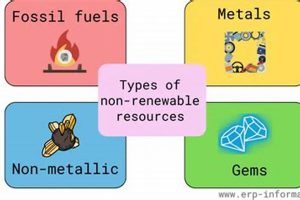
Fossil fuels, including coal, oil (petroleum), and natural gas, represent a substantial category of finite energy sources. These materials are formed over millions of years from the remains of ancient organisms under intense heat and pressure within the Earth’s crust. Their extraction and combustion provide a significant portion of global energy needs, powering transportation, electricity generation, and industrial processes. Another significant type is nuclear fuel, such as uranium, a naturally occurring radioactive element.
The extensive utilization of these energy sources has fueled industrial growth and technological advancement for centuries. They offer relatively high energy density, making them efficient for various applications. The established infrastructure for extraction, processing, and distribution also contributes to their continued prevalence in the global energy mix. However, their combustion releases greenhouse gasses, significantly contributing to climate change. Further, these resources are finite, and their depletion necessitates a transition to alternative energy strategies.
Given the limitations and environmental impacts of these finite resources, investigating renewable alternatives and adopting sustainable energy practices is crucial. Further discussion will focus on the specific characteristics of each energy type, their extraction methods, environmental consequences, and current efforts to mitigate their impact through technological advancements and policy initiatives.
Considerations for Managing Finite Energy Sources
Effective management of finite energy sources necessitates a multi-faceted approach, encompassing resource efficiency, technological innovation, and strategic policy implementation. The following tips highlight crucial areas for consideration.
Tip 1: Enhance Energy Efficiency: Implementing energy-efficient technologies and practices across all sectors (residential, commercial, industrial, transportation) minimizes consumption. Examples include improved insulation in buildings, more efficient appliances, and optimized industrial processes.
Tip 2: Diversify Energy Sources: Reducing reliance on any single type mitigates supply risks and environmental impact. Expanding the energy mix to include a broader range of sources, including renewable options, is crucial.
Tip 3: Invest in Carbon Capture and Storage: Developing and deploying carbon capture and storage (CCS) technologies can reduce the atmospheric emissions from power plants and industrial facilities that rely on combustion.
Tip 4: Implement Carbon Pricing Mechanisms: Establishing carbon pricing, such as carbon taxes or cap-and-trade systems, internalizes the environmental costs of combustion, incentivizing emission reductions and fostering investment in cleaner alternatives.
Tip 5: Promote Sustainable Transportation: Transitioning to electric vehicles, improving public transportation infrastructure, and encouraging alternative modes of transportation can significantly reduce emissions from the transportation sector.
Tip 6: Develop Advanced Extraction Technologies Responsibly: Where extraction is necessary, focus on responsible and efficient techniques to minimize environmental damage. This includes careful monitoring of water and air quality, land reclamation efforts, and proper waste disposal.
Tip 7: Strengthen International Collaboration: Sharing best practices, coordinating research efforts, and establishing common goals among nations are essential for addressing climate change and managing finite resources effectively.
By proactively implementing these considerations, societies can mitigate the adverse effects associated with finite energy sources, fostering a more sustainable and resilient energy future. The ongoing research and continuous improvement of related practices and technologies should be the next priority.
1. Fossil Fuels

Fossil fuels constitute a primary category within finite energy resources. Their formation, spanning millions of years, involves the transformation of deceased organic matter under intense geological pressures into substances rich in carbon and hydrogen. Coal, oil, and natural gas are the principal examples. The reliance on these substances has been fundamental to industrialization, underpinning power generation, transportation, and manufacturing processes globally.
The combustion of fossil fuels releases substantial amounts of carbon dioxide, a greenhouse gas contributing to climate change. Extraction methods, such as mining and drilling, can disrupt ecosystems and lead to environmental degradation. Furthermore, the uneven geographical distribution of these resources has created geopolitical dependencies and conflicts. For instance, the economies of many nations are heavily dependent on the export of oil, leading to significant economic and political ramifications.
Therefore, the imperative to transition away from heavy dependence on fossil fuels is driven by environmental concerns and resource limitations. Efforts to mitigate the impact of this type of energy sources include investing in renewable energy sources, improving energy efficiency, and developing carbon capture and storage technologies. Addressing the challenges associated with these types of fuel requires a coordinated global approach involving technological innovation and policy implementation.
2. Nuclear Fission

Nuclear fission represents a notable component within the broader classification of finite energy resources. This process, involving the splitting of heavy atomic nuclei, such as uranium-235 or plutonium-239, releases substantial energy utilized for electricity generation in nuclear power plants. Despite not emitting greenhouse gasses during operation, nuclear fission relies on finite resources and presents unique challenges.
- Fuel Availability and Mining
Uranium, the primary fuel for most nuclear reactors, is a finite resource extracted through mining operations. While uranium reserves are relatively abundant, their geographical distribution is uneven, leading to geopolitical considerations. Furthermore, the mining process can have environmental consequences, including habitat disruption and water contamination, similar to the extraction of fossil fuels.
- Waste Management and Disposal
A key challenge associated with nuclear fission is the generation of radioactive waste, which remains hazardous for thousands of years. Safe and secure long-term storage or disposal solutions are essential to prevent environmental contamination and health risks. The lack of universally accepted disposal methods and the potential for accidents further complicate the viability of nuclear fission as a long-term energy source.
- Reactor Safety and Proliferation Risks
Nuclear power plants are subject to stringent safety regulations to prevent accidents that could release radioactive materials into the environment. The potential for nuclear proliferation, where fissile materials are diverted for weapons production, also raises concerns. These risks necessitate international cooperation and oversight to ensure the responsible use of nuclear technology.
- Energy Density and Efficiency
Nuclear fission offers high energy density compared to fossil fuels. A relatively small amount of nuclear fuel can generate a significant amount of electricity. This efficiency, coupled with the absence of greenhouse gas emissions during operation, makes nuclear fission an attractive option for some countries seeking to diversify their energy mix. However, the lifecycle costs, including construction, decommissioning, and waste management, must be considered.
The multifaceted aspects of nuclear fission highlight its complex relationship with finite resources. While offering certain advantages, the reliance on finite fuel sources, coupled with environmental and safety concerns, necessitates careful evaluation and responsible management. Alternative reactor designs and fuel cycles, aimed at improving efficiency and reducing waste, continue to be explored as potential enhancements to this segment of the energy sector.
3. Depletion Rates

The concept of depletion rates is fundamentally intertwined with finite energy resources. It defines the pace at which reserves of these resources are being exhausted relative to their availability, directly impacting long-term energy security and sustainability considerations.
- Extraction Technologies and Accessibility
Advances in extraction technologies, such as fracking and deep-sea drilling, can initially increase the rate at which previously inaccessible reserves become exploitable. This accelerated extraction can lead to a short-term increase in supply but simultaneously accelerates the depletion of the overall resource base. For instance, fracking has significantly boosted natural gas production in the United States, but its environmental impacts and contribution to rapid depletion of reserves are subjects of ongoing debate.
- Consumption Patterns and Demand Growth
Global energy demand, driven by population growth, industrialization, and increased per capita energy consumption, significantly influences depletion rates. High demand accelerates the consumption of finite resources, leading to faster depletion. The rapid industrialization of countries like China and India has dramatically increased global energy demand, primarily met by fossil fuels, thus intensifying depletion rates of these resources.
- Reserve Estimation and Proven Reserves
Depletion rates are intrinsically linked to the accuracy of reserve estimations. Proven reserves represent the quantity of resources that are economically recoverable with reasonable certainty. As proven reserves dwindle, depletion rates become a more pressing concern. Fluctuations in oil prices, for example, can affect the economic viability of extracting certain reserves, thus influencing the calculation of proven reserves and impacting perceived depletion rates.
- Technological Innovation and Resource Efficiency
Technological innovation aimed at enhancing resource efficiency can mitigate depletion rates by reducing the amount of energy required for various processes. For example, improvements in vehicle fuel efficiency or the development of energy-efficient building materials can slow down the rate at which finite resources are consumed. Investment in renewable energy technologies also provides an alternative to finite sources, helping to alleviate pressure on depletion rates.
Understanding the interplay between extraction technologies, consumption patterns, reserve estimations, and technological innovation is crucial for managing the depletion of finite energy sources. Addressing these factors through policy interventions, technological advancements, and behavioral changes is essential to ensure long-term energy security and sustainability.
4. Environmental Impact
The extraction, processing, and combustion of finite energy resources exert a multifaceted impact on the environment. Understanding these consequences is crucial for informed energy policy and the pursuit of sustainable alternatives. The following sections outline some primary environmental effects linked to the consumption of these specific resources.
- Air Pollution
The combustion of fossil fuels (coal, oil, and natural gas) releases various air pollutants, including particulate matter, sulfur dioxide, nitrogen oxides, and volatile organic compounds. These pollutants contribute to respiratory problems, acid rain, and smog formation, affecting human health and ecosystem integrity. For example, industrial regions reliant on coal-fired power plants often experience elevated levels of respiratory illnesses and reduced visibility due to air pollution.
- Greenhouse Gas Emissions and Climate Change
The dominant environmental concern associated with fossil fuels is the emission of greenhouse gasses, particularly carbon dioxide. These gasses trap heat in the atmosphere, leading to global warming, sea-level rise, and altered weather patterns. The continued reliance on fossil fuels is the primary driver of anthropogenic climate change, with potential long-term consequences for ecosystems, agriculture, and human societies.
- Habitat Destruction and Ecosystem Disruption
The extraction of fossil fuels and uranium often involves habitat destruction through mining, drilling, and infrastructure development. For instance, mountaintop removal coal mining can devastate entire ecosystems, while oil spills can have catastrophic impacts on marine life. These activities disrupt ecological balance and reduce biodiversity.
- Water Contamination
Various stages of fossil fuel and uranium extraction and processing can lead to water contamination. Fracking, for example, can contaminate groundwater with chemicals and methane. Mining operations can release heavy metals and acids into waterways, harming aquatic life and rendering water unsuitable for human consumption. Nuclear power plants also require significant amounts of cooling water, which can impact aquatic ecosystems when discharged.
These environmental impacts necessitate a transition toward cleaner, more sustainable energy sources and the implementation of mitigation strategies for existing infrastructure. Balancing energy needs with environmental protection is a critical challenge requiring technological innovation, policy interventions, and societal shifts in consumption patterns.
5. Geopolitical Significance

The uneven distribution of finite energy resources across the globe imparts significant geopolitical influence to resource-rich nations. This concentration of essential fuels shapes international relations, trade dynamics, and security strategies, creating a complex web of dependencies and potential conflicts.
- Resource Control and Leverage
Nations possessing substantial reserves of oil, natural gas, or uranium often wield significant leverage in international affairs. Control over these resources provides economic and political power, influencing trade agreements, foreign policy decisions, and alliances. Examples include the Organization of the Petroleum Exporting Countries (OPEC), whose collective control over a large share of global oil reserves allows it to influence prices and supply, affecting the economies of importing nations.
- Energy Security and Dependence
Countries heavily reliant on imports to meet their energy needs are vulnerable to supply disruptions and price volatility. This dependence can lead to strategic vulnerabilities, influencing foreign policy decisions to secure access to reliable energy supplies. European nations, for example, have historically been dependent on natural gas imports from Russia, creating complex geopolitical considerations related to energy security.
- Resource Competition and Conflict
Competition for access to finite energy resources can exacerbate international tensions and contribute to regional instability. Disputes over territorial waters, pipeline routes, and resource rights can escalate into conflicts. The South China Sea, for instance, is subject to competing territorial claims and resource exploration activities, creating a potential flashpoint for international conflict.
- Trade Routes and Maritime Security
The transportation of finite energy resources across the globe relies on strategic trade routes, such as the Strait of Hormuz and the Malacca Strait. Maintaining the security and stability of these routes is critical for global energy security. Naval deployments and international agreements are often employed to ensure the uninterrupted flow of oil and gas through these vital chokepoints.
The strategic importance of finite energy resources highlights the need for diversified energy strategies and international cooperation. Reducing dependence on any single resource or supplier can mitigate geopolitical risks and promote greater stability in the global energy landscape. Furthermore, investment in renewable energy sources and energy efficiency measures can enhance energy security and reduce the potential for resource-driven conflicts.
6. Energy Density

Energy density, defined as the amount of energy stored in a given volume or mass, is a crucial characteristic influencing the widespread utilization of certain finite energy resources. Its high values within materials such as fossil fuels and nuclear fuels have historically driven their adoption as primary energy sources, shaping infrastructure development and energy policy. Examining its facets reveals reasons for the continued prevalence of these resources, despite environmental and sustainability concerns.
- Storage and Transportation Efficiency
The elevated energy density of fossil fuels, particularly oil and natural gas, facilitates cost-effective storage and transportation. Significant amounts of energy can be moved over long distances using established infrastructure, such as pipelines and tankers, without substantial energy losses. This efficiency is critical for meeting global energy demand, especially in regions lacking indigenous resources. Consider the transportation of crude oil from the Middle East to Europe and Asia, a complex logistical operation made feasible by its high energy density.
- Power Plant Footprint
Power plants utilizing finite energy resources, like coal-fired or nuclear power plants, can generate substantial electricity from relatively small land areas due to the high energy density of their fuel. This reduced footprint is advantageous in densely populated regions or areas with limited available land. A single nuclear power plant, for example, can generate gigawatts of electricity, serving the needs of millions of consumers, from a relatively small area compared to a renewable energy facility producing a similar amount of power.
- Portability and Mobile Applications
The high energy density of liquid fossil fuels makes them ideal for mobile applications, especially in transportation. Gasoline and diesel fuel, for instance, enable vehicles to travel long distances without frequent refueling. The energy density of these fuels is a primary reason why internal combustion engines have dominated the transportation sector for over a century. The ongoing transition to electric vehicles involves addressing the lower energy density of current battery technologies.
- Resource Extraction Economics
The concentration of energy within finite resources also influences the economics of extraction. High energy density can justify the costs associated with extracting resources from challenging environments or deep underground deposits. For example, deep-sea oil drilling, while environmentally risky, becomes economically viable due to the potential for extracting significant amounts of energy-dense crude oil.
The implications of energy density extend beyond simple measures of energy content. It affects the entire energy supply chain, from extraction and transportation to power generation and end-use applications. While the high energy density of finite resources has been a key factor in their historical dominance, ongoing efforts to develop and deploy renewable energy technologies aim to overcome the challenges associated with their typically lower energy densities, contributing to a more sustainable energy future. The development of advanced battery technologies and synthetic fuels are examples of this trend.
Frequently Asked Questions About Finite Energy Resources
The following section addresses common inquiries regarding the nature, utilization, and implications of relying on finite energy resources.
Question 1: What constitutes a finite (or non-renewable) energy resource?
A finite energy resource is a natural resource present in limited quantities or replenished at a rate significantly slower than its consumption rate. Examples include fossil fuels (coal, oil, natural gas) and nuclear fuels (uranium).
Question 2: Why are fossil fuels categorized as finite energy resources?
Fossil fuels are formed over millions of years from the remains of ancient organisms subjected to intense heat and pressure within the Earth’s crust. Their formation rate is negligible compared to the rate at which they are currently being extracted and consumed, thus classifying them as finite.
Question 3: What are the primary environmental concerns associated with the use of finite energy resources?
The combustion of fossil fuels releases greenhouse gasses, contributing to climate change. Extraction processes can lead to habitat destruction and water contamination. Nuclear power generation produces radioactive waste requiring long-term storage.
Question 4: How does the depletion of finite energy resources impact energy security?
As proven reserves of finite energy resources decline, countries become more vulnerable to supply disruptions and price volatility. This dependence can create strategic vulnerabilities, particularly for nations reliant on imports.
Question 5: What strategies can be implemented to mitigate the reliance on finite energy resources?
Strategies include investing in renewable energy technologies (solar, wind, hydro), improving energy efficiency across all sectors, developing carbon capture and storage technologies, and implementing policies that incentivize sustainable energy consumption.
Question 6: How does the geographical distribution of finite energy resources influence international relations?
The uneven distribution of resources creates geopolitical dependencies, with resource-rich nations often wielding significant influence in international affairs. Competition for access to these resources can exacerbate international tensions.
The responsible management and eventual transition away from finite energy resources is a critical challenge requiring technological innovation, policy interventions, and a global commitment to sustainability.
The following section will address strategies for the transition to sustainable energy resources.
Conclusion
The preceding exploration has detailed several non-renewable energy resources, emphasizing their formation, utilization, environmental consequences, and geopolitical implications. Fossil fuels, encompassing coal, oil, and natural gas, alongside nuclear fission, represent dominant sources of global energy production, yet their finite nature and associated detriments necessitate a strategic re-evaluation of energy systems. The depletion rates, environmental burdens, and concentrated distribution of these resources underscore the urgency for diversified and sustainable alternatives.
Moving forward, responsible stewardship mandates a reduction in reliance upon these finite energy stores. This necessitates a concerted global effort towards enhanced energy efficiency, technological innovation in renewable energy sectors, and policy frameworks that incentivize sustainable practices. The future stability of global energy markets and environmental integrity depends on the collective commitment to transitioning away from the constraints and consequences inherent in continued dependence on non-renewable energy resources.

![Guide to What Energy Resources Are Renewable [+Future] | Renewable Energy Solutions for a Sustainable Future | Clean & Green Power](https://pplrenewableenergy.com/wp-content/uploads/2026/03/th-516-300x200.jpg "Guide to What Energy Resources Are Renewable [+Future] Renewable Energy Solutions for a Sustainable Future | Clean & Green Power")