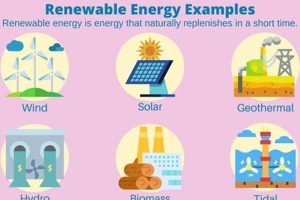
Harnessing the power of oceanic tides presents a sustainable method of electricity generation. This approach leverages the natural rise and fall of sea levels due to gravitational forces, converting kinetic energy into a usable form. Examples of this technology include tidal barrages, tidal stream generators, and tidal lagoons, each employing different methods to capture and convert the energy of moving water.
The significance of this energy source lies in its predictability and renewability. Unlike solar or wind power, tidal patterns are consistent and can be forecast accurately, ensuring a reliable energy supply. Historically, tidal mills have been used for centuries, demonstrating a long-standing awareness of the potential of this natural phenomenon. Modern applications offer substantial environmental benefits by reducing reliance on fossil fuels and mitigating greenhouse gas emissions.
Further discussion will explore the specific technologies employed, the environmental considerations associated with their deployment, and the economic factors influencing the adoption of this promising energy alternative. A comprehensive evaluation of these aspects is crucial for understanding the viability and future prospects of extracting energy from the oceans.
Tidal Energy Implementation Strategies
Effective integration of tidal power requires careful planning and execution. The following recommendations aim to optimize the implementation and maximize the benefits derived from this sustainable energy source.
Tip 1: Conduct Comprehensive Site Assessments: Thoroughly evaluate potential locations considering tidal range, current velocity, seabed geology, and ecological sensitivity. Inadequate assessment can lead to suboptimal energy capture and adverse environmental impacts.
Tip 2: Prioritize Environmental Impact Mitigation: Implement strategies to minimize disruption to marine ecosystems. This includes employing fish-friendly turbine designs, establishing exclusion zones, and conducting ongoing monitoring programs. Addressing environmental concerns early fosters public acceptance and regulatory approval.
Tip 3: Invest in Advanced Technology Research and Development: Support innovation in turbine design, energy storage, and grid integration. Improved efficiency and reliability are crucial for enhancing the economic viability and widespread adoption of this technology.
Tip 4: Foster Collaboration Between Stakeholders: Encourage partnerships between government agencies, private sector companies, and research institutions. Collaborative efforts facilitate knowledge sharing, resource pooling, and streamlined project development.
Tip 5: Develop Supportive Regulatory Frameworks: Establish clear and consistent policies that incentivize investment in tidal power projects. Streamlined permitting processes and feed-in tariffs can significantly accelerate the deployment of this renewable energy source.
Tip 6: Explore Hybrid Energy Systems: Integrate tidal power with other renewable energy sources, such as solar and wind, to create more resilient and reliable energy systems. Diversifying energy sources reduces dependence on any single resource and enhances grid stability.
Tip 7: Implement Robust Monitoring and Maintenance Programs: Establish comprehensive monitoring programs to track the performance of tidal energy infrastructure. Regular maintenance ensures optimal efficiency and extends the lifespan of the equipment.
Successful application hinges on meticulous planning, technological advancement, and proactive environmental stewardship. By adhering to these guidelines, stakeholders can unlock the vast potential of this resource and contribute to a more sustainable energy future.
The following sections will address the practical challenges and opportunities associated with specific tidal energy technologies and explore the economic considerations driving their implementation.
1. Predictability

The inherent predictability of tidal cycles is a fundamental characteristic that elevates tidal energy’s value as a renewable resource. Tidal patterns are governed by the gravitational forces of the moon and the sun, resulting in precise and anticipatable high and low tides. This predictability contrasts sharply with other renewable sources, such as solar and wind, which are subject to weather-dependent fluctuations. The consistent nature of tides allows for accurate forecasting of energy generation potential, enabling grid operators to plan effectively and integrate tidal power seamlessly into the energy supply mix.
This predictability has profound implications for the reliability and economic viability of tidal energy projects. For instance, tidal barrages, like the Rance Tidal Power Station in France, operate based on the known tidal range, allowing for optimized turbine operation and efficient energy conversion. The predictability also reduces the need for extensive energy storage solutions, minimizing infrastructure costs. The predictable nature facilitates the development of sophisticated control systems to optimize energy capture and ensure a stable power output. Furthermore, tidal flow is able to have consistent output through the day and night, a distinct difference from solar power.
In summary, the predictability of tidal cycles is a critical advantage that makes tidal energy a reliable and valuable renewable resource. The ability to accurately forecast energy production from tides enables optimized grid integration, reduces reliance on energy storage, and enhances the economic viability of tidal energy projects. While challenges related to environmental impact and technological advancements persist, the inherent predictability of tides positions tidal energy as a vital component of a diversified and sustainable energy future.
2. Renewable Source

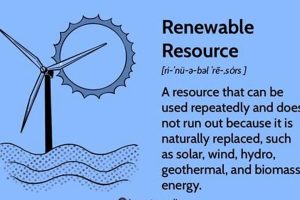
The classification of “tidal energy as a renewable resource” hinges directly on the fundamental characteristic of its source: the tides themselves. Tides are a perpetual, naturally replenishing phenomenon driven by the gravitational interaction between Earth, the Moon, and the Sun. This continuous gravitational influence guarantees the ongoing availability of tidal motion, differentiating it from finite resources such as fossil fuels. The cyclical and inexhaustible nature of tidal movements, therefore, establishes tidal energy as a renewable energy source. Exploiting tidal energy does not deplete a finite reservoir, aligning with the principles of sustainable resource management.
The importance of understanding this connection lies in its implications for long-term energy security and environmental sustainability. Recognizing tidal energy as a renewable source motivates investment in infrastructure and technologies designed to harness its power. For instance, projects like the Swansea Bay Tidal Lagoon in Wales (though currently inactive) represent attempts to capitalize on this renewable resource. The potential for consistent energy generation, unlike fossil fuels, can contribute significantly to reducing carbon emissions and mitigating climate change. Furthermore, embracing a renewable perspective fosters innovation in energy capture and conversion technologies, optimizing the efficiency and reducing the environmental impact of tidal power plants. Example: floating tidal turbines have reduced environmental impact to the seabed.
In summary, the characterization of tidal energy hinges on the tides’ continuous and naturally replenishing nature. This quality defines it as a renewable resource and, therefore, a sustainable energy source, providing long-term environmental and economic benefits. However, the practical application and commercial viability of specific tidal power projects still have the challenges of high initial investment and location constraints but remain a key field of study.
3. Environmental Impact

The environmental impact of tidal energy installations represents a critical consideration in the evaluation of this renewable resource. While offering the potential for reduced greenhouse gas emissions compared to fossil fuels, tidal energy projects are not without ecological consequences, requiring careful assessment and mitigation strategies.
- Disturbance of Marine Ecosystems
Tidal barrages and tidal stream generators can alter hydrodynamic regimes, affecting sediment transport, water quality, and the distribution of marine organisms. The physical presence of these structures can displace or harm benthic communities and disrupt migratory patterns of fish and marine mammals. The Rance Tidal Power Station, for example, has demonstrably altered the local estuarine ecosystem.
- Impact on Fish Populations
Turbines pose a risk of injury or mortality to fish passing through them. The design of turbine blades and the speed of rotation are critical factors in minimizing fish mortality rates. Implementing fish-friendly turbine designs and establishing exclusion zones during sensitive periods can help mitigate these impacts. However, long-term impacts on fish populations are difficult to predict.
- Alteration of Sediment Transport
Tidal barrages can significantly alter sediment transport patterns, leading to accretion or erosion in adjacent coastal areas. This can affect coastal habitats such as salt marshes and mudflats, which are important for biodiversity and coastal protection. Careful modeling of sediment transport is essential during the planning phase of tidal energy projects.
- Noise Pollution
The operation of tidal energy devices, particularly during construction and maintenance, can generate noise that disrupts marine mammals and other noise-sensitive species. Mitigation measures, such as using noise-reduction technologies and scheduling activities to avoid critical periods, are necessary to minimize these impacts.
Addressing these environmental concerns is essential for ensuring the sustainable deployment of tidal energy. By implementing effective mitigation strategies and conducting thorough environmental monitoring, the negative impacts can be minimized, allowing tidal energy to contribute to a cleaner energy future while preserving marine ecosystems. The balance between energy production and environmental protection remains a crucial challenge for the future development of this renewable resource. The selection of the correct area is a key factor to protect the environment with any construction that produces energy from tides.
4. Technological Maturity
The level of technological maturity significantly influences the viability and scalability of tidal energy as a renewable resource. The development and refinement of technologies dictate the efficiency, reliability, and cost-effectiveness of harnessing energy from tidal movements.
- Turbine Design and Efficiency
Advancements in turbine design are central to improving energy capture from tidal flows. Early designs faced challenges related to cavitation, biofouling, and structural integrity. Modern turbines, such as horizontal axis turbines and vertical axis turbines (like Darrieus turbines), incorporate advanced materials, hydrodynamic profiles, and control systems to maximize energy extraction and minimize environmental impact. For example, the Andritz Hammerfest turbine demonstrates increased power output through optimized blade design. Greater efficiency results in more energy capture which makes tidal energy a more usable renewable resource.
- Grid Integration Technologies
Effective integration of tidal energy into existing power grids requires sophisticated grid management systems. Fluctuations in tidal flow and the intermittent nature of tidal cycles necessitate advanced control strategies and energy storage solutions. Technologies like pumped hydro storage and battery storage are increasingly used to smooth out energy supply from tidal power plants. Furthermore, smart grid technologies enable efficient distribution of tidal energy to consumers. The successful integration of the MeyGen project in Scotland showcases the feasibility of large-scale tidal power integration.
- Material Science and Durability
The harsh marine environment presents significant challenges for tidal energy infrastructure. Components are exposed to saltwater corrosion, biofouling, and extreme hydrodynamic forces. Advances in material science have led to the development of corrosion-resistant alloys, antifouling coatings, and robust structural designs that enhance the lifespan and reliability of tidal energy devices. The use of composite materials, such as fiber-reinforced polymers, offers lightweight and high-strength solutions. Increased durability translates to reduced maintenance costs and improved economic viability.
- Subsea Installation and Maintenance
The complexities of subsea installation and maintenance pose significant logistical and economic challenges for tidal energy projects. Specialized vessels, remotely operated vehicles (ROVs), and underwater robotics are essential for deploying and maintaining tidal energy devices. Innovations in underwater welding, non-destructive testing, and predictive maintenance techniques are improving the efficiency and safety of subsea operations. Reducing installation and maintenance costs is critical for making tidal energy competitive with other renewable energy sources.
In summary, technological maturity dictates the degree to which tidal energy can be effectively and economically harnessed as a renewable resource. Advancements in turbine design, grid integration, material science, and subsea operations are driving the development of more efficient, reliable, and cost-effective tidal energy technologies. Continuous innovation is essential for unlocking the full potential of tidal energy and integrating it into a diversified energy portfolio. The development of these technologies is the key for the future of tidal energy.
5. Energy Generation

Energy generation is the direct and primary purpose for classifying tidal energy as a renewable resource. The capacity to reliably and sustainably produce electricity from tidal movements forms the core of its value. Without effective energy generation, the other characteristics renewability, predictability, environmental considerations become largely irrelevant. The cause-and-effect relationship is clear: tidal energy, a perpetually available natural phenomenon, is harnessed to generate electricity, thus contributing to the overall energy supply. This transformative process directly addresses the growing demand for sustainable energy sources and helps reduce reliance on finite fossil fuels. For example, the Sihwa Lake Tidal Power Station in South Korea demonstrates the capability of generating significant electrical power from tidal differences.
The practical significance of energy generation from tides extends to grid stability and energy independence. Unlike intermittent renewable sources, tidal power offers predictable output, allowing grid operators to effectively integrate it into the energy mix. Moreover, countries with access to substantial tidal resources can reduce their dependence on imported fossil fuels, enhancing energy security. Projects such as the MeyGen tidal stream array in Scotland aim to demonstrate the potential of tidal stream technology to provide a consistent baseload power supply. These initiatives highlight the critical role of efficient energy generation in unlocking the economic and strategic benefits of tidal power. Successful installations have had continuous operation by applying this technology.
In conclusion, energy generation is the defining aspect that transforms tidal movements into a valuable renewable resource. The effectiveness of this energy generation process shapes its long-term viability. Overcoming technological and economic challenges associated with energy generation is crucial for realizing the full potential of tidal energy in meeting the global demand for clean and sustainable power. Future development of systems with increased energy generating potential will be a key factor in making this a more valuable resource.
6. Economic Feasibility

Economic feasibility is a pivotal determinant in the widespread adoption of tidal energy as a renewable resource. It encompasses the financial viability of tidal energy projects, influencing investment decisions, technological development, and ultimately, the integration of tidal power into the energy market.
- Initial Capital Investment
The high upfront capital expenditure associated with tidal energy projects poses a significant barrier to entry. Constructing tidal barrages or installing tidal stream arrays requires substantial investment in infrastructure, specialized equipment, and marine engineering expertise. The Rance Tidal Power Station, while a historical success, illustrates the considerable capital outlay involved in barrage construction. Reducing initial costs through innovative designs and efficient construction methods is crucial for enhancing economic attractiveness. For example, tidal stream generators often require less initial capital investment due to their smaller scale and modular design.
- Operational and Maintenance Costs
Operational and maintenance (O&M) expenses represent an ongoing consideration in the economic evaluation of tidal energy. The harsh marine environment necessitates regular inspections, repairs, and component replacements. Biofouling, corrosion, and hydrodynamic forces can increase O&M costs. Implementing robust monitoring systems, employing durable materials, and developing efficient maintenance strategies are essential for minimizing these expenses. Remote monitoring technologies and autonomous underwater vehicles (AUVs) can help reduce O&M costs by enabling proactive maintenance.
- Energy Output and Revenue Generation
The amount of energy generated by tidal power plants directly influences revenue streams and payback periods. Maximizing energy output requires optimizing turbine design, selecting sites with high tidal ranges or strong currents, and implementing effective grid integration strategies. Power purchase agreements (PPAs) and feed-in tariffs can provide stable revenue streams for tidal energy projects, making them more financially viable. The reliability and predictability of tidal power contribute to its value in energy markets, allowing for more accurate forecasting and optimized energy sales.
- Government Incentives and Policy Support
Government incentives and policy support play a crucial role in fostering the economic feasibility of tidal energy. Subsidies, tax credits, and renewable energy mandates can reduce financial risks and attract private investment. Supportive regulatory frameworks that streamline permitting processes and provide long-term market visibility are essential for creating a favorable investment climate. The European Union’s renewable energy directives and national-level policies in countries like the United Kingdom have significantly influenced the development of tidal energy projects. However, long-term commitment and stable policies are necessary to sustain investor confidence.
In conclusion, economic feasibility is integral to realizing the potential of tidal energy as a sustainable energy resource. Overcoming the economic challenges associated with high initial costs, ongoing maintenance, and market competitiveness is essential for driving wider adoption. Addressing these challenges through technological innovation, supportive policies, and strategic investment will pave the way for tidal energy to contribute significantly to a diversified and sustainable energy future.
7. Resource availability
The classification of tidal energy as a renewable resource is intrinsically linked to its geographical resource availability. While the energy source itself the tides is perpetually renewing, its practical exploitation is constrained to specific locations possessing suitable tidal characteristics. This limitation differentiates tidal energy from more ubiquitously available renewable sources such as solar or wind power. The magnitude of tidal ranges, the strength of tidal currents, and the morphology of coastal areas dictate the economic viability of tidal energy projects. Regions with significant tidal ranges or strong tidal currents, such as the Bay of Fundy in Canada or the Pentland Firth in Scotland, represent optimal locations for tidal energy extraction. The absence of such conducive tidal conditions severely restricts the applicability of tidal energy technologies in many coastal regions. A resource that is available everywhere could potentially replace the use of fossil fuels in energy applications.
The economic impact of resource availability extends to project development and investment decisions. The concentration of viable tidal resources in specific areas leads to localized development efforts and targeted infrastructure investments. Projects situated in areas with high tidal energy potential can achieve greater energy output and improved return on investment. However, these areas often face environmental and logistical challenges, including complex seabed conditions, sensitive marine ecosystems, and remote locations. Effective resource assessment, employing advanced hydrodynamic modeling and geophysical surveys, is crucial for identifying suitable sites and mitigating potential risks. The strategic selection of resource-rich locations is, therefore, paramount for the success of tidal energy initiatives and can minimize the impact to cost and the environment.
In summary, resource availability acts as a key determinant in realizing the potential of tidal energy as a renewable resource. The geographical concentration of viable tidal energy resources necessitates careful site selection and targeted investment. While the global tidal energy resource is substantial, its uneven distribution poses both opportunities and challenges. Overcoming these challenges through improved resource assessment techniques and innovative technologies is essential for unlocking the full potential of tidal energy and integrating it into a diversified and sustainable energy mix. The lack of resources is a real problem that must be solved to make tidal energy a bigger player in renewable energy.
Frequently Asked Questions about Tidal Energy as a Renewable Resource
This section addresses common inquiries regarding the harnessing of tidal energy, providing concise answers to enhance understanding of its potential and limitations.
Question 1: What fundamentally makes tidal energy a renewable resource?
Tidal energy derives from the perpetually replenishing gravitational interaction between the Earth, Moon, and Sun, thus ensuring a virtually inexhaustible energy supply.
Question 2: How does the predictability of tidal energy influence its integration into power grids?
The inherent predictability of tidal cycles enables accurate forecasting of energy generation, facilitating efficient grid integration and reducing the need for extensive energy storage solutions.
Question 3: What are the primary environmental concerns associated with tidal energy projects?
Key environmental considerations include potential disturbances to marine ecosystems, impacts on fish populations, alterations to sediment transport patterns, and noise pollution.
Question 4: What technological advancements are driving improvements in tidal energy capture?
Turbine design improvements, advanced materials, efficient grid integration technologies, and optimized subsea installation methods are enhancing energy capture from tidal flows.
Question 5: How does resource availability impact the viability of tidal energy projects?
The geographical concentration of viable tidal resources necessitates careful site selection, as optimal tidal ranges and current velocities are essential for economic energy extraction.
Question 6: What factors influence the economic feasibility of tidal energy as a renewable resource?
Initial capital investment, operational and maintenance costs, energy output and revenue generation, and supportive government policies significantly impact the economic viability of tidal energy projects.
Key takeaways include the recognition of tidal energy’s renewable nature, predictable output, and technological advancements; however, environmental considerations, resource availability, and economic feasibility remain crucial factors in determining its widespread adoption.
Further discussion will explore the practical applications of tidal energy technologies and the long-term prospects for its integration into global energy systems.
Conclusion
This exploration of tidal energy as a renewable resource reveals a complex interplay of potential and limitations. The predictability and renewability of tidal power offer distinct advantages over intermittent energy sources, positioning it as a valuable component of a diversified energy portfolio. Technological advancements continue to improve energy capture and reduce environmental impact. However, economic feasibility and geographical constraints remain significant barriers to widespread adoption. Overcoming these challenges requires sustained investment, innovative technologies, and supportive policy frameworks.
The future of energy production hinges on the responsible development of all available renewable resources. Continued research and strategic implementation are essential to unlock the full potential of tidal energy, contributing to a cleaner, more sustainable global energy landscape. It is imperative that stakeholders collaborate to address the existing hurdles and ensure that tidal power fulfills its promise as a reliable and environmentally sound energy solution.

![Guide to What Energy Resources Are Renewable [+Future] | Renewable Energy Solutions for a Sustainable Future | Clean & Green Power](https://pplrenewableenergy.com/wp-content/uploads/2026/03/th-516-300x200.jpg "Guide to What Energy Resources Are Renewable [+Future] Renewable Energy Solutions for a Sustainable Future | Clean & Green Power")