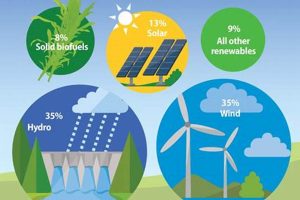
Hydropower, also known as hydroelectric power, currently represents the most substantial contributor to global renewable energy generation. This technology harnesses the kinetic energy of flowing or falling water to drive turbines connected to generators, thereby producing electricity. Large-scale dam projects are the most recognizable manifestation, but run-of-river systems and pumped storage solutions also significantly contribute to overall output.
The significance of this power generation method lies in its established infrastructure, relatively high efficiency, and potential for large-scale energy production. It plays a critical role in meeting electricity demands, particularly in regions with abundant water resources. Historically, it has provided a reliable and cost-effective source of power, aiding in industrial development and improving the quality of life for millions. Additionally, it often provides ancillary benefits, such as flood control and water storage for irrigation and drinking water purposes.
While hydropower maintains a leading position, other renewable energy technologies such as solar, wind, and geothermal are experiencing rapid growth and technological advancements. Understanding the current status of hydropower allows for a better evaluation of the evolving energy landscape and the trajectory of sustainable energy production worldwide. Subsequent discussions will delve into the challenges, innovations, and future prospects of this prominent renewable energy resource.
Strategies for Maximizing Benefits
Effective management and strategic development are crucial to fully leverage the potential benefits of the resource. These strategies can enhance efficiency, minimize environmental impacts, and ensure long-term sustainability.
Tip 1: Implement Modernization Programs: Upgrading existing facilities with advanced turbine technology can significantly increase energy output. This may involve replacing older turbines with more efficient models, optimizing water flow management, and incorporating automated control systems.
Tip 2: Prioritize Environmental Impact Assessments: Conducting thorough environmental impact assessments before initiating new projects is essential. This process should identify potential ecological consequences and integrate mitigation strategies to minimize harm to aquatic ecosystems and surrounding environments.
Tip 3: Invest in Fish Passage Technology: Integrating fish ladders, bypass channels, and other fish passage systems into dam infrastructure is vital for maintaining healthy fish populations. These technologies facilitate the safe movement of migratory fish species around dams, preserving biodiversity.
Tip 4: Optimize Reservoir Management: Implementing dynamic reservoir management strategies can balance power generation with other water resource needs, such as irrigation, flood control, and recreation. This approach involves adjusting water release schedules based on real-time data and predictive models.
Tip 5: Promote Pumped Storage Hydropower: Developing pumped storage facilities can enhance grid stability and integrate intermittent renewable energy sources like solar and wind. Pumped storage uses excess electricity during off-peak hours to pump water uphill, releasing it through turbines during peak demand.
Tip 6: Foster Community Engagement: Involving local communities in the planning and operation of hydropower projects is crucial for building trust and addressing concerns. This includes transparent communication, collaborative decision-making, and providing economic benefits to affected communities.
Tip 7: Explore Small-Scale Hydro Development: Small-scale projects can provide decentralized power generation, particularly in remote areas. These systems have a lower environmental impact compared to large dams and can contribute to rural electrification.
Strategic implementation of these measures can unlock the full potential of this established energy resource, ensuring its continued contribution to global energy needs while mitigating environmental and social consequences.
The forthcoming sections will further explore specific case studies and innovative approaches that are shaping the future of this energy sector.
1. Water's kinetic energy

Water’s kinetic energy represents the fundamental principle underlying the most substantial contribution to renewable energy globally. The ability to harness the movement of water, whether through natural flow or controlled release, directly translates into electricity generation. The inherent power of flowing water, when properly channeled and converted, provides a reliable and significant source of clean energy.
- Conversion to Mechanical Energy
The kinetic energy of water is initially converted into mechanical energy by directing the water flow against turbine blades. These turbines, designed to rotate efficiently under the force of moving water, are directly coupled to generators. The efficiency of this initial conversion is critical to the overall energy yield of the hydropower system. Real-world examples include the Pelton turbines, ideal for high-head installations, and Kaplan turbines, suited for low-head applications. The selection of turbine type directly influences the amount of electricity that can be generated from a given water flow.
- Electricity Generation from Mechanical Rotation
The mechanical rotation of the turbines is then converted into electrical energy via generators. These generators, typically induction or synchronous machines, utilize electromagnetic induction to produce alternating current (AC) electricity. The power output of the generator is directly proportional to the speed of rotation and the generator’s design parameters. Large-scale hydroelectric facilities often employ multiple generators to maximize electricity production and ensure grid stability.
- Impact of Water Flow Variations
The amount of electricity generated is directly dependent on the volume and velocity of water flow. Seasonal variations in rainfall and snowmelt significantly impact the availability of water and, consequently, the power output of hydroelectric facilities. During periods of drought or low water levels, electricity generation may be curtailed, highlighting the vulnerability of hydropower to climate variability. Effective water management strategies and reservoir operations are essential for mitigating the impact of flow variations and ensuring a consistent energy supply.
- Influence of Head Pressure
Head pressure, the vertical distance between the water surface and the turbine, also plays a crucial role in electricity generation. Higher head pressure results in greater kinetic energy, allowing for more efficient turbine operation and increased power output. High-head hydroelectric facilities, often located in mountainous regions, can generate substantial amounts of electricity with relatively small water volumes. Conversely, low-head facilities require larger water volumes to achieve comparable power outputs.
The various facets of harnessing water’s kinetic energy, from the turbine design to the management of water flow variations and head pressure optimization, collectively determine the effectiveness and sustainability of hydroelectric power as a principal renewable energy source. Further innovations in turbine technology, water resource management, and pumped storage systems will continue to shape the future of hydropower and its contribution to global energy needs.
2. Established infrastructure

The prominent position of hydropower as the largest source of renewable energy globally is intrinsically linked to its long-standing and extensive infrastructure. The early development and widespread adoption of hydroelectric technology have resulted in a substantial global network of dams, reservoirs, powerhouses, and transmission lines. This pre-existing infrastructure provides a significant advantage over other renewable energy sources, such as solar and wind, which require ongoing investment in new facilities and grid upgrades to achieve comparable levels of energy production.
The established nature of hydropower infrastructure reduces initial investment costs and project lead times, making it an economically attractive option for many countries. For example, countries with existing large dams, like Canada, Brazil, and Norway, leverage these assets to generate a significant portion of their electricity from renewable sources. The operational experience gained over decades of hydropower generation also contributes to the reliability and efficiency of these facilities. Furthermore, the existing infrastructure provides a platform for modernization and upgrades, allowing for increased energy output and improved environmental performance.
However, the longevity of the infrastructure also presents challenges. Many existing dams are aging and require significant investment for repairs and upgrades. In addition, the environmental and social impacts associated with older projects, such as habitat disruption and displacement of communities, necessitate careful consideration when assessing the long-term sustainability of hydropower. The ongoing debate surrounding dam removal versus rehabilitation highlights the complexities involved in managing established hydropower infrastructure. Despite these challenges, the established infrastructure of hydropower provides a crucial foundation for meeting global energy demands with renewable resources, while advancements in environmentally conscious technologies are improving long-term outcomes.
3. Electricity generation

Electricity generation stands as the central outcome when considering the most substantial contributor to global renewable energy production. The capacity to convert naturally replenished resources into usable electrical energy underpins the significance of this renewable source, dictating its role in meeting worldwide energy demands.
- Hydropower Conversion Efficiency
Hydropower conversion efficiency denotes the proportion of potential energy from water converted into electrical energy. This efficiency is affected by the design and condition of turbines and generators, head pressure, and water flow rates. Modern hydropower plants exhibit efficiencies reaching 90%, making them more efficient than many other power generation methods. The Itaipu Dam, for instance, boasts a high average efficiency due to optimized turbine design and consistent water flow.
- Grid Integration and Stability
The seamless integration of generated electricity into existing power grids is essential for efficient energy distribution. Hydropower plants, often providing baseload power, contribute to grid stability by compensating for fluctuating demand. Pumped storage hydropower further enhances grid stability by storing excess energy during off-peak hours and releasing it during peak demand periods. These systems enhance grid reliability and facilitate the integration of intermittent renewable energy sources, such as solar and wind power.
- Base-Load and Peak-Load Contributions
Hydropower provides both base-load and peak-load electricity. Base-load generation ensures a constant supply of power, while peak-load generation allows for rapid increases in electricity production to meet short-term demand. Large hydropower dams with reservoirs are well-suited for providing base-load power, while smaller run-of-river projects may be better suited for peak-load generation. The Grand Coulee Dam in the United States exemplifies a facility that balances both base-load and peak-load demands.
- Scalability and Distribution
The scalability of electricity generation from water is constrained by geographic factors, water availability, and environmental considerations. Large-scale hydropower projects can generate substantial amounts of electricity but often require significant land inundation and ecosystem disruption. Small-scale hydropower projects, while less impactful, have limited generation capacity. The distribution of electricity from hydropower plants to consumers requires extensive transmission infrastructure, which can pose challenges in remote areas. Balancing scalability, environmental impact, and distribution efficiency is crucial for optimizing the contribution of hydropower to global energy needs.
Collectively, these elements of electricity generation from this dominant renewable source underscore its importance in the global energy landscape. The efficiency of energy conversion, the stability provided to electrical grids, the provision of base-load and peak-load power, and the scalability considerations all influence the role of this energy source in meeting current and future energy demands, while acknowledging the need for responsible management and technological advancements.
4. Geographical dependence

The prominent status of this established power resource is inherently intertwined with its geographical dependence. Access to suitable topographical features and adequate water resources fundamentally dictates the viability and productivity of these installations, thereby shaping its distribution and potential contribution to the global energy mix.
- Water Resource Availability
The presence of substantial and consistent water resources constitutes the primary geographical constraint. Regions with high precipitation, snowmelt, or large river systems are naturally more suited for large-scale hydropower development. For instance, the Himalayan region in Asia and the Andes Mountains in South America possess significant potential due to their abundant water supplies. However, climate change and altered precipitation patterns pose risks to the long-term viability of these regions as reliable power sources, making geographical diversification a critical consideration.
- Topographical Suitability
Topographical features, such as steep valleys and narrow gorges, are essential for creating reservoirs and maximizing head pressure, which directly influences the efficiency of electricity generation. Mountainous regions often provide ideal locations for dam construction and water storage. However, the construction of these facilities in such areas can lead to significant environmental impacts, including habitat fragmentation and displacement of local communities. Balancing the benefits of geographical suitability with the potential ecological and social consequences remains a key challenge.
- Proximity to Demand Centers
The geographical distance between hydropower plants and population centers significantly affects transmission costs and energy losses. While some power plants are located near urban areas, many are situated in remote regions with limited infrastructure. This necessitates the construction of long-distance transmission lines, which can be expensive and prone to energy losses. Integrating distributed power generation, such as small-scale hydropower plants located closer to consumers, can mitigate these challenges, but such systems often have limited generation capacity.
- Geopolitical Considerations
Hydropower projects often involve transboundary rivers, leading to complex geopolitical considerations. The equitable sharing of water resources and the potential impacts of dam construction on downstream countries require careful international cooperation. Disputes over water rights and the potential for water scarcity can hinder the development of power projects and create regional tensions. Collaborative agreements, such as the Indus Waters Treaty between India and Pakistan, are crucial for managing shared water resources and promoting sustainable hydropower development.
In summary, geographical dependence critically shapes the distribution, viability, and sustainability of the leading renewable energy source. Balancing the benefits of abundant water resources and suitable topography with the potential environmental, social, and geopolitical challenges is essential for harnessing this resource responsibly and ensuring its long-term contribution to the global energy mix. Furthermore, exploring alternative locations and technologies can help diversify power generation and mitigate the risks associated with geographical constraints.
5. Scalability challenges

While hydropower maintains its position as the most significant renewable energy source globally, inherent scalability challenges impede its unrestricted expansion. The environmental impacts associated with large-scale projects, including habitat disruption and altered river ecosystems, constrain widespread development. The construction of dams and reservoirs frequently results in the displacement of communities and the inundation of valuable land, creating social and ethical dilemmas. Moreover, suitable locations for large-scale projects are geographically limited, and the economic feasibility of constructing long-distance transmission lines to connect remote power plants to demand centers poses further obstacles. These factors collectively restrict the ability to replicate large-scale projects indefinitely, presenting significant scalability constraints.
The need for environmental impact assessments prior to project commencement exemplifies the complexities involved in scaling hydroelectric power. The Three Gorges Dam project in China, while providing significant power generation capacity, has been scrutinized for its impacts on aquatic ecosystems, displacement of residents, and geological stability. Similarly, proposed dams in the Amazon basin have faced opposition due to concerns over deforestation, loss of biodiversity, and effects on indigenous communities. These cases illustrate the imperative of balancing energy needs with ecological preservation and social justice considerations, further complicating the process of scaling up the exploitation of this potential. Even with the development of run-of-river systems that aim to minimize reservoir size, hydrological changes and their impacts on fish populations remain a concern.
In conclusion, despite the current prominence of hydropower, scalability challenges related to environmental, social, and geographical limitations present significant impediments to its unchecked expansion. Sustainable development strategies that prioritize environmental protection, community engagement, and innovative technologies are essential for ensuring the responsible and scalable use of hydropower in the global energy mix. Focusing on smaller, distributed systems and pumped storage solutions may offer more sustainable pathways for future development, while minimizing the negative impacts associated with large-scale dam projects. The evolution of policies and technological advancements will play a key role in determining the extent to which hydropower can contribute to global renewable energy goals while mitigating scalability obstacles.
Frequently Asked Questions
The following questions address common inquiries regarding the foremost renewable energy resource, aiming to provide clarity on its capabilities, limitations, and future prospects.
Question 1: What are the primary environmental concerns associated with hydropower?
Construction of large-scale projects can lead to significant environmental impacts, including habitat loss, altered river flow regimes, and displacement of aquatic species. Reservoirs can also inundate valuable land and contribute to greenhouse gas emissions through the decomposition of organic matter.
Question 2: How does hydropower contribute to grid stability?
Hydropower plants provide baseload power and can quickly adjust electricity output to meet fluctuating demand, thereby enhancing grid stability. Pumped storage hydropower facilities further enhance grid reliability by storing excess energy during off-peak hours and releasing it during peak demand.
Question 3: What factors influence the efficiency of hydropower generation?
Hydropower generation efficiency depends on the design and condition of turbines and generators, head pressure, and water flow rates. Modern hydropower plants can achieve efficiencies of up to 90%.
Question 4: Is hydropower sustainable in the long term, given climate change?
Climate change poses a threat to the long-term viability of hydropower due to altered precipitation patterns and increased drought frequency. Water resource management strategies and diversification of energy sources are crucial for mitigating these risks.
Question 5: How does small-scale hydropower differ from large-scale hydropower?
Small-scale projects typically have lower environmental impacts and can provide decentralized power generation, particularly in remote areas. However, they have limited generation capacity compared to large-scale projects.
Question 6: What role does international cooperation play in hydropower development?
Hydropower projects often involve transboundary rivers, requiring international cooperation to ensure the equitable sharing of water resources and mitigate potential conflicts. Collaborative agreements are essential for sustainable hydropower development in shared river basins.
In summary, the most substantial renewable energy source presents a complex array of benefits and challenges, requiring informed decision-making and responsible management to ensure its long-term sustainability. Understanding these nuances is critical for shaping energy policies and investment strategies that promote a balanced and resilient energy future.
The subsequent section will address the future outlook of this vital resource, considering emerging technologies and evolving energy demands.
Conclusion
The preceding analysis has illuminated the complexities surrounding the most substantial source of renewable energy worldwide. Hydropower’s established infrastructure, generation capacity, and contribution to grid stability are undeniable. However, its geographical dependence, environmental impacts, and scalability challenges necessitate careful consideration. Balancing energy demands with ecological preservation and social equity remains paramount in the sustainable development of this resource.
The future trajectory of this energy sector will depend on technological innovation, responsible resource management, and effective international cooperation. Continued investment in modernization, environmental mitigation, and community engagement is essential for ensuring that it contributes meaningfully to a global energy transition. Prudent planning and a commitment to sustainability are critical for harnessing the potential of this resource while minimizing its adverse consequences.