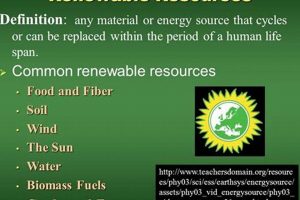
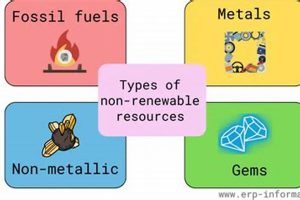
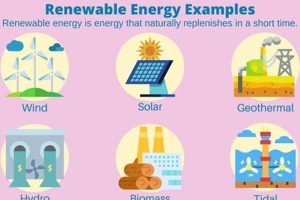
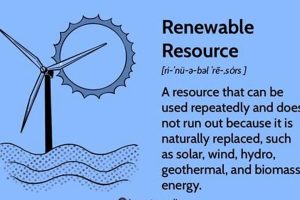
Harnessing power from naturally replenishing sources presents a vital alternative to traditional fossil fuels. These sources include solar, wind, and hydropower, each offering a distinct method of converting natural processes into usable electricity. Solar energy utilizes photovoltaic cells to capture sunlight, converting it directly into electrical current. Wind energy employs turbines to transform kinetic energy from the wind into mechanical power, which then drives a generator. Hydropower leverages the potential energy of water stored at higher elevations, releasing it to turn turbines and generate electricity.
The significance of these energy alternatives lies in their reduced environmental impact and sustainability. Unlike fossil fuels, they produce minimal greenhouse gas emissions, mitigating climate change. Their widespread adoption fosters energy independence, reduces reliance on finite resources, and creates economic opportunities in manufacturing, installation, and maintenance. Historically, the utilization of flowing water to power mills represents an early form of renewable energy application. Modern technologies have significantly advanced the efficiency and scalability of these methods, contributing to a cleaner energy future.
Understanding the operational principles, advantages, and challenges associated with each type of sustainable generation method is essential for informed decision-making. Furthermore, considering the integration of these energy systems into existing infrastructure requires careful planning and technological innovation. The following sections will delve into the specific details of each of these power generation methods, examining their potential and limitations in detail.
Practical Considerations for Implementing Sustainable Energy Solutions
The following guidelines offer practical advice for individuals and organizations seeking to integrate renewable energy sources into their operations.
Tip 1: Conduct a Thorough Energy Audit: Before implementing any renewable energy system, assess current energy consumption patterns. This analysis identifies areas of inefficiency and helps determine the appropriate scale and type of renewable energy system needed.
Tip 2: Evaluate Site-Specific Resource Availability: The feasibility of each renewable energy option depends on the local environment. Solar irradiance, wind speed, and water flow rates must be assessed to determine the potential energy output and suitability of each resource.
Tip 3: Explore Government Incentives and Rebates: Many governments offer financial incentives, such as tax credits, grants, and rebates, to encourage the adoption of renewable energy. Research and utilize these programs to reduce the upfront costs of installation.
Tip 4: Select Appropriately Sized Equipment: Oversized systems result in wasted energy and increased costs. Undersized systems may not meet energy demands. Consult with qualified professionals to determine the optimal system size based on energy needs and resource availability.
Tip 5: Prioritize Energy Storage Solutions: Intermittency is a characteristic of some forms of alternative energy. Battery storage systems or other energy storage technologies can store excess energy generated during peak production periods for use during periods of low production or high demand.
Tip 6: Ensure Proper System Maintenance: Regular maintenance is crucial for ensuring the long-term performance and reliability of any energy system. Establish a maintenance schedule and engage qualified technicians to perform routine inspections and repairs.
Tip 7: Integrate Smart Grid Technologies: Implementing smart grid technologies, such as smart meters and automated control systems, can optimize energy distribution and consumption, improving the efficiency of energy systems and reducing waste.
By carefully considering these factors, individuals and organizations can effectively implement and maintain alternative energy systems, contributing to a more sustainable energy future.
The subsequent sections will provide further insights into the economic and environmental impacts of widespread adoption of this sustainable practice, as well as future trends in the renewable energy sector.
1. Sustainability

Sustainability, in the context of power generation, refers to the long-term ability to meet energy demands without depleting natural resources or causing irreversible environmental damage. Its direct connection to solar, wind, and hydropower lies in their inherent capacity to replenish themselves naturally, unlike finite fossil fuels.
- Resource Depletion Mitigation
Sources like solar and wind mitigate resource depletion by utilizing energy fluxes that are continuously replenished by natural processes. Solar energy harnesses sunlight, a virtually inexhaustible resource, while wind energy captures the kinetic energy of air currents driven by solar heating. Hydropower, while reliant on water cycles, also represents a renewable source when managed responsibly, ensuring continuous water flow without depleting water reserves. This contrasts sharply with fossil fuels, where extraction permanently diminishes available reserves.
- Reduced Greenhouse Gas Emissions
The utilization of these power generation sources significantly reduces greenhouse gas emissions compared to fossil fuels. Solar and wind power generation emit minimal to no greenhouse gasses during operation. While hydropower projects may have initial emissions from construction and land inundation, their operational emissions are substantially lower than those of fossil fuel-based power plants. This reduction in emissions is crucial for mitigating climate change and achieving global sustainability goals.
- Waste Minimization
These technologies contribute to sustainability through waste minimization. Solar panels, wind turbines, and hydropower facilities produce minimal waste during operation. End-of-life management of these technologies requires responsible recycling and disposal practices to minimize environmental impact. Compared to fossil fuel power plants, which generate significant amounts of ash, sludge, and other pollutants, renewable energy sources offer a cleaner waste profile.
- Long-Term Energy Security
Adopting practices enhances long-term energy security by diversifying energy sources and reducing dependence on volatile global fossil fuel markets. Local access to these energy sources enhances energy independence and reduces the risk of disruptions in energy supply caused by geopolitical instability or resource scarcity. The inherent renewability of solar, wind, and hydropower resources provides a stable and predictable energy supply over the long term.
These facets collectively underscore the critical role of the three in promoting environmental stewardship and securing energy supplies for future generations. The advantages of shifting towards this sustainable practice extend beyond environmental benefits, creating resilient economies and mitigating long-term energy risks.
2. Accessibility

Accessibility, in the context of sustainable power generation, denotes the availability and feasibility of deploying resources based on geographic, economic, and technological considerations. The ease with which solar, wind, and hydropower can be implemented varies significantly across regions and is influenced by factors ranging from natural resource distribution to infrastructural development.
- Geographic Availability
The geographical distribution of resources dictates the practical accessibility of each. Solar energy’s accessibility is widespread, though regions with higher solar irradiance offer greater efficiency. Wind resources are concentrated in areas with consistent wind patterns, such as coastal regions and open plains. Hydropower depends on the presence of rivers and suitable topography for dam construction. This uneven distribution necessitates tailored approaches, utilizing resource assessments to determine the most viable power generation option for a given location. Example: A desert region may find solar power to be far more accessible than wind or hydro, given the readily available sunlight.
- Economic Affordability
The economic aspect significantly affects accessibility. Initial capital costs for installing alternative systems can be substantial, though these costs have been declining. Government incentives, such as tax credits and subsidies, play a crucial role in making these technologies more affordable to individuals and organizations. Furthermore, the long-term operational costs, including maintenance and fuel expenses (which are negligible for solar and wind), impact the overall economic accessibility. For instance, community solar programs can make solar energy accessible to individuals who cannot afford individual rooftop installations.
- Technological Infrastructure
Technological infrastructure includes the presence of transmission lines, grid connectivity, and manufacturing capabilities. Areas with well-developed grid infrastructure can seamlessly integrate energy sources. However, in remote or rural areas, the lack of adequate infrastructure can hinder accessibility. Technological advancements, such as microgrids and distributed generation systems, are improving accessibility in these underserved regions. Example: Rural communities can utilize microgrids powered by a hybrid of solar and wind to achieve energy independence where grid access is limited.
- Regulatory and Policy Frameworks
Government policies and regulatory frameworks can either facilitate or impede the accessibility of three energy production methods. Supportive policies, such as feed-in tariffs and renewable energy mandates, incentivize investment and deployment. Streamlined permitting processes and clear regulatory guidelines reduce barriers to entry. Conversely, restrictive policies or bureaucratic hurdles can stifle growth and limit accessibility. Policies promoting net metering, for example, greatly enhance the accessibility of solar power by allowing consumers to sell excess electricity back to the grid.
These intertwined elements define the practical accessibility of green power solutions, underscoring the necessity of integrated approaches that consider geographic suitability, economic viability, technological readiness, and supportive policy environments. Addressing these factors is essential to democratize energy access and foster a transition to a more sustainable energy landscape. The success of these technologies depends on a holistic strategy that promotes equitable access for all communities.
3. Economic Viability

Economic viability is a critical component of integrating solar, wind, and hydropower into the energy mix. The economic feasibility of these power sources directly impacts their adoption rate and long-term sustainability. Initial high capital costs for infrastructure development, such as solar panel installations, wind turbine construction, and hydroelectric dam projects, often present a barrier to entry. However, declining technology costs, coupled with government incentives, such as tax credits and subsidies, are improving the economic competitiveness of these energy alternatives. For instance, the levelized cost of energy (LCOE) for solar photovoltaic (PV) systems has decreased significantly over the past decade, making it increasingly cost-competitive with traditional fossil fuel-based power generation in many regions.
The long-term economic advantages extend beyond the initial investment. Lower operational costs, due to the absence of fuel expenses, contribute to the overall economic viability. Wind and solar farms, once established, require minimal ongoing fuel costs, shielding them from the price volatility associated with fossil fuels. Furthermore, these industries stimulate local economies by creating jobs in manufacturing, installation, maintenance, and research. Real-world examples demonstrate the economic impact: the growth of the wind energy sector in the American Midwest has generated thousands of jobs and attracted significant investment. Similarly, large-scale solar projects in desert regions have transformed previously unproductive land into valuable energy-producing assets. Effective energy storage is one such enabling technology.
In conclusion, economic viability is an essential factor driving the transition to solar, wind, and hydro. Addressing the economic barriers through technological innovation, policy support, and strategic investment is crucial for accelerating their widespread adoption. While challenges remain, the declining costs and long-term economic benefits underscore the vital role of these renewable resources in achieving a sustainable energy future. Balancing initial investments with long-term gains is paramount to making these power sources a practical and attractive option for both developed and developing nations.
4. Scalability
Scalability, regarding energy generation, represents the ability of a technology to expand its production capacity to meet increasing demands. Its importance in the context of solar, wind, and hydropower stems from the need to transition from fossil fuels to sustainable alternatives capable of powering entire economies.
- Modular Expansion
Solar and wind energy exhibit inherent modularity, facilitating incremental expansion. Solar farms can add panels, and wind farms can install additional turbines to increase output. This modularity allows for phased development, adapting to fluctuating energy needs and minimizing upfront investment risks. An example is a utility-scale solar project that begins with a smaller capacity and gradually increases it as demand grows.
- Geographic Dispersion
Scalability extends to geographic dispersion. Solar and wind resources can be deployed across diverse terrains, adapting to local conditions. Distributed generation, where smaller-scale systems are installed closer to end-users, enhances grid resilience and reduces transmission losses. A rural community can implement a combination of rooftop solar and small-scale wind turbines to achieve energy independence.
- Technological Advancements
Continuous technological advancements enhance scalability. Improvements in solar panel efficiency, turbine design, and energy storage technologies contribute to higher energy yields and greater reliability. Innovations such as bifacial solar panels and taller wind turbines increase energy capture. Battery storage systems enable these variable resources to provide a more consistent power supply.
- Grid Integration Challenges
Scalability presents challenges related to grid integration. As the proportion of variable output increases, grid operators must manage fluctuations in supply. Investments in grid modernization, including smart grids and enhanced transmission infrastructure, are essential to accommodate these resources. Advanced forecasting techniques and demand-side management strategies further contribute to grid stability.
These facets demonstrate the complex relationship between scalability and the integration of solar, wind, and hydro energy into the energy system. Overcoming scalability challenges requires a combination of technological innovation, strategic planning, and supportive policies to facilitate the transition to a sustainable energy future. Maximizing the potential of these renewable sources is predicated on addressing the constraints and opportunities presented by scalability.
5. Environmental Impact

The deployment of solar, wind, and hydropower technologies presents a complex interplay of environmental impacts that warrant careful consideration. These resources, while offering a reduced carbon footprint compared to fossil fuels, are not without environmental consequences. Solar energy development can involve land use changes, potentially impacting habitats and biodiversity. Wind energy installations may pose risks to avian and bat populations. Hydropower projects can alter river ecosystems, affecting fish migration and water quality. A comprehensive assessment of environmental impact is therefore an essential component of responsible implementation of these energy alternatives. Quantifying and mitigating these effects is essential to ensure the benefits outweigh the costs.
Effective mitigation strategies are critical to minimizing the adverse environmental effects associated with power generation using these sources. Land use planning can help minimize habitat disruption from solar installations. Implementing bird and bat protection measures, such as turbine placement and operational adjustments, can reduce wildlife mortality at wind farms. Environmental flow management and fish passage structures can help mitigate the ecological impacts of hydropower dams. For example, the implementation of fish ladders at hydroelectric dams has allowed salmon to bypass dams and continue their migration upstream to spawn. Similarly, careful site selection for wind farms, away from major bird migration routes, has proven effective in reducing avian fatalities. The environmental impact assessment must be part of a holistic approach.
Understanding the environmental impacts of power sources facilitates informed decision-making and promotes the development of sustainable energy strategies. By acknowledging both the benefits and the environmental trade-offs, policymakers and project developers can make choices that minimize negative consequences and maximize environmental protection. Transparency and stakeholder engagement are essential to building trust and ensuring that environmental considerations are integrated into all phases of project development. Evaluating the entire life cycle of these technologies, from manufacturing to decommissioning, provides a comprehensive understanding of their true environmental footprint. Further research and technological innovation are necessary to continue reducing the environmental impacts associated with these sustainable alternatives, ensuring that the transition to a cleaner energy future is also an environmentally responsible one.
6. Technological Advancement
Technological advancement is intrinsically linked to the viability and effectiveness of solar, wind, and hydropower energy sources. Innovations in materials science, engineering, and grid management are continually refining the capabilities of these renewable energy systems, reducing costs, and enhancing performance. This ongoing evolution is essential to realizing their full potential as cornerstones of a sustainable energy future.
- Improved Materials and Manufacturing
Advancements in materials science have led to the development of more efficient solar cells, durable wind turbine blades, and corrosion-resistant hydropower components. Innovations in manufacturing processes, such as automated production lines and advanced composite materials, reduce production costs and improve the lifespan of these technologies. The use of perovskite solar cells, for example, promises higher efficiencies and lower manufacturing costs compared to traditional silicon cells. This translates to more affordable and widely accessible sources.
- Enhanced Energy Storage Solutions
Energy storage technologies are crucial for addressing the intermittency of solar and wind. Developments in battery technology, such as lithium-ion and flow batteries, provide improved energy density, longer lifespans, and reduced costs. Pumped hydro storage, a mature technology, offers large-scale energy storage capacity. Other emerging technologies, such as compressed air energy storage and thermal energy storage, also hold promise for grid-scale energy storage. These advancements allow for more reliable and dispatchable power generation from sources, mitigating the variability associated with weather-dependent resources.
- Smart Grid Technologies and Integration
The integration of high proportions of solar, wind, and hydropower requires advanced grid management systems. Smart grid technologies, including smart meters, advanced sensors, and real-time monitoring and control systems, enable more efficient and reliable distribution of energy. Advanced forecasting algorithms and predictive analytics improve the accuracy of energy generation forecasts, allowing grid operators to better manage fluctuations in supply and demand. Distributed energy resource management systems (DERMS) facilitate the integration of decentralized power generation sources, enhancing grid resilience and stability. This translates to more effective utilization of distributed power generation.
- Advanced Turbine and Hydropower Designs
Continued advancements in turbine and hydropower technology are enhancing efficiency and reducing environmental impact. Taller wind turbines with longer blades can capture more energy from the wind. Floating offshore wind turbines enable access to stronger and more consistent wind resources in deeper waters. Advanced hydropower designs, such as run-of-river hydropower plants, minimize the environmental impact on river ecosystems. Fish-friendly turbine designs reduce the risk of fish mortality at hydropower facilities. These innovations improve the environmental and economic viability of these methods, expanding their potential applications.
In summary, technological progress is the driving force behind the ongoing improvement and expanded adoption of power generation methods. Continued investment in research and development, coupled with supportive policies, is essential for unlocking the full potential of these sustainable energy sources. By overcoming technical challenges and driving down costs, innovation enables solar, wind, and hydropower to become increasingly competitive with fossil fuels, paving the way for a cleaner and more sustainable energy future.
7. Energy Security

The concept of energy security is fundamentally intertwined with the strategic deployment of renewable energy resources, particularly solar, wind, and hydropower. Energy security encompasses a nation’s ability to reliably and affordably access energy supplies, mitigating the risks associated with dependence on volatile global fossil fuel markets. Widespread adoption of the above listed power generation methods strengthens energy security by diversifying energy sources, reducing reliance on imported fossil fuels, and fostering domestic energy production. This diversification insulates nations from price shocks, supply disruptions, and geopolitical instability, fostering a more resilient and stable energy landscape. For example, countries with significant renewable energy capacity, such as Iceland (hydropower and geothermal) and Denmark (wind power), demonstrate a high degree of energy independence and security.
The contribution of these energy options to energy security extends beyond mere diversification. By harnessing locally available resources, nations can reduce their vulnerability to external factors that impact energy supply. Solar energy, for instance, can be deployed in almost any location, providing a distributed energy resource that enhances grid resilience. Wind energy, strategically located in regions with consistent wind patterns, offers a reliable source of domestic energy production. Hydropower, while geographically constrained, provides a stable and predictable source of electricity generation. The integration of energy storage solutions further enhances the reliability and dispatchability of these resources, addressing the intermittency challenges associated with solar and wind power. Germany’s Energiewende (energy transition) policy, despite its challenges, illustrates the commitment to achieving energy security through renewable energy expansion.
In conclusion, the strategic utilization of sources like solar, wind, and hydropower is paramount to achieving and maintaining energy security. These resources offer a pathway to reduce dependence on fossil fuels, enhance domestic energy production, and foster a more resilient and stable energy system. While challenges related to grid integration, intermittency, and infrastructure investment remain, the long-term benefits of improved energy security outweigh the costs. A comprehensive energy strategy that prioritizes the development and deployment of these generation methods is essential for ensuring a nation’s economic stability, national security, and environmental sustainability. A strategic move helps to ensure that we are able to leverage on this energy resource.
Frequently Asked Questions about Renewable Energy Resources
The following addresses common inquiries and misconceptions concerning solar, wind, and hydropower energy generation. This information is intended to provide clarity and promote a more informed understanding of these essential energy alternatives.
Question 1: Are solar, wind, and hydropower truly sustainable, considering their environmental impact?
While these options offer a reduced carbon footprint compared to fossil fuels, they are not without environmental consequences. Solar energy can involve land use changes; wind energy may pose risks to wildlife; and hydropower can alter river ecosystems. However, these impacts can be mitigated through careful planning, responsible project development, and ongoing technological innovation. The long-term benefits of reduced greenhouse gas emissions and resource depletion outweigh the localized environmental effects when managed effectively.
Question 2: What factors limit the accessibility of renewable energy resources in different regions?
Accessibility is influenced by geographical resource availability, economic affordability, and technological infrastructure. Solar energy is widely accessible but more efficient in high-irradiance regions. Wind energy relies on consistent wind patterns, and hydropower requires suitable river systems. Economic factors include the initial capital costs and government incentives. Technological infrastructure includes grid connectivity and energy storage solutions. Regions lacking in any of these factors may face limitations in deploying power generation practices.
Question 3: How economically viable are energy options compared to traditional fossil fuels?
The economic viability of these generation methods has improved significantly in recent years due to declining technology costs and government incentives. While initial capital costs can be substantial, the absence of fuel expenses and the long-term operational cost reductions make these power sources increasingly competitive with fossil fuels. Furthermore, these industries stimulate local economies and create jobs, contributing to overall economic growth.
Question 4: Can solar, wind, and hydropower provide a reliable and consistent energy supply, given their intermittent nature?
The intermittency of solar and wind energy can be addressed through a combination of energy storage solutions, grid modernization, and advanced forecasting techniques. Energy storage technologies, such as batteries and pumped hydro storage, can store excess energy for use during periods of low production. Smart grid technologies enable more efficient distribution and management of energy. Accurate forecasting algorithms improve the predictability of renewable energy generation. Hydropower, with its ability to store water in reservoirs, offers a more dispatchable power source compared to solar and wind.
Question 5: What role does technological advancement play in enhancing the performance and reducing the costs of power generation techniques?
Technological advancements are continually improving the performance and reducing the costs of power generation solutions. Innovations in materials science, engineering, and grid management are enhancing energy efficiency, durability, and reliability. Developments in energy storage technologies are addressing the intermittency challenges. Smart grid technologies are enabling more efficient integration of sources into the energy grid. Continued investment in research and development is crucial for unlocking the full potential of sustainable energy.
Question 6: How does the widespread adoption of energy options contribute to energy security?
Widespread adoption of alternative energy supports national security. These technologies reduce reliance on imported fossil fuels, mitigate the risks associated with volatile global energy markets, and foster domestic energy production. Solar, wind, and hydropower resources can be deployed in diverse locations, enhancing grid resilience and reducing vulnerability to supply disruptions. A diversified energy portfolio strengthens energy security and promotes a more stable and sustainable energy future.
The above responses provide a foundation for understanding the key aspects of solar, wind, and hydropower energy. Further research and exploration are encouraged for a more comprehensive understanding of these vital energy alternatives.
The following section will explore the future trends and innovations shaping the landscape of sustainable energy.
Three Renewable Energy Resources
This exploration has examined solar, wind, and hydropower as pivotal components of a sustainable energy future. The analysis has addressed critical dimensions, including sustainability, accessibility, economic viability, environmental impact, technological advancement, and energy security. Each aspect necessitates careful consideration to ensure the responsible and effective deployment of these energy generation methods.
The continued advancement and strategic integration of three renewable energy resources are imperative for mitigating climate change, enhancing energy independence, and fostering long-term economic stability. Addressing the challenges related to intermittency, grid integration, and environmental impact requires ongoing innovation and a steadfast commitment to a cleaner energy future. The path forward demands collaborative efforts from policymakers, researchers, and industry stakeholders to unlock the full potential of these vital energy sources. A proactive approach is vital to ensure a brighter future for generations to come.
![Guide to What Energy Resources Are Renewable [+Future] | Renewable Energy Solutions for a Sustainable Future | Clean & Green Power](https://pplrenewableenergy.com/wp-content/uploads/2026/03/th-516-300x200.jpg "Guide to What Energy Resources Are Renewable [+Future] Renewable Energy Solutions for a Sustainable Future | Clean & Green Power")