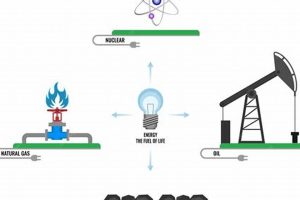
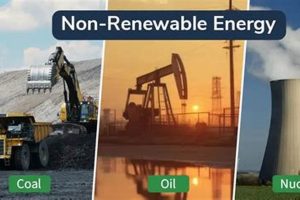
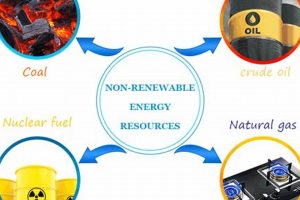
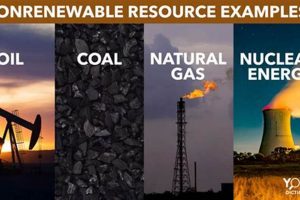
Fossil fuels (coal, oil, and natural gas) represent a significant portion of global energy consumption. Coal, formed from ancient plant matter, is primarily used for electricity generation. Oil, derived from marine organisms, is refined into gasoline, diesel, and other fuels for transportation and heating. Natural gas, often found alongside oil, is used for heating, electricity generation, and industrial processes.
These energy sources have played a vital role in industrial development and modern civilization, offering high energy density and relatively easy accessibility. Historically, their abundance and affordability propelled economic growth and technological advancements. However, their finite nature and environmental impact necessitate a shift towards sustainable alternatives.
Understanding the characteristics, applications, and limitations of these resources is crucial for informed decision-making regarding energy policy and future energy transitions. This discussion will further explore each of these resources in detail, examining their extraction processes, environmental consequences, and potential alternatives.
Practical Considerations Regarding Fossil Fuel Consumption
Minimizing the environmental impact and maximizing the efficient use of finite fossil fuel resources requires careful consideration and proactive measures. The following tips offer guidance for responsible energy consumption:
Tip 1: Improve Building Insulation: Effective insulation reduces energy loss for heating and cooling, lowering reliance on fossil fuels for temperature regulation.
Tip 2: Optimize Vehicle Fuel Efficiency: Choosing fuel-efficient vehicles, maintaining proper tire pressure, and adopting efficient driving habits can significantly reduce fuel consumption.
Tip 3: Support Public Transportation and Active Mobility: Utilizing public transport, cycling, or walking reduces individual reliance on fossil fuel-powered vehicles.
Tip 4: Invest in Energy-Efficient Appliances: Selecting appliances with high energy efficiency ratings minimizes energy consumption during operation.
Tip 5: Embrace Renewable Energy Sources: Transitioning to renewable energy sources like solar, wind, and hydroelectricity reduces dependence on fossil fuels.
Tip 6: Advocate for Sustainable Energy Policies: Supporting policies that promote energy efficiency and renewable energy adoption accelerates the transition to a sustainable energy future.
Tip 7: Reduce, Reuse, and Recycle: Manufacturing processes often rely on fossil fuels. Reducing consumption, reusing items, and recycling materials minimizes the demand for energy-intensive production.
By implementing these strategies, individuals and communities can contribute to a more sustainable energy landscape and mitigate the negative impacts associated with fossil fuel dependence.
Ultimately, transitioning towards a future powered by renewable energy sources is essential for long-term environmental sustainability and energy security. The responsible use of remaining fossil fuel reserves during this transition remains a critical consideration.
1. Fossil Fuels

Fossil fuels represent the primary examples of non-renewable energy sources. The term encompasses three distinct forms: coal, oil, and natural gas. These resources originate from the decomposition of organic matter over geological timescales, resulting in concentrated energy reserves. Coal formation involves the compression of ancient plant matter under layers of sediment, while oil and natural gas derive from marine organisms subjected to intense heat and pressure. This process concentrates energy, making fossil fuels readily combustible and a potent source of power. For example, coal fuels power plants, oil refines into gasoline for vehicles, and natural gas heats homes and powers industrial processes. The connection between these three fuels and the concept of non-renewable energy stems from the finite nature of these resources. Their formation occurs over immensely long periods, rendering their replenishment on a human timescale impossible.
The extraction and utilization of fossil fuels have driven industrialization and global development for centuries. However, their combustion releases greenhouse gases, contributing significantly to climate change. This environmental impact, coupled with resource depletion, necessitates a transition towards sustainable alternatives. For instance, the burning of coal for electricity generation emits substantial quantities of carbon dioxide, a major greenhouse gas. Similarly, oil spills can devastate marine ecosystems, illustrating the environmental risks associated with fossil fuel extraction. Furthermore, the finite reserves of these resources pose a challenge to long-term energy security, highlighting the importance of diversifying energy sources.
Understanding the connection between fossil fuels and the broader category of non-renewable energy sources is crucial for informed energy policy development and sustainable resource management. While fossil fuels have played a pivotal role in societal advancement, their limitations necessitate a shift towards renewable energy options. Continued reliance on these finite and environmentally impactful resources poses significant challenges to future generations. Transitioning to sustainable alternatives is essential to mitigate climate change and ensure long-term energy security.
2. Finite Resources

The finite nature of resources lies at the heart of understanding non-renewable energy sources, specifically coal, oil, and natural gas. These resources, formed over geological timescales from organic matter, exist in limited quantities. Their formation rate is infinitesimally slow compared to the rate of consumption, rendering them effectively non-replenishable on a human timescale. This characteristic distinguishes them from renewable resources like solar or wind energy, which are continuously replenished. For instance, proven oil reserves, while substantial, are finite; continued extraction without discovery of new reserves inevitably leads to depletion. Similarly, coal deposits, while vast, are not infinite, and their extraction faces limitations imposed by geological and environmental factors. The finite nature of these resources necessitates careful management and exploration of alternative energy sources.
The concept of finite resources has significant practical implications for energy planning and resource management. Dependence on finite resources creates vulnerabilities related to price volatility, supply disruptions, and geopolitical instability. As reserves dwindle, extraction becomes more challenging and expensive, potentially leading to price increases and economic disruption. Furthermore, reliance on finite resources necessitates strategic planning for a transition to alternative energy sources. For example, investing in renewable energy infrastructure and developing energy storage technologies are crucial steps towards mitigating the risks associated with resource depletion. Understanding the limitations imposed by finite resources is essential for informed decision-making regarding future energy security and sustainable development.
In summary, the finite nature of resources like coal, oil, and natural gas underscores the critical need for a transition to renewable energy sources. While these non-renewable resources have fueled industrialization and economic growth, their inherent limitations pose challenges to long-term sustainability. Recognizing the finite nature of these resources necessitates proactive measures to diversify energy portfolios, invest in renewable energy technologies, and promote sustainable resource management practices. Addressing the challenges associated with finite resources is crucial for ensuring a stable and sustainable energy future.
3. Energy Generation
Energy generation relies significantly on the combustion of three primary non-renewable resources: coal, oil, and natural gas. This process involves the conversion of chemical energy stored within these fuels into thermal energy, subsequently used to generate electricity or provide direct heat for industrial processes and residential applications. The dominance of these resources in the energy sector stems from their high energy density and established infrastructure for extraction, processing, and distribution. For instance, coal-fired power plants utilize the heat generated from burning coal to boil water, creating steam that drives turbines connected to generators, ultimately producing electricity. Similarly, natural gas combustion powers turbines directly, while oil derivatives like gasoline and diesel fuel internal combustion engines for transportation. This dependence on non-renewable resources for energy generation has profound implications for global energy security and environmental sustainability.
The reliance on these non-renewable resources for electricity generation presents both advantages and disadvantages. Advantages include established infrastructure, relatively low cost (historically), and reliable energy output. However, disadvantages include finite resource availability, significant contributions to greenhouse gas emissions, and associated environmental impacts such as air and water pollution. For example, the combustion of coal releases substantial amounts of carbon dioxide, a major contributor to climate change. Oil extraction can lead to habitat destruction and oil spills, posing severe threats to ecosystems. Furthermore, the finite nature of these resources creates uncertainty regarding future energy supplies and price volatility. These factors necessitate a shift toward more sustainable energy generation methods, emphasizing renewable sources like solar, wind, and hydropower.
Understanding the connection between energy generation and the reliance on non-renewable resources is crucial for developing effective energy policies and transitioning towards a sustainable energy future. While these resources currently play a dominant role in meeting global energy demands, the long-term implications of their continued use necessitate a shift towards cleaner and more sustainable alternatives. Addressing the challenges associated with resource depletion, environmental impact, and energy security requires investment in renewable energy technologies, improvements in energy efficiency, and diversification of energy sources. This transition is essential for mitigating the impacts of climate change and ensuring a stable and sustainable energy future.
4. Environmental Impact

Significant environmental impacts are intrinsically linked to the utilization of coal, oil, and natural gas. Combustion of these fuels releases greenhouse gases, primarily carbon dioxide, contributing to climate change. This alteration of atmospheric composition leads to global warming, with cascading effects including rising sea levels, altered weather patterns, and increased frequency of extreme weather events. Beyond greenhouse gas emissions, extraction and transportation of these resources pose further environmental risks. Coal mining can lead to habitat destruction, water contamination, and land subsidence. Oil spills, a risk inherent in oil transportation, can devastate marine ecosystems and coastal communities. Natural gas extraction, while generally cleaner than coal or oil, can contribute to methane leaks, a potent greenhouse gas. For example, the Deepwater Horizon oil spill in 2010 demonstrated the catastrophic consequences of accidents associated with offshore oil extraction, impacting marine life and coastal economies across the Gulf of Mexico. Understanding these environmental impacts is crucial for developing responsible energy policies and transitioning towards sustainable alternatives.
Further analysis reveals that the environmental impact of these energy sources extends beyond immediate consequences. The long-term effects of climate change, driven by greenhouse gas emissions from fossil fuel combustion, pose significant challenges to global ecosystems and human societies. These challenges include disruptions to agricultural practices, increased susceptibility to infectious diseases, and displacement of populations due to rising sea levels or extreme weather events. Moreover, the extraction and processing of these fuels consume significant quantities of water, a resource under increasing stress in many regions. For instance, water scarcity exacerbated by energy production can impact agricultural productivity and access to clean drinking water, particularly in arid and semi-arid regions. Therefore, mitigating the environmental impact of non-renewable energy sources is not merely an environmental concern, but a critical factor influencing human health, economic stability, and social equity.
In summary, the environmental impact of coal, oil, and natural gas necessitates a shift towards sustainable energy sources. Addressing the challenges of climate change, habitat destruction, and resource depletion requires a concerted effort to diversify energy portfolios, invest in renewable energy technologies, and implement sustainable resource management practices. Transitioning away from dependence on these environmentally damaging energy sources is essential for ensuring a healthy planet and a sustainable future. The long-term consequences of inaction outweigh the short-term economic benefits derived from continued reliance on these finite and polluting resources. The imperative to transition to a sustainable energy future is not just an environmental imperative, but a fundamental requirement for ensuring the well-being of future generations.
5. Resource Depletion
Resource depletion is intrinsically linked to the consumption of non-renewable energy sources, namely coal, oil, and natural gas. These resources, formed over geological timescales, exist in finite quantities. Their extraction and consumption occur at rates far exceeding their replenishment, leading to inevitable depletion. This depletion poses significant challenges to energy security, economic stability, and environmental sustainability. Understanding the dynamics of resource depletion is crucial for informed decision-making regarding energy policy and the transition to renewable alternatives.
- Declining Reserves:
Continuous extraction diminishes available reserves, leading to increased difficulty and cost of extraction. As easily accessible reserves are depleted, exploration shifts to more challenging environments, such as deep-sea drilling or remote arctic regions. These ventures entail higher financial costs, increased technological complexity, and greater environmental risks. For example, the decline in conventional oil reserves has driven exploration in unconventional sources like oil sands and shale oil, which require more energy-intensive extraction methods. This declining availability underscores the finite nature of these resources and the need for alternative energy strategies.
- Economic Impacts:
Resource depletion can trigger price volatility and economic instability. As readily available supplies diminish, prices tend to rise, impacting industries reliant on these energy sources. This can lead to inflationary pressures and disruptions in supply chains. For instance, dependence on imported oil makes economies vulnerable to price fluctuations in the global market, impacting transportation costs and the price of goods and services. Diversification of energy sources and investment in renewable energy technologies can mitigate these economic risks.
- Geopolitical Implications:
Control over dwindling resources can exacerbate geopolitical tensions. Nations heavily reliant on specific non-renewable resources may face increased competition for access to remaining reserves. This can lead to political instability and conflict in resource-rich regions. For example, competition for access to oil and natural gas reserves has historically been a source of international tension. Transitioning towards renewable energy sources can reduce dependence on these resources, enhancing energy independence and mitigating geopolitical risks.
- Environmental Consequences:
Resource depletion often necessitates more intensive extraction methods, which can exacerbate environmental damage. As easily accessible reserves are exhausted, extraction shifts to more challenging environments, often requiring more invasive techniques with greater environmental impacts. For example, the extraction of oil sands involves large-scale land disturbance, deforestation, and water contamination. This intensification of environmental damage underscores the interconnectedness between resource depletion and environmental degradation.
These interconnected facets of resource depletion underscore the urgency of transitioning away from dependence on non-renewable energy sources. The finite nature of coal, oil, and natural gas necessitates a shift towards sustainable alternatives. Continued reliance on these dwindling resources exacerbates economic, geopolitical, and environmental risks. Investing in renewable energy technologies, promoting energy efficiency, and developing sustainable resource management practices are essential steps toward ensuring a secure and sustainable energy future.
Frequently Asked Questions about Non-Renewable Energy Sources
This section addresses common inquiries regarding the utilization and implications of coal, oil, and natural gas.
Question 1: Why are these energy sources termed “non-renewable”?
These resources are classified as non-renewable due to their formation over geological timescales, far exceeding human lifetimes. Consumption rates vastly surpass replenishment rates, rendering them effectively finite.
Question 2: What is the primary environmental concern associated with these fuels?
Combustion releases greenhouse gases, contributing significantly to climate change. Extraction and transportation processes also pose environmental risks, including habitat destruction and potential for spills.
Question 3: What are the economic implications of dependence on these resources?
Dependence creates vulnerability to price volatility, supply disruptions, and geopolitical instability. As reserves dwindle, extraction becomes more costly, potentially impacting economic stability.
Question 4: What are the long-term consequences of resource depletion?
Depletion necessitates exploration of more challenging and environmentally sensitive extraction sites, increasing both cost and environmental risk. It also underscores the need for a transition to sustainable alternatives.
Question 5: What alternatives exist to reliance on these non-renewable resources?
Renewable energy sources, such as solar, wind, hydro, and geothermal, offer sustainable alternatives. Energy efficiency improvements and conservation efforts also play a crucial role in reducing reliance on non-renewable resources.
Question 6: What role does energy policy play in addressing the challenges of non-renewable energy dependence?
Effective energy policies are essential for promoting energy efficiency, incentivizing renewable energy development, and managing the transition towards a sustainable energy future. Policy frameworks can accelerate the adoption of cleaner technologies and mitigate the negative impacts of non-renewable resource dependence.
Understanding the limitations and implications of relying on coal, oil, and natural gas is crucial for informed decision-making and responsible energy consumption. Transitioning towards sustainable alternatives is essential for ensuring long-term energy security and environmental sustainability.
The subsequent section will delve further into specific examples of sustainable energy alternatives and their potential to address the challenges posed by non-renewable energy sources.
Conclusion
This exploration of coal, oil, and natural gas has illuminated their crucial role in historical energy production, while also highlighting their inherent limitations and substantial environmental consequences. The finite nature of these resources, coupled with the detrimental impacts of their combustion and extraction, necessitates a fundamental shift in global energy strategies. Resource depletion, price volatility, geopolitical instability, and climate change represent significant challenges associated with continued reliance on these non-renewable sources.
A sustainable future demands a decisive transition towards renewable energy sources and enhanced energy efficiency measures. Investing in renewable energy technologies, developing smart grids, and promoting responsible resource management are not merely options, but necessities for ensuring a secure and environmentally sustainable future. The urgency of this transition cannot be overstated; the choices made today will determine the energy landscape and environmental well-being of generations to come. Transitioning away from dependence on non-renewable resources represents not just an environmental imperative, but a fundamental step towards a more sustainable and equitable future for all.