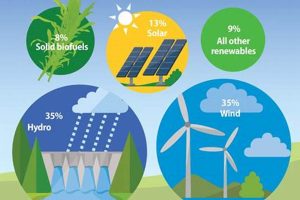
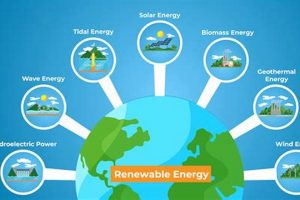
The proportion of total energy consumption derived from replenishable resources is a critical metric for assessing a nation’s or region’s progress toward sustainable energy systems. This value represents the percentage of overall energy demand that is met by resources such as solar, wind, hydro, geothermal, and biomass. For example, if a country consumes 1000 terawatt-hours (TWh) of energy annually, and 300 TWh comes from wind and solar power, then that country’s metric would be 30 percent.
Increasing this metric offers several significant advantages. These include reducing greenhouse gas emissions, mitigating climate change, enhancing energy security by diversifying supply sources, and promoting technological innovation in the energy sector. Historically, this proportion has been relatively small, reliant on traditional hydropower and biomass. However, advancements in technology and decreasing costs have led to a substantial increase in the utilization of solar and wind power in recent decades, driving growth in this area.
The following sections will delve into the specific drivers behind increases in the adoption of these energy sources, examine the challenges associated with integrating variable renewable energy into existing grid infrastructure, and analyze the economic and policy considerations that influence the deployment and expansion of cleaner energy technologies.
Strategies for Increasing Reliance on Replenishable Energy
The following strategies offer guidance on effectively enhancing the percentage of energy derived from sustainable resources within a given system.
Tip 1: Implement Supportive Policy Frameworks: Governments must enact clear and consistent policies that incentivize development and deployment. This includes feed-in tariffs, renewable portfolio standards, and carbon pricing mechanisms. For example, a feed-in tariff guarantees a fixed price for electricity generated from sources like solar and wind, making projects financially viable.
Tip 2: Invest in Grid Modernization: An aging electrical grid can hinder the integration of variable resources such as solar and wind. Investment in smart grid technologies, including advanced metering infrastructure and real-time monitoring systems, is essential to improve grid stability and reliability.
Tip 3: Promote Energy Storage Solutions: Battery storage, pumped hydro storage, and other storage technologies address the intermittency challenges associated with many replenishable resources. By storing excess energy during periods of high generation, these solutions can provide a consistent supply of electricity when needed.
Tip 4: Facilitate Public-Private Partnerships: Collaboration between governments and the private sector is crucial for accelerating the transition to sustainable energy. Public-private partnerships can leverage private sector expertise and capital to develop large-scale projects.
Tip 5: Conduct Public Awareness Campaigns: Educating the public about the benefits of sustainable energy and the technologies available is vital for fostering support. These campaigns can highlight the environmental, economic, and social advantages of cleaner energy resources.
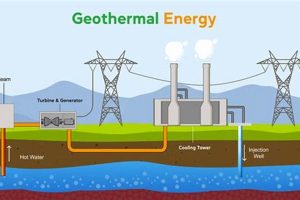
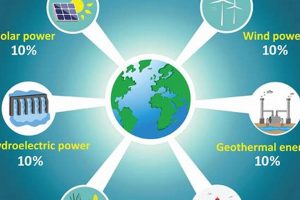
Tip 6: Diversify Renewable Energy Sources: Relying on a single type of replenishable energy can expose a system to vulnerabilities. Diversifying the energy mix with a combination of solar, wind, hydro, geothermal, and biomass strengthens energy security and mitigates risk.
Increased reliance on replenishable resources yields substantial benefits, including reduced carbon emissions, enhanced energy security, and long-term cost savings. Successfully implementing these strategies requires a coordinated effort involving governments, industry, and the public.
The subsequent sections will explore specific case studies of nations that have successfully increased its proportion of energy from replenishable sources, detailing the specific approaches taken and the outcomes achieved.
1. Sustainability

Sustainability is inextricably linked to the proportion of energy derived from sustainable resources. The core tenet of sustainability is meeting present needs without compromising the ability of future generations to meet their own. Reliance on finite resources, such as fossil fuels, directly contradicts this principle due to their eventual depletion and the environmental degradation associated with their extraction and combustion. Consequently, increasing the proportion of total energy consumption met by replenishable resources is a fundamental step toward achieving long-term sustainability.
The expansion of these resource options directly mitigates the negative environmental consequences associated with conventional energy production. For example, shifting from coal-fired power plants to wind and solar farms reduces greenhouse gas emissions, air pollution, and water usage. This transition preserves natural ecosystems, safeguards public health, and promotes climate stability. Countries like Denmark, with a high proportion of electricity generated from wind power, demonstrate the practical benefits of this approach, exhibiting lower carbon footprints and improved air quality compared to nations heavily reliant on fossil fuels.
In summary, the interconnection between sustainability and these energies is essential for ensuring a viable future. The pursuit of a higher percentage of energy from such sources is not merely an environmental objective but a fundamental requirement for long-term resource security and intergenerational equity. While challenges remain in achieving a complete transition, the increasing economic competitiveness and technological advancements of replenishable technologies offer a pathway toward a more sustainable energy future.
2. Energy Security

Energy security, defined as the uninterrupted availability of energy sources at an affordable price, is directly enhanced by increasing the proportion of total energy derived from replenishable resources. Dependence on a limited number of fossil fuel suppliers exposes nations to price volatility, geopolitical instability, and potential supply disruptions. Shifting toward domestically available resources, such as solar, wind, and geothermal, reduces reliance on imported fuels and strengthens a nation’s control over its energy supply.
A higher percentage of energy from domestic resources mitigates the impact of international market fluctuations and political conflicts that can significantly influence fossil fuel prices. For example, countries with robust solar and wind energy sectors experienced greater energy price stability during periods of geopolitical turmoil that disrupted global oil and gas markets. Furthermore, diversification of the energy mix through multiple replenishable energy sources reduces the risk of disruptions caused by localized weather events or technological failures affecting a single energy source. Germany’s Energiewende, despite its challenges, exemplifies an attempt to bolster energy security by transitioning to a more diversified energy portfolio with a significant emphasis on solar and wind power.
In conclusion, increasing the proportion of total energy consumption from replenishable resources is a strategic imperative for enhancing energy security. This transition reduces reliance on volatile global markets, promotes domestic energy independence, and strengthens a nation’s resilience to external shocks. While challenges related to grid integration and energy storage persist, the long-term benefits of greater energy security justify continued investment in, and deployment of, sustainable energy technologies.
3. Environmental Impact
The environmental impact of energy production is a critical concern driving the transition toward a greater proportion of energy from sustainable resources. The conventional energy sector, reliant on fossil fuels, contributes significantly to air and water pollution, habitat destruction, and climate change. The increasing adoption of cleaner energy alternatives is therefore essential for mitigating these adverse effects.
- Reduced Greenhouse Gas Emissions
The combustion of fossil fuels releases substantial quantities of greenhouse gases, primarily carbon dioxide, which contribute to global warming. Sustainable energy sources, such as solar, wind, and hydro, generate electricity with significantly lower or zero greenhouse gas emissions. Increasing the proportion of total energy demand met by these resources directly reduces a nation’s carbon footprint and helps mitigate climate change. For example, a shift from coal-fired power to wind power demonstrably lowers carbon emissions per unit of electricity generated.
- Decreased Air Pollution
Fossil fuel power plants emit harmful air pollutants, including particulate matter, sulfur dioxide, and nitrogen oxides, which contribute to respiratory illnesses and other health problems. Sustainable energy technologies produce minimal or no air pollutants, resulting in cleaner air and improved public health. The implementation of solar energy in urban areas, for example, contributes to reduced smog and respiratory ailments within that area.
- Minimized Water Usage
Traditional power plants, particularly coal and nuclear, require large quantities of water for cooling purposes, which can deplete water resources and harm aquatic ecosystems. Many replenishable energy technologies, such as solar photovoltaic and wind power, have minimal water requirements. This reduced water consumption helps conserve water resources and protects aquatic habitats, especially in regions facing water scarcity.
- Reduced Habitat Destruction
The extraction and transportation of fossil fuels, as well as the construction of large-scale hydroelectric dams, can lead to habitat destruction and biodiversity loss. Sustainable energy projects, when carefully sited and designed, can minimize their impact on ecosystems. For instance, offshore wind farms can provide habitat for marine life, while distributed solar energy installations can reduce the need for large-scale land disturbance.
In summary, the increasing proportion of energy derived from replenishable resources is crucial for minimizing the detrimental environmental impact associated with conventional energy production. By reducing greenhouse gas emissions, decreasing air pollution, minimizing water usage, and reducing habitat destruction, sustainable energy technologies contribute to a healthier environment and a more sustainable future. These environmental benefits are a key driver behind the global transition toward cleaner energy sources.
4. Economic Viability

Economic viability is a critical factor influencing the adoption and expansion of energy derived from sustainable resources. The cost-competitiveness of these sources, relative to conventional options, directly affects investment decisions, policy support, and overall market penetration. Understanding the multifaceted nature of economic viability is essential for fostering a sustainable and affordable energy transition.
- Levelized Cost of Energy (LCOE)
LCOE is a key metric used to compare the cost of different energy sources over their lifetime. It accounts for capital costs, operating expenses, fuel costs (where applicable), and decommissioning costs. The decreasing LCOE of solar and wind power has been a significant driver of their increased adoption. For example, the LCOE of solar photovoltaic (PV) has fallen dramatically in recent years, making it competitive with, or even cheaper than, fossil fuel-based electricity in many regions. This improved cost-competitiveness makes solar and wind economically attractive investments for utilities and businesses.
- Investment and Financing
The economic viability of energy projects is also dependent on the availability of capital and favorable financing terms. Governments and private investors play a crucial role in providing the necessary funding for these projects. Supportive policies, such as tax credits, loan guarantees, and feed-in tariffs, can reduce investment risks and attract capital. For instance, government subsidies for solar installations have spurred significant growth in the industry, demonstrating the impact of financial incentives on adoption rates.
- Job Creation and Economic Growth
The energy sector can be a significant source of job creation and economic growth. The manufacturing, installation, and maintenance of energy technologies create new employment opportunities. Furthermore, the development of local energy industries can boost economic activity in specific regions. For example, areas with established wind turbine manufacturing facilities have experienced job growth and increased economic output. This localized economic benefit further enhances the economic viability of these options from a broader societal perspective.
- Grid Integration Costs
The economic viability of energy is also affected by the costs associated with integrating variable sources, such as solar and wind, into the existing electricity grid. These costs include investments in grid infrastructure, energy storage, and demand response programs. While these integration costs can be substantial, they are often offset by the environmental and energy security benefits of reduced dependence on fossil fuels. Furthermore, technological advancements in grid management and energy storage are helping to lower these costs.
In conclusion, economic viability is a multifaceted concept encompassing the LCOE, investment availability, job creation potential, and grid integration costs. The declining costs of solar and wind, coupled with supportive policies and technological advancements, are enhancing the economic attractiveness of sustainable energy. As these trends continue, cleaner energy will play an increasingly significant role in meeting global energy demand while fostering sustainable economic growth.
5. Technological Advancements
Technological advancements are a primary driver for the increasing proportion of total energy consumption met by replenishable sources. Innovation across various technological domains directly impacts the efficiency, cost-effectiveness, and reliability of these resources, influencing their adoption and integration into existing energy systems. The development of more efficient solar photovoltaic cells, for example, reduces the land area required to generate a given amount of electricity, thereby lowering costs and mitigating potential land-use conflicts. Similarly, advancements in wind turbine design, such as taller towers and longer blades, enable greater energy capture, particularly in areas with lower wind speeds. These specific technological improvements directly correlate with increased energy output and reduced overall costs, making these energy sources more economically competitive.
Furthermore, progress in energy storage technologies, such as lithium-ion batteries and pumped hydro storage, addresses the intermittency challenges associated with many replenishable sources. The ability to store excess energy generated during periods of high solar or wind output enables a more consistent and reliable energy supply, reducing the need for backup power from conventional sources. For example, grid-scale battery storage systems are being deployed to smooth out fluctuations in solar and wind generation, enhancing grid stability and facilitating the integration of larger quantities of these variable sources. Advancements in smart grid technologies, including advanced metering infrastructure and real-time monitoring systems, also play a crucial role in optimizing the performance of energy grids and enabling the efficient integration of distributed sources.
In summary, technological advancements are fundamental to the ongoing expansion of energy from replenishable resources. Continued innovation in areas such as energy generation, storage, and grid management is essential for overcoming existing challenges and realizing the full potential of cleaner energy sources. These advancements, coupled with supportive policies and market mechanisms, will drive the transition towards a more sustainable and resilient energy future. One ongoing challenge lies in improving the recycling processes for materials used in these technologies to truly achieve sustainability.
6. Policy Frameworks
Policy frameworks exert a significant influence on the proportion of total energy derived from replenishable sources. These frameworks, encompassing laws, regulations, incentives, and standards, establish the conditions under which these resources compete in the energy market and are critical drivers of their adoption. Effective policies can correct market failures, address environmental externalities, and incentivize investment in technologies that might otherwise struggle to compete with established fossil fuel infrastructure. For example, feed-in tariffs guarantee a fixed price for electricity generated from solar and wind, reducing investment risk and encouraging project development. Renewable Portfolio Standards (RPS) mandate that a certain percentage of a utility’s electricity supply must come from these sources, creating a guaranteed market. The absence or inadequacy of such policies can significantly impede the growth of the energy sector.
The design and implementation of policy frameworks directly impact the effectiveness of these measures. Clear, consistent, and long-term policies provide certainty for investors and developers, fostering greater confidence in energy projects. Short-term or inconsistent policies, on the other hand, can create uncertainty and discourage investment. For example, abrupt changes to solar tax credits in some regions have led to significant fluctuations in solar installations. Policy frameworks also need to address grid integration challenges and promote technological innovation. Investments in smart grid technologies and energy storage solutions are often necessary to enable the efficient integration of variable sources into the existing grid. Policy support for research and development can drive down the costs of these technologies and improve their performance.
In summary, policy frameworks are indispensable for increasing the proportion of energy from sustainable resources. Well-designed and consistently implemented policies can overcome market barriers, incentivize investment, and promote technological innovation. Without supportive policy frameworks, the transition to a sustainable energy future will be significantly slower and more challenging. One ongoing challenge is ensuring that policy frameworks are adaptable to changing technological and economic circumstances and that they are designed to avoid unintended consequences, such as placing undue burdens on consumers or hindering economic growth.
7. Grid Integration

Grid integration is a crucial component in increasing the proportion of total energy derived from replenishable resources. The inherent variability of many of these sources, such as solar and wind, presents unique challenges to the stability and reliability of electrical grids. Consequently, the ability to efficiently and effectively integrate these fluctuating sources into existing grid infrastructure is essential for maximizing their contribution to the overall energy supply. Without robust grid integration strategies, the potential of such resources to displace conventional fossil fuel-based generation is significantly limited. For instance, large-scale solar farms, despite their high energy output during peak sunlight hours, can destabilize the grid if the generated power cannot be efficiently transmitted and balanced with demand. Similarly, fluctuations in wind power generation require sophisticated grid management systems to maintain a stable frequency and voltage.
Several technologies and strategies facilitate improved grid integration. These include smart grid technologies, which enable real-time monitoring and control of grid operations, advanced forecasting models that predict the output of energy sources, and energy storage solutions that can absorb excess generation and release it when needed. Furthermore, the deployment of high-voltage transmission lines can improve the delivery of energy from remote energy sites to load centers. For example, Germany’s experience with increasing wind power integration has highlighted the importance of upgrading grid infrastructure to accommodate the variable output from wind farms in the north to industrial centers in the south. California’s adoption of battery storage systems is another practical example, smoothing out solar energy production throughout the day and reducing reliance on natural gas peaker plants.
In conclusion, grid integration is an indispensable element in realizing the full potential of cleaner energy. Overcoming the technical and economic challenges associated with integrating variable resources requires continued investment in grid infrastructure, advanced technologies, and sophisticated grid management systems. The successful integration of these sources not only increases their contribution to the energy mix but also enhances the overall reliability and resilience of the electricity grid. Failure to adequately address grid integration issues will inevitably constrain the ability to meet ambitious goals for reducing carbon emissions and transitioning to a sustainable energy future. It’s also critical to ensure that planning for transmission is done far enough in advance to avoid project delays and maximize the benefit of the resource and the grid.
Frequently Asked Questions
This section addresses commonly asked questions regarding the proportion of energy derived from replenishable sources, providing clarity on various aspects and considerations.
Question 1: Why is it important to increase the proportion of energy derived from sustainable resources?
Increasing this metric is crucial for mitigating climate change, enhancing energy security, reducing air pollution, and promoting sustainable economic development. Reliance on replenishable resources reduces greenhouse gas emissions, diversifies energy sources, and minimizes the environmental impact associated with conventional energy production.
Question 2: What are the primary sources included when calculating the proportion of energy from replenishable sources?
Primary sources include solar, wind, hydro, geothermal, and biomass. The specific mix of sources varies by region and is dependent on resource availability, technological capabilities, and policy support.
Question 3: What are the main challenges associated with increasing this metric?
Key challenges include the intermittency of certain resources (e.g., solar and wind), the need for grid modernization to accommodate variable sources, and the potential for land-use conflicts associated with large-scale installations. Addressing these challenges requires investment in energy storage, smart grid technologies, and careful project siting.
Question 4: How is progress measured in increasing this metric?
Progress is typically measured by tracking the percentage of total energy consumption derived from replenishable resources over time. Data on energy production and consumption are collected by government agencies, international organizations, and industry associations.
Question 5: What role do policy frameworks play in promoting a higher percentage of energy from sustainable sources?
Policy frameworks, such as feed-in tariffs, renewable portfolio standards, and carbon pricing mechanisms, create incentives for investment in sustainable energy technologies and establish a level playing field for these resources in the energy market. Effective policies are essential for driving the transition to a cleaner energy system.
Question 6: How do technological advancements contribute to increasing this metric?
Technological advancements improve the efficiency, cost-effectiveness, and reliability of sustainable energy technologies, making them more competitive with conventional energy sources. Innovation in areas such as solar cell efficiency, wind turbine design, and energy storage directly contributes to increasing the proportion of energy from sustainable sources.
The importance of increasing energy from replenishable resources is to create better future.
The following sections will examine case studies of nations successfully incorporating energy sources to their consumption.
Conclusion
The preceding discussion has explored the multifaceted nature of the share of energy from renewable sources. This exploration has highlighted the critical role of this metric in mitigating climate change, enhancing energy security, and fostering sustainable development. Furthermore, the analysis has underscored the importance of supportive policy frameworks, technological advancements, and robust grid integration strategies in achieving a higher reliance on sustainable resources. Addressing the challenges associated with variability and intermittency is paramount to realizing the full potential of clean energy technologies.
A continued focus on increasing the share of energy from renewable sources is essential for securing a sustainable energy future. The long-term implications of energy policy decisions will shape the global environment and economic landscape for generations to come. Therefore, a sustained commitment to innovation, infrastructure development, and strategic policy implementation is vital for ensuring a just and equitable transition to a cleaner energy system. The responsibility for driving this transition lies with governments, industries, and individuals alike.