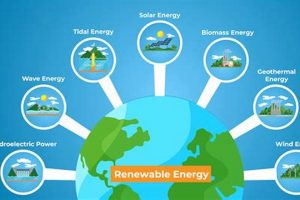
Harnessing power from naturally replenishing resources offers a sustainable alternative to traditional fossil fuels. These resources, unlike finite reserves, are continuously replenished by natural processes. Examples include solar radiation, wind currents, flowing water, geothermal heat from the Earth’s interior, and biomass derived from organic matter.
Utilizing these energy forms presents significant advantages, contributing to reduced greenhouse gas emissions and mitigating climate change. Moreover, these options enhance energy security by diversifying energy supplies and decreasing reliance on volatile global markets. Historically, the development and adoption of these technologies have been driven by both environmental concerns and the desire for energy independence.
The following sections will delve into specific technologies and methods employed to convert these naturally occurring phenomena into usable electricity, heat, and transportation fuels, examining their operational principles, potential, and limitations.
Maximizing the Potential of Renewable Resources
Effectively integrating renewable resources into the energy infrastructure requires a multifaceted approach. The following guidelines outline key strategies for optimizing the utilization and expanding the impact of these technologies.
Tip 1: Prioritize Energy Efficiency: Reducing overall energy consumption minimizes the demand that renewable resources must meet. Implementing energy-efficient building designs, adopting efficient appliances, and promoting energy conservation habits can significantly decrease the reliance on traditional power sources.
Tip 2: Invest in Energy Storage Solutions: Fluctuations in resource availability, such as variations in sunlight or wind speed, necessitate robust energy storage systems. Battery storage, pumped hydro storage, and thermal energy storage can bridge the gap between energy generation and demand, ensuring a consistent power supply.
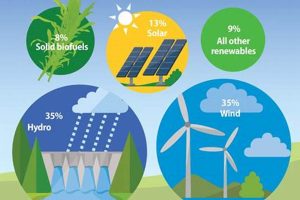
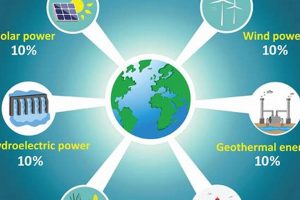
Tip 3: Diversify the Renewable Energy Portfolio: Relying solely on a single resource exposes the system to vulnerabilities. Combining solar, wind, hydro, and geothermal energy sources creates a more resilient and stable energy grid, mitigating the impact of fluctuations in any single resource.
Tip 4: Optimize Grid Infrastructure: A modern and interconnected grid is essential for effectively distributing renewable energy across geographical areas. Upgrading transmission lines and incorporating smart grid technologies enhances the efficiency and reliability of the energy network.
Tip 5: Promote Research and Development: Continuous innovation is crucial for improving the efficiency and affordability of renewable energy technologies. Investing in research and development accelerates the development of next-generation technologies and optimizes existing systems.
Tip 6: Implement Supportive Policy Frameworks: Government policies play a crucial role in driving the adoption of renewable resources. Implementing incentives, tax credits, and regulations that support renewable energy development can create a level playing field and encourage investment in these technologies.
Tip 7: Facilitate Community Engagement: Public awareness and support are essential for the successful integration of renewable resources. Educating communities about the benefits of renewable energy and involving them in the planning process can foster acceptance and accelerate adoption.
Implementing these strategies will facilitate a transition towards a more sustainable energy future, leveraging the benefits of renewable resources to reduce environmental impact and enhance energy security.
These insights provide a foundation for understanding the comprehensive approach needed to harness the full potential of clean energy sources.
1. Solar photovoltaic conversion

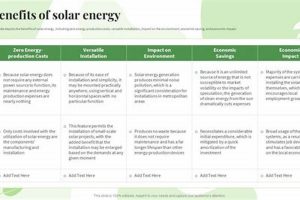
Solar photovoltaic conversion represents a critical component within the spectrum of clean power technologies. Functioning on the principle of the photovoltaic effect, solar cells directly transform sunlight into electricity. This direct conversion circumvents traditional energy generation methods that rely on thermal processes and moving parts, thereby reducing mechanical wear and minimizing environmental impact. The adoption of solar photovoltaic technology has seen significant growth, driven by declining costs, technological advancements, and increasing awareness of climate change mitigation. This technology serves as a practical alternative to fossil fuels, contributing to a more sustainable energy future.
The importance of solar photovoltaic systems extends beyond individual applications. Large-scale solar farms can contribute significantly to grid stabilization and peak demand management. Distributed solar installations on residential and commercial buildings enhance energy independence and resilience. Furthermore, photovoltaic technology enables electrification in remote areas lacking access to traditional grid infrastructure. In developing nations, off-grid solar systems provide essential electricity for households, schools, and healthcare facilities, fostering economic development and improved living standards. For instance, rural electrification projects in India have successfully deployed photovoltaic systems to provide power to remote villages, improving access to education and healthcare services.
In summary, solar photovoltaic conversion plays a vital role in diversifying the energy mix and reducing reliance on fossil fuels. Its ability to directly convert sunlight into electricity, coupled with its scalability and declining costs, makes it an increasingly attractive solution for both centralized and decentralized power generation. Continued research and development in this area are essential to further improve efficiency, reduce manufacturing costs, and enhance the long-term viability of clean electricity production. Solar Photovoltaic conversion represents a meaningful shift in how to reduce pollution and lower cost of generating electricity.
2. Wind Turbine Mechanics

Wind turbine mechanics represents a critical element within the renewable energy sector, focusing on the conversion of kinetic energy from wind into usable electrical power. Understanding the operational principles and mechanical components of these systems is essential for maximizing energy capture and ensuring long-term reliability.
- Aerodynamic Rotor Design
The rotor blades, designed using aerodynamic principles, capture wind energy and initiate the rotational motion of the turbine. Blade profiles, pitch control mechanisms, and overall rotor diameter significantly influence the efficiency of energy extraction. Advanced materials and optimized blade shapes enhance performance under varying wind conditions. For example, the NREL S809 airfoil is commonly used for horizontal-axis wind turbines.
- Gearbox and Generator Integration
The gearbox increases the rotational speed of the rotor to match the operating speed of the generator, which then converts mechanical energy into electrical energy. Gearless, direct-drive turbines eliminate the gearbox, reducing maintenance requirements and improving reliability but can increase the turbine’s weight and size. Synchronous and asynchronous generators are commonly used, each offering different characteristics in terms of grid stability and power output.
- Yaw and Pitch Control Systems
Yaw control systems orient the rotor towards the prevailing wind direction, maximizing energy capture. Pitch control systems adjust the blade angle to optimize power output and prevent damage during high wind speeds. These systems employ sensors, actuators, and control algorithms to dynamically manage turbine operation. Active pitch control allows for precise adjustment of blade angles, while passive stall regulation relies on aerodynamic design to limit power output.
- Structural Integrity and Support Systems
The turbine tower provides structural support for the rotor and nacelle, elevating the turbine to access stronger and more consistent wind resources. Tower designs must withstand extreme weather conditions and minimize vibration. Foundation systems, such as concrete gravity bases or steel lattice structures, ensure stability. Regular inspections and maintenance are critical for preventing structural failures.
These interconnected mechanical facets highlight the complexity involved in converting wind into electricity. The efficiency and reliability of wind turbines are directly dependent on the effective integration of these systems. Continued advancements in materials science, control systems, and structural engineering are essential for further enhancing the performance and longevity of clean electricity generation. Wind turbine mechanics plays a crucial part in the overall production of renewable energy across the globe.
3. Hydropower generation capacity

Hydropower generation capacity represents a significant and established component within the array of clean energy sources. Its reliance on the kinetic energy of flowing water distinguishes it from fossil fuel-based power generation, contributing to a reduction in greenhouse gas emissions and promoting a sustainable energy portfolio. Maximizing the efficient operation and expanding the reach of hydropower facilities is essential for meeting growing energy demands while minimizing environmental impact.
- Dam Infrastructure and Water Management
Dam construction and water management practices are fundamental to hydropower generation. Dams create reservoirs that store water, providing a controlled release to drive turbines. However, dam construction can alter river ecosystems, impacting aquatic life and water flow patterns. Effective water management strategies must balance energy production with environmental conservation, incorporating measures such as fish passages and minimum flow requirements. The Three Gorges Dam in China exemplifies a large-scale hydropower project with significant power generation capacity but also raises environmental and social concerns.
- Turbine Technology and Efficiency
Turbine technology plays a crucial role in converting the potential energy of water into mechanical energy and then into electrical energy. Different turbine types, such as Francis, Kaplan, and Pelton turbines, are suited to varying head and flow conditions. Advanced turbine designs, incorporating computational fluid dynamics and optimized blade profiles, enhance energy conversion efficiency and reduce cavitation. The development of variable-speed turbines allows for better adaptation to fluctuating water flow, improving overall power output.
- Pumped Storage Hydropower Systems
Pumped storage hydropower systems provide a means of energy storage, enhancing grid stability and accommodating intermittent clean energy sources. During periods of low electricity demand, water is pumped from a lower reservoir to an upper reservoir, storing energy. During peak demand, the water is released to generate electricity. These systems act as large-scale batteries, providing a reliable source of on-demand power. The Dinorwig Power Station in Wales is a notable example of a pumped storage facility that enhances grid flexibility.
- Environmental Mitigation Strategies
Environmental mitigation strategies are essential for minimizing the ecological impact of hydropower facilities. These measures include fish ladders to facilitate fish migration, aeration systems to improve water quality, and sediment management techniques to prevent reservoir sedimentation. Dam removal projects, where appropriate, can restore river ecosystems and enhance biodiversity. Comprehensive environmental impact assessments are necessary to identify and address potential ecological consequences.
Hydropower generation capacity, when implemented responsibly, contributes significantly to clean energy supplies. The integration of effective water management, efficient turbine technology, pumped storage systems, and robust environmental mitigation strategies are critical for maximizing the benefits and minimizing the impacts. The ongoing advancement and sustainable management of hydropower facilities represent a critical component of a diversified clean energy portfolio.
4. Geothermal heat extraction
Geothermal heat extraction represents a key facet of clean resources, harnessing thermal energy from the Earth’s interior. Unlike solar or wind power, geothermal energy provides a consistent, baseload electricity supply, operating independently of weather conditions. Its utilization ranges from direct use applications like heating and cooling to electricity generation, contributing diversely to the renewable energy landscape.
- Geothermal Power Plants
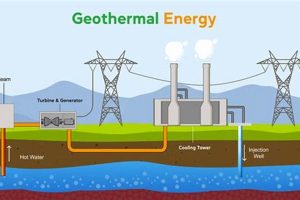
Geothermal power plants convert subsurface heat into electricity. High-temperature geothermal reservoirs, typically found near volcanic activity or tectonic plate boundaries, drive turbines connected to generators. Three main types of geothermal power plants exist: dry steam, flash steam, and binary cycle. Dry steam plants directly use steam from the reservoir, while flash steam plants convert high-pressure hot water into steam. Binary cycle plants, suitable for lower-temperature reservoirs, use a secondary fluid with a lower boiling point to generate steam, enabling electricity production from a broader range of geothermal resources. The Geysers in California is a prominent example of a large-scale geothermal power plant complex, providing a significant portion of the region’s clean electricity.
- Geothermal Direct Use Applications
Geothermal direct use applications involve utilizing subsurface heat for heating, cooling, and other thermal processes without converting it to electricity. These applications include district heating systems, greenhouse heating, aquaculture, and industrial process heating. Geothermal heat pumps, also known as ground-source heat pumps, use the stable underground temperature to provide efficient heating and cooling for residential and commercial buildings. Iceland extensively utilizes geothermal direct use for district heating, providing a sustainable alternative to fossil fuel-based heating systems. Klamath Falls, Oregon, similarly leverages geothermal resources for heating and industrial applications.
- Enhanced Geothermal Systems (EGS)
Enhanced Geothermal Systems (EGS) offer a pathway to access geothermal resources in areas lacking natural permeability or sufficient water. EGS involves fracturing hot, dry rock deep underground and injecting water to create an artificial geothermal reservoir. The heated water is then extracted and used for electricity generation or direct use applications. EGS expands the geographical availability of geothermal energy, tapping into vast, previously inaccessible resources. Research and development efforts are focused on optimizing EGS technology, addressing challenges such as induced seismicity and water management. Several pilot EGS projects are underway globally, aiming to demonstrate the commercial viability of this technology.
- Geothermal Resource Sustainability
Geothermal resource sustainability is a critical consideration for long-term geothermal energy production. Proper reservoir management practices, including monitoring fluid levels, injection rates, and temperature changes, are essential for preventing resource depletion. Reinjecting cooled geothermal fluids back into the reservoir helps maintain pressure and extend the lifespan of the resource. Geothermal resource assessments and modeling are used to estimate the sustainable yield of geothermal fields. Sustainable geothermal development ensures that this clean energy source remains available for future generations. Periodic reviews and adjustments to extraction strategies are vital for maintaining a balance between energy production and resource preservation.
These elements illustrate the breadth of geothermal heat extraction as a viable clean resource. From established power plants to innovative technologies like EGS, geothermal energy contributes significantly to energy diversification and emissions reduction. Responsible resource management and continuous technological advancements are essential for maximizing the potential of geothermal energy as a long-term energy solution.
5. Biomass fuel combustion

Biomass fuel combustion represents a complex facet within clean energy sources. While considered renewable due to its derivation from organic matter, its sustainability depends heavily on sourcing practices and combustion technologies. Understanding its role requires a nuanced approach, balancing energy provision with environmental considerations.
- Sustainable Sourcing and Feedstock Management
The renewability of biomass hinges on sustainable sourcing practices. Feedstocks must be derived from sustainably managed forests, agricultural residues, or dedicated energy crops. Unsustainable logging or land clearing for biomass production can negate its benefits, leading to deforestation and habitat loss. Certification schemes, such as those by the Forest Stewardship Council (FSC), help ensure responsible sourcing. For example, using agricultural waste products like corn stover or rice husks offers a more sustainable pathway than harvesting virgin timber.
- Combustion Technologies and Emissions Control
The efficiency and environmental impact of biomass fuel combustion depend significantly on the combustion technology employed. Advanced combustion systems, such as fluidized bed combustors, improve energy conversion and reduce emissions compared to traditional furnaces. Emissions control technologies, including scrubbers and electrostatic precipitators, mitigate pollutants like particulate matter, nitrogen oxides, and sulfur dioxide. Denmark, for instance, has implemented stringent emissions standards for biomass power plants, requiring advanced combustion and pollution control systems.
- Carbon Neutrality Considerations
The carbon neutrality of biomass combustion is a subject of ongoing debate. While biomass is often considered carbon neutral because the carbon released during combustion was previously absorbed from the atmosphere during plant growth, this assumption overlooks factors such as transportation emissions, land-use changes, and the time lag between combustion and regrowth. Life cycle assessments are essential for accurately evaluating the carbon footprint of biomass fuel cycles. Studies indicate that biomass sourced from rapidly regrowing crops and burned in efficient combustion systems can approach carbon neutrality under specific conditions.
- Integration with Combined Heat and Power (CHP) Systems
Biomass fuel combustion is frequently integrated with combined heat and power (CHP) systems to maximize energy efficiency. CHP systems capture waste heat from combustion processes to generate electricity or provide heating and cooling for nearby buildings or industrial facilities. This approach increases the overall energy efficiency of biomass utilization and reduces greenhouse gas emissions compared to separate heat and power generation. Many European countries utilize biomass CHP systems to provide district heating and electricity to urban areas.
These facets of biomass fuel combustion highlight its complex position within the renewable energy spectrum. Its sustainability and environmental performance depend heavily on responsible sourcing, advanced combustion technologies, careful consideration of carbon neutrality, and integration with efficient energy systems. While it offers a viable alternative to fossil fuels under specific conditions, a comprehensive and sustainable approach is essential to harness its benefits effectively.
6. Ocean wave energy
Ocean wave energy represents an underutilized, but potentially significant component within the portfolio of diverse clean resources. The consistent motion of ocean waves, driven by wind and solar energy, offers a predictable and abundant supply of power, distinct from other intermittent sources. Its development aims to tap into this vast kinetic energy resource.
- Wave Energy Conversion Technologies
Wave energy conversion technologies transform the mechanical energy of ocean waves into electricity. Several distinct device types exist, including oscillating water columns (OWC), oscillating body converters (OBC), and overtopping devices. OWC systems use wave action to compress air, driving a turbine. OBCs extract energy from the relative motion of floating structures. Overtopping devices capture water behind a barrier, releasing it through turbines. The choice of technology depends on wave climate, water depth, and seabed conditions. The Pelamis Wave Power device, an OBC, was an early example of a commercial-scale wave energy converter deployed in Portugal.
- Wave Climate Assessment and Resource Mapping
Accurate wave climate assessment is essential for identifying suitable locations for wave energy deployment. Wave resource mapping involves analyzing wave height, period, and direction over time to characterize the available energy potential. Numerical models and buoy measurements are used to generate detailed wave climate atlases. Regions with consistent wave energy, such as the coasts of Scotland, Portugal, and Australia, are prime candidates for wave energy development. The European Marine Energy Centre (EMEC) in Scotland provides a test site for wave energy devices, facilitating resource assessment and technology validation.
- Grid Integration and Energy Storage Considerations
Integrating ocean wave energy into existing electricity grids presents unique challenges due to the variability of wave patterns. Energy storage systems, such as batteries or pumped hydro storage, can mitigate these fluctuations, ensuring a reliable power supply. Grid integration studies assess the impact of wave energy on grid stability and identify necessary infrastructure upgrades. Smart grid technologies enable more efficient management of intermittent power sources. Denmark has explored grid integration strategies for wave energy, aiming to incorporate this clean source into its national energy mix.
- Environmental Impact and Ecosystem Considerations
Assessing and mitigating the environmental impact of wave energy devices is crucial for sustainable development. Potential impacts include disturbance to marine ecosystems, noise pollution, and alterations to sediment transport. Environmental monitoring programs are implemented to track the effects of wave energy devices on marine life and coastal processes. Device designs that minimize environmental disturbance are favored. The Wave Hub project in Cornwall, UK, integrates environmental monitoring and adaptive management practices to minimize ecological impacts.
These facets of ocean wave energy highlight its potential contribution to a diversified clean energy portfolio. The development of robust conversion technologies, accurate resource assessment, effective grid integration strategies, and responsible environmental management are essential for unlocking the potential of ocean wave energy as a reliable and sustainable energy source. The combination of ocean energy to different sources contributes greatly to sustainability.
7. Tidal current power
Tidal current power represents a significant subset within the broader landscape of clean electricity sources. Its inclusion within this category stems from its utilization of a naturally replenishing resource: the kinetic energy of tidal currents. These currents, driven by gravitational forces exerted by celestial bodies, are predictable and consistent, offering a reliable source of power in suitable locations. The cause-and-effect relationship is straightforward: the predictable movement of tidal waters is harnessed to drive turbines, generating electricity without the emission of greenhouse gases or reliance on fossil fuels.
The importance of tidal current power lies in its potential to provide baseload power, complementing intermittent sources such as solar and wind. Unlike these sources, tidal currents are less susceptible to weather-related fluctuations, offering a more stable and predictable energy supply. Practical applications include the installation of submerged turbines in channels with strong tidal flows, such as the Pentland Firth in Scotland, where multiple projects are underway to harness this resource. These installations contribute to grid stability and reduce reliance on traditional power generation methods. The MeyGen project in Scotland serves as a real-life example, demonstrating the feasibility of large-scale tidal current power generation.
Understanding tidal current power’s place within the range of clean electricity sources is practically significant for several reasons. It allows for a more diversified and resilient energy mix, reduces dependence on finite resources, and promotes environmental sustainability. Challenges remain, including the high upfront costs of turbine deployment, potential environmental impacts on marine ecosystems, and the need for robust grid integration strategies. However, ongoing research and development efforts are addressing these challenges, paving the way for increased utilization of tidal current power as a key component of a clean energy future.
Frequently Asked Questions
This section addresses common inquiries regarding the implementation, impact, and viability of various clean energy technologies. The goal is to provide clear and concise answers based on current research and established practices.
Question 1: How do fluctuations in renewable energy sources, such as solar and wind, affect grid stability?
Fluctuations in solar and wind energy production can pose challenges to grid stability due to their intermittent nature. These variations necessitate advanced grid management techniques, including energy storage solutions, demand-side management strategies, and improved forecasting capabilities. A diversified energy portfolio that integrates multiple clean resources, along with conventional power sources, can further mitigate these fluctuations.
Question 2: What are the primary environmental concerns associated with large-scale hydropower projects?
Large-scale hydropower projects can have significant environmental impacts, including alteration of river ecosystems, disruption of fish migration patterns, and release of greenhouse gases from reservoir decomposition. Mitigation strategies include the construction of fish passages, implementation of minimum flow requirements, and management of reservoir sediment. Comprehensive environmental impact assessments are essential for identifying and addressing potential ecological consequences.
Question 3: How does the long-term sustainability of biomass fuel combustion compare to other clean energy sources?
The long-term sustainability of biomass fuel combustion depends heavily on sourcing practices and combustion technologies. Sustainable sourcing from managed forests or agricultural residues is essential for ensuring renewability. Advanced combustion systems and emissions control technologies mitigate air pollution. Life cycle assessments are necessary to evaluate the overall carbon footprint, considering factors such as transportation and land-use changes.
Question 4: What are the major obstacles hindering the widespread adoption of ocean wave energy?
The widespread adoption of ocean wave energy faces several challenges, including the high cost of device deployment, the variability of wave climates, and potential environmental impacts on marine ecosystems. Research and development efforts are focused on improving device efficiency, reducing costs, and minimizing ecological disturbance. Reliable wave climate data and grid integration strategies are also critical for advancing wave energy technology.
Question 5: How do Enhanced Geothermal Systems (EGS) differ from conventional geothermal power plants, and what advantages do they offer?
Enhanced Geothermal Systems (EGS) differ from conventional geothermal power plants by accessing geothermal resources in areas lacking natural permeability or sufficient water. EGS involves fracturing hot, dry rock and injecting water to create an artificial geothermal reservoir. This technology expands the geographic availability of geothermal energy and taps into vast, previously inaccessible resources. However, EGS faces challenges related to induced seismicity and water management.
Question 6: What role does government policy play in promoting the development and deployment of clean energy resources?
Government policy plays a crucial role in promoting the development and deployment of clean energy resources. Policies such as tax incentives, renewable energy standards, and feed-in tariffs can encourage investment in clean energy technologies and create a level playing field. Regulations that limit greenhouse gas emissions and support energy efficiency further drive the adoption of clean sources. International agreements and collaborations also facilitate the global transition to clean resources.
In summary, the successful integration of clean electricity resources requires a comprehensive approach that addresses technological, economic, and environmental considerations. Informed decision-making, driven by accurate data and evidence-based policies, is essential for realizing the full potential of clean electricity in addressing energy needs and mitigating climate change.
The subsequent section will explore emerging trends and future directions in diverse clean energy technology.
Conclusion
This examination of different sources of renewable energy underscores their critical role in transforming global energy systems. The preceding sections highlighted diverse technologies, ranging from established hydropower and geothermal systems to emerging wave and tidal power solutions. Each resource presents distinct benefits, challenges, and operational considerations. The effective integration of these various sources requires strategic planning, technological innovation, and a commitment to sustainability.
The ongoing transition to a cleaner energy future demands a concerted effort to further refine these technologies, optimize resource management, and implement supportive policy frameworks. Future advancements in energy storage, grid modernization, and materials science will be instrumental in maximizing the potential of these diverse clean sources. Continued research, development, and responsible implementation are essential for realizing a sustainable and resilient energy landscape.