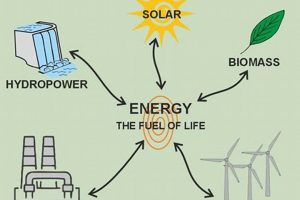
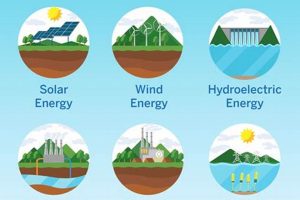
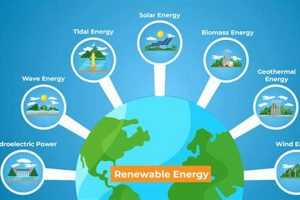
Resources that naturally replenish over a human timescale are vital for sustainable energy production and environmental preservation. These sources offer alternatives to finite fossil fuels and contribute to reduced carbon emissions. Four prominent instances of these sustainable energy sources include solar power, wind energy, geothermal energy, and hydropower. Solar power harnesses the sun’s energy through photovoltaic cells, converting sunlight directly into electricity. Wind energy utilizes wind turbines to convert kinetic energy into electrical power. Geothermal energy taps into the Earth’s internal heat for electricity generation or direct heating. Hydropower leverages the energy of flowing or falling water to generate electricity through dams or other water diversion structures.
The utilization of these continually replenished energy sources presents numerous benefits. They mitigate reliance on fossil fuels, thereby decreasing greenhouse gas emissions and combating climate change. Furthermore, developing and implementing renewable energy technologies can stimulate economic growth by creating jobs in manufacturing, installation, and maintenance sectors. Historically, societies have utilized some of these natural sources for centuries, such as using watermills for grinding grains. However, recent technological advancements have significantly improved the efficiency and scalability of these power generation methods, making them increasingly viable alternatives to conventional energy sources.
Examining each of these sustainable sources in further detail reveals their individual characteristics, advantages, and limitations. Understanding the specifics of solar, wind, geothermal, and hydro allows for informed decision-making regarding their implementation and integration into diverse energy grids. Each option plays a crucial role in a diversified energy portfolio, contributing to a more resilient and environmentally responsible energy future.
Harnessing Sustainable Sources
Effective utilization of continuously replenishing sources requires careful planning and a comprehensive understanding of their unique attributes. Implementing these approaches can contribute to a more sustainable energy landscape.
Tip 1: Conduct Thorough Resource Assessments: Prior to investing in solar, wind, geothermal, or hydro projects, conduct comprehensive assessments to determine resource availability. Solar irradiance, wind speeds, geothermal gradients, and water flow rates vary significantly by location, impacting project feasibility.
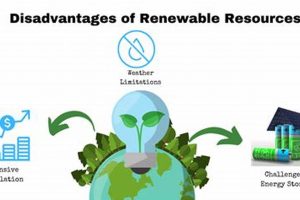
Tip 2: Prioritize Grid Integration Strategies: Renewables such as solar and wind are intermittent. Developing effective grid integration strategies, including energy storage solutions (e.g., batteries, pumped hydro) and demand response programs, is crucial to ensure a stable and reliable electricity supply.
Tip 3: Optimize Technology Selection: Carefully evaluate various technology options for each source. For instance, different types of solar panels (monocrystalline, polycrystalline, thin-film) have varying efficiencies and cost profiles. Selecting the appropriate technology for a specific application maximizes performance and return on investment.
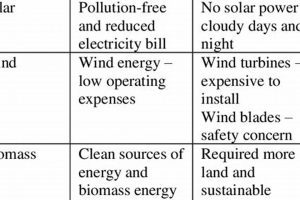
Tip 4: Emphasize Environmental Impact Mitigation: While generally considered environmentally friendly, it is important to address potential impacts. Hydropower projects can affect aquatic ecosystems; wind farms can pose risks to birds and bats. Thorough environmental impact assessments and mitigation measures are essential.
Tip 5: Foster Community Engagement: Successful renewable energy projects often involve active engagement with local communities. Addressing concerns, providing economic benefits, and ensuring transparency can build support and facilitate project acceptance.
Tip 6: Implement Supportive Policies and Incentives: Government policies and incentives play a crucial role in driving the adoption of continuously replenishing sources. Feed-in tariffs, tax credits, and renewable energy standards can create a favorable investment climate and accelerate deployment.
Tip 7: Promote Energy Efficiency: Complementing these sources with energy efficiency measures can reduce overall energy demand, making it easier to transition to a cleaner energy system. Improving building insulation, using energy-efficient appliances, and adopting smart grid technologies are all important steps.
Adhering to these guidelines allows for maximizing the potential of these sources while minimizing potential drawbacks. A strategic and informed approach ensures a more sustainable and resilient energy future.
Applying these insights is crucial for advancing towards a cleaner and more secure energy future.
1. Solar energy potential

Solar energy potential is intrinsically linked to the concept of continuously replenished energy sources, as it represents one of the most abundant and widely accessible of such resources. Its capacity to generate electricity or heat relies on harnessing solar radiation, a process crucial to diversifying energy portfolios and mitigating reliance on finite fossil fuels. Understanding the various facets of solar energy potential is therefore paramount to maximizing its contribution to a sustainable energy future.
- Geographic Irradiance Levels
Solar energy potential is heavily dependent on geographic location and the amount of solar irradiance received. Regions with high solar irradiance, such as deserts or areas near the equator, exhibit significantly higher energy generation potential than regions with lower irradiance, such as those at higher latitudes or with frequent cloud cover. This factor dictates the economic viability of solar projects in specific areas and influences the type of solar technology best suited for each locale.
- Technological Efficiency
The efficiency of solar photovoltaic (PV) cells directly affects the amount of electricity generated from a given amount of solar irradiance. Technological advancements in PV materials and design have led to increased conversion efficiencies, making solar energy increasingly competitive with traditional energy sources. Continued research and development in this area are essential for maximizing the potential of solar energy as a primary source.
- Energy Storage Solutions
The intermittent nature of solar energy necessitates the integration of energy storage solutions to ensure a reliable and consistent electricity supply. Battery storage, thermal energy storage, and pumped hydro storage are among the technologies used to store excess solar energy generated during peak irradiance periods for use during periods of low or no sunlight. The effectiveness and cost-efficiency of these storage solutions are critical for the widespread adoption of solar energy as a baseload power source.
- Grid Integration Infrastructure
Seamless integration of solar energy into existing electricity grids is essential for its effective utilization. This requires upgrades to grid infrastructure to accommodate the variable nature of solar power and the development of smart grid technologies that can optimize energy distribution. Investment in grid modernization is thus a prerequisite for realizing the full potential of solar energy on a large scale.
By carefully considering these facetsgeographic irradiance, technological efficiency, energy storage, and grid integrationdevelopers and policymakers can effectively harness solar energy potential, maximizing its contribution to a diverse and sustainable energy mix. The advancement of solar technologies, coupled with strategic planning, are crucial for successfully transitioning to energy systems less reliant on traditional fossil fuels.
2. Wind power variability
Wind power, as one of four examples of renewable resources, presents unique challenges due to its inherent variability. Unlike fossil fuels, wind speed is subject to constant change, impacting electricity generation. Understanding the dimensions of this variability is critical for effectively integrating wind energy into the power grid and ensuring a reliable energy supply.
- Meteorological Patterns
Wind speed is significantly affected by weather systems, seasonal changes, and even diurnal cycles. These patterns can lead to fluctuations in wind energy production over various timescales. Accurate weather forecasting and statistical modeling are crucial for predicting and mitigating these variations, which affects grid stability. For example, prolonged periods of low wind can necessitate reliance on backup power sources to meet electricity demand.
- Geographic Location
Wind resource availability varies greatly depending on geographic location. Coastal regions and mountainous areas generally experience higher and more consistent wind speeds compared to inland areas with flat terrain. Siting wind farms in areas with favorable wind regimes is vital for maximizing energy output and minimizing variability. However, optimal locations may be distant from population centers, requiring investment in transmission infrastructure.
- Grid Integration Strategies
Integrating variable wind power into the electricity grid necessitates implementing strategies to balance supply and demand. Energy storage technologies, such as batteries or pumped hydro, can store excess wind energy generated during high-wind periods for use during low-wind periods. Furthermore, demand response programs can incentivize consumers to shift electricity usage to align with periods of high wind energy production. These strategies enhance grid stability and reduce the need for conventional power plants.
- Forecasting Accuracy
Accurate wind power forecasting is crucial for grid operators to manage the variability of wind energy. Advanced forecasting models utilize meteorological data, historical wind patterns, and machine learning algorithms to predict wind power output with increasing precision. Improved forecasting allows grid operators to anticipate fluctuations in wind energy supply and adjust dispatchable power sources accordingly, minimizing the impact of wind variability on grid reliability.
Addressing wind power variability requires a multi-faceted approach that encompasses accurate forecasting, grid integration strategies, and optimized turbine placement. Integrating these approaches ensures that wind power, as one example of renewable resources, can effectively contribute to a sustainable and reliable energy future.
3. Geothermal heat accessibility

Geothermal heat accessibility is a critical consideration when evaluating geothermal energy’s viability as one of four examples of renewable resources. Its accessibility determines the technical and economic feasibility of harnessing this naturally replenished heat from the Earth’s interior for electricity generation or direct heating purposes.
- Geological Characteristics
Geothermal resources are not uniformly distributed. Areas with high geothermal gradients, often associated with volcanic activity or tectonic plate boundaries, possess greater potential. The type of geological formation also influences accessibility. Enhanced Geothermal Systems (EGS), for example, are engineered to create permeability in hot, dry rocks, expanding the geographical range of accessible geothermal resources. The depth and temperature of geothermal reservoirs are critical parameters in determining the efficiency and cost-effectiveness of extraction.
- Drilling and Extraction Technologies
The ability to efficiently and economically drill into the Earth’s crust to access geothermal reservoirs is essential. Advanced drilling technologies, such as directional drilling and improved drill bit designs, have expanded the possibilities for reaching deeper and more complex geothermal formations. Furthermore, advancements in fluid extraction and reinjection techniques are crucial for maintaining reservoir pressure and sustainability over the long term. These technologies directly impact the cost and environmental footprint of geothermal energy production.
- Economic Viability
The economic viability of a geothermal project is heavily influenced by the accessibility of the geothermal resource. Shallow, high-temperature resources are generally more economical to develop than deep, lower-temperature resources that require more advanced and expensive technologies. The cost of drilling, plant construction, and ongoing operation and maintenance must be weighed against the potential energy output and revenue generation. Government incentives and policies can also significantly impact the economic feasibility of geothermal projects.
- Environmental Considerations
While geothermal energy is generally considered environmentally friendly compared to fossil fuels, it is not without potential environmental impacts. Drilling and extraction activities can cause induced seismicity, land subsidence, and the release of greenhouse gases such as hydrogen sulfide and carbon dioxide. Careful site selection, monitoring, and mitigation measures are necessary to minimize these impacts and ensure the sustainable utilization of geothermal resources. The environmental footprint of geothermal energy extraction is a factor that impacts its acceptance as one of the examples of renewable resources.
Geothermal heat accessibility, therefore, encompasses a complex interplay of geological, technological, economic, and environmental factors. Overcoming the challenges associated with accessing geothermal resources is essential for realizing its full potential as a clean and sustainable energy source, thereby expanding its impact amongst the examples of renewable resources available.
4. Hydropower ecosystem impacts

Hydropower, as one instance among the four examples of renewable resources, presents a complex relationship with aquatic ecosystems. While it provides a continuously replenished energy source, its infrastructure development and operation frequently induce significant alterations to riverine environments, leading to a range of ecological consequences. These impacts stem primarily from dam construction, altered water flow regimes, and associated habitat modifications.
The construction of dams directly fragments river ecosystems, impeding the migration of aquatic species, particularly anadromous fish such as salmon. Impoundments behind dams transform free-flowing river habitats into lacustrine environments, favoring species adapted to still water while displacing those reliant on flowing conditions. Altered water flow patterns downstream can disrupt natural flood cycles, impacting floodplain ecosystems and reducing nutrient transport. Furthermore, hydropower operations can lead to fluctuations in water levels, destabilizing riverbanks and affecting riparian vegetation. Examples such as the Columbia River basin in North America and the Mekong River in Southeast Asia highlight the extensive ecological changes resulting from large-scale hydropower development. Mitigation strategies, including fish passage facilities, environmental flows, and reservoir management practices, are crucial for minimizing these adverse effects.
Understanding the intricate link between hydropower and its ecosystem impacts is essential for ensuring its sustainable deployment. Careful assessment of potential ecological consequences, coupled with proactive mitigation measures, is paramount for balancing the energy benefits of hydropower with the imperative of preserving aquatic biodiversity. As such, acknowledging and addressing these impacts is a critical component of responsibly developing and managing this renewable energy resource.
5. Resource policy support

Resource policy support plays a pivotal role in the development and deployment of solar, wind, geothermal, and hydropower projects. These four examples of renewable resources often require specific policy frameworks to overcome economic barriers and compete effectively with conventional energy sources. Policies such as feed-in tariffs, renewable portfolio standards, and tax incentives create a stable investment environment, encouraging private sector involvement and accelerating the transition to a cleaner energy system. Without such support, the initial high capital costs and perceived risks associated with these continuously replenished sources often impede their widespread adoption.
Real-world examples illustrate the effectiveness of resource policy support. Germany’s Energiewende, for instance, utilizes feed-in tariffs to guarantee a fixed price for renewable energy fed into the grid. This policy has been instrumental in driving the growth of solar and wind power in the country. Similarly, the U.S. Investment Tax Credit for solar energy has spurred significant investment in solar projects, leading to substantial cost reductions and increased deployment. The absence of consistent or well-designed resource policy support, conversely, can hinder the development of these energy resources, leading to missed opportunities for carbon emissions reduction and energy security enhancement.
Therefore, understanding the practical significance of resource policy support is crucial for policymakers and stakeholders alike. Effective policies not only incentivize investment but also address potential challenges, such as grid integration and land use conflicts. A holistic approach that considers economic, environmental, and social factors is essential for crafting resource policies that maximize the benefits of these four examples of renewable resources and contribute to a more sustainable energy future. The successful integration of these energy options is dependent on carefully structured resource policy support.
Frequently Asked Questions
The following section addresses common inquiries regarding continuously replenishing energy sources. These questions aim to provide clear, factual information relevant to understanding their role in sustainable energy systems.
Question 1: What fundamentally defines an energy source as being continuously replenished?
An energy source is defined as continuously replenished when its rate of natural regeneration equals or exceeds its rate of consumption by humans. This ensures long-term availability without depleting the resource, unlike finite fossil fuels.
Question 2: Can continuously replenished energy sources completely replace fossil fuels in meeting global energy demand?
While these sources have significant potential, achieving complete replacement requires overcoming challenges related to intermittency, energy storage, and infrastructure development. A diversified energy portfolio is crucial for ensuring a stable and reliable energy supply.
Question 3: What are the primary environmental benefits associated with utilizing continuously replenished energy sources?
The primary environmental benefits include reduced greenhouse gas emissions, decreased air and water pollution, and diminished reliance on environmentally damaging extraction methods associated with fossil fuels. These factors contribute to mitigating climate change and protecting ecosystems.
Question 4: Are continuously replenished energy sources economically competitive with traditional energy sources?
The economic competitiveness of these resources varies depending on factors such as location, technology costs, and government policies. In many regions, solar and wind power are now cost-competitive with fossil fuels, particularly when considering long-term environmental and social costs.
Question 5: What role does technology play in maximizing the efficiency and reliability of continuously replenished energy sources?
Technological advancements are critical for improving the efficiency of energy conversion, developing effective energy storage solutions, and integrating variable energy sources into the grid. Continued research and development are essential for maximizing the potential of these resources.
Question 6: What are some potential limitations or drawbacks associated with the utilization of these resources?
Potential limitations include intermittency, land use requirements, visual impacts, and potential effects on wildlife. Careful planning, site selection, and mitigation measures are necessary to minimize these drawbacks and ensure sustainable deployment.
The information presented addresses key aspects of sources that naturally regenerate, providing insight into their capabilities and limitations. Understanding these factors is necessary for informed decision-making and effective implementation within sustainable energy frameworks.
The following section provides links to further studies and resources for more extensive information.
The Enduring Significance of Renewable Energy Resources
This exploration has detailed what are four examples of renewable resources solar, wind, geothermal, and hydro emphasizing their respective potentials, limitations, and integration challenges. Each resource presents unique opportunities for diversifying energy supplies and reducing dependence on fossil fuels. Key considerations include geographic suitability, technological advancements, policy support, and careful environmental impact assessments.
The transition toward greater reliance on continuously replenished sources demands sustained commitment to innovation, strategic planning, and informed decision-making. These combined efforts will determine the success of constructing a future in which energy production aligns with environmental stewardship and long-term sustainability. Further research and practical implementations will pave the way for a secure and clean energy landscape.