Harnessing power from sources that naturally replenish, like sunlight, wind, and water, presents both compelling incentives and considerable obstacles. These alternative power systems offer a pathway toward reduced reliance on finite reserves and mitigating environmental impact, but also introduce challenges in terms of reliability, infrastructure, and economic viability. For example, solar energy, while abundant, is intermittent, and hydroelectric power, while consistent, can have ecological consequences.
The adoption of these sustainable methods is driven by concerns about climate change, energy security, and the depletion of fossil fuels. Historically, interest in these resources has waxed and waned with fluctuations in fossil fuel prices and environmental awareness. The potential benefits include a cleaner environment, energy independence, and the creation of new industries and jobs. However, significant initial investment, technological limitations, and geographic constraints can hinder widespread deployment.
A balanced evaluation necessitates a thorough examination of the merits and drawbacks associated with each particular type of sustainable power source. Considerations include their environmental footprint, cost-effectiveness, scalability, and the impact on existing energy infrastructure. The subsequent analysis will delve into these aspects, providing a comprehensive overview of the landscape of these emerging power methodologies.
Evaluating the potential of sustainable energy requires careful consideration of both its benefits and limitations. Informed decision-making is essential for successful implementation.
Tip 1: Conduct a Thorough Resource Assessment: Accurately assess the availability and potential of sustainable resources in a specific location. For example, wind farm development necessitates detailed wind speed and direction data, while solar projects require insolation studies.
Tip 2: Analyze Lifecycle Costs: Focus on the total cost of energy production, considering initial investment, operational expenses, and decommissioning. While the initial outlay for a solar installation may be high, the long-term operational costs are typically low.
Tip 3: Evaluate Environmental Impact: Assess the full environmental footprint, including land use, water consumption, and potential impacts on wildlife. Hydroelectric dams, while a renewable resource, can significantly alter river ecosystems.
Tip 4: Consider Grid Integration Challenges: Address the intermittency of some renewable resources, such as solar and wind, through energy storage solutions or grid modernization. A robust electrical grid is essential for accommodating variable power inputs.
Tip 5: Engage with Local Communities: Incorporate community input and address concerns regarding visual impact, noise pollution, and potential economic disruptions. Community acceptance is crucial for project success.
Tip 6: Explore Hybrid Systems: Integrate different sustainable energy sources and conventional power generation to create a reliable and diversified energy portfolio. A combination of solar, wind, and natural gas can provide a stable power supply.
Tip 7: Prioritize Energy Efficiency: Combine the adoption of new power generation technologies with programs aimed at reducing energy consumption to maximize the benefits and reduce the needed energy output.
Careful planning and realistic expectations are crucial for harnessing the benefits of renewable energy. A balanced approach that acknowledges both opportunities and challenges is essential for a sustainable energy future.
This assessment provides a foundation for informed decisions regarding the integration of renewable energy into existing energy infrastructure.
1. Sustainability

Sustainability, in the context of power generation, pertains to the ability to meet current energy demands without compromising the ability of future generations to meet their own needs. The sustainability characteristic of energy resources profoundly influences the evaluation of their associated merits and drawbacks.
- Resource Depletion
Renewable sources, such as solar, wind, hydro, and geothermal, are inherently sustainable because they utilize resources that are naturally replenished. Unlike fossil fuels, their use does not lead to resource depletion. The advantage is long-term energy security; the disadvantage is reliance on natural processes, which may be variable or geographically limited.
- Environmental Impact
Sustainable practices minimize environmental harm, reducing greenhouse gas emissions, air and water pollution, and habitat destruction. The benefit lies in mitigating climate change and preserving ecosystems; the challenge is ensuring renewable technologies themselves have minimal environmental impact through their lifecycle, from manufacturing to decommissioning.
- Long-Term Availability
The long-term availability of renewable resources is a critical aspect of sustainability. Solar energy, for instance, will remain available as long as the sun shines. However, changes in climate patterns could affect wind and hydro resources, creating uncertainty and necessitating adaptive strategies for energy production and distribution.
- Economic Viability
For renewable energy to be truly sustainable, it must also be economically viable. This includes considering the costs of infrastructure, maintenance, and energy storage. Subsidies and incentives may be needed to make renewable energy competitive with fossil fuels, especially in the short term. Sustainable economic models are vital for the long-term adoption of these resources.
The facets of sustainabilityresource depletion, environmental impact, long-term availability, and economic viabilitycollectively determine the overall “advantages and disadvantages of renewable energy resources.” Each of these characteristics requires careful consideration in the planning and implementation of a sustainable energy policy.
2. Intermittency
Intermittency presents a defining characteristic in assessing the viability of many sustainable power solutions. The fluctuating nature of resources such as solar and wind introduces complexities that profoundly influence the integration, reliability, and economic competitiveness of these energy systems.
- Variability in Supply
The power output from solar arrays and wind turbines is inherently variable, influenced by weather patterns and diurnal cycles. Solar energy production peaks during daylight hours but ceases at night, while wind energy fluctuates with wind speed. This variability necessitates backup power sources or energy storage solutions to ensure a consistent supply, adding to the overall system cost and complexity.
- Grid Management Challenges
Integrating intermittent energy sources into the electrical grid requires sophisticated management techniques to balance supply and demand. Grid operators must forecast power output accurately and have the flexibility to adjust other power sources to compensate for fluctuations. An inadequate grid infrastructure can limit the amount of intermittent renewable energy that can be reliably integrated without causing instability or blackouts.
- Energy Storage Solutions
Energy storage technologies, such as batteries, pumped hydro, and thermal storage, offer a potential solution to the intermittency challenge. These technologies can store excess energy generated during periods of high production and release it when demand exceeds supply. However, energy storage remains a significant cost factor and can introduce additional environmental impacts depending on the storage method used.
- Geographic Diversification
Intermittency can be mitigated through geographic diversification of renewable energy sources. By distributing wind farms and solar arrays across a wide geographic area, fluctuations in one location can be offset by more consistent production in another. This approach requires an extensive transmission infrastructure to transport electricity over long distances, but it can enhance the overall reliability of the renewable energy system.
Addressing the intermittency challenge is crucial for the widespread adoption of sustainable energy. The added costs and complexities associated with managing variable power outputs must be carefully weighed against the environmental and economic benefits of these renewable resources to determine their overall feasibility.
3. Infrastructure

The infrastructure required to support renewable energy resources is a pivotal factor determining their viability and overall impact. The existing electrical grid, designed primarily for centralized fossil fuel power plants, often proves inadequate for integrating distributed and intermittent sources like solar and wind. Consequently, significant investment in grid modernization, including smart grids and enhanced transmission lines, is frequently necessary. This infrastructural demand represents a substantial upfront cost, potentially hindering the economic competitiveness of renewable energy projects, particularly in regions with outdated grids. However, these upgrades can also improve grid resilience and efficiency, benefiting all energy sources.
Furthermore, specific renewable energy technologies necessitate dedicated infrastructure. Offshore wind farms, for instance, require specialized installation vessels, underwater cables, and port facilities. Geothermal plants need access to subsurface thermal reservoirs and the construction of well systems and pipelines. Hydroelectric dams involve significant civil engineering projects, potentially inundating large areas and altering river ecosystems. Each of these examples highlights the complex interplay between the type of renewable resource, the necessary infrastructure, and the consequential environmental and economic trade-offs. The absence of suitable infrastructure can render a theoretically viable renewable energy project economically unfeasible or environmentally damaging. Conversely, strategic investment in appropriate infrastructure can unlock the potential of renewable resources and accelerate the transition to a cleaner energy future.
In summary, infrastructure plays a crucial role in realizing the benefits of renewable energy. Its cost, environmental impact, and compatibility with existing systems must be carefully considered. While the initial investment can be substantial, the long-term benefits of a modern and resilient energy infrastructure, capable of supporting diverse renewable resources, are considerable. Overcoming infrastructural challenges is thus paramount to maximizing the advantages and minimizing the disadvantages associated with renewable energy adoption.
4. Environmental Impacts

Environmental impacts constitute a central consideration in evaluating the overall profile of renewable energy resources. While often perceived as inherently benign, these technologies are not without ecological consequences. A comprehensive analysis requires acknowledging both the reduced emissions compared to fossil fuels and the specific environmental trade-offs associated with each renewable source. For example, wind farms, while producing clean electricity, can pose a threat to avian wildlife and alter landscapes. Similarly, large-scale hydroelectric projects can disrupt river ecosystems and displace local communities. The advantages of reduced carbon emissions must be weighed against these localized ecological disturbances.
The assessment of environmental impacts extends beyond direct ecological effects to encompass the entire lifecycle of renewable energy systems. The manufacturing of solar panels and wind turbines, for instance, involves the extraction of raw materials and the consumption of energy, resulting in emissions and resource depletion. Similarly, the disposal of these technologies at the end of their lifespan presents challenges related to waste management and potential environmental contamination. A thorough understanding of these lifecycle impacts is crucial for accurately comparing the environmental performance of different energy sources and for developing strategies to minimize their ecological footprint. Consider the mining of rare earth elements required for some wind turbine magnets; this activity can have significant environmental and social consequences in the extraction areas.
Ultimately, the integration of environmental impact assessments into the decision-making process is essential for promoting sustainable energy development. This requires considering not only the immediate benefits of renewable energy but also the long-term ecological consequences. By carefully evaluating the environmental trade-offs and implementing mitigation measures, it is possible to maximize the advantages of renewable energy while minimizing its negative impacts. This holistic approach is vital for ensuring that the transition to a cleaner energy future does not come at the expense of ecological integrity and biodiversity conservation. Therefore, evaluating “Environmental Impacts” is crucial in the whole evaluation of “advantages and disadvantages of renewable energy resources.”
5. Cost-Effectiveness

Cost-effectiveness stands as a central determinant in the evaluation of energy resources, directly influencing the feasibility and adoption rate of various technologies. For renewable energy, cost considerations extend beyond initial capital outlays to encompass operational expenses, maintenance, fuel costs (or lack thereof), and long-term economic and environmental impacts. The economic viability of renewable energy is thus intrinsically linked to its advantages and disadvantages, dictating its competitiveness against conventional fossil fuels.
- Levelized Cost of Energy (LCOE)
The Levelized Cost of Energy (LCOE) is a metric used to compare the cost of energy production across different sources over their lifespan. A lower LCOE signifies greater cost-effectiveness. Renewable energy technologies, particularly solar and wind, have witnessed significant LCOE reductions in recent years, making them increasingly competitive with fossil fuels. However, the LCOE does not fully account for the intermittency of some renewable sources, which may require additional expenses for storage or backup generation. For example, while a solar farm may have a competitive LCOE, the cost of battery storage to ensure 24/7 power availability must also be considered.
- Incentives and Subsidies
Government incentives and subsidies play a crucial role in enhancing the cost-effectiveness of renewable energy. Tax credits, feed-in tariffs, and renewable energy mandates can significantly lower the upfront costs and increase the profitability of renewable energy projects. These policies help level the playing field with fossil fuels, which have historically benefited from substantial subsidies. However, the dependence on subsidies can create uncertainty and hinder long-term investment if policies are not stable and predictable. Germany’s feed-in tariff program, for example, spurred rapid growth in solar energy but also led to concerns about rising electricity prices.
- External Costs and Environmental Economics
The cost-effectiveness analysis must also consider external costs, such as the environmental and health impacts associated with energy production. Fossil fuels generate significant air and water pollution, contributing to respiratory illnesses and climate change. Renewable energy sources generally have lower external costs, as they produce fewer emissions and consume less water. Assigning a monetary value to these external costs through carbon pricing or pollution taxes can improve the economic competitiveness of renewable energy and incentivize cleaner energy choices. The implementation of a carbon tax in British Columbia, for example, has encouraged businesses and consumers to reduce their carbon footprint and invest in cleaner energy alternatives.
- Long-Term Price Stability
Renewable energy offers the potential for long-term price stability compared to fossil fuels, which are subject to volatile global markets and geopolitical instability. Once a renewable energy project is built, the fuel costs are minimal or non-existent, reducing exposure to price fluctuations. This price stability can provide economic benefits to consumers and businesses, making renewable energy an attractive long-term investment. Long-term power purchase agreements (PPAs) with renewable energy providers can offer predictable energy costs for utilities and large energy consumers, hedging against future price volatility.
Ultimately, a comprehensive cost-effectiveness assessment of renewable energy must consider LCOE, incentives, external costs, and long-term price stability. While the initial costs of some renewable technologies may be higher than those of fossil fuels, the long-term economic and environmental benefits can make them a cost-effective choice. As technology advances and policies evolve, renewable energy is poised to become increasingly competitive, accelerating the transition to a cleaner and more sustainable energy future. The consideration of “Cost-Effectiveness” is therefore vital to understanding the wider “advantages and disadvantages of renewable energy resources.”
6. Scalability

Scalability, in the context of energy resources, refers to the capacity to increase production to meet growing demand. This attribute significantly influences the viability and deployment of renewable energy, directly impacting both the merits and drawbacks associated with its widespread adoption. The potential for expanding energy generation from renewable sources is critical to displacing fossil fuels and achieving sustainable energy goals.
- Resource Availability and Geographic Constraints
The scalability of some renewable energy technologies is intrinsically linked to resource availability and geographic constraints. Solar energy, for example, is scalable in regions with high solar irradiance, but its scalability may be limited in areas with frequent cloud cover. Similarly, wind energy requires consistent wind speeds, and hydroelectric power depends on the presence of suitable rivers and topography. These constraints can limit the overall scalability of these resources and necessitate a diversified energy portfolio.
- Technological Advancements and Manufacturing Capacity
The scalability of renewable energy is also contingent on technological advancements and manufacturing capacity. Innovation in solar cell efficiency, wind turbine design, and energy storage systems can enhance the scalability of these technologies by increasing energy output and reducing costs. Similarly, expanding manufacturing capacity for renewable energy components is essential to meet growing demand and avoid supply chain bottlenecks. The rapid growth of the solar panel industry in China, for instance, has significantly increased the global scalability of solar energy.
- Grid Integration and Infrastructure Development
The scalability of renewable energy is intricately connected to grid integration and infrastructure development. Integrating large amounts of intermittent renewable energy into the electrical grid requires significant investments in grid modernization, including smart grids, enhanced transmission lines, and energy storage solutions. Insufficient grid capacity and outdated infrastructure can limit the amount of renewable energy that can be reliably integrated, hindering its scalability. The development of high-voltage direct current (HVDC) transmission lines, for example, can facilitate the transport of renewable energy over long distances, improving its scalability.
- Land Use and Environmental Considerations
The scalability of renewable energy is also influenced by land use and environmental considerations. Large-scale renewable energy projects, such as solar farms and wind farms, require significant land areas, which can compete with other land uses, such as agriculture and conservation. Furthermore, the construction and operation of these projects can have environmental impacts, such as habitat loss and visual impacts. Balancing the need for renewable energy scalability with land use and environmental considerations is crucial for sustainable deployment. Careful site selection, environmental impact assessments, and mitigation measures can help minimize the negative impacts and maximize the benefits of renewable energy.
These factorsresource availability, technological advancements, grid integration, and environmental considerationscollectively determine the degree to which renewable energy can be scaled to meet global energy demands. Overcoming these challenges is essential to realizing the full potential of renewable energy and transitioning to a sustainable energy future. A comprehensive assessment of “advantages and disadvantages of renewable energy resources” must therefore consider the critical element of scalability.
Frequently Asked Questions Regarding Renewable Energy Resources
The following addresses common inquiries surrounding sustainable energy options, presenting a balanced perspective on their merits and limitations.
Question 1: What constitutes a renewable energy resource?
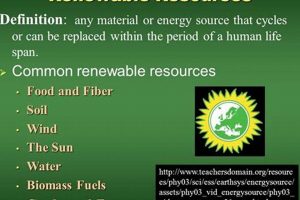
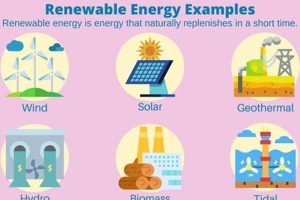
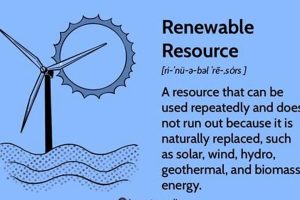
Renewable energy resources are those derived from natural processes that are replenished at a rate equal to or faster than their consumption. Examples include solar, wind, hydro, geothermal, and biomass.
Question 2: Are renewable energy sources entirely free of environmental impact?
No, all energy sources have environmental impacts. While renewable sources generally produce fewer emissions than fossil fuels, they can affect land use, wildlife, and water resources. The magnitude and type of impact vary depending on the specific technology and location.
Question 3: Why are renewable energy sources sometimes described as intermittent?
Intermittency refers to the variable and often unpredictable nature of some renewable energy sources, such as solar and wind. Their availability depends on weather conditions, which fluctuate throughout the day and year. This variability poses challenges for grid management and requires energy storage solutions or backup power sources.
Question 4: How do the costs of renewable energy compare to those of fossil fuels?
The cost-effectiveness of renewable energy varies depending on the technology, location, and available incentives. In many areas, solar and wind energy have become cost-competitive with or even cheaper than fossil fuels. However, the costs of energy storage and grid integration can still be significant factors.
Question 5: What role does energy storage play in the deployment of renewable energy?
Energy storage is crucial for mitigating the intermittency of some renewable energy sources and ensuring a reliable power supply. Storage technologies, such as batteries, pumped hydro, and thermal storage, can store excess energy generated during periods of high production and release it when demand exceeds supply.
Question 6: Can renewable energy sources meet all of the world’s energy needs?
While renewable energy has the potential to meet a significant portion of global energy demand, achieving complete reliance on renewable sources presents considerable challenges. These challenges include intermittency, infrastructure limitations, land use conflicts, and the need for substantial investment in new technologies and grid infrastructure. A diversified energy portfolio, combining renewable sources with energy efficiency measures and potentially other low-carbon technologies, may be necessary to meet future energy needs sustainably.
Careful consideration of these questions is essential for informed decision-making regarding energy policy and investment.
This FAQ section concludes the detailed exploration of renewable energy options. The next section will provide a succinct overview of key considerations.
Advantages and Disadvantages of Renewable Energy Resources
The preceding analysis has presented a comprehensive overview of the factors influencing the viability of sustainable power generation. The examination encompasses resource sustainability, intermittency challenges, required infrastructure investments, potential environmental impacts, economic competitiveness, and scalability limitations. Each aspect plays a critical role in determining the feasibility and overall impact of transitioning to renewable energy systems.
Ultimately, the successful integration of renewable energy requires a nuanced understanding of its potential and limitations. Continued technological innovation, strategic policy implementation, and careful consideration of environmental and economic trade-offs are essential to maximizing the benefits and minimizing the drawbacks of renewable energy resources. Future progress hinges on informed decision-making and a commitment to sustainable energy practices.
![Guide to What Energy Resources Are Renewable [+Future] | Renewable Energy Solutions for a Sustainable Future | Clean & Green Power](https://pplrenewableenergy.com/wp-content/uploads/2026/03/th-516-300x200.jpg "Guide to What Energy Resources Are Renewable [+Future] Renewable Energy Solutions for a Sustainable Future | Clean & Green Power")