A notable impediment to widespread adoption of sustainable power generation lies in the inherent limitations associated with technologies converting naturally replenishing sources into usable electricity. This often manifests as intermittency in production, influenced by weather patterns or diurnal cycles. Solar irradiance, for instance, fluctuates with cloud cover and the time of day, leading to variable power output. Similarly, wind turbine performance is contingent upon consistent airflow, a resource subject to considerable temporal and geographical variation. These operational characteristics introduce complexities in grid management and necessitate the development of robust energy storage solutions or backup power systems.
Addressing these limitations is crucial to fostering a more sustainable energy future. Throughout history, energy systems have evolved to meet societal demands. However, the integration of fluctuating renewable sources necessitates a fundamental shift in infrastructure planning and operational paradigms. Investment in advanced grid technologies, such as smart grids, and the development of reliable energy storage methods, like pumped hydro or advanced battery systems, are essential for accommodating the variable nature of power generation from these resources. Overcoming these challenges is vital for realizing the full potential of sustainable energy and mitigating the detrimental effects of climate change.
Further discussion will delve into specific barriers to widespread implementation, examining the economic, environmental, and social implications of these limitations. Subsequent sections will analyze the economic viability of different renewable energy technologies, evaluate the land-use impacts associated with large-scale installations, and address concerns regarding the visual and auditory impact on local communities. The examination will also explore strategies for mitigating these negative consequences and enhancing the overall sustainability of renewable energy development.
Mitigating Obstacles to Renewable Energy Integration
Successful deployment of sustainable energy solutions demands careful consideration of inherent challenges. The following recommendations address key concerns associated with the effective and responsible implementation of renewable power systems.
Tip 1: Invest in Robust Grid Infrastructure: Modernizing electrical grids is paramount to accommodating variable power inputs. Smart grid technologies, including advanced sensors and automated control systems, facilitate real-time monitoring and adjustments, enhancing grid stability and reliability during fluctuations in renewable energy supply.
Tip 2: Prioritize Energy Storage Solutions: Developing and deploying efficient energy storage technologies is crucial for buffering the intermittent nature of renewable resources. Battery storage systems, pumped hydro storage, and compressed air energy storage can store excess energy generated during peak production periods for use during periods of low generation, ensuring a consistent power supply.
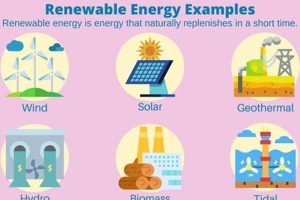
Tip 3: Diversify Renewable Energy Portfolio: Relying on a single renewable energy source amplifies the risks associated with weather-dependent generation. A diversified portfolio of solar, wind, hydro, and geothermal resources can provide a more stable and predictable energy supply, mitigating the impact of localized weather events or seasonal variations.
Tip 4: Conduct Thorough Environmental Impact Assessments: Large-scale renewable energy projects can have significant environmental impacts. Comprehensive environmental impact assessments should be conducted prior to project implementation to identify potential ecological concerns and implement mitigation strategies to minimize harm to wildlife, habitats, and water resources.
Tip 5: Engage with Local Communities: Renewable energy projects can face opposition from local communities due to concerns about visual impacts, noise pollution, and land use changes. Early and transparent engagement with local stakeholders is essential to address concerns, foster community support, and ensure that projects are developed in a manner that respects local values and priorities.
Tip 6: Optimize Project Siting: Strategic siting of renewable energy projects can minimize environmental and social impacts. Careful consideration should be given to factors such as proximity to sensitive habitats, potential visual impacts, and proximity to existing infrastructure to reduce costs and environmental footprint.
Tip 7: Promote Technological Innovation: Continuous investment in research and development is essential for improving the efficiency, reliability, and cost-effectiveness of renewable energy technologies. Support for innovation can drive down costs, improve performance, and enable the deployment of renewable energy solutions in a wider range of applications.
Addressing these considerations proactively will facilitate a smoother transition to a sustainable energy future. Prioritizing grid modernization, energy storage, diversification, environmental stewardship, and community engagement will maximize the benefits of renewable energy while minimizing its drawbacks.
The subsequent section will summarize the overall implications of these strategies and offer concluding thoughts on the future of renewable energy deployment.
1. Intermittency

Intermittency is a principal factor contributing to the challenges associated with renewable energy resources. The variable nature of solar, wind, and other renewable sources directly affects their reliability and introduces complexities in grid management and energy supply.
- Grid Stability Implications
Variable power output from intermittent sources strains grid stability. Electrical grids are designed to operate within narrow frequency ranges. Fluctuations in renewable energy supply can cause deviations, potentially leading to blackouts or system failures. Maintaining grid stability requires sophisticated control systems and balancing mechanisms, adding to the overall cost and complexity.
- Demand Matching Difficulties
The timing of renewable energy generation often does not coincide with peak demand. Solar power production is highest during midday, while electricity demand typically peaks in the evening. This mismatch necessitates energy storage solutions or backup power sources to ensure a continuous supply during periods of low renewable generation and high demand.
- Predictability Challenges
Forecasting renewable energy output is inherently difficult due to the unpredictable nature of weather patterns. Even with advanced forecasting models, there can be significant discrepancies between predicted and actual generation, leading to uncertainty in energy supply. This unpredictability can hinder the effective integration of renewables into grid operations.
- Economic Ramifications
The need for backup power sources and energy storage systems to mitigate intermittency adds significant costs to renewable energy projects. These costs can make renewable energy less competitive compared to traditional fossil fuel-based power plants, hindering its widespread adoption. Additionally, revenue streams for renewable energy producers can be affected by fluctuations in generation and electricity prices.
The complexities introduced by intermittency directly impact the economic viability and reliability of renewable energy systems. Addressing these challenges requires ongoing innovation in energy storage, grid management, and forecasting technologies. Overcoming intermittency is essential for maximizing the contribution of renewable energy resources to a sustainable energy future.
2. Land Use
Large-scale renewable energy installations, particularly solar and wind farms, necessitate extensive land areas, representing a significant disadvantage. This requirement stems from the relatively low energy density of sunlight and wind compared to fossil fuels. Consequently, substantial tracts of land are required to generate comparable amounts of electricity. This land-use footprint can directly impact existing ecosystems, agricultural practices, and land availability for other essential societal needs. For instance, large solar projects may displace agricultural land or require the clearing of natural habitats, affecting biodiversity and ecological balance. Similarly, wind farms can disrupt migratory bird patterns and visual landscapes, leading to community concerns and potential environmental degradation.
The impact of land use extends beyond simple area occupation. Site selection considerations must account for optimal resource availability (e.g., sunny or windy locations), proximity to existing transmission infrastructure, and minimal disruption to sensitive ecological areas. In some instances, prime renewable energy locations coincide with valuable agricultural land or ecologically significant habitats, creating direct competition for land resources. Careful planning, environmental impact assessments, and mitigation strategies are essential to minimize the negative consequences of land occupation by renewable energy projects. Furthermore, strategies like co-location of renewable energy with other land uses, such as agriculture (agrivoltaics), can help to maximize land-use efficiency and reduce overall impact.
In summary, the extensive land requirements of certain renewable energy technologies constitute a substantial disadvantage. This factor necessitates careful planning and mitigation strategies to minimize the impact on ecosystems, agricultural activities, and community concerns. A comprehensive understanding of the land-use implications is crucial for the sustainable and responsible development of renewable energy resources. Balancing the need for clean energy with the imperative to protect valuable land resources is a key challenge in the ongoing transition to a more sustainable energy future.
3. Initial Cost

The substantial upfront capital expenditure associated with renewable energy technologies forms a significant economic impediment to their widespread adoption. These initial investment hurdles often outweigh the long-term operational cost advantages, creating a barrier, particularly in developing economies and among smaller-scale energy consumers.
- Manufacturing and Installation Expenses
The production of solar panels, wind turbines, and geothermal plants involves complex manufacturing processes and specialized materials, leading to high initial production costs. Furthermore, the installation of these systems requires skilled labor, specialized equipment, and, in some cases, significant infrastructure upgrades, adding to the overall upfront expense. For example, the construction of a large-scale solar farm necessitates the purchase of thousands of solar panels, inverters, and mounting systems, along with site preparation, electrical wiring, and grid connection costs. These expenses can deter potential investors, especially when compared to the lower initial cost of traditional fossil fuel power plants.
- Technology Maturity and Economies of Scale
While renewable energy technologies have advanced significantly, many are still relatively immature compared to established fossil fuel-based systems. This technological immaturity contributes to higher manufacturing costs and lower production volumes, limiting economies of scale. As production volumes increase and technology matures further, costs are expected to decline. However, the current high initial cost remains a significant barrier to entry. Government subsidies and incentives play a crucial role in bridging this cost gap and promoting the widespread adoption of renewable energy technologies.
- Financing and Investment Risks
Securing financing for renewable energy projects can be challenging due to the perceived risks associated with new technologies and fluctuating energy markets. Lenders may be hesitant to provide capital for projects with high upfront costs and uncertain long-term returns. This risk aversion can lead to higher interest rates and stricter lending terms, further increasing the financial burden on renewable energy developers. Furthermore, policy uncertainty and regulatory changes can affect the long-term profitability of renewable energy projects, adding to investment risks and discouraging private sector investment.
- Grid Connection Costs and Infrastructure Upgrades
Connecting renewable energy projects to the existing electrical grid often requires significant infrastructure upgrades, particularly in remote areas or regions with limited transmission capacity. These grid connection costs can be substantial, adding to the overall upfront expense of renewable energy projects. Furthermore, integrating intermittent renewable energy sources requires grid modernization and investments in smart grid technologies to ensure grid stability and reliability. These infrastructure upgrades represent a significant financial burden, particularly for large-scale renewable energy projects.
The high initial cost of renewable energy technologies directly impacts their competitiveness in the energy market. While long-term operational savings and environmental benefits are substantial, the upfront investment hurdle remains a significant disadvantage. Addressing this challenge requires continued technological innovation, economies of scale, supportive government policies, and innovative financing mechanisms to reduce the initial cost and promote the widespread adoption of renewable energy resources. Overcoming this initial cost barrier is paramount for achieving a sustainable and decarbonized energy future.
4. Resource Dependency

The inherent reliance on specific natural resources represents a significant limitation of renewable energy technologies. This dependency directly influences the viability and geographic suitability of various renewable energy sources, and its consideration is critical to understanding the disadvantages associated with transitioning to renewable energy systems. Unlike fossil fuels, which can be transported to locations with limited indigenous resources, renewable energy generation is intrinsically tied to the availability and consistency of local resources.
Solar power, for example, is contingent upon sufficient and consistent solar irradiance, making regions with frequent cloud cover or shorter daylight hours less suitable. Wind energy requires consistent wind patterns, excluding areas with low wind speeds or unpredictable turbulence. Hydropower depends on reliable water sources, subject to droughts and seasonal variations, impacting electricity generation. Geothermal energy is geographically restricted to areas with accessible geothermal resources. Bioenergy, while seemingly versatile, involves dependencies on arable land for biomass production and can compete with food production or ecological preservation. These dependencies constrain the scalability and universal applicability of individual renewable technologies, potentially limiting their contribution to a diversified energy mix. For instance, a landlocked country with minimal solar and wind resources will face significant challenges in relying solely on these sources for energy independence.
In conclusion, the unavoidable resource dependency associated with renewable energy constitutes a fundamental disadvantage. Overcoming this limitation requires a diversified approach to renewable energy deployment, strategic grid infrastructure development to facilitate resource sharing across regions, and continued research into technologies that can operate efficiently under varying resource conditions. Acknowledging and mitigating resource dependency is crucial for ensuring a resilient and sustainable energy future, particularly in regions with limited access to specific renewable resources.
5. Infrastructure Demands

The integration of renewable energy resources necessitates significant modifications and expansions to existing energy infrastructure, presenting a notable obstacle to their widespread deployment. These infrastructure requirements, ranging from transmission lines to energy storage facilities, contribute substantially to the overall cost and complexity of transitioning to a renewable-based energy system, thereby representing a key aspect of the phrase “disadvantage of renewable energy resources”.
- Transmission Line Expansion and Upgrades
Renewable energy sources are often located in geographically remote areas with abundant resources, such as solar farms in deserts or wind farms in mountainous regions. Connecting these remote generation sites to population centers requires extensive new transmission lines, or significant upgrades to existing ones. This entails substantial capital investment, lengthy permitting processes, and potential environmental impacts associated with land clearing and construction activities. For instance, transporting wind energy from the Great Plains to major cities in the eastern United States requires building high-voltage transmission lines across vast distances, a costly and time-consuming endeavor. The lack of adequate transmission infrastructure can severely limit the amount of renewable energy that can be integrated into the grid.
- Grid Modernization and Smart Grid Technologies
The variable and intermittent nature of many renewable energy sources necessitates the development of sophisticated grid management systems. Traditional electrical grids are designed to handle stable, predictable power flows from large, centralized power plants. Integrating intermittent renewable sources requires upgrading to “smart grids” that can dynamically adjust to fluctuating supply and demand, optimize energy distribution, and improve grid stability. Smart grid technologies include advanced sensors, automated control systems, and real-time data analytics. These upgrades require significant investment and expertise, and their absence can lead to grid instability and reduced reliability of renewable energy supply.
- Energy Storage Solutions
To mitigate the intermittency of renewable energy sources like solar and wind, energy storage solutions are crucial. These solutions can store excess energy generated during peak production periods and release it when demand exceeds supply. Various energy storage technologies exist, including battery storage, pumped hydro storage, and compressed air energy storage. However, these technologies are still relatively expensive and have limited capacity. The lack of cost-effective and large-scale energy storage solutions represents a significant impediment to the widespread adoption of renewable energy. For example, a large solar farm without adequate battery storage may be unable to provide electricity during nighttime hours or periods of cloud cover.
- Distributed Generation and Microgrids
The increasing deployment of distributed generation resources, such as rooftop solar panels and small wind turbines, requires adaptations to grid infrastructure to accommodate bidirectional power flows. Traditional grids are designed for unidirectional power flow from centralized power plants to consumers. Integrating distributed generation requires advanced metering infrastructure, grid protection devices, and control systems to ensure grid stability and prevent reverse power flows from disrupting grid operations. Microgrids, which are localized energy grids that can operate independently from the main grid, offer a potential solution for integrating distributed generation resources. However, the development and deployment of microgrids require significant investment and regulatory changes.
These infrastructure demands highlight a key component of the overarching disadvantage inherent in transitioning to renewable energy resources. The costs and complexities associated with upgrading and expanding energy infrastructure represent a considerable barrier to achieving a sustainable and decarbonized energy future. Addressing these challenges requires strategic planning, innovative technologies, and substantial investment in grid modernization and energy storage solutions.
Frequently Asked Questions
The following section addresses common concerns regarding the limitations associated with renewable energy technologies. It aims to provide clear and concise answers to frequently asked questions.
Question 1: What is the most significant drawback of relying on renewable energy resources?
Intermittency represents a primary concern. The fluctuating nature of solar irradiance and wind speed, for example, introduces challenges in maintaining a consistent and reliable power supply. This necessitates backup systems and energy storage solutions, adding to the overall cost and complexity.
Question 2: How does land usage contribute to the disadvantages of renewable energy?
Large-scale renewable energy projects, such as solar farms and wind farms, require substantial land areas. This can lead to habitat disruption, competition with agricultural land use, and potential visual impacts on the surrounding landscape.
Question 3: Are renewable energy resources truly cost-effective considering initial investment costs?
The initial capital expenditure for renewable energy technologies can be significant. Manufacturing and installation costs for solar panels, wind turbines, and geothermal plants often exceed those of traditional fossil fuel-based power plants. However, long-term operational costs are typically lower, and government incentives can help offset the initial investment.
Question 4: To what extent does resource dependency limit the potential of renewable energy?
The viability of many renewable energy technologies depends on the availability of specific natural resources. Solar power relies on sunlight, wind power on consistent airflow, and hydropower on reliable water sources. This geographic dependency restricts the deployment of certain technologies in areas with limited resources.
Question 5: What infrastructure challenges arise when integrating renewable energy into existing power grids?
Integrating intermittent renewable energy sources requires significant modifications to existing grid infrastructure. This includes upgrading transmission lines, implementing smart grid technologies, and developing energy storage solutions. These infrastructure upgrades can be costly and complex.
Question 6: Do environmental impacts exist despite renewable energy’s reputation as environmentally friendly?
While renewable energy is generally considered cleaner than fossil fuels, it is not without environmental consequences. Manufacturing processes for solar panels and wind turbines can involve the use of hazardous materials. Hydropower projects can alter river ecosystems, and biomass energy production can compete with food production.
In summary, while renewable energy offers numerous advantages, its limitations related to intermittency, land use, initial cost, resource dependency, infrastructure demands, and potential environmental impacts must be carefully considered and addressed. Effective mitigation strategies are essential for realizing the full potential of sustainable energy systems.
The following section will explore potential solutions to mitigate the drawbacks associated with renewable energy deployment.
Conclusion
This exploration has underscored that the path toward widespread adoption of sustainable energy is not without significant challenges. The inherent limitations, encompassing intermittency, substantial land use requirements, elevated initial costs, reliance on specific geographic resources, and the necessary overhauls to existing infrastructure, constitute real impediments. These factors collectively affect the economic viability, reliability, and environmental impact of renewable energy systems. Understanding these limitations is paramount for informed decision-making and strategic planning.
Moving forward, a multi-faceted approach is essential. Continued technological innovation to improve efficiency and reduce costs, strategic grid modernization to enhance integration capabilities, and the implementation of robust energy storage solutions are imperative. Furthermore, comprehensive environmental impact assessments and proactive community engagement are crucial for ensuring responsible and sustainable development. Addressing the challenges associated with the “disadvantage of renewable energy resources” is not merely an option, but a necessity for securing a resilient and environmentally sound energy future. The long-term benefits of a decarbonized energy system warrant concerted effort and sustained commitment to overcoming these obstacles.
![Guide to What Energy Resources Are Renewable [+Future] | Renewable Energy Solutions for a Sustainable Future | Clean & Green Power](https://pplrenewableenergy.com/wp-content/uploads/2026/03/th-516-300x200.jpg "Guide to What Energy Resources Are Renewable [+Future] Renewable Energy Solutions for a Sustainable Future | Clean & Green Power")