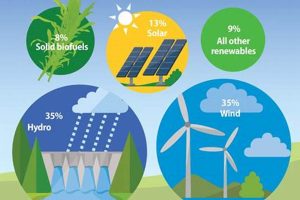
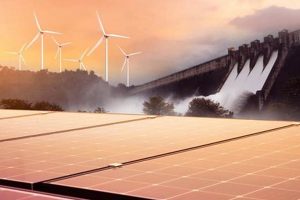
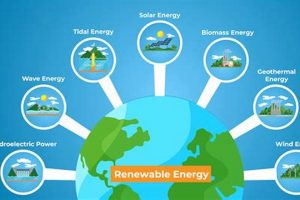
Energy resources that replenish naturally and are virtually inexhaustible are increasingly vital. These encompass a diverse array of methods for electricity generation, heating, and transportation that rely on ongoing natural processes. Examples include sunlight conversion into electricity and harnessing the earth’s internal heat for geothermal power.
The significance of these resources lies in their potential to mitigate climate change, reduce reliance on finite fossil fuels, and enhance energy security. Historically, societies have utilized renewable sources like wind and water power for centuries, but recent technological advancements have enabled more efficient and widespread deployment of a greater variety of sources.
This exploration will focus on several key renewable energy technologies, outlining their operational principles and current applications across the global energy landscape. Included will be overviews of solar power, wind energy, hydropower, geothermal energy, biomass, and other emerging approaches to sustainable energy production.
Maximizing the Potential of Renewable Power
To effectively leverage sustainable energy options, a comprehensive understanding of their deployment and management is crucial. The following guidelines offer insights for optimizing their utilization across diverse sectors.
Tip 1: Diversify Energy Portfolio: Integrate multiple renewable technologies to ensure energy security and resilience against resource variability. For example, combine solar and wind power generation to offset intermittency.
Tip 2: Implement Energy Storage Solutions: Pair renewable generation with energy storage systems, such as batteries or pumped hydro, to smooth out power fluctuations and provide on-demand energy access.
Tip 3: Prioritize Grid Modernization: Invest in smart grid technologies to efficiently integrate distributed sources and manage bidirectional power flow. Upgrading grid infrastructure enhances overall system reliability.
Tip 4: Encourage Community Engagement: Foster community-based projects to promote local ownership and acceptance of renewable energy installations. Community solar gardens are a prime example.
Tip 5: Streamline Permitting Processes: Simplify and expedite the regulatory framework for renewable energy projects to reduce development costs and deployment timelines. Clear and transparent regulations are essential.
Tip 6: Invest in Research and Development: Support ongoing research to improve the efficiency, reliability, and affordability of renewable energy technologies. Innovation is vital for long-term sustainability.
Tip 7: Offer Financial Incentives: Implement tax credits, subsidies, and feed-in tariffs to stimulate investment in renewable energy projects and make them economically viable. Supportive policies accelerate adoption.
Maximizing the potential of these technologies necessitates a strategic approach encompassing technological innovation, policy support, and community involvement. Effective implementation facilitates a transition towards a cleaner, more sustainable energy future.
The subsequent sections will explore the economic and environmental implications of widespread renewable energy adoption, further reinforcing the significance of these guidelines.
1. Sustainability
Sustainability, in the context of renewable energy sources, signifies the ability of these resources to meet current energy needs without compromising the ability of future generations to meet their own. It is a fundamental characteristic that distinguishes them from finite fossil fuels, offering a pathway to long-term energy security and environmental stewardship.
- Resource Replenishment
Renewable energy sources are characterized by their natural replenishment processes. Solar radiation is continuously available, wind patterns persist, and water cycles renew. This natural regeneration ensures a virtually inexhaustible supply of energy, promoting long-term resource availability.
- Reduced Environmental Impact
Compared to fossil fuels, renewable energy technologies generally produce fewer greenhouse gas emissions and air pollutants. This reduction in environmental impact mitigates climate change, improves air quality, and reduces harm to ecosystems. Examples include solar panels generating electricity with minimal emissions and wind turbines harnessing power without burning fossil fuels.
- Long-Term Economic Viability
While initial investments in renewable energy infrastructure can be significant, the long-term operational costs are often lower than those associated with fossil fuel-based power plants. Once established, renewable energy facilities require minimal fuel inputs, reducing vulnerability to fluctuating fuel prices and enhancing economic stability.
- Energy Independence
Reliance on renewable energy sources can enhance a nation’s energy independence by reducing dependence on imported fossil fuels. Developing domestic renewable energy resources creates local jobs, stimulates economic growth, and strengthens energy security.
The sustainability of these ten sources is not merely an environmental attribute but a multifaceted characteristic encompassing resource availability, environmental stewardship, economic stability, and energy independence. Embracing renewable energy is a strategic imperative for a sustainable future.
2. Availability

The availability of these energy options is a critical determinant of their practical applicability and regional suitability. It is not a uniform characteristic; instead, it varies significantly depending on geographical location, climate conditions, and resource endowment. This variability directly influences the feasibility and economic viability of harnessing each particular renewable energy source.
For example, solar energy availability is highest in regions with abundant sunshine, such as deserts and areas near the equator. Wind energy potential, conversely, is concentrated in coastal areas and open plains where consistent wind patterns prevail. Hydropower resources are limited to areas with significant river systems and suitable topography for dam construction. Geothermal energy is most accessible in regions with active volcanism or geothermal hotspots. Biomass availability depends on agricultural practices, forestry resources, and waste management systems. Tidal energy requires locations with significant tidal range, while wave energy is best suited for coastal areas with consistent wave action. Consequently, the selection and deployment of renewable energy technologies must align with the local availability of these resources.
Understanding the spatial distribution and temporal variability of availability is essential for effective energy planning and resource management. Assessments of availability guide investment decisions, inform policy development, and facilitate the integration of renewable energy into existing energy systems. Challenges such as intermittency and grid integration must be addressed to fully capitalize on the potential of available resources. Ultimately, optimizing the utilization of availability is crucial for achieving a sustainable and resilient energy future.
3. Technological advancement

Technological advancement serves as a crucial driver in the ongoing evolution and increased viability of each sustainable energy options. Improvements in materials science, engineering design, and control systems directly impact the efficiency, reliability, and cost-effectiveness of these systems. This progress enables broader adoption and integration into existing energy infrastructures. For example, solar panel technology has seen a significant increase in energy conversion efficiency due to advancements in photovoltaic materials and manufacturing processes, reducing the levelized cost of energy and making solar power more competitive with traditional energy sources. Similarly, wind turbine technology has benefited from innovations in blade design, gearbox systems, and tower construction, resulting in larger, more efficient turbines that can capture more energy from the wind.
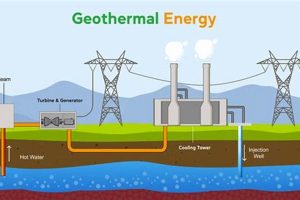
Further examples of the impact of progress include geothermal energy, where enhanced geothermal systems are expanding access to previously untapped resources through advanced drilling techniques and reservoir stimulation methods. Biomass energy has seen improvements in combustion and gasification technologies, allowing for more efficient conversion of biomass feedstocks into electricity and heat. Hydropower development has benefited from the use of advanced turbine designs and dam construction techniques, minimizing environmental impacts and maximizing energy generation. Wave and tidal energy technologies are also advancing, with innovative designs being developed to more effectively capture and convert ocean energy into electricity. These continuous improvements are essential for overcoming technical barriers, reducing costs, and scaling up the deployment of these systems.
In conclusion, progress is integral to unlocking the full potential of these sources. It is a continuous process of innovation, refinement, and adaptation that drives down costs, improves performance, and enables the widespread integration of these technologies into global energy systems. Sustained investment in research and development is crucial for overcoming existing challenges and realizing the full promise of a sustainable energy future.
4. Economic Viability

Economic viability represents a critical determinant in the widespread adoption of all energy resources. It assesses the cost-effectiveness of a given energy source relative to its alternatives, factoring in capital expenditures, operational expenses, fuel costs (if applicable), and anticipated revenues. For sustainable energy options to compete with conventional fossil fuels, they must demonstrate economic feasibility within prevailing market conditions.
The economic viability of these energy resources varies significantly depending on factors such as technology maturity, resource availability, government policies, and market demand. For instance, solar photovoltaic (PV) and wind energy have experienced substantial cost reductions in recent years, making them economically competitive in many regions. Government subsidies, tax incentives, and feed-in tariffs have further enhanced their economic attractiveness. However, other energy sources, such as wave and tidal energy, face higher capital costs and technical challenges that currently limit their economic competitiveness. The economic viability of biomass energy is highly dependent on feedstock availability, transportation costs, and conversion efficiency. Geothermal energy can be economically attractive in regions with high geothermal gradients, but exploration and drilling costs can be substantial. The economic viability of hydropower depends on factors such as dam construction costs, reservoir size, and environmental considerations.
Ultimately, the economic viability of all energy resources is not a static characteristic but rather a dynamic variable influenced by technological innovation, policy support, and market forces. Continued investment in research and development, coupled with supportive government policies, can further improve the economic competitiveness, paving the way for a sustainable energy future.
5. Environmental impact

The environmental implications associated with these 10 sources constitute a crucial aspect of their overall assessment and deployment. While these energy sources are generally considered cleaner alternatives to fossil fuels, they are not entirely without environmental consequences. A thorough understanding of these effects is essential for responsible energy planning and mitigation strategies. Each of these energy options carries distinct environmental trade-offs that must be carefully considered.
Solar power, while producing minimal emissions during operation, requires significant land use for large-scale installations. The manufacturing process of solar panels involves the use of certain materials with potential environmental concerns related to resource extraction and waste disposal. Wind energy can impact avian and bat populations, and the construction of wind farms may alter landscapes and habitats. Hydropower projects can disrupt river ecosystems, alter water flow patterns, and displace communities. Geothermal energy can release greenhouse gases, such as hydrogen sulfide and carbon dioxide, and may induce seismic activity in some areas. Biomass energy can contribute to deforestation and air pollution if not sustainably managed. Tidal and wave energy technologies have the potential to disturb marine ecosystems and navigation. Therefore, comprehensive environmental impact assessments are necessary before implementing any renewable energy project to identify potential risks and develop mitigation measures.
Effective environmental management practices, such as careful site selection, responsible sourcing of materials, and implementation of monitoring and mitigation plans, are crucial for minimizing the adverse effects of all renewable energy installations. The pursuit of sustainable energy should not come at the expense of environmental degradation, emphasizing the importance of a holistic approach that balances energy needs with ecological protection. Continued research and development are needed to improve the environmental performance of renewable energy technologies and ensure their long-term sustainability.
6. Scalability

Scalability, in the context of these power sources, denotes the capacity to expand energy production from a given source to meet increasing demands without compromising efficiency, cost-effectiveness, or environmental integrity. The inherent potential for expansion varies significantly across different renewable energy technologies, influencing their ultimate contribution to global energy supply. Achieving substantial reductions in reliance on fossil fuels necessitates the deployment of renewable energy resources at scales comparable to existing energy systems.
The scalability of solar photovoltaic (PV) technology, for instance, is considered high due to its modular nature. Solar farms can be expanded incrementally by adding more solar panels, and distributed solar installations on rooftops contribute to overall capacity. Wind energy also exhibits good scalability, as wind farms can be constructed in phases and offshore wind farms offer significant expansion potential. Hydropower, however, often faces limitations in scalability due to the finite number of suitable sites and environmental constraints. Geothermal energy is geographically restricted, limiting its scalability in certain regions. Biomass energy scalability is constrained by the availability of sustainable biomass feedstocks and concerns regarding land use and competition with food production. Wave and tidal energy technologies are still in early stages of development, and their scalability remains uncertain. The inherent scalability of each type is a critical factor in determining their suitability for meeting future energy demands.
The interplay between scalability and deployment hinges on technological advancements, economic incentives, and policy support. Overcoming challenges related to grid integration, energy storage, and resource availability is crucial for realizing the full potential of all sustainable energy sources. Recognizing the varying scalability of different options is essential for creating a diverse and resilient energy portfolio capable of meeting the world’s growing energy needs while minimizing environmental impact. Successful energy transitions rely on strategically deploying scalable sources in conjunction with infrastructure investments and policy frameworks that facilitate their widespread adoption.
7. Grid integration

Grid integration represents a critical interface for the effective utilization of these ten diverse energy sources. Due to the intermittent nature of some resources, such as solar and wind, their integration into existing electrical grids presents significant technical challenges. Grid infrastructure, designed primarily for dispatchable power sources like fossil fuel plants, must adapt to accommodate variable generation patterns. Without appropriate modifications, the stability and reliability of the electrical grid may be compromised.
To address these challenges, several technologies and strategies are employed. Smart grid technologies, including advanced sensors, communication networks, and control systems, enable real-time monitoring and management of grid operations. Energy storage systems, such as batteries and pumped hydro storage, can absorb excess energy during periods of high generation and release it during periods of low generation. Furthermore, grid expansion and reinforcement are often necessary to transmit renewable energy from remote areas to load centers. For example, Germany’s Energiewende initiative has required significant investment in grid infrastructure to integrate its increasing wind and solar capacity. Similarly, California’s ambitious renewable energy goals have necessitated the development of transmission lines to access solar resources in the desert regions.
Successful grid integration hinges on a coordinated approach involving grid operators, utilities, policymakers, and technology providers. Standardized interconnection procedures, supportive regulatory frameworks, and investments in grid modernization are essential for unlocking the full potential of all renewable resources. Failure to address these integration challenges will limit the contribution of all energy sources to the global energy mix and hinder the transition to a sustainable energy future.
Frequently Asked Questions
The following section addresses common inquiries regarding renewable energy sources, providing concise and informative responses to enhance understanding.
Question 1: What constitutes a renewable energy source?
A renewable energy source is defined as a natural resource that replenishes at a rate comparable to its rate of consumption. These resources are virtually inexhaustible and include solar, wind, hydro, geothermal, and biomass.
Question 2: Are renewable energy sources entirely emission-free?
While renewable energy sources produce minimal to no emissions during operation, their lifecycle may involve some emissions related to manufacturing, transportation, and installation. However, these emissions are significantly lower than those associated with fossil fuels.
Question 3: Is renewable energy reliable given its intermittent nature?
The reliability of renewable energy depends on factors such as geographic location, weather patterns, and grid infrastructure. Energy storage solutions and smart grid technologies can mitigate intermittency challenges and enhance reliability.
Question 4: What are the primary economic barriers to renewable energy adoption?
Economic barriers include high upfront capital costs, financing challenges, and market distortions that favor fossil fuels. Government policies, such as tax incentives and subsidies, can help overcome these barriers.
Question 5: How does land use impact the sustainability of renewable energy?
Large-scale renewable energy projects, such as solar farms and wind farms, require significant land areas. Careful site selection and land management practices are essential to minimize environmental impacts.
Question 6: Can renewable energy sources meet global energy demand?
With continued technological advancements, policy support, and infrastructure investments, renewable energy sources have the potential to meet a substantial portion of global energy demand. A diversified energy portfolio is crucial for achieving a sustainable energy future.
This FAQ section has provided concise answers to common questions regarding renewable energy. Understanding these nuances is essential for informed decision-making and the successful deployment of sustainable energy technologies.
The subsequent sections will delve into the practical applications of renewable energy technologies across various sectors and industries.
Conclusion
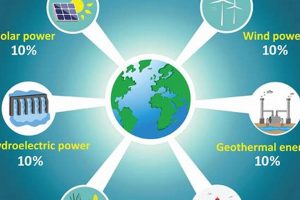
This exploration of 10 sources of renewable energy has illuminated the multifaceted nature of their potential. The discussion addressed fundamental aspects, from sustainability and availability to technological advancement, economic viability, environmental impact, scalability, and grid integration. A comprehensive understanding of these factors is essential for informed decision-making regarding energy policy and investment strategies.
The transition toward a sustainable energy future necessitates a deliberate and strategic approach. Continued research, policy support, and infrastructure development are paramount for realizing the full potential of all renewable resources. The pursuit of a cleaner energy landscape demands a commitment to innovation and a recognition of the interconnectedness between energy production, environmental stewardship, and economic prosperity.