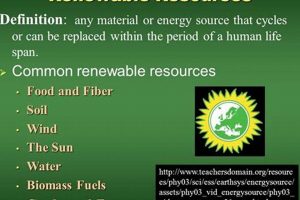
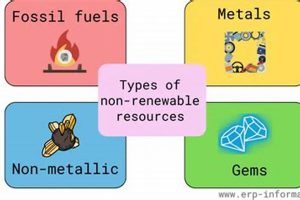
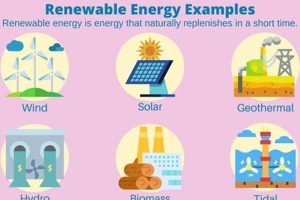
Sources of power that replenish naturally and are sustainable are gaining prominence. These sources offer a vital alternative to finite fossil fuels, reducing environmental impact and ensuring long-term energy security. This discussion will present ten distinct cases illustrating the breadth of options available.
Harnessing these natural processes mitigates climate change, improves air quality, and lessens reliance on politically volatile energy markets. Historically, societies depended on rudimentary versions of these methods, like windmills for grinding grain. Modern technology has significantly advanced their efficiency and scalability, making them a viable solution for large-scale energy demands.
The subsequent sections detail specific types of these sustainable energy solutions. The exploration includes solar power, wind energy, geothermal resources, hydropower, biomass, and emerging technologies.
Harnessing Sustainable Power
Optimizing the utilization of sustainable power demands careful planning and informed decision-making. Understanding the nuances of each resource and its applicability is crucial for effective implementation.
Tip 1: Prioritize Energy Efficiency: Before investing in new infrastructure, reduce energy consumption through efficient appliances, insulation, and optimized building design. Minimizing demand lessens the overall scale and cost of renewable energy projects.
Tip 2: Conduct a Thorough Resource Assessment: Evaluate the availability of specific resources (solar irradiance, wind speed, geothermal gradients) at a particular location. Data collection and analysis are essential for determining the viability of a project.
Tip 3: Consider Grid Integration Challenges: Intermittency of some sources (solar, wind) requires advanced grid management strategies, including energy storage solutions (batteries, pumped hydro) or demand response programs.
Tip 4: Explore Hybrid Systems: Combining multiple renewable sources can provide a more reliable and consistent power supply. For example, integrating solar and wind power with energy storage mitigates variability.
Tip 5: Understand Regulatory Frameworks and Incentives: Familiarize yourself with existing policies, subsidies, and tax credits that support adoption. These can significantly impact the economic feasibility of a project.
Tip 6: Evaluate Lifecycle Costs: Consider not only initial capital expenses but also long-term operating and maintenance costs. Some options may have lower upfront costs but higher maintenance requirements.
Tip 7: Prioritize Community Engagement: Successful deployment often requires public support. Engage local communities in the planning process to address concerns and foster a sense of ownership.
These considerations aim to facilitate the effective integration of sustainable power. Implementing these strategies maximizes the benefits while minimizing potential drawbacks.
Strategic and informed approaches are essential for achieving a sustainable energy future. By carefully addressing these points, stakeholders can contribute to a more environmentally responsible and economically sound power system.
1. Sustainability

The concept of sustainability is intrinsically linked to the viability and efficacy of environmentally conscious power alternatives. These alternatives, by definition, must offer a long-term solution that minimizes harm to the planet and ensures resource availability for future generations. The following points elaborate on facets of sustainability in relation to these environmentally conscious power alternatives.
- Resource Replenishment Rate
A primary determinant of sustainability is the rate at which the energy source replenishes itself. Solar radiation, wind currents, and geothermal heat are continuously renewed by natural processes, ensuring a consistent supply. Biomass, while requiring cultivation, can also be sustainable if managed responsibly, preventing deforestation and soil degradation. The contrast is evident when compared to fossil fuels, which are finite and non-renewable, leading to depletion.
- Environmental Footprint Mitigation
Minimizing environmental disruption is critical. Hydroelectric dams, while providing clean power, can alter river ecosystems and displace communities. Wind turbines, while efficient, can pose a threat to bird populations and create noise pollution. Careful siting, environmental impact assessments, and the implementation of mitigation strategies are essential for reducing these negative impacts and ensuring responsible deployment.
- Waste and Emission Reduction
The reduction of greenhouse gas emissions and waste products is a key driver for adopting sustainable energy options. Solar panels and wind turbines produce no direct emissions during operation, unlike coal-fired power plants. Biomass power generation can be carbon-neutral if the carbon released during combustion is offset by the carbon absorbed during plant growth. Effective waste management is also essential, particularly during the manufacturing and decommissioning phases of these technologies.
- Long-Term Resource Availability
Sustainability implies the long-term availability and accessibility of the resource. Geothermal resources, for instance, may be depleted if extraction rates exceed the natural replenishment rate. Solar radiation, on the other hand, is virtually inexhaustible. Understanding the long-term potential and limitations of each resource is crucial for developing sustainable energy strategies and ensuring a reliable energy supply for future generations.
These facets highlight the interconnectedness between sustainable practices and alternative power solutions. Evaluating a resource’s replenishment rate, minimizing its environmental footprint, reducing waste and emissions, and ensuring long-term availability are all crucial considerations for building a truly sustainable energy system that benefits both the environment and future generations.
2. Accessibility

Accessibility defines the practicality and feasibility of deploying sustainable energy options across diverse geographies and communities. The availability of specific resources, coupled with infrastructure requirements, influences the economic viability and overall potential of each energy type. The following facets highlight key considerations.
- Geographic Distribution
The inherent geographic constraints impact the widespread utilization of some. Solar irradiance is abundant in sunny regions, while wind resources are concentrated in coastal and mountainous areas. Geothermal energy is limited to tectonically active zones. Hydropower depends on suitable river systems. This uneven distribution necessitates a diversified approach, tailoring energy strategies to local resource availability. For example, while solar power may be universally applicable on a small scale, large-scale solar farms require regions with high solar irradiance and available land.
- Infrastructure Requirements
Effective deployment hinges on existing or planned infrastructure. Wind farms require transmission lines to transport electricity to populated areas. Solar power plants necessitate grid connections and energy storage solutions to mitigate intermittency. Geothermal power plants depend on access to geothermal reservoirs and specialized drilling equipment. Hydropower facilities involve dam construction and reservoir management. The presence or absence of these infrastructures significantly affects deployment costs and timelines. Remote communities often face challenges due to limited grid access, requiring off-grid solutions.
- Technological Adaptability
The ability to adapt technology to specific environments enhances its accessibility. Floating solar panels can be deployed on bodies of water, overcoming land constraints. Small-scale wind turbines can generate power in areas with moderate wind speeds. Geothermal heat pumps can provide heating and cooling in regions with limited geothermal potential. Advancements in energy storage technology increase the feasibility of using intermittent resources like solar and wind in areas with unstable grid infrastructure. Technological innovations broaden the scope and applicability of these power solutions.
- Economic Affordability
The economic viability of these options plays a crucial role in their accessibility. High initial costs can be a barrier to adoption, particularly in developing countries or low-income communities. Government subsidies, tax incentives, and innovative financing models can help to reduce costs and promote wider accessibility. The levelized cost of energy (LCOE) must be competitive with traditional energy sources to encourage investment and widespread adoption. As technology matures and economies of scale are achieved, the costs continue to decline, improving affordability.
Accessibility acts as a gatekeeper determining the practical application and widespread adoption of sustainable energy solutions. Addressing geographic constraints, developing necessary infrastructure, adapting technology, and ensuring economic affordability are essential for unlocking the full potential and ensuring equitable energy access. Overcoming these challenges is crucial for transitioning to a more sustainable and resilient energy future.
3. Environmental Impact

The environmental impact represents a critical consideration in evaluating sustainable power options. While often touted as clean energy solutions, each source possesses unique environmental consequences that must be carefully assessed and mitigated. A comprehensive understanding of these impacts is essential for making informed decisions and ensuring a truly sustainable energy future.
- Land Use and Habitat Disruption
Many facilities, such as solar farms and wind farms, necessitate significant land areas, potentially leading to habitat loss and fragmentation. Large-scale hydropower projects inundate vast areas, displacing communities and altering aquatic ecosystems. Biomass production can drive deforestation if not managed responsibly. Careful site selection, ecological impact assessments, and habitat restoration efforts are crucial for minimizing these adverse effects. For example, offshore wind farms mitigate land use concerns but raise questions about marine ecosystems. Implementing effective land management practices is essential.
- Water Resource Depletion and Contamination
Hydropower dams alter river flow patterns, affecting downstream ecosystems and water availability. Geothermal power plants can release trace amounts of heavy metals and greenhouse gases, potentially contaminating water sources. Biomass production can lead to water pollution from agricultural runoff. Concentrated solar power plants require significant amounts of water for cooling. Water management strategies, closed-loop systems, and careful monitoring are essential for mitigating these risks. Water-scarce regions face particular challenges in balancing energy production with water conservation.
- Air Quality and Greenhouse Gas Emissions
While many of these options produce minimal or no direct emissions during operation, the manufacturing, transportation, and construction phases can generate air pollutants and greenhouse gases. Biomass combustion can release particulate matter and other air pollutants. Geothermal power plants can emit small amounts of hydrogen sulfide and carbon dioxide. Lifecycle assessments are essential for evaluating the total emissions associated with each energy source. Continuous improvements in manufacturing processes and transportation methods can help reduce these indirect emissions.
- Noise Pollution and Aesthetic Impacts
Wind turbines can generate noise pollution that affects nearby communities and wildlife. Large-scale energy projects can alter landscapes and detract from scenic views. Visual impacts can be a source of public opposition. Careful siting, noise mitigation technologies, and community engagement are important for addressing these concerns. Balancing the benefits of clean energy with the aesthetic and auditory impacts is a crucial consideration. For instance, underground transmission lines can reduce visual impacts, but at a higher cost.
These facets highlight the complexity of assessing the environmental impact. While the benefits are significant, a comprehensive and nuanced understanding of the potential consequences is crucial for ensuring a truly sustainable and responsible energy transition. Employing mitigation strategies and continuous monitoring is vital for minimizing negative impacts and maximizing the long-term environmental benefits.
4. Technological Advancement
Technological advancement is inextricably linked to the viability and efficacy of sustainable energy resources. Innovations drive down costs, improve efficiency, and expand the applicability of these alternatives. Progress across various domains is essential for realizing the full potential of sustainable energy and mitigating climate change.
One can observe the profound impact of technological development in solar photovoltaic (PV) technology. The evolution from early, less efficient solar cells to modern, high-performance panels has dramatically reduced the cost per watt, making solar energy increasingly competitive with fossil fuels. Similarly, advancements in wind turbine design, including larger rotor diameters and taller towers, have increased energy capture and lowered the cost of wind power. These improvements have expanded the geographic areas where wind energy is economically viable. In geothermal energy, enhanced geothermal systems (EGS) represent a significant technological leap, enabling access to geothermal resources in regions previously considered unsuitable. The development of advanced materials, smart grids, and energy storage solutions further contributes to the integration and reliability of renewable energy systems.
The continuous pursuit of technological improvements is crucial for overcoming the challenges associated with sustainable sources. Intermittency, a primary concern with solar and wind, is addressed through advancements in energy storage, such as lithium-ion batteries and pumped hydro storage. Grid modernization efforts, including smart grids with real-time monitoring and control capabilities, are essential for managing the variability and ensuring the reliable delivery of electricity from sources. Further investment in research and development is needed to unlock the full potential of emerging technologies, such as advanced biofuels, ocean energy, and hydrogen fuel cells. Technological progress not only reduces costs and improves performance but also enhances the environmental sustainability of these environmentally conscious options.
5. Economic Viability

Economic viability functions as a crucial determinant in the widespread adoption of sustainable power alternatives. Despite their environmental advantages, these resources must demonstrate cost-effectiveness to compete with established fossil fuel-based energy systems. The initial capital investments, operational expenses, and the revenue generated throughout their lifespan dictate the economic practicality of options, influencing investment decisions and deployment rates. A positive correlation exists between decreasing costs of renewable energy technologies and their increasing deployment across various sectors. For instance, the declining cost of solar photovoltaic (PV) systems has rendered them economically competitive in numerous regions, leading to a surge in solar energy installations.
Subsidies, tax incentives, and carbon pricing mechanisms play a substantial role in enhancing the economic viability. These policy interventions mitigate the initial high costs, encouraging investment and accelerating the transition. Feed-in tariffs, which guarantee a fixed price for generated electricity, have proven effective in fostering the growth of wind and solar energy sectors in numerous countries. Furthermore, economies of scale, driven by technological advancements and mass production, continue to drive down the levelized cost of energy (LCOE) for technologies, rendering them increasingly attractive. Long-term economic benefits, including reduced reliance on imported fuels and decreased healthcare expenses associated with air pollution, contribute to the overall economic justification.
The economic assessment must encompass the full lifecycle costs, including decommissioning and waste management. This comprehensive approach provides a more accurate depiction of the true economic impact, enabling informed decision-making. The interplay between economic factors, technological innovation, and supportive policies determines the trajectory of sustainable energy adoption. Overcoming economic barriers and establishing a level playing field are essential for unlocking the full potential of these solutions, paving the way for a sustainable energy future.
6. Energy Security

Energy security, defined as the uninterrupted availability of energy sources at an affordable price, is intrinsically linked to the diversification offered by sustainable energy resources. Reliance on a limited number of energy sources, particularly fossil fuels concentrated in specific geographic regions, creates vulnerability to price volatility, geopolitical instability, and supply disruptions. Integrating a diverse portfolio of sustainable energy options enhances energy security by reducing dependence on external sources and mitigating the risks associated with single-source dominance. This shift contributes to a more resilient and stable energy supply, bolstering national economies and safeguarding access to vital energy services.
Sustainable energy resources inherently support energy security through distributed generation. Solar photovoltaic (PV) systems, wind farms, geothermal plants, and biomass facilities can be deployed across various geographic locations, reducing the reliance on centralized power plants and long-distance transmission lines. This distributed approach enhances grid resilience and minimizes the impact of localized disruptions. For example, island nations often face challenges in securing reliable energy supplies due to their dependence on imported fossil fuels. By investing in solar, wind, and ocean energy resources, these nations can enhance their energy independence and improve their overall energy security. Similarly, rural communities with limited access to grid infrastructure can benefit from off-grid sustainable energy solutions, ensuring a reliable power supply for homes, businesses, and essential services.
The development and deployment of sustainable energy resources also stimulates domestic job creation and economic growth, further strengthening energy security. Local manufacturing, installation, and maintenance of technologies create employment opportunities and reduce dependence on foreign suppliers. Investing in innovation and technological advancements in the sector fosters a competitive advantage and enhances long-term energy security. By diversifying energy sources, promoting distributed generation, and fostering domestic industries, governments and businesses can build more secure and resilient energy systems, safeguarding access to affordable and reliable energy for all.
Frequently Asked Questions
This section addresses common inquiries regarding sustainable power options, providing clear and concise answers to enhance understanding of these resources.
Question 1: What are the primary benefits of utilizing sustainable energy resources compared to traditional fossil fuels?
Sustainable power offers several key advantages. It reduces greenhouse gas emissions, mitigates air pollution, enhances energy security by diversifying supply, and promotes long-term environmental sustainability. Traditional fossil fuels contribute to climate change, air pollution, and resource depletion.
Question 2: How does intermittency of solar and wind power affect grid stability, and what measures are implemented to address it?
The variable nature of solar and wind necessitates sophisticated grid management strategies. Energy storage solutions, such as batteries and pumped hydro, help balance supply and demand. Smart grids with advanced monitoring and control capabilities also enhance grid stability. Forecasting techniques and geographically diverse deployment further mitigate intermittency.
Question 3: What role does government policy play in promoting the adoption of sustainable power resources?
Government policies, including subsidies, tax incentives, feed-in tariffs, and renewable portfolio standards, create a supportive environment for investment and deployment. These policies reduce costs, level the playing field with fossil fuels, and stimulate demand for sustainable energy.
Question 4: What are the key challenges associated with large-scale deployment of sustainable energy infrastructure?
Challenges include high initial capital costs, land use considerations, environmental impacts, intermittency management, and grid integration complexities. Overcoming these challenges requires technological innovation, strategic planning, and community engagement.
Question 5: How does the levelized cost of energy (LCOE) of sustainable energy compare to that of fossil fuels?
The LCOE of technologies has declined significantly in recent years, making them increasingly competitive with fossil fuels. In many regions, solar and wind power are now cost-competitive or even cheaper than new coal or natural gas plants. However, LCOE varies depending on location, resource availability, and financing costs.
Question 6: What are some emerging sustainable energy technologies that hold promise for the future?
Emerging technologies include advanced biofuels, enhanced geothermal systems (EGS), ocean energy (wave and tidal power), and hydrogen fuel cells. These technologies have the potential to further diversify and enhance the capabilities of the sustainable energy sector.
Addressing these questions enhances comprehension of the multifaceted dimensions of power options. Informed decisions are crucial for promoting a sustainable and resilient energy future.
The subsequent section delves into the future outlook and emerging trends in this field.
Conclusion
This exploration has illuminated ten diverse examples of renewable energy resources, underscoring their potential to reshape the global energy landscape. From the ubiquitous solar irradiance to the consistent geothermal gradients, these options present viable pathways towards mitigating climate change and enhancing energy security. The economic viability, coupled with technological advancements, continues to drive their increasing adoption, albeit with considerations for environmental impacts and grid integration challenges. Each offers a unique contribution to a diversified and sustainable energy portfolio.
The continued investment in research, development, and strategic policy implementation remains critical. The future of energy lies in embracing these solutions, fostering innovation, and addressing the inherent challenges. A comprehensive approach, encompassing technological advancements, policy support, and societal awareness, is essential to unlock the full potential of these power resources and transition towards a cleaner, more resilient, and sustainable energy future for all.
![Guide to What Energy Resources Are Renewable [+Future] | Renewable Energy Solutions for a Sustainable Future | Clean & Green Power](https://pplrenewableenergy.com/wp-content/uploads/2026/03/th-516-300x200.jpg "Guide to What Energy Resources Are Renewable [+Future] Renewable Energy Solutions for a Sustainable Future | Clean & Green Power")