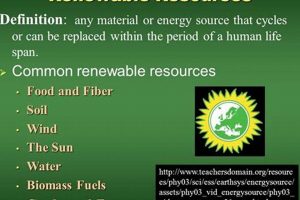
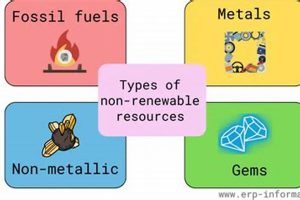
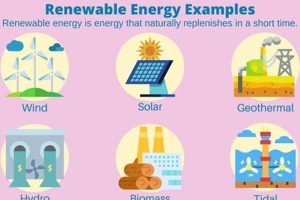
The Earth’s internal heat, a primary source for this energy type, continuously replenishes through radioactive decay and residual heat from the planet’s formation. This inherent replenishment differentiates it from fossil fuels, which are finite resources formed over millions of years. Practical examples include Iceland, where geothermal resources provide a significant portion of the nation’s electricity and heating, and the Geysers in California, a large-scale geothermal power plant.
Harnessing the planet’s inner warmth offers several advantages. It represents a stable and consistent energy source, unaffected by weather patterns that influence solar and wind power generation. Its utilization can significantly reduce reliance on fossil fuels, thereby mitigating greenhouse gas emissions and lessening the impacts of climate change. Historically, cultures have used geothermal resources for bathing and heating, while modern technology enables electricity generation and direct-use applications in agriculture and industry.
The subsequent sections will delve into the specific mechanisms that ensure the continuous renewal of this energy source, exploring the geological processes involved and examining the sustainability of its exploitation. Further discussion will address the various applications of this resource, along with potential environmental considerations and mitigation strategies.
Understanding Geothermal Energy’s Renewability
The following points clarify how geothermal energy fits the definition of a renewable resource and highlight key considerations for its sustainable utilization.
Tip 1: Recognize the Source of Renewal. The Earth’s internal heat, stemming from radioactive decay and primordial heat, continuously generates the energy that geothermal systems utilize. This ongoing process distinguishes it from finite resources.
Tip 2: Distinguish Between Resources and Reserves. The geothermal resource base (the total heat stored in the Earth) is vastly larger than the technically or economically recoverable reserves. Sustainable management focuses on extracting only a fraction of the resource over extended periods.
Tip 3: Acknowledge the Importance of Reinjection. Injecting cooled geothermal fluids back into the reservoir helps maintain pressure and sustain the long-term productivity of the geothermal field. This is crucial for preventing reservoir depletion.
Tip 4: Understand Sustainable Extraction Rates. Extracting geothermal energy at a rate faster than its natural replenishment can lead to a decline in reservoir temperature and pressure over time, impacting the system’s long-term viability. Careful monitoring and modeling are essential.
Tip 5: Consider Cascading Uses. Implementing cascading systems, where geothermal fluids are used for multiple purposes at progressively lower temperatures (e.g., electricity generation followed by district heating or aquaculture), maximizes resource efficiency.
Tip 6: Recognize Regional Variations. The renewability of geothermal energy can vary depending on the geological setting and the specific characteristics of the geothermal system. High-enthalpy systems may require more careful management than low-enthalpy systems.
Tip 7: Implement Monitoring and Management Strategies. Continuous monitoring of reservoir parameters (temperature, pressure, fluid levels) is vital for assessing the sustainability of geothermal operations and adapting management strategies as needed.
These points underscore that while the planet’s heat is constantly renewed, responsible extraction and management are crucial for maintaining the long-term viability of geothermal energy as a truly sustainable resource.
The next stage of this examination will address the limitations and opportunities related to different geothermal technologies, promoting understanding to make optimal use of this renewable source.
1. Earth's Internal Heat

The classification of geothermal energy as renewable is fundamentally linked to the perpetual nature of Earth’s internal heat. This persistent thermal energy reservoir is the driving force behind all geothermal systems, making its understanding critical to grasping the sustainability of this resource.
- Primordial Heat and Radioactive Decay
Earth’s interior retains heat from its formation and the ongoing decay of radioactive isotopes within its mantle and crust. These processes continuously generate heat, ensuring a consistent thermal gradient from the core to the surface. Without this constant input, geothermal systems would dissipate over relatively short geological timescales. For example, locations like Iceland, situated on the Mid-Atlantic Ridge, benefit from both high crustal temperatures and tectonic activity facilitating heat transfer.
- Geothermal Gradient and Heat Flux
The geothermal gradient, the rate at which temperature increases with depth, and the heat flux, the rate of heat flow from the Earth’s interior to its surface, quantify the amount of energy available for extraction. Areas with high geothermal gradients and heat flux, such as volcanic regions, offer the most readily exploitable resources. The Geysers geothermal field in California illustrates this, with high heat flux allowing for significant electricity generation.
- Convection and Conduction
Heat from the Earth’s interior reaches the surface through two primary mechanisms: convection within the mantle and conduction through the lithosphere. Convection brings hot material closer to the surface, creating hotspots. Conduction transfers heat through solid rock, though at a slower rate. The interplay of these processes determines the distribution and accessibility of geothermal resources worldwide. Deep geothermal systems often rely on conductive heat transfer, while shallower hydrothermal systems rely on convective circulation.
- Sustainable Extraction and Reservoir Management
While Earth’s internal heat is continuously replenished, sustainable extraction rates are critical. Over-extraction can lead to reservoir depletion, diminishing the resource’s potential. Reservoir management strategies, including reinjection of cooled fluids, help maintain pressure and prolong the lifespan of geothermal systems. The Soultz-sous-Forts enhanced geothermal system in France demonstrates the application of reservoir management techniques to ensure long-term sustainability.
In summary, the continuous generation and flow of Earth’s internal heat, sustained by primordial heat and radioactive decay, are the foundation of geothermal energy’s renewability. Responsible extraction and management practices are crucial for ensuring its long-term utilization as a sustainable energy source. The ongoing advancements in geothermal technology further enhance its potential to contribute to a low-carbon energy future.
2. Radioactive Decay Source

Radioactive decay within the Earth’s interior serves as a primary and continuous heat source, directly underpinning geothermal energy’s classification as a renewable resource. Certain isotopes, such as uranium-238, thorium-232, and potassium-40, undergo radioactive decay, releasing energy in the form of heat. This heat sustains the Earth’s geothermal gradient, the increase in temperature with depth, which is crucial for the formation and maintenance of geothermal reservoirs. Without this constant energy input, the Earth’s internal temperature would gradually decrease, rendering geothermal energy extraction unviable on a long-term basis. The abundance and half-lives of these isotopes ensure a sustained heat supply over geological timescales, making geothermal energy fundamentally different from finite resources like fossil fuels.
The impact of radioactive decay is evident in various geothermal regions worldwide. For example, in areas with high concentrations of radioactive elements in the crust, such as certain granitic formations, geothermal gradients are significantly elevated. These regions often exhibit enhanced geothermal potential and support the development of geothermal power plants. Moreover, the heat generated by radioactive decay influences the dynamics of mantle convection and plate tectonics, indirectly contributing to the formation of geothermal systems in volcanically active areas and along plate boundaries. Accurate assessment of the radiogenic heat production in different geological settings is therefore essential for evaluating the potential and sustainability of geothermal resources. The heat production rates vary greatly by rock type and region globally.
In conclusion, radioactive decay is an indispensable component in determining that geothermal energy is renewable. It provides a continuous and significant heat source within the Earth, driving geothermal systems and enabling the long-term extraction of thermal energy. Understanding the spatial distribution and intensity of radiogenic heat production is crucial for the effective exploration, development, and sustainable management of geothermal resources globally. While extraction methods and reservoir management strategies impact the longevity of specific geothermal sites, the fundamental renewal of the resource is ensured by the ongoing process of radioactive decay.
3. Continuous Replenishment Cycle

The designation of geothermal energy as a renewable resource hinges directly on its inherent continuous replenishment cycle. This cycle, driven by Earth’s internal heat, ensures the sustained availability of thermal energy for extraction. Radioactive decay within the Earth’s core and mantle, coupled with residual heat from planetary formation, constitutes the primary energy input into this cycle. This energy continuously migrates towards the Earth’s surface via conduction and convection, forming geothermal gradients. Without this continuous heat influx, geothermal reservoirs would eventually dissipate, negating the resource’s renewable nature. The inherent replenishment mechanism separates geothermal from finite energy sources, such as fossil fuels.
The practical manifestation of this cycle is observable in various geothermal systems globally. Hydrothermal systems, for example, rely on the circulation of groundwater that is heated by subsurface geothermal sources. As heat is extracted through wellbores, the natural hydrological cycle facilitates the recharge of these systems with cooler groundwater, which is then heated by the same geothermal source, perpetuating the cycle. Enhanced Geothermal Systems (EGS) aim to create or enhance these natural fracture networks in regions with hot, dry rock, effectively creating artificial hydrothermal systems that tap into the continuous heat flow. The reinjection of spent geothermal fluids into the reservoir is a crucial aspect of maintaining the cycle’s equilibrium and minimizing the risk of resource depletion. The failure to maintain this replenishment cycle through sustainable extraction practices can lead to a decline in reservoir pressure and temperature, undermining the long-term viability of geothermal operations.
In conclusion, the continuous replenishment cycle is a fundamental characteristic underpinning geothermal energy’s renewable nature. Understanding and managing this cycle through sustainable extraction techniques, including fluid reinjection and reservoir monitoring, are essential for ensuring the long-term utilization of geothermal resources. While specific geothermal sites may require careful management to maintain their productivity, the Earth’s internal heat engine provides a constantly renewing energy source, positioning geothermal as a crucial component of a sustainable energy future.
4. Sustainable Extraction Practices

The longevity of geothermal energy as a renewable resource is inextricably linked to the implementation of sustainable extraction practices. While the Earth continuously generates geothermal energy, responsible management is crucial to prevent resource depletion and ensure long-term viability.
- Reinjection Strategies
Reinjecting cooled geothermal fluids back into the reservoir is a critical sustainable extraction practice. This process helps maintain reservoir pressure, sustains fluid levels, and reduces the risk of subsidence. The absence of reinjection can lead to a decline in energy production over time, effectively diminishing the resource’s renewability. The Geysers geothermal field in California, for instance, experienced a significant decline in production before implementing comprehensive reinjection programs.
- Monitoring and Modeling
Continuous monitoring of reservoir parameters, such as temperature, pressure, and flow rates, is essential for assessing the sustainability of extraction. Numerical modeling helps predict reservoir behavior under different extraction scenarios, allowing operators to optimize production and avoid over-exploitation. Without robust monitoring and modeling, it becomes difficult to determine sustainable extraction rates, jeopardizing the long-term renewability of the resource. Projects that employ advanced monitoring and modeling exhibit enhanced resource sustainability.
- Cascading Use Systems
Implementing cascading use systems maximizes the efficiency of geothermal resources. This involves utilizing geothermal fluids for multiple purposes at progressively lower temperatures, such as electricity generation followed by district heating or aquaculture. Cascading use reduces the overall demand on the geothermal reservoir, prolonging its lifespan and enhancing its renewability. Iceland’s geothermal utilization exemplifies this approach, combining power generation with various direct-use applications.
- Sustainable Flow Rates
Establishing sustainable flow rate limits is key to preventing irreversible depletion of the geothermal reservoir. Careful analysis of reservoir characteristics and recharge rates is required to determine the maximum extraction rate that can be sustained over the long term. Exceeding these limits can lead to a decline in reservoir pressure and temperature, reducing the resource’s overall potential and undermining its renewability. Precautionary flow rate strategies are often employed to maintain consistency of pressure.
These sustainable extraction practices collectively ensure that geothermal energy remains a renewable resource. By prioritizing responsible management and optimizing resource utilization, the long-term contribution of geothermal energy to a sustainable energy future can be maximized. Without diligent application of these practices, the benefits of Earth’s continuous heat source would be diminished, jeopardizing the renewability of this valuable resource.
5. Reinjection Maintains Pressure

Reinjection of geothermal fluids represents a crucial engineering practice directly supporting the long-term viability of geothermal resources. This active management technique directly addresses pressure decline within geothermal reservoirs, a key factor in sustaining energy production and preserving the renewable nature of this resource.
- Sustaining Reservoir Productivity
Pressure within a geothermal reservoir facilitates the flow of heated fluids to the surface for energy extraction. Fluid removal without replenishment leads to pressure reduction, decreasing production rates and potentially causing reservoir collapse or subsidence. Reinjection restores pressure, sustaining fluid mobility and ensuring continued energy extraction. The Geysers in California exemplifies this, where reinjection has significantly extended the field’s productive lifespan.
- Extending Resource Lifespan
By mitigating pressure decline, reinjection extends the operational lifespan of geothermal facilities. Maintaining pressure stabilizes reservoir temperature and prevents cold water influx, which can reduce energy output. The enhanced longevity directly contributes to the resource’s classification as renewable, ensuring its availability for future generations. Models predict significant lifespan extension through strategic reinjection planning.
- Minimizing Environmental Impact
Reinjection not only maintains reservoir pressure but also provides a safe disposal method for spent geothermal fluids. This minimizes surface discharge, reducing potential environmental contamination. By containing fluids within the subsurface, reinjection helps prevent soil and water pollution, promoting responsible resource management and enhancing the overall sustainability of geothermal energy. Iceland’s geothermal facilities often prioritize closed-loop reinjection systems.
- Enhancing Energy Recovery
Strategic reinjection can improve energy recovery from geothermal reservoirs. By carefully positioning reinjection wells, operators can optimize fluid flow paths and sweep heat from a larger volume of rock. This process enhances heat extraction efficiency, maximizing the utilization of the geothermal resource. Enhanced Geothermal Systems (EGS) rely heavily on reinjection to circulate fluids through fractured rock formations and extract heat effectively.
In conclusion, the practice of reinjection serves as a cornerstone in preserving the renewable characteristics of geothermal energy. Maintaining reservoir pressure not only sustains productivity and extends resource lifespan but also minimizes environmental impact and enhances energy recovery. These combined benefits underscore the critical role of reinjection in ensuring the long-term sustainability of geothermal resources.
6. Reservoir Management Vital

Effective reservoir management constitutes an indispensable component in maintaining the long-term viability and renewability of geothermal energy. Without diligent oversight and strategic planning, even the Earth’s vast geothermal resources are susceptible to depletion, undermining their designation as renewable.
- Sustainable Extraction Rates
Establishing sustainable extraction rates is paramount. Over-extraction, exceeding the natural recharge capacity of the reservoir, leads to pressure decline and reduced energy output. Comprehensive reservoir modeling and monitoring are essential to determine these rates. The Larderello geothermal field in Italy provides a historical example where uncontrolled extraction initially led to resource decline, highlighting the need for regulated sustainable flow rates.
- Fluid Reinjection Strategies
Implementing effective fluid reinjection strategies is critical for pressure maintenance and waste disposal. Reinjecting cooled geothermal fluids helps replenish the reservoir, sustaining production levels and minimizing land subsidence. Strategic placement of reinjection wells optimizes pressure distribution and heat extraction efficiency. The Geysers geothermal field in California demonstrates the positive impact of reinjection in prolonging the operational lifespan of the resource.
- Monitoring and Assessment Programs
Continuous monitoring of reservoir parameters, including temperature, pressure, fluid levels, and chemical composition, provides essential data for assessing reservoir health. Regular assessment programs, utilizing both geological and geophysical techniques, identify potential issues and inform adaptive management strategies. The absence of adequate monitoring can lead to undetected resource decline, as illustrated by early experiences in some Icelandic geothermal systems.
- Integrated Resource Planning
Integrating geothermal development into broader regional resource planning ensures sustainable utilization. This involves considering competing water uses, environmental impacts, and community needs. Coordinated planning minimizes conflicts and promotes responsible development that balances energy production with long-term resource preservation. Comprehensive environmental impact assessments are crucial to inform responsible integrated planning for future operations.
These facets collectively underscore that reservoir management is not merely a technical consideration but a fundamental requirement for ensuring geothermal energy remains a renewable resource. By adopting sustainable extraction practices, implementing effective reinjection strategies, conducting comprehensive monitoring programs, and integrating geothermal development into broader resource planning, the long-term viability and renewability of geothermal energy can be effectively secured, contributing to a more sustainable energy future.
7. Resource Base Immense
The substantial size of the geothermal resource base is a critical factor underpinning the assertion that geothermal energy constitutes a renewable energy source. The Earth’s internal heat content, a vast reservoir of thermal energy, dwarfs current and foreseeable global energy demands. This immensity ensures that, even with widespread utilization, the resource as a whole will not be depleted in any meaningful timeframe relevant to human civilization. The sheer scale differentiates geothermal from finite resources, such as fossil fuels, where extraction progressively diminishes the available supply. The continuous generation of heat through radioactive decay and residual heat from planetary formation maintains the overall resource base at a stable level, further bolstering its renewable status. This abundance is a fundamental prerequisite for geothermal to be considered a sustainable alternative.
Practical implications of this immense resource base are far-reaching. It allows for diverse applications ranging from large-scale electricity generation to direct-use applications like district heating and agricultural processes. Countries such as Iceland, located in a geologically active region, harness a significant portion of their energy needs from geothermal sources, demonstrating the feasibility of relying on this abundant resource. Enhanced Geothermal Systems (EGS), which aim to access heat in previously inaccessible rock formations, further expand the exploitable resource base, potentially opening geothermal development to regions with limited naturally occurring hydrothermal resources. Moreover, the immensity of the resource incentivizes further technological advancements in extraction and utilization methods, driving down costs and improving efficiency.
In summary, the vastness of the geothermal resource base is a defining characteristic that solidifies its standing as a renewable energy source. This abundance, combined with sustainable extraction practices and technological innovation, positions geothermal as a significant contributor to a low-carbon energy future. While localized depletion of specific geothermal reservoirs can occur if not properly managed, the overall resource remains immense and continuously replenished, ensuring its long-term availability. This understanding highlights the importance of responsible reservoir management to maximize the benefits of this abundant and renewable energy source.
Frequently Asked Questions
This section addresses common inquiries concerning the classification of geothermal energy as a renewable resource. The following questions aim to clarify key concepts and dispel potential misconceptions.
Question 1: What fundamentally defines geothermal energy as a renewable resource?
Geothermal energy is classified as renewable due to its continuous replenishment from the Earth’s internal heat. This heat, generated by radioactive decay and residual heat from planetary formation, is consistently renewed over geological timescales.
Question 2: How does the rate of extraction affect geothermal energy’s renewability?
Sustainable extraction practices are crucial. If geothermal fluids are extracted faster than the rate of natural recharge, reservoir pressure and temperature decline, impacting long-term viability. Responsible management ensures equilibrium.
Question 3: What role does reinjection play in ensuring geothermal energy’s renewability?
Reinjection of cooled geothermal fluids back into the reservoir helps maintain pressure, sustains fluid levels, and minimizes land subsidence. It is a key component of sustainable geothermal operations.
Question 4: Is geothermal energy renewable in all locations?
While the underlying principle of geothermal energy’s renewability applies globally, the specific characteristics of individual geothermal systems vary. High-enthalpy systems may require more careful management than low-enthalpy systems to ensure long-term sustainability.
Question 5: Does the immense size of the geothermal resource base guarantee its renewability?
The vast geothermal resource base is a positive factor, but it does not negate the need for sustainable management. Localized depletion can occur if extraction rates are not carefully controlled. Therefore, reservoir management strategies are imperative.
Question 6: How do Enhanced Geothermal Systems (EGS) impact geothermal energy’s renewability?
EGS technologies expand the exploitable geothermal resource base by accessing heat in previously inaccessible rock formations. However, sustainable extraction and reinjection practices remain essential for ensuring the long-term viability of EGS projects.
In summary, geothermal energy’s classification as renewable is contingent upon both the continuous replenishment of Earth’s internal heat and the implementation of responsible resource management strategies.
The subsequent segment will explore the environmental considerations associated with geothermal energy development.
Why is Geothermal Energy a Renewable Resource
This exploration has established the multifaceted basis for classifying geothermal energy as a renewable resource. The continuous replenishment of Earth’s internal heat, primarily fueled by radioactive decay and primordial heat, forms the foundation of this classification. Sustained productivity hinges upon responsible extraction practices, notably fluid reinjection, to maintain reservoir pressure and prolong operational lifespans. Effective reservoir management, encompassing monitoring, modeling, and sustainable flow rates, complements the inherent renewability of the resource. The sheer scale of the geothermal resource base further solidifies its potential as a long-term energy solution.
Recognizing these principles is crucial for informed decision-making in energy policy and resource development. Prioritizing sustainable geothermal practices ensures that this valuable resource contributes meaningfully to a low-carbon future, offering a stable and reliable energy source for generations to come. Continued research and technological advancement will further enhance the efficiency and accessibility of geothermal energy, maximizing its impact on global energy security and environmental sustainability.

![Guide to What Energy Resources Are Renewable [+Future] | Renewable Energy Solutions for a Sustainable Future | Clean & Green Power](https://pplrenewableenergy.com/wp-content/uploads/2026/03/th-516-300x200.jpg "Guide to What Energy Resources Are Renewable [+Future] Renewable Energy Solutions for a Sustainable Future | Clean & Green Power")