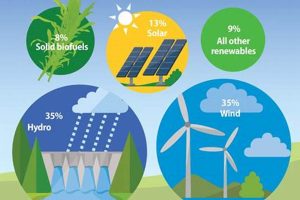
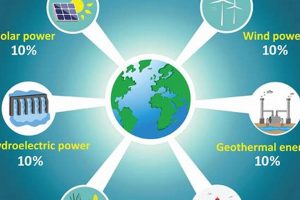
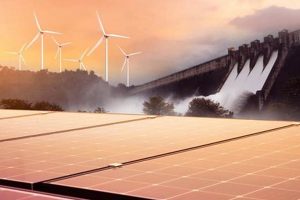
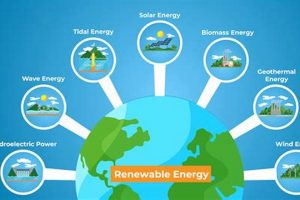
Various naturally replenishing power generation methods are available, each harnessing distinct environmental processes. These methods convert naturally recurring phenomena into usable electricity, heat, or mechanical power. Examples include utilizing the sun’s radiant energy through photovoltaic cells, capturing wind power with turbines, harnessing flowing water for hydroelectric generation, extracting geothermal energy from the earth’s core, and utilizing biomass derived from organic matter.
The adoption of these sustainable methodologies presents significant advantages, notably reduced reliance on finite fossil fuel reserves and decreased greenhouse gas emissions. Throughout history, simple forms of some methods, like watermills and windmills, were employed. Contemporary applications offer improved efficiency and capacity, offering viable alternatives to traditional power generation while promoting environmental stewardship and long-term energy security.
Further examination will delineate specific technologies associated with solar, wind, hydro, geothermal, and biomass energy. A comparative analysis of their respective efficiencies, environmental impacts, and economic viability will also be presented. Finally, the ongoing research and development efforts aimed at optimizing these different approaches will be considered.
Practical Considerations for Renewable Power Methodologies
Implementing renewable power methodologies requires careful planning and execution to maximize effectiveness and long-term sustainability. Several key considerations can enhance project success and optimize resource utilization.
Tip 1: Conduct a Thorough Resource Assessment: Prior to investment, a comprehensive evaluation of available resources is essential. Solar projects require accurate insolation data; wind projects depend on reliable wind speed measurements; hydropower projects need detailed hydrological studies. Inadequate resource assessment can lead to underperforming installations.
Tip 2: Prioritize Energy Efficiency Measures: Reducing energy consumption before implementing renewable solutions enhances overall project economics. Improving building insulation, using energy-efficient appliances, and optimizing industrial processes minimize the required capacity of renewable energy systems, lowering upfront costs and increasing return on investment.
Tip 3: Select Appropriate Technology for the Application: Choosing the right technology is crucial for maximizing performance. Concentrated solar power may be suitable for large-scale electricity generation in sunny regions, while rooftop photovoltaic systems may be better suited for decentralized power generation in urban environments. Matching technology to application ensures optimal efficiency.
Tip 4: Integrate Energy Storage Solutions: The intermittent nature of certain methodologies necessitates incorporating energy storage. Battery storage systems, pumped hydro storage, or thermal energy storage can smooth out supply fluctuations and ensure a consistent power supply, improving grid stability and reliability.
Tip 5: Implement Robust Monitoring and Maintenance Protocols: Regular monitoring and maintenance are vital for long-term performance. Tracking system output, inspecting equipment for wear and tear, and addressing maintenance issues promptly ensures optimal efficiency and extends the lifespan of renewable energy installations.
Tip 6: Consider Environmental Impact Assessments: Thorough assessment of the environmental effects of deployment is crucial. Construction can disrupt local ecosystems, and proper planning is vital to minimize negative impacts on wildlife, habitats, and water sources. Undertaking the assessments guarantees responsible project development.
Tip 7: Secure Supportive Policies and Incentives: Government policies, tax credits, and subsidies can significantly improve the financial viability of ventures. Understanding and leveraging these incentives can reduce the payback period and encourage wider adoption.
Careful consideration of these tips will contribute to the successful deployment of more environmentally friendly power sources. Integrating these strategies enhances overall project effectiveness and promotes sustainable energy production.
The following sections will address the challenges associated with scaling up the use of renewable power sources and explore potential pathways to a sustainable energy future.
1. Solar Power

Solar power represents a significant category within renewable energy sources. Its prevalence and versatility necessitate a detailed understanding of its multifaceted nature and contribution to the broader energy landscape.
- Photovoltaic Conversion
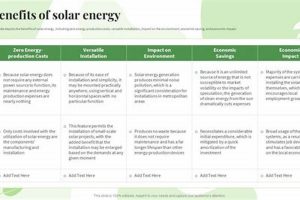
Photovoltaic (PV) cells are semiconductor devices that convert sunlight directly into electricity. Common examples include rooftop solar panels on residential and commercial buildings, as well as large-scale solar farms that feed electricity into the grid. This direct conversion eliminates the need for mechanical processes, making PV systems a relatively clean and efficient technology. The widespread deployment of PV contributes to diversifying electricity generation and reducing reliance on fossil fuels.
- Concentrated Solar Power
Concentrated Solar Power (CSP) technologies use mirrors or lenses to focus a large area of sunlight onto a small receiver. The concentrated heat is then used to produce steam, which drives a turbine to generate electricity. CSP plants are often located in desert regions with high solar irradiance. Examples include parabolic trough systems and solar power towers. While CSP requires more land area than PV, it offers the potential for thermal energy storage, which can provide electricity even when the sun is not shining.
- Solar Thermal Applications
Solar thermal energy is used directly for heating purposes, such as water heating and space heating. Solar water heaters are commonly used in residential and commercial buildings to preheat water, reducing the demand for conventional water heaters. Solar air heaters can provide space heating, reducing the need for fossil fuel-based heating systems. These direct applications of solar energy can significantly reduce energy consumption and carbon emissions.
- Grid Integration and Storage Challenges
The intermittent nature of solar power presents challenges for grid integration. Fluctuations in sunlight due to weather patterns and time of day can lead to variability in electricity generation. Energy storage technologies, such as batteries and pumped hydro storage, can help to smooth out these fluctuations and ensure a reliable supply of electricity. Developing cost-effective and efficient energy storage solutions is crucial for increasing the penetration of solar power in the electricity grid.
These diverse applications of solar power underscore its importance within the framework of different types of renewable energy sources. From direct electricity generation to thermal applications, solar technologies offer a range of solutions for reducing dependence on fossil fuels and promoting a sustainable energy future.
2. Wind Energy

Wind energy constitutes a significant segment within different types of renewable energy sources, attributable to its technological maturity and potential for large-scale electricity generation. Kinetic energy, naturally converted from wind flow, presents a powerful effect in the production of power. Wind turbines translate this mechanical momentum into electrical current. Wind, as a perpetual atmospheric event driven by solar heating differentials, ensures a continuous, though variable, input of renewable potential.
The importance of wind-generated power lies in its potential to displace fossil fuel combustion, thereby mitigating carbon emissions and enhancing energy security. Large wind farm projects, as exemplified by those in the North Sea and the American Midwest, demonstrate the practical application of this source. These facilities inject substantial electricity into regional grids, satisfying increasing demand while curtailing greenhouse gas output. Furthermore, decentralized wind systems, such as small turbines for individual households or farms, offer a degree of energy independence, particularly in rural environments.
Challenges associated with wind energy encompass intermittency, necessitating grid modernization and sophisticated energy storage strategies to ensure reliable electricity supply. Visual and auditory impacts from wind farms can also give rise to community objections, requiring careful site selection and public engagement. Notwithstanding these impediments, wind energy continues to play a crucial role in the transition towards a decarbonized energy sector. Ongoing research and technology development are steadily improving turbine efficiency, reducing costs, and enhancing grid integration strategies, thereby bolstering wind energy’s contribution within the portfolio of renewable methodologies.
3. Hydropower Potential

Hydropower potential represents a substantial component within the spectrum of renewable energy sources. Its long-standing presence in power generation, coupled with its capacity for large-scale electricity production, underscores its relevance within the renewable energy portfolio.
- Conventional Dams and Reservoirs
Conventional hydroelectric dams involve the impoundment of water behind a barrier, creating a reservoir. The potential energy of the stored water is then converted to kinetic energy as it flows through turbines, generating electricity. The Hoover Dam and Three Gorges Dam are prime examples of this technology. While conventional dams provide significant power generation and water management benefits, they can also lead to substantial environmental impacts, including habitat alteration and displacement of communities.
- Run-of-River Hydroelectric Systems
Run-of-river systems divert a portion of a river’s flow through a powerhouse to generate electricity, without creating a large reservoir. These systems typically have a smaller environmental footprint compared to conventional dams. However, their power output is more dependent on the natural flow of the river and may be subject to seasonal variations. Examples include many smaller hydroelectric plants located on rivers in mountainous regions.
- Pumped Storage Hydropower
Pumped storage facilities utilize two reservoirs at different elevations. During periods of low electricity demand, water is pumped from the lower reservoir to the upper reservoir. When demand increases, the stored water is released through turbines to generate electricity. Pumped storage serves as a form of energy storage, helping to balance fluctuations in electricity supply from intermittent renewable sources, such as solar and wind. Dinorwig Power Station in Wales is a prominent example.
- Environmental and Social Considerations
Harnessing hydropower potential requires careful consideration of environmental and social impacts. Dam construction can disrupt river ecosystems, alter water quality, and displace local communities. Fish passage and mitigation measures are essential to minimize harm to aquatic life. Stakeholder engagement and comprehensive environmental impact assessments are crucial for ensuring responsible development of hydroelectric projects.
The diverse approaches to leveraging hydropower potential underscore its integral role among other sustainable energy methodologies. Managing the balance between power generation and environmental stewardship will be crucial for maximizing the contribution of hydropower to a diversified and sustainable energy future.
4. Geothermal Resources
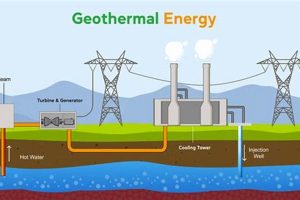
Geothermal resources, intrinsically tied to subterranean thermal energy, represent a prominent category within renewable energy sources. This connection stems from the Earths internal heat, a virtually inexhaustible reservoir of power accessible through diverse methods. The primary causal factor is the planet’s core, continually generating heat via radioactive decay and primordial formation processes. This thermal energy radiates outwards, creating temperature gradients within the crust, thus giving rise to exploitable geothermal reservoirs. These reservoirs, often manifested as hydrothermal resources (hot water and steam), are harnessed to produce electricity or provide direct heating. The practical significance lies in their inherent sustainability; as long as the Earth continues to generate heat, the resource replenishes, unlike finite fossil fuels. For instance, Iceland derives a substantial portion of its electricity and heating from geothermal plants, demonstrating its practical efficacy. This understanding is crucial because it highlights the potential for decreased dependence on conventional energy sources, fostering environmental sustainability.
The practical applications extend beyond electricity generation. Geothermal heat pumps utilize the stable ground temperature to provide efficient heating and cooling for buildings. These systems circulate fluids through underground loops, extracting heat in winter and dissipating heat in summer. Examples include university campuses and residential complexes employing geothermal heating and cooling to minimize energy consumption and carbon footprint. Furthermore, geothermal resources find application in industrial processes, aquaculture, and greenhouse heating. The integration of geothermal power into electrical grids requires careful planning and engineering to manage the resource effectively and ensure consistent output, considering the variability in reservoir characteristics and extraction rates. Technological advancements aim to enhance efficiency and sustainability, including improved drilling techniques, enhanced geothermal systems (EGS) that access deeper and drier geothermal resources, and closed-loop systems that minimize water usage and environmental impact.
In summary, geothermal resources are an indispensable element of the global portfolio of renewable energy methodologies. Their viability is predicated on harnessing the Earth’s continuous internal heat, an aspect that contributes profoundly to their environmental sustainability. While challenges persist concerning exploration, extraction costs, and potential environmental impacts, ongoing technological advancements are poised to enhance the efficiency and accessibility of this renewable power type. A deeper understanding of geothermal resources fosters informed strategies for energy diversification and climate change mitigation, establishing its pivotal role in the transition toward a future powered by sustainable energy.
5. Biomass Conversion

Biomass conversion constitutes a significant element within the framework of renewable energy sources. Its inherent connection stems from the utilization of organic matter derived from recently living organisms to generate energy. This process effectively transforms stored solar energy, captured through photosynthesis, into usable forms such as electricity, heat, and biofuels. Biomass encompasses a diverse range of materials, including agricultural residues, forestry byproducts, dedicated energy crops, and organic waste. This diversity underscores the adaptability of biomass conversion across different geographical regions and resource availability scenarios. The importance of biomass conversion lies in its potential to displace fossil fuels, offering a carbon-neutral or carbon-negative energy pathway when sustainably managed. For instance, the combustion of sustainably harvested wood for electricity generation replaces coal-fired power plants, leading to reduced greenhouse gas emissions. Anaerobic digestion of agricultural waste produces biogas, a renewable fuel for heating and transportation. These examples illustrate the tangible benefits of biomass conversion as a component of sustainable energy production.
Practical applications of biomass conversion vary widely depending on the feedstock and technology employed. Direct combustion is a straightforward method used for heating and electricity generation, particularly in industrial settings where waste biomass is readily available. Gasification converts biomass into a syngas, which can be used to produce electricity or further processed into liquid fuels like methanol. Pyrolysis involves heating biomass in the absence of oxygen to produce bio-oil, a versatile fuel that can be upgraded for transportation applications. Anaerobic digestion breaks down organic matter in the absence of oxygen, generating biogas composed primarily of methane, which can be used for heating, electricity generation, or upgraded to biomethane for injection into natural gas pipelines. The practical significance of understanding these different conversion pathways lies in optimizing resource utilization and tailoring energy production to specific needs. For example, agricultural communities can utilize anaerobic digestion to convert animal manure into biogas, providing a renewable energy source for on-farm use and reducing reliance on fossil fuels.
In summary, biomass conversion represents a crucial element within the domain of renewable energy sources. Its potential to leverage organic matter for energy production offers a pathway towards reducing dependence on fossil fuels and mitigating climate change. Challenges remain regarding sustainable feedstock sourcing, conversion efficiency, and potential land-use impacts. However, ongoing research and technological advancements are steadily improving the viability and sustainability of biomass conversion as a key contributor to a diversified and renewable energy future.
Frequently Asked Questions
The following section addresses prevalent inquiries concerning the variety of sustainable power generation methods. Clarification is provided on critical aspects, aiding in a more comprehensive understanding of these vital resources.
Question 1: What constitutes a “renewable” energy source?
A renewable energy source is defined as one that replenishes naturally on a human timescale. This encompasses sources derived from solar radiation, wind patterns, water flow, geothermal heat, and biomass, ensuring long-term availability unlike finite fossil fuels.
Question 2: Why are some energy sources considered “renewable” while others are not?
Energy sources are designated “renewable” based on their replenishment rates and sustainability. Fossil fuels, such as coal and petroleum, are finite resources formed over geological timescales, rendering them non-renewable. Renewable sources, by contrast, regenerate continually, ensuring sustained availability.
Question 3: What are the main types of renewable energy sources currently utilized?
The primary utilized sustainable energy methodologies encompass solar, wind, hydropower, geothermal, and biomass. Solar energy harnesses sunlight via photovoltaic cells or thermal collectors. Wind turbines convert kinetic energy into electricity. Hydropower relies on flowing water to drive turbines. Geothermal plants tap into subterranean thermal energy. Biomass conversion utilizes organic matter for fuel or electricity generation.
Question 4: Are all environmentally friendly energy sources equally sustainable and environmentally benign?
While all environmentally friendly power methodologies aim to mitigate environmental impact, their degree of sustainability and environmental effect varies. Large-scale hydroelectric projects, for example, may involve significant ecosystem disruption. Sustainable harvesting practices are crucial for biomass utilization. Comprehensive life-cycle assessments are essential to evaluate the true environmental impact of each energy option.
Question 5: What factors influence the selection of a particular method of power extraction for a specific location or application?
The selection of a given power extraction approach is contingent upon a confluence of factors, including resource availability, geographical location, economic considerations, grid infrastructure, and environmental impact. Solar energy is best suited for regions with high solar irradiance, while wind energy flourishes in areas with consistent wind patterns. Proximity to transmission lines and regulatory frameworks also play crucial roles.
Question 6: What are the key challenges associated with integrating disparate sustainable energy methodologies into existing power grids?
Integrating variable environmentally friendly energy methods, such as solar and wind, into existing power grids poses significant challenges. Intermittency requires advanced grid management techniques, energy storage solutions, and demand-response strategies to ensure grid stability and reliability. Upgrading grid infrastructure to accommodate distributed generation is also essential.
These responses clarify prevalent questions concerning the diverse selection of sustainable electricity generation choices. A thorough comprehension is imperative for promoting the responsible and efficacious adoption of these resources.
The subsequent section will explore the future prospects for renewable energy innovation and the role of technology in driving sustainable energy solutions.
Conclusion
The preceding analysis of the different types renewable energy sources reveals a diversified landscape of options for sustainable power generation. Each methodology, from solar and wind to hydro, geothermal, and biomass, possesses distinct characteristics, advantages, and limitations. Effective implementation necessitates careful consideration of resource availability, environmental impact, technological maturity, and economic viability.
Continued research, development, and policy support are crucial to unlocking the full potential of these sustainable resources. A concerted effort to overcome existing challenges, such as intermittency, infrastructure limitations, and environmental concerns, will pave the way for a cleaner, more secure, and environmentally responsible energy future. The global transition to a sustainable energy system hinges on a comprehensive understanding and strategic deployment of renewable solutions.