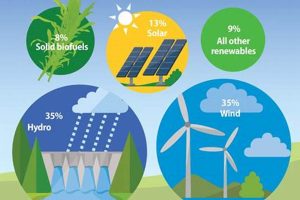
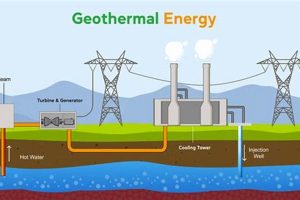
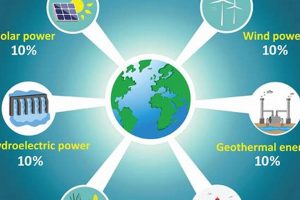
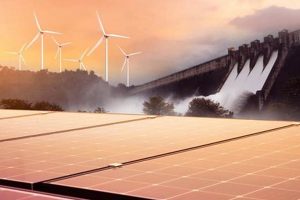
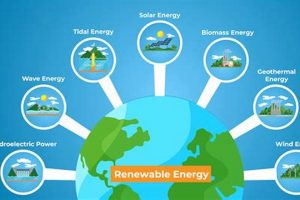
An energy resource is considered sustainable if it is naturally replenished on a human timescale, typically meaning that its rate of use does not exceed its rate of renewal. These resources are derived from natural processes that are constantly replenished, such as sunlight, wind, rain, tides, and geothermal heat. Examples include solar power harvested through photovoltaic cells, wind energy converted into electricity by turbines, hydropower generated from flowing water, and geothermal energy extracted from the Earth’s internal heat.
Harnessing these resources offers numerous advantages, including reduced reliance on finite fossil fuels, decreased greenhouse gas emissions, and enhanced energy security. Historically, societies have utilized forms of these resources, such as windmills for grinding grain and watermills for powering machinery. However, advancements in technology have facilitated the widespread and efficient conversion of these natural phenomena into usable electricity and heat, contributing to a cleaner and more sustainable energy future.
The following sections will delve deeper into the specific technologies employed to capture and convert these sustainable resources, exploring their efficiency, environmental impacts, and potential for large-scale implementation. This will include a discussion of energy storage solutions, grid integration challenges, and the economic considerations associated with transitioning to a predominantly sustainable energy infrastructure.
Practical Applications of Sustainable Energy
Successfully integrating sustainable energy sources requires a strategic approach, encompassing efficient technology implementation, infrastructure adaptation, and informed policy support. The following tips outline crucial considerations for maximizing the effectiveness of these resources.
Tip 1: Prioritize Energy Efficiency: Reducing overall energy demand through insulation, efficient appliances, and smart building design minimizes the need for extensive sustainable energy infrastructure. Example: Implementing LED lighting retrofits in commercial buildings significantly reduces electricity consumption.
Tip 2: Diversify Resource Mix: Relying on a single source can create vulnerabilities. A balanced portfolio incorporating solar, wind, hydro, and geothermal energy enhances resilience and mitigates the impact of fluctuating resource availability. Example: Combining solar farms with wind turbines ensures a consistent energy supply, even when sunlight or wind conditions vary.
Tip 3: Invest in Energy Storage: Intermittency is a key challenge. Battery storage, pumped hydro storage, and thermal energy storage systems can buffer fluctuations and ensure a reliable energy supply. Example: Pairing a solar installation with battery storage allows excess daytime energy to be used during peak evening hours.
Tip 4: Modernize Grid Infrastructure: Smart grids with enhanced monitoring, control, and communication capabilities are essential for integrating distributed sustainable energy sources and managing grid stability. Example: Implementing smart meters and real-time pricing mechanisms allows for better demand response and grid optimization.
Tip 5: Support Policy Incentives: Government policies such as tax credits, feed-in tariffs, and renewable portfolio standards can stimulate investment and accelerate the adoption of sustainable energy technologies. Example: Offering tax incentives for residential solar installations can significantly increase consumer adoption.
Tip 6: Conduct Thorough Site Assessments: Evaluate factors such as solar irradiance, wind speeds, and geothermal gradients to ensure that sustainable energy projects are strategically located and optimized for maximum energy production. Example: Performing a detailed wind resource assessment before installing wind turbines ensures that they are placed in areas with consistent and strong winds.
These practical applications highlight the importance of a holistic approach to utilizing sustainable energy resources, balancing technological innovation with strategic planning and supportive policies. The successful integration of these practices contributes to a more secure, sustainable, and environmentally responsible energy future.
The subsequent sections will examine case studies of successful sustainable energy implementations, exploring the specific strategies and technologies that have contributed to their positive outcomes.
1. Naturally Replenished

The characteristic of being “naturally replenished” is foundational to the definition of a sustainable power supply. Without this inherent property of continuous or near-continuous regeneration within a human timescale, an energy source cannot be categorized as endlessly reusable. The capacity for natural replenishment distinguishes these resources from finite fossil fuels, whose formation occurs over geological timescales far exceeding human lifespans. This replenishment aspect drives the overall sustainability and reduces reliance on sources that deplete over time.
Consider solar energy as a primary example. The sun constantly emits radiant energy, and photovoltaic technologies convert this light into electricity. This process relies on a resource that is perpetually renewed and essentially inexhaustible in practical terms. Similarly, wind energy is derived from air currents driven by solar heating of the Earth, a continuous cycle. Hydropower utilizes the continuous water cycle of evaporation, precipitation, and runoff, while geothermal systems tap into the Earth’s internal heat, which is slowly but continuously replenished by radioactive decay. The natural replenishment of these energy resources directly impacts their availability and environmental benefits.
Understanding that an energy resource is naturally replenished enables informed energy policy decisions, infrastructural investments, and technological developments. The long-term sustainability and environmental advantages associated with this inherent property underscore the importance of prioritizing the development and deployment of sustainable power generation technologies. As the demand for energy increases globally, reliance on naturally replenished resources becomes increasingly crucial for mitigating environmental impacts and ensuring long-term energy security.
2. Sustainable Rate
The concept of a “sustainable rate” is intrinsically linked to the definition of an endless power supply, representing a fundamental criterion for classifying an energy resource as sustainable. It stipulates that the rate at which a resource is utilized must not exceed its rate of natural replenishment. This balance is essential for ensuring the resource’s long-term availability and preventing its depletion over time. If an energy source is extracted at a pace that surpasses its renewal, it functionally becomes a finite resource, undermining its sustainability classification. The extraction exceeding the regeneration is the most common cause of failure to define a renewable energy source.
Consider the case of biomass energy. While trees can be replanted to replace those harvested for fuel, if deforestation occurs at a rate faster than reforestation, the biomass source is no longer truly endlessly reusable. Similarly, groundwater, often utilized in geothermal systems, must be extracted at a rate that allows aquifers to recharge naturally; over-extraction can lead to depletion and land subsidence. The practical significance of understanding “sustainable rate” lies in enabling responsible resource management practices that balance energy demands with environmental preservation. An example of success is sustainable forestry, which manages harvesting to the rate of tree growth, ensuring long term availability. Another example is sustainable fisheries, which maintains harvest rates below the point where the fish populations can no longer replenish themselves.
In summary, the principle of “sustainable rate” acts as a regulatory mechanism, ensuring that the pursuit of energy does not compromise the long-term availability of the resource itself. It necessitates careful monitoring, responsible extraction practices, and adaptive management strategies to maintain equilibrium between utilization and replenishment. Failure to adhere to this principle transforms a potentially endlessly reusable energy resource into a depleting one, negating the core tenets of sustainability. Without a sustainable rate of use, the core definition of endless power supply fails.
3. Environmental Benefits

Environmental benefits are intrinsically linked to the definition of a sustainable power supply, serving as a critical component that distinguishes these sources from conventional fossil fuels. Unlike fossil fuels, which generate substantial pollution and greenhouse gas emissions during extraction, processing, and combustion, sustainable energy sources offer cleaner alternatives with minimal or no direct emissions. The utilization of solar, wind, hydro, and geothermal energy reduces air and water pollution, mitigates climate change, and decreases the environmental impact associated with resource extraction and transportation. The absence of these benefits would disqualify an energy source from being categorized as endlessly reusable, regardless of its replenishment rate.
For instance, solar photovoltaic systems generate electricity directly from sunlight without releasing air pollutants or greenhouse gases. Wind turbines convert kinetic energy into electricity with minimal environmental disruption, and hydropower harnesses the potential energy of flowing water, offering a relatively clean energy source compared to coal-fired power plants. Geothermal energy taps into the Earth’s internal heat, providing a stable and consistent energy supply with lower emissions than conventional geothermal resource usage. These examples illustrate the direct correlation between utilizing sustainable resources and achieving significant environmental improvements. The importance of environmental benefits is underscored by increasingly stringent environmental regulations and the global push to decarbonize energy systems. The reduced carbon footprint associated with these sources offers a substantial competitive advantage and aligns with sustainable development goals.
In summary, environmental benefits are not merely ancillary advantages but are essential attributes that define a sustainable power supply. The ability to generate energy with minimal environmental impact is integral to the concept of sustainability, ensuring that current energy needs are met without compromising the ability of future generations to meet their own needs. These benefits drive the transition toward cleaner energy systems and underscore the crucial role of sustainable resources in mitigating climate change and safeguarding environmental health. The absence of significant environmental benefits renders a resource unsustainable in practice, despite any potential for natural replenishment.
4. Energy Security
Energy security, defined as the uninterrupted availability of energy sources at an affordable price, is inextricably linked to the deployment and utilization of endlessly reusable power supplies. Dependence on finite fossil fuels often exposes nations to geopolitical risks, price volatility, and supply disruptions. Transitioning towards domestic sustainable energy resources reduces reliance on imported fuels, thereby strengthening a nation’s energy independence and mitigating vulnerabilities to external factors. A diversified portfolio of resources provides further stability, minimizing the impact of localized supply shortages or price fluctuations. For instance, countries heavily reliant on natural gas imports from politically unstable regions face heightened energy security risks compared to those with a diversified energy mix that includes solar, wind, and geothermal power. Germany’s reliance on Russian natural gas highlights the inherent risks associated with dependence on a single energy source and the potential for geopolitical leverage.
The integration of resource management not only enhances energy security but also stimulates economic growth and job creation. The development, manufacturing, installation, and maintenance of technologies within domestic borders fosters local industries and reduces capital outflows associated with fuel imports. Furthermore, decentralized power generation from sources enhances the resilience of energy infrastructure, making it less susceptible to large-scale disruptions caused by natural disasters or cyberattacks. Microgrids powered by solar and wind energy, for example, can provide critical power to communities isolated from the main grid, ensuring energy access during emergencies. The widespread adoption of resource management also contributes to long-term price stability. The inherent cost stability of solar and wind energy, with minimal fuel costs, insulates consumers from the volatile price swings associated with fossil fuels.
In conclusion, energy security is not merely a desirable outcome but an essential component of a sustainable energy future. The shift towards resource management offers a pathway to reduced geopolitical risks, greater energy independence, and enhanced resilience of energy infrastructure. The economic benefits of domestic industry growth, job creation, and long-term price stability further underscore the importance of prioritizing this form of resource as a strategic imperative for national security and economic prosperity. Failing to embrace the benefits of sustainable sources undermines a nation’s energy security, perpetuating vulnerabilities and hindering the transition to a more secure and sustainable energy future.
5. Resource Diversity

Resource diversity, referring to the utilization of a wide array of endless power supplies, is a crucial consideration in fully realizing the potential of the definition. Sole reliance on a single energy technology can create vulnerabilities related to intermittency, geographic limitations, and technological risks. Diversification enhances grid stability, strengthens energy security, and promotes overall system resilience.
- Mitigation of Intermittency
Solar and wind energy, while abundant, are intermittent resources, subject to variability based on weather conditions and time of day. Combining these with more consistent resources, such as geothermal or hydro, ensures a more reliable energy supply. For example, integrating solar farms with wind turbine installations helps balance energy generation, compensating for periods of low sunlight or wind.
- Geographic Optimization
Different regions possess varying potentials for specific resources. Coastal areas are well-suited for wind energy, while arid regions are ideal for solar power. Geothermal resources are concentrated in areas with high tectonic activity. Diversifying energy sources allows for the optimization of resource utilization based on geographic location. A region unsuitable for wind power may still effectively harness solar energy, while another can leverage its geothermal resources.
- Technological Redundancy
Technological breakthroughs or setbacks in one area can impact the overall energy system. Relying on a single technology exposes the system to risks associated with technological failures or obsolescence. A diverse energy portfolio, incorporating various mature and emerging technologies, provides redundancy and reduces the impact of unforeseen technological disruptions. A system utilizing multiple energy extraction techniques will be more resilient in the long run.
- Grid Stability and Resilience
A diversified energy mix contributes to enhanced grid stability and resilience. Different energy sources exhibit varying response times and operational characteristics, allowing for better grid management and balancing. Combining dispatchable (hydro, geothermal) with non-dispatchable (solar, wind) resources improves the grid’s ability to meet fluctuating demand and withstand disturbances. This ensures the grid can provide uninterrupted service even when faced with disruptions of service.
Ultimately, the integration of resource diversity ensures a comprehensive and reliable endlessly reusable energy framework. Through a combination of diverse sources, regions can optimize their existing resources and increase sustainability. Diversification reduces reliance on singular sources, mitigates economic impact, and contributes to energy independence, thereby reinforcing the definition. The implementation of diverse sources makes a sustainable power structure that can better meet demand and contribute to overall economic and environmental health.
6. Technology Advancement

Technology advancement is inextricably linked to the viability and broader definition of an endlessly reusable power supply. Improvements in efficiency, storage, grid integration, and cost-effectiveness are essential for these sources to compete with traditional fossil fuels and achieve widespread adoption. The fundamental nature of sustainable energy, predicated on naturally replenished resources, necessitates continuous innovation to overcome inherent limitations and maximize resource utilization. For instance, early solar panels were inefficient and expensive, limiting their practicality. Advancements in photovoltaic materials and manufacturing processes have significantly improved efficiency and reduced costs, making solar energy more accessible and economically viable. Similarly, the development of larger, more efficient wind turbines has greatly increased the energy output per turbine, enhancing the overall economics of wind power. The implementation of better technology increases both the usability and feasibility of endlessly reusable sources, supporting an environment that prioritizes environmental consciousness.
Furthermore, technology advancement is crucial for addressing the intermittency challenges associated with certain endlessly reusable resources, such as solar and wind. The development of advanced energy storage solutions, including lithium-ion batteries, pumped hydro storage, and compressed air energy storage, allows for the capture and storage of excess energy during peak generation periods, ensuring a more reliable energy supply during periods of low production. Smart grid technologies, incorporating advanced sensors, control systems, and communication networks, facilitate the integration of distributed power generation from endless power supplies, enhancing grid stability and reliability. The continued improvement of these storage and integration technologies is crucial for the increased adoption and sustainability of those sources.
In conclusion, technology advancement is not merely an ancillary factor but a fundamental driver of the transition towards sustainable energy systems. Continuous innovation is essential for improving the efficiency, cost-effectiveness, and reliability of these power sources, making them competitive with fossil fuels and enabling their widespread deployment. Investing in research and development, fostering technological innovation, and supporting the deployment of advanced technologies are crucial for fully realizing the potential of source management and achieving a sustainable energy future. By embracing technological advancements, society can overcome the limitations of dependence on traditional sources and maximize the advantages of endless power supplies, leading to a cleaner, more secure, and more sustainable energy future.
Frequently Asked Questions
This section addresses common inquiries regarding sustainable power supplies. Understanding these principles is crucial for informed decision-making and effective resource management.
Question 1: Are all naturally occurring energy sources considered endlessly reusable?
No, not all naturally occurring energy sources qualify. A source must be replenished at a rate equal to or greater than its rate of consumption to be classified as endlessly reusable. For example, while geothermal energy taps into the Earth’s internal heat, unsustainable extraction practices can deplete geothermal reservoirs, rendering them non-renewable.
Question 2: Is biomass energy always an environmentally friendly option?
The environmental impact of biomass energy depends on its source and management practices. Unsustainable deforestation to harvest biomass can lead to habitat loss, soil erosion, and increased carbon emissions. However, biomass sourced from sustainably managed forests or agricultural residues can be a relatively low-carbon alternative to fossil fuels.
Question 3: Can power supplies fully replace fossil fuels in the near future?
While many different sources show great promise, complete replacement of fossil fuels in the short term faces technical, economic, and infrastructural challenges. However, with continued technological advancements, supportive policies, and increased investments in sustainable energy infrastructure, a transition towards a predominantly system is feasible over the coming decades.
Question 4: What role does energy storage play in the adoption of solar and wind power?
Energy storage is crucial for addressing the intermittency challenges associated with both. Storage technologies, such as batteries and pumped hydro, allow excess energy generated during peak production periods to be stored and released when needed, ensuring a more reliable and consistent energy supply.
Question 5: Are endlessly reusable always more expensive than fossil fuels?
The relative cost of power supplies compared to fossil fuels varies depending on the specific technology, location, and policy incentives. In many regions, solar and wind energy are already cost-competitive with fossil fuels, and continued technological advancements are driving costs down further.
Question 6: How can individuals contribute to the adoption of sustainable power systems?
Individuals can contribute by reducing their energy consumption through energy efficiency measures, supporting policies that promote system, investing in sustainable technologies such as solar panels, and advocating for sustainable practices within their communities.
These FAQs highlight key considerations surrounding power supplies. A comprehensive understanding of these factors is essential for informed decision-making and effective participation in the transition towards a sustainable energy future.
The following sections will examine case studies of successful deployment of endless power supply frameworks, demonstrating their feasibility and benefits in real-world scenarios.
Conclusion
This exploration of “what is the definition of a renewable energy source” has emphasized the critical role of natural replenishment, sustainable extraction rates, environmental benefits, energy security, resource diversity, and technological advancement. Each aspect is indispensable for classifying an energy source as truly endless reusable and for realizing a sustainable energy future. A deficiency in any of these areas undermines the long-term viability and environmental integrity of a source, regardless of its initial potential.
The imperative to transition towards endlessly reusable energy systems is driven by the finite nature and detrimental environmental impacts of fossil fuels. This shift requires a holistic approach, encompassing technological innovation, strategic planning, and informed policy decisions. Prioritizing the development and deployment of endlessly reusable technologies, while considering their multifaceted implications, is essential for ensuring a secure, sustainable, and environmentally responsible energy future. The continued success of these sources depends on rigorous adherence to the principles outlined and an unwavering commitment to innovation and responsible management.