

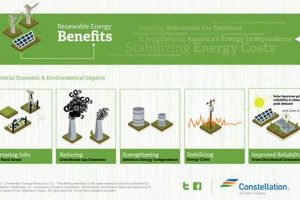

Harnessing power from naturally replenishing sources yields a multitude of advantages. These advantages encompass environmental preservation, long-term economic stability, and enhanced energy independence. Examples include decreased greenhouse gas emissions, creation of new... Read more »
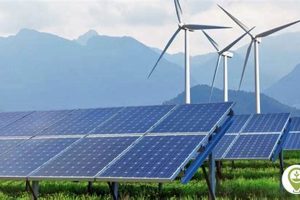
Energy sources that replenish naturally and produce minimal to no pollution during their operation are gaining prominence. These encompass solar, wind, geothermal, hydro, and biomass energies. A practical illustration includes utilizing photovoltaic... Read more »


The state’s power generation increasingly leverages sources that replenish naturally and are, for all practical purposes, inexhaustible. These encompass solar, wind, geothermal, and biomass, and contribute to a diversified energy portfolio. For... Read more »
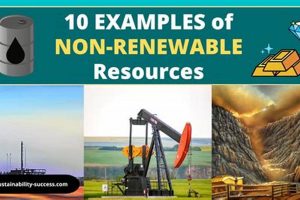
Items that are utilized to achieve goals, whether physical materials, intellectual assets, or even intangible elements, exist alongside those that cannot be readily converted for productive purposes. Consider, for example, a deposit... Read more »
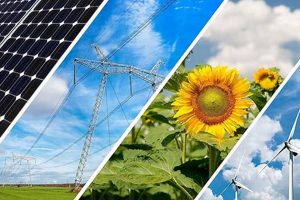
Naturally occurring resources that replenish at a rate comparable to or faster than their rate of consumption are considered sustainable. These resources are derived from the environment and can be continuously replenished,... Read more »
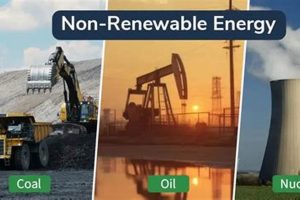
Energy sources categorized as finite are those that cannot be replenished at a rate comparable to their consumption. These resources exist in limited quantities, formed over geological timescales, meaning their extraction progressively... Read more »
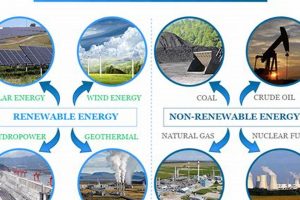
Harnessing heat from within the Earth to generate power presents a complex energy source classification. While the planet’s internal thermal energy is vast, the rate at which it can be extracted sustainably... Read more »

Fossil fuels, including coal, oil (petroleum), and natural gas, represent a substantial category of finite energy sources. These materials are formed over millions of years from the remains of ancient organisms under... Read more »
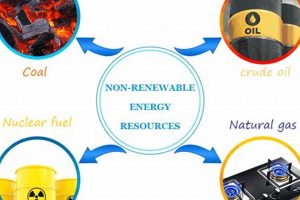
The generation of power through nuclear fission relies on finite materials. These materials, primarily uranium, are extracted from the Earth and processed for use as fuel in nuclear reactors. Once used, the... Read more »
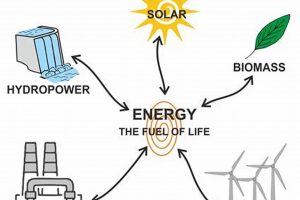
Harnessing power from naturally replenishing sources represents a fundamental shift in energy production. These methods rely on elements that regenerate over a relatively short period, ensuring a continuous supply. Common examples include... Read more »