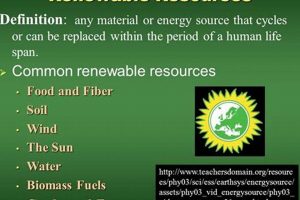
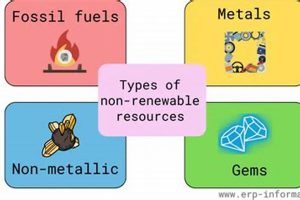
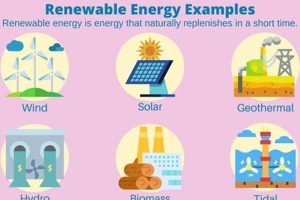
The generation of power through nuclear fission relies on finite materials. These materials, primarily uranium, are extracted from the Earth and processed for use as fuel in nuclear reactors. Once used, the spent fuel cannot be readily replenished, necessitating fresh supplies for continued operation. This characteristic places it within the category of energy sources that are not self-renewing on a human timescale, unlike solar or wind power.
Despite the limitation of requiring exhaustible inputs, this method of electricity production provides several significant advantages. It offers a high power output from relatively small fuel volumes, contributing to energy independence for nations with access to these materials. Moreover, it generates electricity with minimal greenhouse gas emissions during operation, making it a relevant consideration in strategies aimed at mitigating climate change. Historically, it has played a crucial role in diversifying energy portfolios and ensuring a stable power supply in many countries.
Given this duality – the dependence on finite resources alongside its potential for low-carbon electricity generation – further exploration is warranted. Key topics include the long-term availability of these materials, advances in reactor technology designed to improve fuel efficiency and reduce waste, and the ongoing debates surrounding waste disposal and environmental impact. These considerations are vital for understanding the role this technology can play in meeting future energy demands and addressing global environmental challenges.
Considerations Regarding Fission-Based Power Generation
The following points offer guidance for evaluating the role of fission-based power within a broader energy strategy, particularly concerning its reliance on materials extracted from the Earth.
Tip 1: Resource Availability Assessment: Evaluate the current known reserves and estimated future availability of uranium and thorium, the primary elements used in nuclear fuel cycles. This includes considering geopolitical factors influencing resource access and potential fluctuations in market prices.
Tip 2: Fuel Cycle Efficiency Enhancement: Promote research and development into advanced reactor designs and fuel cycles that maximize energy extraction from mined resources. This encompasses technologies such as breeder reactors and thorium-based reactors, which can significantly extend the lifespan of existing fuel supplies.
Tip 3: Waste Management Optimization: Invest in secure and sustainable long-term waste storage solutions, recognizing the inherent challenge of radioactive waste generated by fission reactors. This includes exploring geological repositories and advanced reprocessing techniques to minimize the volume and radiotoxicity of waste.
Tip 4: Safety Protocol Reinforcement: Prioritize stringent safety protocols and regulatory oversight to minimize the risk of accidents and ensure public trust in fission-based power generation. This involves continuous monitoring, robust containment structures, and international cooperation on safety standards.
Tip 5: Life Cycle Analysis: Conduct thorough life cycle analyses to assess the environmental impacts of fission-based power, encompassing resource extraction, fuel processing, reactor operation, waste disposal, and decommissioning. This provides a comprehensive understanding of the true environmental footprint.
Tip 6: Public Engagement and Education: Foster transparent communication and public education initiatives to address concerns and misconceptions surrounding fission-based power. This should include clear explanations of the benefits, risks, and ongoing research efforts aimed at improving safety and sustainability.
Effective management of these resources and associated challenges are paramount for harnessing the potential benefits of this power generation method. Prudent planning and responsible implementation are crucial for mitigating its inherent limitations and ensuring a sustainable role in meeting energy demands.
These considerations are pivotal for informed decision-making regarding the integration of this technology into broader energy policies and strategies. Further research and technological advancements are necessary to optimize its contribution to a diverse and sustainable energy future.
1. Uranium Availability

Uranium availability is a central factor in assessing the sustainability of nuclear energy as a power source reliant on finite resources. The quantity and accessibility of uranium reserves directly influence the long-term viability and scalability of nuclear power generation.
- Known Reserves and Extraction Rates
The global supply of uranium is finite, with known reserves concentrated in specific geographic locations. Current extraction rates are determined by demand and economic feasibility, but these rates cannot be maintained indefinitely. The continued viability of nuclear power depends on the ability to access and extract uranium ore economically.
- Geopolitical Influences
Uranium resources are unevenly distributed globally, and geopolitical factors can significantly impact supply chains. Political instability in uranium-rich regions or trade restrictions can disrupt the availability and increase the cost of uranium, thereby affecting the economics of nuclear power.
- Advanced Reactor Technology
The development and deployment of advanced reactor technologies, such as breeder reactors, can extend the lifespan of uranium resources. These reactors can convert non-fissile isotopes of uranium into fissile material, increasing the amount of energy that can be extracted from a given quantity of uranium. This directly affects the resource depletion rate.
- Exploration and Discovery
Ongoing exploration efforts aimed at discovering new uranium deposits are crucial for sustaining the long-term supply. Successful exploration can increase known reserves and potentially lower extraction costs. However, exploration is capital-intensive and carries the risk of failing to discover economically viable deposits.
In summation, uranium availability is intrinsically linked to the categorization of fission-based energy as a power source that depends on materials taken from the Earth. While technological advancements and new discoveries can mitigate resource constraints, the fundamental reliance on a finite resource remains a defining characteristic.
2. Fuel Depletion

Fuel depletion, a direct consequence of nuclear fission processes, underscores the classification of fission-based energy as dependent on materials taken from the Earth. The gradual consumption of fissile isotopes within reactor fuel rods necessitates periodic replacement, reaffirming that this energy source is not self-renewing on a practical timescale.
- Progressive Isotope Consumption
Within a nuclear reactor, fissile isotopes, primarily uranium-235, undergo controlled chain reactions, releasing energy. As these isotopes are consumed, the reactor’s reactivity decreases, eventually requiring the replacement of the fuel rods. This process of progressive isotope consumption is the fundamental mechanism driving fuel depletion.
- Reactor Shutdown and Refueling Cycles
The decreasing reactivity due to fuel depletion necessitates periodic reactor shutdowns for refueling. These refueling cycles involve the removal of spent fuel and the insertion of fresh fuel assemblies. The frequency of these cycles is determined by the reactor design, fuel enrichment, and operational parameters, but they are an inherent aspect of fission-based power generation.
- Buildup of Fission Products
As fissile isotopes undergo fission, they produce a variety of fission products, some of which are neutron absorbers. The accumulation of these neutron absorbers further reduces reactor reactivity, exacerbating the effects of fissile isotope depletion. The buildup of fission products is an unavoidable consequence of nuclear fission and contributes to the overall process of fuel depletion.
- Impact on Long-Term Operations
Fuel depletion has significant implications for the long-term operations of nuclear power plants. It dictates the frequency of refueling outages, which impact electricity production and plant economics. The need for continuous fuel supply underscores the reliance on resource extraction and the inherent limitations associated with materials taken from the Earth.
The dynamics of fuel depletion provide a clear indication that fission-based energy is intrinsically linked to exhaustible inputs. Strategies aimed at improving fuel utilization, such as advanced reactor designs and fuel reprocessing, can mitigate the effects of fuel depletion but cannot eliminate the fundamental reliance on finite resources. This aspect is critical in evaluating the role of nuclear energy within a broader context of sustainable energy strategies.
3. Resource Extraction

Resource extraction is inextricably linked to the understanding of fission-based power as dependent on materials taken from the Earth. The process of obtaining uranium, the primary fuel source, requires significant mining operations, milling, and enrichment. These activities establish the initial condition that classifies the energy derived from nuclear fission as reliant on non-renewable resources.
The mining of uranium ore involves either open-pit or underground methods, each with its environmental consequences. These operations disrupt ecosystems, generate waste rock and tailings, and can potentially contaminate water sources. Milling processes further refine the ore, producing uranium concentrate known as yellowcake. This material then undergoes enrichment to increase the proportion of the fissile isotope uranium-235, a process that consumes considerable energy and resources. Examples include the Cigar Lake mine in Saskatchewan, Canada, a high-grade uranium deposit that requires specialized extraction techniques to minimize environmental impact, and the Ranger mine in Australia, where rehabilitation efforts are ongoing to address the legacy of mining activities. These real-world instances illustrate the scale and complexity of uranium extraction and the subsequent implications for environmental sustainability.
In conclusion, resource extraction is not merely a preliminary step in nuclear energy production; it is a defining characteristic that places it within the category of non-renewable energy sources. The environmental consequences and energy demands associated with uranium mining, milling, and enrichment are significant considerations when evaluating the overall sustainability of nuclear power. Understanding this connection is crucial for informed decision-making regarding energy policy and the pursuit of alternative, renewable energy solutions.
4. Waste Accumulation

Waste accumulation directly links fission-based energy to the paradigm of reliance on materials taken from the Earth. The production of spent nuclear fuel, a byproduct of nuclear fission, generates radioactive waste that persists for extended periods, potentially thousands of years. This accumulation is a direct consequence of using finite materials in nuclear reactors. Spent fuel contains highly radioactive fission products and transuranic elements, which require careful management and long-term disposal solutions. The very existence of this persistent waste stream underscores the dependency of nuclear power on materials that, once used, generate problematic residues that cannot be readily reintegrated into the environment. The volume of accumulated waste, currently stored in various forms globally, is a tangible manifestation of this dependence.
The importance of waste accumulation as a component of reliance on finite resources stems from several factors. First, the sheer longevity of the radioactive waste necessitates long-term storage solutions, such as geological repositories, which require significant investment and societal consensus. Second, the potential for environmental contamination from leaks or accidents necessitates robust safety protocols and monitoring systems. Third, the volume of accumulated waste grows continuously as long as fission reactors operate, creating a perpetual challenge for waste management strategies. Examples include the Yucca Mountain project in the United States, a proposed geological repository that faced significant political and technical challenges, and the Onkalo spent nuclear fuel repository in Finland, one of the first operational deep geological repositories in the world. These examples illustrate the complexities and costs associated with managing nuclear waste, highlighting the practical significance of understanding its connection to resource depletion.
Waste accumulation serves as a constant reminder of the closed nature of the nuclear fuel cycle. Unlike renewable energy sources that rely on naturally replenishing inputs, fission-based energy generates waste that remains hazardous for millennia. Addressing the challenges associated with waste accumulation is essential for the long-term sustainability of nuclear power and requires continuous research into advanced reactor designs, waste reduction strategies, and improved storage solutions. The long-lived nature of nuclear waste is a critical consideration in evaluating the overall environmental impact of nuclear energy, underscoring the importance of transparent and responsible waste management practices.
5. Supply Chains

The functionality of fission-based energy generation is intrinsically linked to a complex network of supply chains. These chains encompass the extraction of raw materials, their processing and enrichment, the fabrication of fuel elements, the transportation of these elements to reactor sites, and, critically, the management and disposal of spent fuel. This intricate system underscores the reliance of the nuclear sector on external inputs derived from materials taken from the Earth. Any disruption within these supply chains can directly affect the reliability and economic viability of nuclear power plants, highlighting the practical significance of this dependency.
Consider the uranium enrichment process, for example. Only a small fraction of mined uranium is the fissile isotope U-235. The enrichment process, often involving advanced technologies such as gas centrifuges, concentrates this isotope. These enrichment facilities are geographically concentrated, meaning that many nations relying on nuclear energy are dependent on a limited number of suppliers. Similarly, the disposal of spent nuclear fuel faces significant logistical and political hurdles, requiring specialized transportation and long-term storage solutions. The Fukushima Daiichi nuclear disaster in Japan, while not directly caused by supply chain failures, demonstrated the vulnerability of nuclear facilities to external events and the potential for widespread disruption. The subsequent shutdown of nuclear reactors globally led to shifts in uranium demand and supply dynamics, illustrating the interconnectedness of the nuclear industry.
Effective management and diversification of these supply chains are essential for ensuring the long-term stability of fission-based energy production. Geopolitical risks, resource depletion, and environmental concerns all necessitate proactive strategies to mitigate potential disruptions. Investing in domestic uranium production, developing alternative fuel cycles, and establishing secure waste disposal pathways are crucial steps for enhancing the resilience of these supply chains. The inherent reliance on finite resources, coupled with the complexities of the nuclear fuel cycle, necessitate a comprehensive and strategic approach to supply chain management within the nuclear energy sector.
6. Geopolitical Factors

Geopolitical factors exert considerable influence on the production and utilization of fission-based power, given its reliance on materials taken from the Earth. The distribution of uranium deposits, international relations, and non-proliferation concerns all shape the accessibility and security of the nuclear fuel cycle.
- Resource Control and Trade
Nations possessing significant uranium reserves can exert influence on the global nuclear energy market. Trade agreements, export restrictions, and political alliances directly impact the availability and price of uranium, affecting countries dependent on imports. For example, Canada and Australia, major uranium producers, adhere to strict safeguards and export policies to prevent diversion for weapons proliferation. Disruptions in supply, due to political instability or trade disputes, can significantly affect the operational capacity of nuclear power plants globally.
- Non-Proliferation Regimes
The development and enforcement of international non-proliferation treaties, such as the Treaty on the Non-Proliferation of Nuclear Weapons (NPT), influence the behavior of nations regarding nuclear technology. These regimes aim to prevent the spread of nuclear weapons while allowing for the peaceful use of nuclear energy. However, concerns over compliance and the potential for dual-use technology necessitate stringent oversight and verification mechanisms. The International Atomic Energy Agency (IAEA) plays a crucial role in monitoring nuclear activities and ensuring adherence to safeguards agreements.
- Security and Stability
Political instability and armed conflict in regions with uranium mines or nuclear facilities pose significant risks. Disruptions to mining operations, theft of nuclear materials, or attacks on nuclear power plants can have severe consequences, both domestically and internationally. For example, concerns over the security of nuclear materials in politically volatile regions have prompted increased security measures and international cooperation. The potential for non-state actors to acquire nuclear materials remains a persistent threat.
- International Cooperation and Agreements
International collaboration on nuclear safety, waste management, and technology development is essential for addressing shared challenges. Agreements such as the Convention on Nuclear Safety promote the adoption of best practices and the sharing of information. Cooperation on research and development can accelerate the development of advanced reactor technologies and waste disposal solutions. These collaborative efforts are crucial for fostering a safe and sustainable nuclear energy sector.
The interplay of these geopolitical factors underscores the complex landscape of fission-based energy. Resource control, non-proliferation concerns, security considerations, and international cooperation collectively shape the accessibility, security, and sustainability of nuclear power. These factors must be carefully considered in energy policy decisions and strategic planning within the nuclear sector.
7. Technological Efficiency

Technological efficiency plays a pivotal role in mitigating the challenges associated with fission-based power and its dependence on materials taken from the Earth. Advancements in reactor design, fuel utilization, and waste management directly influence the sustainability and resource footprint of nuclear energy. Increased efficiency can extend the lifespan of existing uranium reserves, reduce the volume and radiotoxicity of nuclear waste, and enhance the overall economic viability of nuclear power plants. Therefore, technological progress is essential for addressing the limitations associated with the reliance on non-renewable resources.
- Advanced Reactor Designs
Advanced reactor designs, such as Generation IV reactors and small modular reactors (SMRs), offer improved thermal efficiency, enhanced safety features, and the potential for utilizing alternative fuel cycles. These reactors can operate at higher temperatures, leading to greater electricity generation per unit of fuel. SMRs, with their modular construction and simplified designs, offer potential cost savings and increased deployment flexibility. For example, the use of supercritical carbon dioxide as a coolant in some advanced reactors can significantly increase thermal efficiency compared to traditional water-cooled reactors. The development and deployment of these technologies directly impact the amount of resource extraction required for electricity generation.
- Fuel Cycle Optimization
Optimizing the nuclear fuel cycle can enhance resource utilization and reduce waste generation. Strategies include using mixed oxide (MOX) fuel, which recycles plutonium from spent fuel, and developing advanced fuel reprocessing techniques to extract valuable materials from waste. For example, France’s La Hague reprocessing plant recovers uranium and plutonium from spent fuel for reuse. These strategies reduce the demand for freshly mined uranium and decrease the volume of high-level radioactive waste requiring long-term storage. The implementation of closed fuel cycles, where spent fuel is reprocessed and reused, can significantly extend the lifespan of existing uranium reserves.
- Enhanced Waste Management
Technological advancements in waste management focus on reducing the volume and radiotoxicity of nuclear waste and developing safe and sustainable disposal methods. Techniques such as vitrification, where waste is incorporated into a glass matrix, can stabilize waste for long-term storage. Research into transmutation, which involves converting long-lived radioactive isotopes into shorter-lived or stable isotopes, offers the potential to reduce the burden of nuclear waste disposal. The development of deep geological repositories, such as the Onkalo repository in Finland, provides a permanent disposal solution for high-level radioactive waste. These efforts contribute to the overall sustainability of nuclear power by mitigating the environmental impacts associated with waste accumulation.
- Real-time Monitoring and Control Systems
The implementation of advanced monitoring and control systems within nuclear power plants enhances operational efficiency and safety. These systems utilize sensors, data analytics, and artificial intelligence to optimize reactor performance, detect anomalies, and prevent accidents. Real-time monitoring of reactor parameters, such as temperature, pressure, and neutron flux, allows operators to make informed decisions and optimize fuel utilization. Advanced control algorithms can automate reactor operations, reducing the potential for human error and improving overall efficiency. These systems contribute to the safe and reliable operation of nuclear power plants, ensuring that resources are utilized effectively and minimizing the risk of accidents.
The connection between technological efficiency and reliance on finite resources is paramount within the context of fission-based energy. Ongoing research and development efforts aimed at improving reactor design, fuel utilization, waste management, and operational control are essential for enhancing the sustainability and reducing the environmental impact of nuclear power. As technological advancements continue, the role of nuclear energy as a viable and responsible energy source will depend on its ability to minimize its resource footprint and manage its waste products effectively. The pursuit of greater technological efficiency remains a critical pathway toward a more sustainable nuclear energy future.
Frequently Asked Questions
The following questions address common inquiries regarding the nature of nuclear energy and its connection to reliance on finite resources.
Question 1: Is fission-based power a renewable energy source?
No. Fission-based power relies on uranium, a finite resource extracted from the Earth. Once used in reactors, this material cannot be replenished. Thus, it does not meet the definition of a renewable energy source.
Question 2: How long will existing uranium reserves last?
Estimates vary depending on consumption rates and technological advancements. Current estimates suggest that known uranium reserves could last for several decades at current consumption rates. However, the development of advanced reactor technologies and the discovery of new deposits can extend this timeframe.
Question 3: What are the environmental impacts of uranium mining?
Uranium mining can have significant environmental impacts, including habitat disruption, soil erosion, and water contamination. Proper environmental management practices are essential to minimize these impacts and ensure responsible resource extraction.
Question 4: What happens to nuclear waste?
Spent nuclear fuel remains radioactive for thousands of years. It requires specialized storage and disposal solutions, such as deep geological repositories, to isolate the waste from the environment and prevent potential contamination.
Question 5: Can nuclear waste be recycled?
Yes, certain components of spent nuclear fuel can be recycled through reprocessing. This process can recover uranium and plutonium for reuse in reactors, reducing the volume of high-level waste requiring disposal. However, reprocessing is a complex and costly process with its own environmental considerations.
Question 6: Are there alternatives to uranium-based nuclear power?
Thorium-based reactors offer a potential alternative to uranium. Thorium is more abundant than uranium, and thorium fuel cycles can potentially produce less radioactive waste. However, thorium-based reactors are still under development and not yet commercially deployed.
In summation, the discussion underscores the finite nature of the materials used in fission-based energy generation, prompting an examination of resource management strategies and technological innovations.
The subsequent section explores the role of technological innovation in mitigating the reliance on limited resources.
Nuclear Energy
This exploration has underscored the inherent reliance of fission-based power generation on finite materials obtained from the Earth. Considerations of uranium availability, fuel depletion, resource extraction impacts, waste accumulation challenges, supply chain vulnerabilities, geopolitical influences, and the potential of technological efficiencies collectively define nuclear energy’s classification within the realm of non-renewable resources. These factors necessitate a comprehensive understanding of the constraints and opportunities associated with this energy source.
As societies grapple with the imperatives of climate change and energy security, a balanced assessment of fission-based power’s role is essential. Further research into advanced reactor technologies, sustainable waste management strategies, and international collaborations are critical for navigating the complexities of nuclear energy’s resource dependency. Only through informed decision-making and responsible implementation can the potential benefits of this power source be realized while mitigating its environmental and geopolitical challenges.
![Guide to What Energy Resources Are Renewable [+Future] | Renewable Energy Solutions for a Sustainable Future | Clean & Green Power](https://pplrenewableenergy.com/wp-content/uploads/2026/03/th-516-300x200.jpg "Guide to What Energy Resources Are Renewable [+Future] Renewable Energy Solutions for a Sustainable Future | Clean & Green Power")