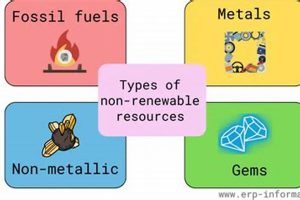
These materials, formed over geological timescales, exist in finite quantities on Earth. Their extraction and consumption occur at a rate far exceeding their natural replenishment. Examples include fossil fuels such as coal, petroleum, and natural gas, as well as nuclear fuels like uranium. The use of these substances transforms stored energy into usable power, but their limited availability and environmental consequences necessitate careful consideration.
The reliance on these finite energy sources has underpinned industrial development and global economic growth for centuries. They provide a relatively concentrated and readily accessible energy source, facilitating transportation, manufacturing, and electricity generation. Historically, their abundance and low cost spurred technological advancements and improved living standards. However, continued dependence raises concerns about resource depletion and environmental degradation, including greenhouse gas emissions and habitat destruction.
The following discussion will delve into the specifics of these materials, their environmental impacts, and the ongoing efforts to transition toward more sustainable alternatives. This includes examining the challenges and opportunities associated with utilizing renewable energy sources and implementing energy efficiency measures to mitigate the long-term consequences of exploiting these limited resources.
Strategies for Responsible Management
The responsible stewardship of finite energy sources is paramount to mitigating environmental impact and ensuring long-term energy security. The following guidelines aim to promote efficient utilization and reduce reliance on these materials.
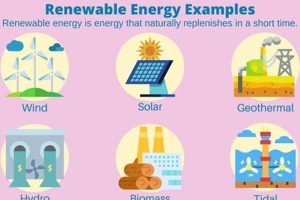
Tip 1: Diversify Energy Portfolios: Integrate renewable energy sources, such as solar, wind, and geothermal, into the energy mix to reduce dependence on finite supplies. This minimizes vulnerability to price fluctuations and supply disruptions.
Tip 2: Improve Energy Efficiency: Implement technologies and practices that minimize energy consumption across all sectors. This includes utilizing efficient appliances, optimizing building insulation, and promoting energy-conscious industrial processes.
Tip 3: Invest in Research and Development: Support innovation in energy storage, carbon capture, and alternative fuel technologies. This will pave the way for a more sustainable energy future.
Tip 4: Implement Carbon Pricing Mechanisms: Introduce carbon taxes or cap-and-trade systems to incentivize emission reductions and encourage investment in cleaner technologies. This internalizes the external costs associated with their extraction and consumption.
Tip 5: Promote Circular Economy Principles: Reduce waste and maximize resource utilization through recycling, reuse, and repurposing initiatives. This extends the lifespan of materials and minimizes the need for new extraction.
Tip 6: Enhance Public Awareness: Educate the public about the environmental and economic consequences of its consumption and promote informed decision-making regarding energy choices. This fosters a culture of conservation and sustainability.
Tip 7: Support International Cooperation: Foster collaboration among nations to share best practices, develop common standards, and coordinate efforts to mitigate climate change. This ensures a unified approach to global energy challenges.
Adopting these measures will contribute to a more sustainable energy system, reducing environmental harm, enhancing energy security, and promoting a responsible approach to resource management.
The subsequent section will explore the broader implications of these strategies and their role in achieving a low-carbon future.
1. Finite Availability

Finite Availability is the defining characteristic of materials that are consumed at a rate faster than their natural replenishment. This principle is intrinsically linked to these energy forms, dictating their long-term sustainability and influencing global energy policies.
- Fixed Quantity
Limited resources are present on Earth in fixed, measurable quantities. Unlike renewable sources, their formation processes span geological timescales. Consequently, extraction diminishes the total available stock, with no prospect of immediate or substantial regeneration. For example, known reserves of crude oil represent a finite volume, and continued extraction reduces the remaining amount.
- Depletion Rate
The rate at which these materials are extracted and consumed far surpasses their formation rate. The energy demand drives this rapid depletion, leading to projected resource exhaustion within definable timeframes. Current consumption patterns indicate that easily accessible oil reserves could be significantly diminished within decades, necessitating exploration of less accessible and more costly deposits.
- Uneven Distribution
The global distribution of these resources is uneven, concentrating reserves in specific geographical locations. This creates resource dependencies and geopolitical tensions, as nations lacking indigenous sources rely on imports from resource-rich countries. For instance, the concentration of oil reserves in the Middle East has historically influenced international relations and energy security policies.
- Economic Implications
Scarcity arising from finite availability directly influences the economic value of these resources. As supplies dwindle, extraction costs increase, and prices fluctuate, impacting global markets and national economies. The rising cost of gasoline due to limited oil supply is a direct consequence of this finite availability.
These facets of finite availability underscore the urgent need for sustainable energy practices and the development of alternative renewable resources. Understanding these limitations is crucial for mitigating the long-term environmental and economic consequences associated with continued reliance on these finite materials.
2. Environmental Impact

The utilization of finite resources is inextricably linked to significant environmental consequences. These impacts span various stages, from extraction and processing to combustion and waste disposal, posing considerable challenges to ecological sustainability.
- Greenhouse Gas Emissions
The combustion of fossil fuels, a primary source of energy derived from finite resources, releases substantial quantities of greenhouse gases, including carbon dioxide, methane, and nitrous oxide, into the atmosphere. These emissions contribute to global warming and climate change, leading to rising sea levels, extreme weather events, and disruptions to ecosystems. For example, coal-fired power plants are a major source of carbon dioxide emissions, exacerbating the greenhouse effect.
- Air Pollution
The burning of fossil fuels also generates air pollutants such as particulate matter, sulfur dioxide, and nitrogen oxides. These pollutants contribute to respiratory problems, cardiovascular diseases, and other health issues. Industrial areas heavily reliant on these fuels often experience higher levels of air pollution, impacting the health and well-being of local communities. Smog in urban centers is a direct consequence of this air pollution.
- Water Contamination
Extraction processes, such as mining and hydraulic fracturing, can contaminate water resources with heavy metals, chemicals, and radioactive materials. These contaminants pose risks to aquatic ecosystems and human health. For instance, oil spills from offshore drilling operations can devastate marine life and pollute coastal waters.
- Habitat Destruction
The extraction of finite resources often involves the destruction of natural habitats, including forests, wetlands, and grasslands. This habitat loss reduces biodiversity, disrupts ecological processes, and threatens the survival of numerous plant and animal species. Mountaintop removal coal mining, for example, causes extensive deforestation and habitat fragmentation.
These environmental consequences underscore the urgent need to transition towards sustainable energy sources and implement responsible resource management practices. Failure to address these impacts will result in long-term ecological degradation and compromise the well-being of future generations.
3. Economic Significance

The economic implications of these energy sources are profound, shaping global trade, influencing national economies, and driving technological innovation. Their extraction, processing, and distribution represent significant economic activities with far-reaching consequences.
- Global Trade and Investment
These materials are commodities traded on international markets, driving substantial global trade flows and attracting significant investment. Resource-rich nations often rely on export revenues, while resource-dependent nations import to fuel their economies. Fluctuations in commodity prices can have significant impacts on national budgets and trade balances. The global oil market, for example, is a critical determinant of international economic activity, influencing transportation costs, manufacturing expenses, and overall economic growth.
- Employment and Industrial Activity
The industries associated with these energy sources, including mining, drilling, refining, and power generation, provide substantial employment opportunities. These industries often form the backbone of regional economies, supporting numerous ancillary businesses. However, the decline of certain resource-based industries can lead to economic disruption and job losses. The transition away from coal-fired power generation, for example, can have significant economic consequences for communities dependent on coal mining.
- Government Revenue and Taxation
Governments derive significant revenue from these materials through royalties, taxes, and licensing fees. These revenues can fund public services, infrastructure projects, and social programs. However, over-reliance on resource revenues can create economic vulnerabilities, as fluctuations in commodity prices can impact government budgets. Many countries dependent on oil revenues have experienced economic challenges due to volatile oil prices.
- Technological Innovation and Development
The extraction and utilization of these materials has driven technological innovation in various fields, including engineering, geology, and materials science. The pursuit of new energy sources and more efficient extraction methods has spurred advancements that have broader applications across industries. For instance, the development of hydraulic fracturing techniques has increased access to previously inaccessible shale gas reserves, transforming the energy landscape. However, the environmental risks associated with such technologies necessitate careful evaluation and regulation.
The multifaceted economic significance underscores the importance of sustainable resource management and the transition towards a diversified energy portfolio. The long-term economic stability requires a shift away from dependence on finite materials and towards more sustainable and resilient energy systems. The economic benefits of renewable energy sources, such as reduced reliance on imports and job creation in the green economy, are increasingly recognized as critical drivers of future prosperity.
4. Geopolitical Influence

The distribution and control of finite energy sources are inextricably linked to geopolitical power dynamics. Uneven distribution of these resources, coupled with global energy demand, has created complex interdependencies and strategic rivalries among nations.
- Resource Control and Strategic Advantage
Nations possessing significant reserves of fossil fuels, such as oil and natural gas, wield considerable geopolitical influence. Control over these resources allows them to exert economic pressure, influence international policies, and secure strategic alliances. The Organization of the Petroleum Exporting Countries (OPEC), for instance, has historically played a dominant role in shaping global oil prices and influencing energy security policies.
- Energy Security and Dependence
Nations heavily reliant on imports to meet their energy needs are vulnerable to supply disruptions, price volatility, and political instability in resource-rich regions. This dependence can create strategic vulnerabilities, forcing nations to align their foreign policies with those of resource-exporting countries. The European Union’s reliance on Russian natural gas, for example, has created geopolitical complexities, influencing its relationship with Russia and its energy security strategies.
- Resource Competition and Conflict
Competition for access to these energy sources has historically fueled geopolitical tensions and conflicts. Disputes over territorial claims, pipeline routes, and maritime boundaries can escalate into armed conflicts, threatening regional and global stability. The South China Sea, with its contested maritime boundaries and potential oil and gas reserves, represents a flashpoint for resource-driven conflicts.
- Energy Transition and Shifting Power Dynamics
The global transition towards renewable energy sources has the potential to reshape geopolitical power dynamics. Nations investing heavily in renewable energy technologies and diversifying their energy portfolios can reduce their dependence on finite resources and enhance their energy security. Countries like Germany and Denmark, leaders in renewable energy innovation, are gaining influence in the global energy landscape.
The interrelationship of resource control, dependence, competition, and the energy transition underscores the importance of strategic energy policies and international cooperation in managing the geopolitical implications of finite sources. The shift towards a sustainable energy future will require a recalibration of global power dynamics and a commitment to multilateralism in addressing energy security challenges.
5. Technological Dependence

The extraction, processing, and utilization of finite resources are fundamentally intertwined with technological advancements. Dependence on specific technologies fuels the continued exploitation of these resources, creating a self-perpetuating cycle. The availability and affordability of fossil fuels, for example, have driven the development of internal combustion engines, power plants, and various industrial processes, thereby creating a massive infrastructure reliant upon their continued supply. Without these technologies, the accessibility and usability of these energy sources would be significantly limited.
The practical significance of understanding this technological dependence lies in recognizing the inertia it creates. Entire industries, supply chains, and consumer behaviors are predicated on the ongoing availability of these energy sources. This reliance hinders the transition to renewable alternatives, as the existing infrastructure and expertise are largely optimized for the extraction and use of materials that are inherently unsustainable. For example, the vast network of pipelines designed to transport oil and natural gas represents a significant investment that creates resistance to adopting decentralized renewable energy systems. Similarly, the development of advanced drilling techniques, such as hydraulic fracturing, has extended the lifespan of fossil fuel production, but it has also intensified concerns about environmental degradation and long-term sustainability. The success of future transitions to renewable energy relies on overcoming this technological lock-in.
In conclusion, technological dependence is a critical component of the challenge associated with moving beyond reliance on limited resources. The existing infrastructure, knowledge base, and economic incentives create a powerful force that perpetuates the current system. Overcoming this dependence requires not only the development of new, sustainable technologies but also a fundamental shift in infrastructure, policy, and societal attitudes. The complexities arising from this dependence cannot be ignored, and acknowledging them is vital for creating a more sustainable energy future.
Frequently Asked Questions
The following questions address common concerns and misconceptions regarding finite resources and their implications for energy policy and environmental sustainability.
Question 1: What is the primary distinction between finite and renewable resources?
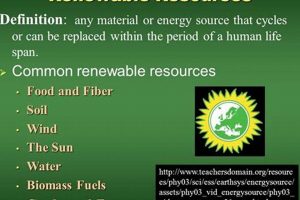
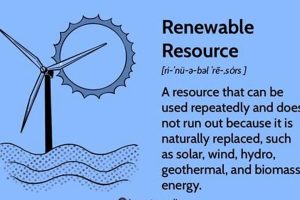
Finite resources, such as fossil fuels and nuclear fuels, exist in limited quantities on Earth and are consumed at a rate exceeding their natural replenishment. Conversely, renewable resources, such as solar, wind, and hydro power, are replenished naturally over relatively short timescales.
Question 2: Why is the depletion of finite resources a matter of concern?
The depletion of these materials raises concerns about long-term energy security, economic stability, and environmental sustainability. Continued reliance can lead to resource scarcity, price volatility, and adverse environmental impacts, including climate change and habitat destruction.
Question 3: What are the primary environmental consequences associated with the extraction and utilization of finite resources?
Environmental consequences include greenhouse gas emissions, air pollution, water contamination, habitat destruction, and the release of hazardous materials. These impacts contribute to climate change, respiratory problems, ecosystem degradation, and risks to human health.
Question 4: How does the uneven distribution of finite resources influence global geopolitics?
The uneven distribution creates resource dependencies and strategic rivalries among nations. Countries with substantial reserves wield considerable geopolitical influence, while those reliant on imports are vulnerable to supply disruptions and political instability.
Question 5: What strategies can mitigate the environmental and economic risks associated with finite resources?
Strategies include diversifying energy portfolios, improving energy efficiency, investing in renewable energy technologies, implementing carbon pricing mechanisms, and promoting circular economy principles.
Question 6: How can technological innovation contribute to a more sustainable utilization of finite resources?
Technological innovation can improve extraction efficiency, reduce emissions, and develop alternative fuels. Advancements in carbon capture, energy storage, and smart grid technologies are crucial for minimizing the negative impacts.
The responsible management of finite resources requires a holistic approach, considering environmental, economic, and geopolitical factors. A transition towards sustainable energy systems is essential for mitigating the long-term risks and securing a more resilient future.
The following section will explore the challenges and opportunities associated with implementing sustainable energy policies and promoting responsible resource management.
Non-Renewable Resources
This exploration has elucidated the fundamental characteristics, environmental consequences, economic significance, and geopolitical implications associated with non-renewable resources. Their finite nature, coupled with the environmental degradation stemming from their extraction and combustion, presents a complex and multifaceted challenge to global sustainability. The continued dependence on these resources necessitates careful consideration of resource management strategies and the imperative to transition toward more sustainable alternatives.
The future viability of energy systems and the preservation of environmental integrity hinge on a concerted effort to reduce reliance on non-renewable resources. Innovation, policy reform, and international cooperation are essential to facilitate this transition and mitigate the long-term risks associated with these materials. Recognizing the critical juncture at which society stands, a resolute commitment to sustainable energy practices becomes not merely a choice, but a necessity for future generations.
![Guide to What Energy Resources Are Renewable [+Future] | Renewable Energy Solutions for a Sustainable Future | Clean & Green Power](https://pplrenewableenergy.com/wp-content/uploads/2026/03/th-516-300x200.jpg "Guide to What Energy Resources Are Renewable [+Future] Renewable Energy Solutions for a Sustainable Future | Clean & Green Power")