Harnessing the sun’s radiant light and converting it into usable electricity presents a significant energy solution. This process involves photovoltaic cells or concentrated solar power systems to capture the sun’s energy and transform it into electricity. An example is a residential rooftop system that converts sunlight into power for a home, reducing reliance on the electrical grid.
The significance of this energy source lies in its virtually inexhaustible supply. Unlike fossil fuels, which are finite and contribute to greenhouse gas emissions, the sun will continue to radiate energy for billions of years. Embracing this method reduces dependence on depleting resources, mitigates climate change, and enhances energy security. Historically, solar energy applications were limited, but advancements in technology and decreasing costs have made it a more viable and widespread option.
The subsequent sections will delve into the mechanisms of capturing and converting this radiant source, its environmental impact compared to other forms of power generation, and the current state and future prospects of its deployment on a global scale. Furthermore, economic considerations and governmental policies influencing the growth of this industry will be examined.
Maximizing the Potential of Solar Energy
The following suggestions aim to provide a practical understanding of how to effectively utilize and support energy derived from sunlight, thereby contributing to a more sustainable energy future.
Tip 1: Conduct a Thorough Site Assessment: Prior to investing in solar technology, a professional evaluation of the location’s sunlight exposure is crucial. Factors such as shading from trees or buildings can significantly impact energy production. A detailed assessment ensures optimal placement and system sizing.
Tip 2: Invest in High-Efficiency Equipment: Selecting photovoltaic panels and inverters with high conversion rates maximizes the amount of electricity generated from available sunlight. While initial costs may be higher, the long-term energy savings and increased output provide a greater return on investment.
Tip 3: Implement Regular Maintenance Schedules: Solar installations require periodic cleaning and inspection to maintain peak performance. Dust, debris, and minor component failures can reduce efficiency. Establishing a routine maintenance plan ensures system longevity and optimal energy production.
Tip 4: Integrate Energy Storage Solutions: Pairing solar installations with battery storage systems allows for energy to be stored during periods of high production and used during periods of low sunlight or at night. This increases self-sufficiency and reduces reliance on the grid.
Tip 5: Advocate for Supportive Policies: Engage with local and national policymakers to promote incentives and regulations that encourage the adoption of power generated from the sun. Supportive policies can lower upfront costs and provide financial benefits for consumers and businesses.
Tip 6: Monitor Energy Production and Consumption: Implementing a monitoring system allows for tracking of energy generation and usage patterns. Analyzing this data helps identify areas for improvement and optimize energy consumption, leading to greater efficiency and cost savings.
These suggestions highlight actionable steps to enhance the utilization and benefits of power derived from the sun. By implementing these strategies, individuals and organizations can contribute to a more sustainable and resilient energy future.
The subsequent section will explore the environmental and economic considerations surrounding the widespread adoption of this sustainable power source.
1. Inexhaustible Resource

The classification of solar power as originating from an inexhaustible resource is fundamental to understanding its role as a source of energy. The availability of sunlight for practical electricity generation is not subject to depletion in the foreseeable future, differentiating it from finite resources such as fossil fuels or uranium.
- Continuous Solar Irradiance
The Earth continuously receives solar radiation, the primary input for solar electricity generation. This persistent energy flux from the sun ensures a constant supply for photovoltaic and solar thermal systems. For example, solar farms in arid regions benefit from high levels of irradiance throughout the year. The consistency of this input, even with seasonal variations, contributes to the long-term reliability of solar energy.
- Absence of Resource Depletion
Unlike fossil fuels, whose extraction depletes finite reserves, harnessing sunlight for power generation does not diminish the source. Once solar infrastructure is established, the cost of energy generation is primarily associated with maintenance and operation, rather than resource acquisition. A household using solar panels to generate electricity consumes energy from the sun without reducing the amount available for others.
- Temporal Scale of Resource Availability
The sun’s lifespan extends billions of years into the future, ensuring the ongoing availability of solar radiation as an energy source for human civilization. This vast temporal scale contrasts sharply with the projected depletion timelines for many non-renewable resources. Future generations can continue to benefit from solar power, assuming continued technological advancement and infrastructure maintenance.
These facets collectively support the premise that solar power originates from an inexhaustible resource. The continuous availability of solar irradiance, the absence of resource depletion, and the long-term temporal scale all contribute to the renewable character of energy derived from the sun. The reliance on an inexhaustible resource positions solar as a sustainable alternative to power generation methods dependent on finite reserves.
2. Sustainable Generation

Sustainable generation, when considered in the context of radiant energy converted into power, denotes the capacity to produce electricity without depleting natural resources or causing long-term environmental harm. It is inherently linked to the concept of this power source, which depends on a continuously replenished resource and minimal environmental impact.
- Minimal Environmental Footprint
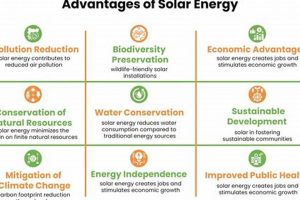
Power generated from the sun significantly reduces reliance on fossil fuels, thereby minimizing greenhouse gas emissions, air pollution, and water usage associated with traditional power plants. Solar facilities, once constructed, operate with minimal ongoing environmental disturbance. A solar farm, for instance, generates electricity without producing significant air or water pollutants, unlike a coal-fired power plant.
- Resource Preservation
Solar power depends on the availability of sunlight, a perpetually renewed resource. This eliminates the need for resource extraction, such as mining for coal or drilling for oil, which can disrupt ecosystems and deplete natural resources. Rooftop solar panels enable homeowners to generate their own electricity, reducing demand on centralized power grids and minimizing the overall need for resource extraction.
- Long-Term Operational Viability
Power sourced from the sun ensures long-term operational viability. With proper maintenance, solar installations can provide electricity for decades with minimal resource input. This contrasts with power plants that require continuous fuel supplies and are subject to resource depletion. A well-maintained solar array can reliably generate electricity for 25 years or more, providing a stable source of energy without requiring additional resource extraction.
- Reduced Water Consumption
Solar electricity generation, particularly through photovoltaic systems, requires significantly less water than many traditional forms of electricity generation. This is especially critical in water-stressed regions, where water resources are limited. A solar farm operating in a desert environment can generate electricity with minimal water usage, while a coal-fired power plant in the same region may require substantial amounts of water for cooling purposes.
These facets collectively illustrate how converting sunlight into electricity aligns with the principles of sustainable generation. By minimizing environmental impact, preserving resources, ensuring long-term operational viability, and reducing water consumption, this practice contributes to a more sustainable energy future, reinforcing the notion of its inherent renewable character.
3. Environmental Benefit

The inherent link between environmental benefit and solar-derived power stems from the reduced reliance on fossil fuels. Combustion of coal, oil, and natural gas for electricity generation releases substantial quantities of greenhouse gases, contributing to climate change. Solar installations, in contrast, generate electricity with minimal emissions during operation, directly mitigating the negative impacts associated with fossil fuel dependence. The deployment of large-scale solar farms, for instance, displaces the need for equivalent fossil fuel-based power plants, resulting in a quantifiable reduction in carbon dioxide emissions. This displacement represents a direct environmental benefit realized through the adoption of sustainable technologies.
Furthermore, solar electricity generation minimizes air and water pollution compared to conventional power plants. Coal-fired facilities release particulate matter, sulfur dioxide, and nitrogen oxides, contributing to respiratory problems and acid rain. Nuclear power plants require significant volumes of water for cooling, impacting aquatic ecosystems. Solar installations, particularly photovoltaic systems, require minimal water and produce negligible air pollutants during operation. The reduced pollution associated with solar contributes to improved public health and ecosystem preservation. Examples include urban areas where rooftop solar installations contribute to cleaner air and decreased respiratory ailments.
Ultimately, the environmental benefit associated with solar power is a crucial component of its viability as a sustainable energy source. The reduction in greenhouse gas emissions, decreased air and water pollution, and minimal environmental disruption collectively contribute to a more sustainable energy future. The widespread adoption of solar, therefore, presents a tangible pathway toward mitigating the environmental consequences of electricity generation and transitioning to a cleaner, more sustainable energy economy. The long-term success of solar adoption hinges on recognizing and prioritizing these environmental benefits.
4. Continuous Replenishment

The principle of continuous replenishment is foundational to the classification of solar power as an energy source. Solar radiation, originating from nuclear fusion processes within the sun, is consistently emitted towards Earth. This constant influx of energy distinguishes solar power from finite sources, such as fossil fuels, which are depleted upon extraction and combustion. Solar power’s reliance on continuously replenished solar radiation is the fundamental reason why it can be categorized as a sustainable option.
The implications of continuous replenishment are multifold. It ensures long-term availability, eliminating the risk of resource exhaustion associated with fossil fuels. This factor contributes to energy security, as nations are not dependent on geographically limited resources. Economically, reliance on a constantly renewed source reduces price volatility associated with extraction, processing, and transportation of finite fuels. Real-world examples of solar’s impact are photovoltaic panels generating electricity on rooftops or mirrors concentrating solar power, both relying on continual stream of solar energy.
Understanding the continuous nature of solar radiation highlights the importance of investing in technologies and infrastructure to effectively capture and utilize this resource. Challenges remain in storage solutions and transmission efficiency, but the core principle of endless replenishment ensures a sustainable energy supply for the future. Policies supporting solar energy development are underpinned by the understanding of its unending supply, promoting energy security, reducing environmental impact, and mitigating the effects of climate change.
5. Long-Term Availability

Long-term availability is a critical attribute determining the sustainability of energy resources. In the context of determining the energy from the sun to be a renewable source, it signifies the prolonged and uninterrupted accessibility of the sun’s energy for electricity generation. This attribute is key when evaluating the viability of transitioning away from finite energy sources.
- Solar Lifespan and Energy Production
The sun’s estimated lifespan of several billion years guarantees a continuous supply of solar radiation for power generation purposes. Photovoltaic installations, for instance, once established, can generate electricity for decades with minimal depletion of the source. A solar farm, properly maintained, will consistently produce electricity over a 25-30 year lifespan, directly correlating with the long-term availability of the sun’s energy.
- Technological Advancement and Efficiency Gains
Continued advancements in solar technologies, such as improved photovoltaic cell efficiency and enhanced energy storage solutions, enhance the long-term availability of electricity. Each technological improvement translates to higher energy yields from the same amount of sunlight, optimizing resource utilization. The development of perovskite solar cells, for example, holds the potential to significantly increase the efficiency of solar energy conversion, extending the practical availability of solar power.
- Geopolitical Stability and Energy Independence
Reliance on domestically available solar energy reduces dependence on foreign fuel sources, enhancing energy security and mitigating geopolitical risks associated with fossil fuel supply chains. A country with abundant solar resources can become energy independent, reducing its vulnerability to international market fluctuations and political instability. A nation investing in solar energy infrastructure strengthens its long-term energy security by leveraging a readily available and geographically independent resource.
- Environmental Preservation and Sustainability
Sustained reliance on power derived from the sun promotes environmental preservation by reducing the demand for fossil fuels and minimizing greenhouse gas emissions. Power generation with this method contributes to long-term environmental sustainability, reducing the ecological footprint associated with electricity generation. The cumulative impact of transitioning to solar on a global scale translates to significant reductions in carbon emissions and a more sustainable energy future.
These facets collectively illustrate the significance of long-term availability in solidifying the renewable character of solar-derived power. The sun’s extended lifespan, coupled with technological advancement, enhanced energy independence, and environmental preservation, positions solar as a viable and sustainable energy solution for future generations. The focus on maximizing the long-term availability of sunlight underlines its potential as a primary component of a global sustainable energy mix.
Frequently Asked Questions
The following addresses common inquiries regarding the categorization of solar energy as a sustainable resource.
Question 1: What fundamentally classifies electricity derived from sunlight as renewable?
The classification rests on the inexhaustible nature of the sun’s radiant energy. Unlike fossil fuels, the source is not depleted through utilization.
Question 2: Does the manufacturing process of solar panels impact the renewable status of solar electricity?
The manufacturing process does involve energy consumption and resource utilization. However, the lifecycle emissions are significantly lower than those associated with fossil fuel-based power generation. Ongoing efforts focus on minimizing the environmental impact of panel production.
Question 3: How does solar power contribute to mitigating climate change?
Solar electricity generation does not directly emit greenhouse gases during operation. The displacement of fossil fuel-based power plants reduces overall emissions, thus aiding in climate change mitigation.
Question 4: Is solar power a consistently reliable energy source?
The availability of sunlight varies depending on geographical location, weather conditions, and time of day. Energy storage solutions and grid integration strategies are implemented to address intermittency challenges.
Question 5: What role do government policies play in promoting solar energy adoption?
Incentives, tax credits, and regulations, influence the economic viability and deployment of solar technologies. Supportive policies accelerate the transition toward sustainable electricity generation.
Question 6: How does the long-term cost of solar power compare to traditional energy sources?
The initial investment in solar installations can be substantial. However, reduced fuel costs and minimal maintenance requirements result in competitive long-term costs, particularly as technology advances and fossil fuel prices fluctuate.
In summary, while challenges exist, solar’s renewable nature and potential for environmental and economic benefits are widely recognized. Continued innovation and strategic policy implementation can further enhance its role in a sustainable energy future.
The subsequent section will explore practical applications and real-world examples of solar-powered systems.
Conclusion
This exploration has demonstrated that solar power aligns with the fundamental criteria defining a renewable energy source. The suns inexhaustible nature, coupled with solar technologies’ capacity for sustainable electricity generation and reduced environmental impact, solidifies this classification. The discussion covered continuous replenishment of solar radiation, its long-term availability, and the environmental benefits derived from its utilization. These aspects are crucial when considering sustainable energy solutions.
The continued development and deployment of solar technologies are imperative for mitigating climate change and ensuring long-term energy security. Recognizing power derived from the sun as a renewable asset is paramount for informed energy policy and investment decisions. A sustained commitment to solar energy represents a tangible step toward a more sustainable and environmentally conscious future for global energy production and consumption.