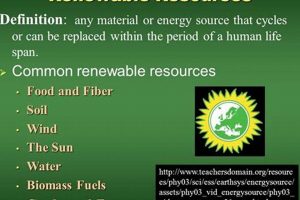
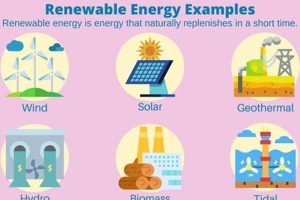
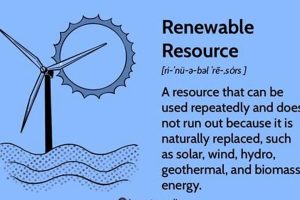
These sources represent naturally replenishing energy pathways, offering alternatives to finite fossil fuels. Examples include solar power, derived from the sun’s radiation; wind energy, harnessed from moving air currents; geothermal energy, extracted from the Earth’s internal heat; hydropower, generated from flowing water; and biomass energy, originating from organic matter.
Their significance lies in their potential to mitigate climate change by reducing greenhouse gas emissions. Furthermore, these energy alternatives enhance energy security by diversifying energy portfolios and decreasing reliance on volatile global fossil fuel markets. Historically, reliance on them has fluctuated, but growing environmental concerns are driving renewed interest and technological advancements.
The following sections will delve deeper into the specific characteristics, technological implementations, and economic considerations associated with several of these energy sources, offering a detailed examination of their potential and challenges in the global energy landscape.
Strategic Considerations for Renewable Energy Implementation
The effective integration of diverse renewable options requires careful planning and execution. These strategic points are intended to maximize the efficacy and long-term viability of renewable energy projects.
Tip 1: Conduct Thorough Resource Assessments: Before initiating any project, rigorously assess the availability and consistency of the intended resource. Solar irradiance, wind speed profiles, geothermal gradients, and water flow rates must be precisely measured to ensure sustained energy production.
Tip 2: Prioritize Grid Integration Planning: Seamlessly integrate renewable energy sources into existing power grids. This requires advanced grid management technologies, including smart grids and energy storage solutions, to handle intermittent energy generation.
Tip 3: Invest in Energy Storage Technologies: Address the intermittency challenges inherent in solar and wind energy by deploying robust energy storage systems. Battery storage, pumped hydro storage, and thermal energy storage are vital for ensuring a consistent energy supply.
Tip 4: Foster Community Engagement and Support: Secure community buy-in by involving local stakeholders in the planning and development process. Address concerns regarding environmental impacts, noise pollution, and visual aesthetics to build consensus.
Tip 5: Establish Supportive Regulatory Frameworks: Governments must enact clear and stable regulatory policies that incentivize renewable energy development. Feed-in tariffs, tax credits, and renewable portfolio standards provide crucial financial and market certainty.
Tip 6: Promote Research and Development: Support ongoing research into advanced renewable energy technologies. This includes improving the efficiency of solar cells, developing more reliable wind turbines, and exploring innovative geothermal extraction techniques.
The successful adoption of these technologies hinges on comprehensive resource assessment, strategic grid integration, investment in storage solutions, active community engagement, and supportive regulatory environments. These actions will pave the way for a sustainable energy future.
The subsequent section will outline potential challenges and mitigation strategies for realizing the full potential of renewable energy technologies.
1. Solar irradiance capture
Solar irradiance capture represents a fundamental mechanism within replenishable energy systems. Its efficiency and scalability directly influence the viability of solar power as a significant contributor to global energy demand.
- Photovoltaic Conversion Efficiency
Photovoltaic (PV) cells convert sunlight directly into electricity. Increasing the efficiency of PV cells is paramount; current commercial silicon-based cells achieve efficiencies around 20-25%, while advanced materials like perovskites hold promise for exceeding 30%. Improved efficiency reduces the land area required for solar farms and increases energy output per unit area, lowering overall costs.
- Concentrated Solar Power (CSP) Systems
CSP systems use mirrors to focus sunlight onto a receiver, which heats a working fluid to drive a turbine and generate electricity. CSP plants can incorporate thermal energy storage, allowing for electricity generation even when the sun isn’t shining. This dispatchability addresses intermittency concerns associated with solar irradiance variability.
- Geographic Irradiance Variability
Solar irradiance varies significantly based on geographic location, latitude, and climate conditions. Regions with high solar irradiance, such as deserts, are particularly well-suited for solar power generation. Accurate solar resource assessments are critical for determining the optimal location and sizing of solar energy projects to maximize energy yield.
- Integration with Existing Infrastructure
The successful implementation of solar irradiance capture requires seamless integration with existing power grids. This includes upgrading grid infrastructure to handle the intermittent nature of solar power and implementing smart grid technologies to balance supply and demand. Effective grid integration is essential for maximizing the utilization of solar energy and minimizing curtailment.
These facets demonstrate that solar irradiance capture is a multifaceted field. Advancements in PV technology, optimized CSP designs, accurate resource assessments, and effective grid integration are crucial for maximizing the contribution of solar energy to a sustainable energy future.
2. Wind kinetic conversion

Wind kinetic conversion stands as a pivotal technology within the framework of replenishable energy sources. Its ability to transform the kinetic energy of moving air into usable electricity positions it as a significant contributor to mitigating reliance on fossil fuels and fostering a sustainable energy infrastructure.
- Turbine Aerodynamics and Blade Design
The efficiency of wind energy conversion is heavily dependent on the aerodynamic design of turbine blades. Advanced blade profiles, incorporating concepts such as airfoil optimization and variable pitch control, maximize energy capture from wind currents. Real-world examples include the use of twisted blade designs to maintain optimal angles of attack across the blade span, enhancing overall turbine performance and power output. Improper blade design can lead to reduced energy production and increased stress on turbine components.
- Wind Farm Placement and Resource Assessment
Strategic placement of wind farms is crucial for optimizing energy generation. Detailed wind resource assessments, incorporating meteorological data and terrain analysis, are essential for identifying locations with consistent and strong wind patterns. For instance, offshore wind farms typically experience higher and more stable wind speeds compared to land-based installations. Incorrect siting can lead to underperforming wind farms and a poor return on investment.
- Grid Integration and Intermittency Management
The integration of wind power into existing electrical grids presents challenges due to the intermittent nature of wind resources. Grid operators must implement sophisticated forecasting and control systems to manage fluctuations in wind power output. Energy storage solutions, such as battery systems or pumped hydro storage, can mitigate intermittency and ensure a reliable power supply. Inadequate grid infrastructure and lack of storage capacity can limit the amount of wind power that can be effectively integrated into the grid.
- Environmental Considerations and Mitigation Strategies
Wind kinetic conversion raises environmental concerns, including potential impacts on wildlife, particularly birds and bats. Careful siting of wind farms, coupled with mitigation strategies such as radar-activated turbine shutdown systems, can minimize these impacts. Additionally, noise pollution and visual aesthetics are important considerations in community engagement and project approval. Neglecting environmental concerns can lead to project delays, community opposition, and damage to ecosystems.
These facets collectively demonstrate the complex interplay of factors influencing the effectiveness of wind kinetic conversion. Optimizing turbine design, strategically siting wind farms, managing grid integration challenges, and addressing environmental concerns are all critical for maximizing the contribution of wind power to a diversified and sustainable energy portfolio. The ongoing advancements in wind turbine technology and improved understanding of wind resource management continue to enhance the viability of wind energy as a key component of future energy systems.
3. Geothermal heat extraction

Geothermal heat extraction represents a distinct pathway within the broader category of naturally replenishing energy sources. Its connection stems from the Earth’s internal heat, a resource continuously generated by radioactive decay and residual heat from planetary formation. The extraction process taps into this thermal energy, bringing it to the surface for direct use in heating applications or, more commonly, for conversion into electricity via geothermal power plants. The importance of this approach lies in its capacity to provide a consistent, baseload energy supply, independent of weather conditions or time of day, a characteristic differentiating it from solar or wind power. Iceland, for example, exemplifies the practical significance, utilizing geothermal resources extensively for both electricity generation and district heating, significantly reducing its reliance on fossil fuels. Without geothermal heat extraction, this stable and environmentally preferable energy source would remain untapped.
The practical applications of geothermal heat extraction extend beyond electricity generation and heating. Geothermal energy is also used in agriculture for greenhouse heating, aquaculture for maintaining optimal water temperatures, and industrial processes requiring direct heat. Geothermal heat pumps offer efficient heating and cooling solutions for residential and commercial buildings. The technology continues to evolve, with enhanced geothermal systems (EGS) expanding the potential for geothermal energy production by accessing geothermal resources in areas without naturally occurring hydrothermal reservoirs. These technological advancements broaden the geographic applicability and economic viability of geothermal projects. This resources reliable baseload capacity makes it a valuable asset in diversified energy portfolios, supporting grid stability and energy security.
In summary, geothermal heat extraction plays a crucial role in the realm of renewable energy resources. Its inherent stability and versatility offer significant advantages over intermittent renewable sources. While challenges remain in terms of exploration, initial capital investment, and potential environmental impacts such as induced seismicity, ongoing research and development are focused on mitigating these concerns and expanding the accessibility and sustainability of geothermal energy. Understanding the principles and practical applications of geothermal heat extraction is essential for realizing its full potential and contributing to a more sustainable energy future.
4. Hydropower potential utilization

Hydropower potential utilization constitutes a significant segment within the array of replenishable energy resources. Its foundation lies in harnessing the gravitational force of flowing or falling water to drive turbines, converting mechanical energy into electrical power. The capacity to harness this kinetic energy is directly proportional to both the volume of water flow and the vertical distance over which the water descends, known as the hydraulic head. As a form of renewable energy, hydropower relies on the perpetual water cycle, ensuring the resource is continuously replenished through precipitation and river systems. The Itaipu Dam, a collaborative project between Brazil and Paraguay, exemplifies the large-scale implementation of this concept, providing substantial electrical power to both nations. Consequently, this approach reduces reliance on fossil fuel-based power generation, mitigating carbon emissions.
Beyond large-scale dams, hydropower potential utilization encompasses a diverse range of technologies. Run-of-river systems, for instance, divert a portion of a river’s flow to power turbines, minimizing environmental impacts compared to traditional dams. Small-scale hydro projects can provide decentralized power to remote communities, fostering energy independence and economic development. Pumped storage hydropower utilizes excess electricity during off-peak hours to pump water uphill to a reservoir, releasing it through turbines during periods of high demand. This technology acts as a large-scale energy storage system, enhancing grid stability and facilitating the integration of intermittent renewable energy sources like solar and wind. The Dinorwig Power Station in Wales demonstrates the operational effectiveness of pumped storage hydropower.
In conclusion, hydropower potential utilization represents a mature and well-established renewable energy technology. Its connection to the larger suite of replenishable energy resources is based on its dependence on a continuously renewing natural process. While challenges related to environmental impacts and ecological disruption exist, advancements in technology and improved river management practices are focused on minimizing these concerns. The continued and responsible deployment of hydropower, in conjunction with other renewable energy sources, is essential for achieving a sustainable and low-carbon energy future.
5. Biomass sustainable sourcing

Biomass sustainable sourcing is intrinsically linked to the viability of biomass as a form of replenishable energy resources. The utilization of organic matter, derived from plants and animals, for energy production inherently depends on responsible procurement practices to ensure long-term resource availability and minimize negative environmental consequences. Unsustainable harvesting methods, such as deforestation or the depletion of agricultural residues without regard for soil health, negate the purported environmental benefits of biomass energy and can lead to deforestation, soil erosion, and habitat loss. The selection of appropriate feedstocks, such as dedicated energy crops grown on marginal lands or sustainably managed forest resources, is crucial for mitigating these risks.
The connection between biomass sourcing and its renewability is a matter of cause and effect. Sourcing practices, if environmentally damaging, undermine the resource’s renewability, leading to its depletion and potential environmental degradation. Conversely, well-managed biomass sourcing can contribute to environmental improvement by enhancing carbon sequestration, promoting biodiversity, and restoring degraded lands. For example, the utilization of agricultural waste streams, such as corn stover or rice husks, for energy production can reduce reliance on landfills and provide a valuable economic opportunity for farmers, provided that sufficient residues are left in the fields to maintain soil fertility. In Europe, strict sustainability criteria have been implemented to ensure that biomass used for energy meets specific environmental standards, promoting responsible sourcing practices and minimizing adverse impacts.
In summary, the sustainability of biomass energy hinges on responsible sourcing practices. Employing sustainable sourcing methods enables biomass to function as a genuinely replenishable energy resource. Careful selection of feedstocks, adherence to environmental regulations, and continuous monitoring of sourcing practices are essential for maximizing the environmental and economic benefits of biomass energy. The viability of biomass as a component of renewable energy resources directly depends on upholding these principles.
Frequently Asked Questions Regarding Renewable Energy Resources
The following addresses several common queries concerning replenishable energy sources, providing clarification and insight into their characteristics and implementation.
Question 1: What distinguishes renewable energy resources from non-renewable energy sources?
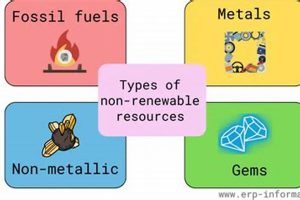
Renewable energy resources are replenished naturally on a human timescale, preventing depletion. Non-renewable sources, such as fossil fuels, exist in finite quantities and are consumed at a rate exceeding their natural replenishment.
Question 2: Are renewable energy resources entirely free from environmental impact?
No energy source is entirely free from environmental impact. However, replenishable energy resources generally produce significantly lower greenhouse gas emissions and air pollutants compared to fossil fuels. Careful consideration of siting, resource management, and ecosystem preservation remains essential.
Question 3: Why are some renewable energy resources considered intermittent?
Certain replenishable energy resources, such as solar and wind, are dependent on weather conditions, leading to variability in energy output. Energy storage solutions and grid management strategies are crucial for addressing intermittency challenges.
Question 4: How does the cost of renewable energy resources compare to that of traditional energy sources?
The cost of replenishable energy resources has decreased significantly in recent years, making them increasingly competitive with traditional energy sources. Factors such as technological advancements, economies of scale, and government incentives influence the economics of renewable energy projects.
Question 5: Can renewable energy resources meet all global energy demands?
While challenges exist, various studies indicate that it is technically feasible to meet a substantial portion of global energy demands with replenishable energy resources. Achieving this requires a combination of technological innovation, policy support, and infrastructure development.
Question 6: What are the primary barriers to widespread adoption of renewable energy resources?
Barriers include high upfront costs, intermittency challenges, grid infrastructure limitations, regulatory hurdles, and social acceptance. Overcoming these barriers requires concerted efforts from governments, industries, and communities.
In summary, renewable energy resources offer a viable pathway toward a sustainable energy future, presenting both opportunities and challenges that require careful consideration and strategic action.
The subsequent section will present a glossary of terms related to renewable energy technologies.
Forms of Renewable Energy Resources
The preceding exploration has elucidated diverse forms of renewable energy resources, encompassing solar irradiance capture, wind kinetic conversion, geothermal heat extraction, hydropower potential utilization, and biomass sustainable sourcing. Each modality presents unique characteristics, advantages, and challenges that warrant careful consideration in the pursuit of a sustainable energy future. Successful implementation necessitates a comprehensive understanding of resource availability, technological feasibility, economic viability, and environmental implications.
The imperative for continued research, development, and deployment of forms of renewable energy resources remains paramount. Addressing the challenges of intermittency, grid integration, and environmental impact is crucial for realizing the full potential of these resources. A concerted and sustained commitment from governments, industries, and communities is essential to transition towards a low-carbon economy and mitigate the adverse effects of climate change.
![Guide to What Energy Resources Are Renewable [+Future] | Renewable Energy Solutions for a Sustainable Future | Clean & Green Power](https://pplrenewableenergy.com/wp-content/uploads/2026/03/th-516-300x200.jpg "Guide to What Energy Resources Are Renewable [+Future] Renewable Energy Solutions for a Sustainable Future | Clean & Green Power")