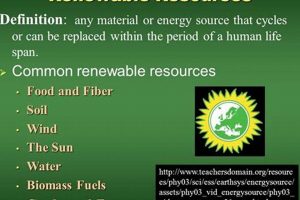
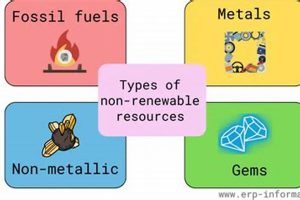
Resources categorized as finite are those that exist in limited quantities on Earth and cannot be replenished at a rate comparable to their consumption. These materials, formed over geological timescales, are fundamentally exhaustible. Examples include fossil fuels such as coal, petroleum, and natural gas, as well as nuclear fuels like uranium. The defining characteristic is that once depleted, the Earth cannot naturally create more of them within a human lifespan.
The utilization of these finite materials has been integral to industrial development and technological advancement, providing energy and raw materials for various sectors. However, the dependence on such resources presents environmental and economic challenges. Combustion of fossil fuels contributes to greenhouse gas emissions and climate change, while the extraction and processing of these materials can lead to habitat destruction and pollution. Furthermore, the limited supply of these materials raises concerns about long-term energy security and price volatility.
Understanding the characteristics and consequences associated with finite resources necessitates a focus on sustainable alternatives. Investigating renewable energy sources, improving energy efficiency, and exploring alternative materials are critical steps in mitigating the risks associated with the continued reliance on exhaustible resources. Further discussions will address the specific impact of various finite resources and the strategies being developed to transition towards a more sustainable future.
Guidance on Finite Resource Considerations
The responsible management of substances that cannot be renewed at a rate comparable to their consumption requires careful planning and strategic action across various sectors.
Tip 1: Prioritize Resource Efficiency: Implement strategies to minimize the use of exhaustible materials in manufacturing, transportation, and building construction. This includes optimizing processes, reducing waste, and promoting the use of lighter, stronger, and more durable materials.
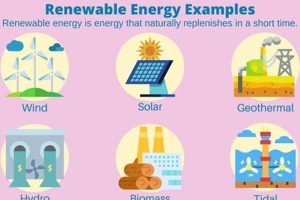
Tip 2: Invest in Renewable Energy Sources: Shift reliance away from fossil fuels by supporting the development and deployment of solar, wind, hydro, and geothermal power generation. Encourage research and development to improve the efficiency and affordability of these alternative energy technologies.
Tip 3: Develop Circular Economy Models: Transition from a linear “take-make-dispose” model to a circular economy that emphasizes resource recovery, reuse, and recycling. Design products for durability, repairability, and recyclability, and establish systems for collecting and processing end-of-life materials.
Tip 4: Promote Material Substitution: Explore and utilize alternative materials that are more abundant or renewable. This could involve replacing traditional materials with bio-based alternatives, recycled materials, or innovative materials derived from waste streams.
Tip 5: Implement Carbon Capture and Storage Technologies: For industries that continue to rely on fossil fuels, invest in carbon capture and storage technologies to reduce greenhouse gas emissions. Capture carbon dioxide from industrial processes and power plants and store it underground to prevent it from entering the atmosphere.
Tip 6: Enact Supportive Policies and Regulations: Governments play a crucial role in promoting the sustainable management of resources that cannot be renewed. Implement policies that incentivize resource efficiency, renewable energy adoption, and circular economy practices. Establish regulations to limit pollution and promote responsible resource extraction.
Tip 7: Educate and Engage Stakeholders: Raise awareness among consumers, businesses, and policymakers about the importance of responsible resource management. Provide education and training on sustainable practices and encourage collaboration among stakeholders to develop and implement solutions.
Effective implementation of these strategies requires a coordinated effort across various sectors, driven by a clear understanding of the environmental and economic implications associated with the utilization of materials that cannot be renewed.
The subsequent sections will delve into the specific applications and challenges associated with these approaches, offering concrete examples and case studies to illustrate their effectiveness.
1. Limited Quantity
The defining characteristic of a resource that falls under the definition of materials that cannot be renewed is its inherent scarcity. The concept of “limited quantity” directly dictates that such resources exist in a finite amount on Earth. This finite quantity is not merely a descriptive attribute; it is the fundamental basis upon which the classification rests. The extraction and consumption of these materials deplete a fixed stock, setting them apart from renewable resources that can be naturally replenished or regenerated within a human lifespan. For example, the global supply of crude oil, a primary source of energy, is undeniably limited, originating from geological processes that occurred over millions of years. Consequently, the continued extraction of oil reserves inevitably leads to depletion, highlighting the inherent limitations of this resource.
The practical significance of understanding the limited quantity of such resources lies in the need for strategic resource management and the exploration of alternative solutions. Recognizing that these reserves are finite necessitates a shift towards more sustainable practices. This includes improving energy efficiency, promoting conservation efforts, and investing in the development of renewable energy sources. The limited quantity of these resources also has profound economic implications, influencing global energy markets and geopolitical relationships. Scarcity drives up prices, creating incentives for both efficient utilization and the exploration of new reserves, although these new reserves also contribute to the overall finite nature of the resource.
In summary, the “limited quantity” aspect is not merely a descriptive element but the essential foundation of understanding the classification of these materials. It is the catalyst for discussions regarding resource management, technological innovation, and the transition to sustainable energy practices. The awareness of finite supplies drives the imperative to address future resource scarcity and mitigate the environmental consequences associated with their extraction and consumption. Continued reliance on finite quantities necessitates careful planning and a proactive approach to ensure long-term energy security and environmental stewardship.
2. Geological Timescales

The defining characteristic of resources falling under the category of materials that cannot be renewed is their formation process, occurring over extensive geological timescales. This temporal aspect is not merely a descriptive detail; it is a fundamental component differentiating them from renewable resources. Geological timescales encompass periods of millions to hundreds of millions of years, during which organic matter undergoes transformative processes under specific temperature and pressure conditions to form fossil fuels like coal, oil, and natural gas. The protracted duration of these processes renders the replenishment of these resources within a human lifespan practically impossible.
The connection between geological timescales and the characteristics of materials that cannot be renewed is inherently causal. The slow, incremental nature of their formation leads to the finite quantities available. Unlike solar or wind energy, which are continuously available, these resources represent a stored form of energy accumulated over vast periods. The extraction and consumption of these materials rapidly deplete reserves that took eons to create. For instance, the formation of coal involves the accumulation and compression of plant matter over millions of years. Modern consumption rates far exceed the negligible rate at which new coal deposits form. The environmental consequences of extracting and utilizing these geologically formed materials, such as greenhouse gas emissions, further accentuate the need for responsible resource management and alternative energy development.
In conclusion, understanding the role of geological timescales is crucial for comprehending the non-renewable nature of certain Earth resources. It underscores the need for sustainable practices, including conservation, efficiency improvements, and the transition to renewable energy sources. This perspective highlights the long-term implications of relying on resources formed over millions of years and emphasizes the urgency of addressing resource scarcity and environmental impact. Future strategies must prioritize minimizing the depletion of these slowly formed materials to ensure long-term energy security and environmental sustainability.
3. Finite Supply

The concept of “finite supply” is intrinsically linked to resources that cannot be renewed, serving as a core element in their definition. The term explicitly conveys that these resources exist in limited and exhaustible quantities. The finite nature results from their formation over geological timescales or their accumulation through processes that are exceedingly slow relative to human consumption rates. This inherent limitation necessitates careful management and strategic decision-making regarding their utilization. Resources like crude oil, natural gas, coal, and uranium are prime examples. Their availability is constrained by geological formations and past environmental conditions, making them fundamentally different from renewable resources such as solar or wind energy, which are continuously replenished.
The practical significance of understanding the finite supply lies in the implications for energy security, economic stability, and environmental sustainability. As reserves of these finite materials diminish, competition for access intensifies, potentially leading to geopolitical tensions and economic instability. Furthermore, the extraction and combustion of fossil fuels, a major component of the materials that cannot be renewed, contribute significantly to greenhouse gas emissions and climate change. Recognizing the finite nature of these resources encourages the exploration and adoption of alternative, renewable energy technologies and the implementation of energy-efficient practices. Resource depletion also compels innovation in materials science, promoting the development of substitutes and more efficient extraction methods.
In summary, “finite supply” is not merely a descriptive characteristic but a defining feature of materials that cannot be renewed, shaping the challenges and opportunities associated with their use. Acknowledging this limitation is crucial for promoting responsible resource management, mitigating environmental impacts, and ensuring long-term energy security. The transition to a more sustainable future hinges on understanding the constraints imposed by finite resources and proactively developing alternative solutions.
4. Exhaustible Nature

The “exhaustible nature” is a critical attribute inextricably linked to the definition of materials that cannot be renewed. This characteristic signifies that these resources are finite and diminish with extraction and consumption, lacking the capacity to be replenished within a human timescale. The following facets explore the implications of this exhaustible nature.
- Depletion Rate
The rate at which these materials are extracted and consumed far exceeds the rate at which they are naturally formed. Fossil fuels, for example, accumulated over millions of years, yet are being depleted at an accelerating pace due to industrial activities. This disparity between formation and consumption rates signifies the exhaustible characteristic and underscores the unsustainability of current practices. Continued high consumption rates exacerbate resource scarcity and increase the urgency of transitioning to alternative energy sources.
- Irreversible Reduction
The reduction in the availability of these resources is effectively irreversible within a human timeframe. Once extracted and used, the original stock is diminished, and natural processes cannot restore it. This characteristic distinguishes exhaustible resources from renewable ones that can be regenerated through natural cycles. The implications include a long-term decline in supply and a need for stringent conservation measures to prolong the availability of remaining reserves.
- Economic Consequences
The exhaustible nature of materials that cannot be renewed has significant economic repercussions. As supplies dwindle, prices tend to increase, impacting industries and consumers alike. This scarcity can lead to economic instability, geopolitical tensions over resource access, and increased incentives for developing alternative technologies and sources. Efficient resource management and diversification of energy sources are essential to mitigate these economic risks.
- Environmental Impact Amplification
The extraction and utilization of these resources frequently lead to substantial environmental damage. Mining, drilling, and combustion processes can result in habitat destruction, pollution, and greenhouse gas emissions. The exhaustible nature of these resources amplifies these impacts, as the continued pursuit of dwindling reserves leads to increasingly environmentally damaging extraction methods. Transitioning to renewable energy sources and adopting sustainable practices are crucial for mitigating these environmental consequences.
The “exhaustible nature” of materials that cannot be renewed necessitates a paradigm shift towards sustainable resource management and the development of alternative energy sources. Understanding the implications of this characteristic is essential for ensuring long-term economic stability, environmental protection, and energy security. Continued reliance on these finite resources without proactive measures will inevitably lead to resource depletion and amplified environmental consequences.
5. Irreplaceable Stock

The concept of “irreplaceable stock” is inherently tied to the definition of materials that cannot be renewed, underscoring the critical challenge in managing finite resources. This attribute highlights the fact that once these resources are consumed, they cannot be regenerated or replaced within a relevant timeframe, thus emphasizing their limited availability and the imperative for sustainable utilization.
- Unique Geological Formation
The “irreplaceable stock” of many materials that cannot be renewed arises from unique geological events and conditions that occurred over millions of years. Fossil fuels, such as crude oil and natural gas, are formed from the decomposition of organic matter under specific pressure and temperature conditions deep within the Earth’s crust. The specific geological circumstances that led to the creation of these deposits are not replicable on a human timescale, making the existing stocks truly irreplaceable. The depletion of these resources signifies the loss of a geological legacy that cannot be recovered.
- Fixed Quantity on Earth
The total amount of resources that fall under materials that cannot be renewed is essentially fixed. Unlike renewable resources that are continuously replenished by natural processes, the finite quantity of these materials means that every unit extracted and consumed represents a permanent reduction in the global supply. This fixed quantity necessitates strategic planning and conservation efforts to prolong the availability of remaining reserves and minimize environmental impacts. Continued extraction without regard to the finite nature of the resource jeopardizes future access and exacerbates potential economic and geopolitical tensions.
- Technological Inability to Recreate
Despite technological advancements, the current state of science does not permit the artificial recreation of materials that cannot be renewed at a scale that would be economically or practically viable. While synthetic materials may mimic some of the properties of these materials, they do not replicate the complex composition and energy density of natural resources such as fossil fuels or uranium. This inability to artificially generate these resources reinforces the significance of their “irreplaceable stock” and highlights the need for developing alternative technologies that do not rely on depleting these finite reserves.
- Ecological and Economic Value
The “irreplaceable stock” of these materials has profound ecological and economic implications. Extraction and consumption of these resources often disrupt ecosystems, contributing to habitat destruction, pollution, and greenhouse gas emissions. Economically, the dwindling supply of these materials can lead to price volatility, energy insecurity, and economic instability. Recognizing the ecological and economic value of these irreplaceable stocks necessitates a shift toward sustainable practices, including renewable energy adoption, resource efficiency, and the development of circular economy models that minimize waste and promote resource recovery.
In summation, the “irreplaceable stock” aspect of materials that cannot be renewed emphasizes the inherent constraints and responsibilities associated with their utilization. Acknowledging the finite and non-replicable nature of these resources is crucial for driving innovation in sustainable technologies and promoting responsible resource management to ensure long-term energy security and environmental stewardship. The need for a paradigm shift towards alternative resources is necessitated by the dwindling supply of materials that are unable to renew within a reasonable or usable timeframe.
Frequently Asked Questions
The following addresses common inquiries regarding the characterization of materials that cannot be renewed, offering insights into their finite nature and implications.
Question 1: What fundamentally defines a resource as belonging to the materials that cannot be renewed category?
The defining characteristic is their exhaustible nature and inability to be replenished within a human timescale. These materials exist in limited quantities and are formed through geological processes spanning millions of years.
Question 2: What examples are typically categorized as resources that cannot be renewed?
Common examples include fossil fuels, such as coal, petroleum, and natural gas, as well as nuclear fuels like uranium.
Question 3: Why is the finite supply of these materials a concern?
The finite supply poses challenges to long-term energy security, economic stability, and environmental sustainability. Diminishing reserves can lead to price volatility and geopolitical tensions.
Question 4: How does the exhaustible nature of materials that cannot be renewed impact the environment?
Extraction and combustion of these resources often result in habitat destruction, pollution, and significant greenhouse gas emissions, contributing to climate change.
Question 5: What strategies can be implemented to mitigate the reliance on materials that cannot be renewed?
Mitigation strategies include investing in renewable energy sources, improving energy efficiency, promoting circular economy models, and developing alternative materials.
Question 6: What role do governments play in managing the resources that cannot be renewed?
Governments play a crucial role in enacting supportive policies, regulations, and incentives that promote sustainable resource management, renewable energy adoption, and responsible resource extraction.
Understanding the finite nature of these resources is essential for informed decision-making and the transition to a more sustainable future.
Subsequent sections will explore the role of renewable energy sources in detail.
Concluding Summary of Exhaustible Resource Definitions
The preceding analysis has detailed the core characteristics defining materials that cannot be renewed, emphasizing their limited quantities, formation over geological timescales, finite supply, exhaustible nature, and irreplaceable stock. Comprehending these attributes is crucial for informed resource management and strategic planning. The continued reliance on such resources poses significant challenges to energy security, economic stability, and environmental sustainability, necessitating a shift towards alternative solutions.
Given the inherent limitations associated with the materials that cannot be renewed, future efforts must prioritize the development and adoption of renewable energy sources, the implementation of energy-efficient practices, and the promotion of circular economy models. Addressing the long-term consequences of resource depletion requires a concerted global effort, driven by innovation, collaboration, and a commitment to responsible resource stewardship. Only through proactive measures can society mitigate the risks associated with exhaustible resources and ensure a more sustainable future for generations to come.
![Guide to What Energy Resources Are Renewable [+Future] | Renewable Energy Solutions for a Sustainable Future | Clean & Green Power](https://pplrenewableenergy.com/wp-content/uploads/2026/03/th-516-300x200.jpg "Guide to What Energy Resources Are Renewable [+Future] Renewable Energy Solutions for a Sustainable Future | Clean & Green Power")