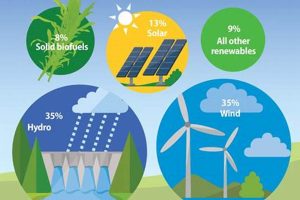
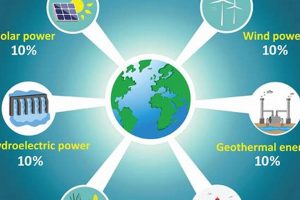
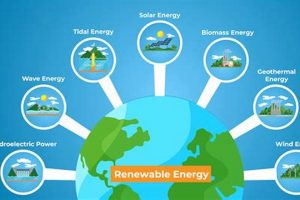
A description of energy derived from natural resources that replenish themselves over time and produce little to no pollution during operation. These resources often include solar radiation, wind, geothermal heat, and sustainably managed biomass. For example, photovoltaic panels converting sunlight into electricity exemplify this type of resource, contrasting with fossil fuels that release substantial pollutants when combusted.
The use of these resources is pivotal in mitigating climate change, improving air quality, and fostering energy independence. Historically, societies relied on readily available renewable resources like wood and water power. However, the industrial revolution shifted focus to fossil fuels, causing environmental degradation. A renewed emphasis on these alternative energy options is essential to transition towards a sustainable energy future.
Understanding the characteristics and viability of different resource options is critical for effective energy planning. Subsequent sections will delve into specific resource types, their associated technologies, and the economic and policy considerations surrounding their adoption, contributing to a broader understanding of sustainable energy solutions.
Guiding Principles
The subsequent advice aims to provide a framework for understanding and evaluating energy options based on their environmental impact and sustainability.
Tip 1: Resource Replenishment: Prioritize resources that naturally renew, such as solar, wind, and hydro. This characteristic ensures long-term availability and reduces depletion of finite reserves.
Tip 2: Minimal Emission Output: Focus on technologies that generate electricity or heat with negligible emissions during operation. Compare emission profiles of different sources, considering both direct and indirect pollutants.
Tip 3: Lifecycle Assessment: Evaluate the environmental impact across the entire lifecycle, from raw material extraction to manufacturing, operation, and eventual disposal or recycling. This provides a holistic view of sustainability.
Tip 4: Grid Integration Considerations: Assess the compatibility of energy generation with existing grid infrastructure. Understanding intermittency challenges and developing storage solutions are critical for reliable supply.
Tip 5: Policy Incentives and Regulations: Remain informed about governmental policies, subsidies, and regulations that promote or hinder the adoption of certain energy sources. These factors significantly influence economic viability.
Tip 6: Energy Efficiency Synergies: Complement the adoption of alternative energy resources with energy efficiency improvements in buildings, transportation, and industry. Reducing energy demand enhances the overall effectiveness.
Adhering to these principles fosters a more informed and responsible approach to energy selection. Prioritizing these considerations facilitates a transition toward a cleaner and more sustainable energy economy.
The subsequent sections will delve into specific technologies and their applications.
1. Renewability

Renewability serves as a foundational principle in defining what constitutes an energy source that is environmentally sound. It distinguishes resources that can be replenished naturally within a human timescale from those that are finite and exhaustible.
- Natural Replenishment Cycles
This encompasses the rate at which a resource is renewed by natural processes. Solar radiation, wind patterns, and hydrological cycles are examples where the resource is continuously replenished. A reliance on resources exceeding their replenishment rate undermines the concept of renewability and long-term sustainability.
- Sustainable Harvesting Practices
For biomass resources, such as wood or biofuels, renewability depends on sustainable harvesting practices. Overexploitation leads to depletion and negates the intended environmental benefits. Certification schemes and responsible forest management are crucial for ensuring biomass resources are genuinely renewable.
- Inherent Sustainability Limitation
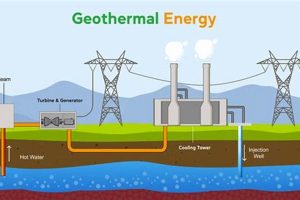
Some resources, although naturally occurring, might be renewable only to a certain extent. Geothermal energy, for example, can be considered renewable if the rate of extraction does not exceed the Earths natural heat flow. Otherwise, even geothermal resources can be depleted over time.
- Technology Dependence
The effective harnessing of renewable resources often relies on technological advancements. Solar panel efficiency, wind turbine design, and energy storage solutions are critical factors that determine the practical viability and scalability of renewable energy technologies.
In essence, renewability guarantees the ongoing availability of an energy resource. By integrating this dimension with low emission profiles and considering the complete lifecycle impacts, a definition of an environmentally sound energy source emerges that can address present needs without compromising future generations.
2. Low Emission
A fundamental attribute inherent in the meaning of environmentally sound energy is the characteristic of producing minimal or no polluting substances into the atmosphere during energy generation. This aspect distinguishes them from conventional fossil fuels, which release significant quantities of greenhouse gasses, particulate matter, and other harmful pollutants. The direct correlation between reduced emissions and the positive environmental impact is a crucial element to understand their significance.
Sources, such as solar photovoltaic systems and wind turbines, exemplify technologies with operational emissions approaching zero. The absence of combustion processes eliminates the release of carbon dioxide, sulfur oxides, and nitrogen oxides, all primary contributors to climate change and air quality degradation. While the manufacturing and installation processes for these technologies may have some emissions, lifecycle assessments consistently demonstrate a substantially lower overall environmental burden compared to fossil fuel alternatives. The practical application of widespread adoption leads to tangible improvements in public health outcomes by reducing respiratory illnesses and mitigating the effects of global warming.
The emphasis on low emissions is vital not only for mitigating immediate environmental consequences but also for fostering a transition toward a more sustainable energy future. The deployment of energy generation solutions supports the achievement of global climate targets and enhances energy security by reducing reliance on finite fossil fuel reserves. Understanding the emission profiles of different options facilitates informed decision-making for policymakers, energy planners, and consumers alike, promoting a shift toward cleaner and healthier energy systems. The challenge remains in addressing the intermittency issues associated with some generation methods and in scaling up production and infrastructure to meet increasing energy demands.
3. Resource Availability

Resource availability is a critical determinant in practically applying the very meaning of environmentally conscious energy. Irrespective of a resource’s renewable nature or low emission profile, its limited or inaccessible presence significantly impedes its viability. This principle highlights that even the most sustainable energy options are rendered ineffective without sufficient accessible quantities. Solar energy, while inherently renewable, requires adequate levels of solar irradiance, rendering regions with frequent cloud cover less suitable. Wind energy necessitates consistent wind speeds, making geographically sheltered areas less favorable for wind farm development. Therefore, the geographical distribution and concentration of resources directly influence the applicability and scalability of corresponding energy technologies. The economic implications are significant, as the cost of energy generation increases when resources are scarce or require extensive infrastructure for their extraction and transportation.
The integration of resource mapping and assessment into energy planning is essential for maximizing the efficacy of sustainable energy initiatives. Detailed geographical surveys, coupled with technological advancements in resource extraction and conversion, can unlock previously untapped potential. For instance, advancements in deep geothermal drilling technology are expanding the geographical areas where geothermal energy can be harnessed. Similarly, improvements in energy storage technologies are mitigating the challenges associated with the intermittency of solar and wind power, enabling wider deployment even in regions with fluctuating resource availability. The development of smart grids further enhances the integration of distributed energy generation sources, optimizing the utilization of available resources across a broader geographical area. The strategic allocation of investments in infrastructure and technology, guided by comprehensive resource assessments, is crucial for achieving a sustainable energy transition.
In summary, the principle of resource availability underscores the pragmatic limitations of the idealized definitions. An energy source, however sustainable in theory, is practically useful only if resources are accessible and abundant enough to meet energy demands. Consideration of resource constraints is paramount in energy policy formulation and infrastructure development, ensuring the deployment of energy technologies that are both environmentally sound and economically viable within specific geographical contexts. Overcoming limitations through technological innovation and strategic resource management is key to enabling a genuinely sustainable global energy landscape.
4. Economic Viability

The economic viability of an energy source constitutes a crucial, inextricable component of its alignment with the established meaning of environmentally sound energy. An energy source, regardless of its minimal environmental impact or resource abundance, cannot achieve widespread adoption if its economic costs outweigh its benefits. This principle dictates that the levelized cost of energy (LCOE), encompassing all expenses associated with developing, operating, and decommissioning an energy facility, must be competitive with that of conventional fossil fuels for it to be practically implemented.
Solar photovoltaic (PV) technology provides a pertinent example of the interplay between reduced environmental impact and cost competitiveness. Initial costs associated with solar PV installation were prohibitively high, hindering widespread adoption. However, continuous technological advancements and economies of scale have significantly lowered the manufacturing costs of solar panels, bringing the LCOE closer to, and in some instances below, that of fossil fuel-based energy generation. This reduction in cost, coupled with government subsidies and tax incentives, has driven the rapid growth of the solar energy sector, illustrating the pivotal role of economic factors in enabling the large-scale deployment of environmentally sound energy options. Similarly, wind energy has become increasingly cost-competitive due to technological improvements in turbine design and manufacturing processes, expanding its presence in energy markets. The long-term economic benefits, such as reduced fuel price volatility and decreased healthcare costs associated with pollution-related illnesses, further enhance the attractiveness of resources from an economic standpoint.
In conclusion, economic viability is not merely a peripheral consideration but an indispensable element in determining the practical significance. The ongoing pursuit of technological innovation and policy support aimed at reducing the costs of renewable technologies is critical for accelerating the transition towards an environmentally conscious energy future. Overcoming the economic barriers promotes accessibility and widespread adoption, translating environmental benefits from theoretical possibilities to tangible realities.
5. Grid Integration

Grid integration represents a critical technological and logistical challenge in actualizing the potential inherent in energy that aligns with the criteria associated with environmentally sound sources. The seamless incorporation of variable and often distributed renewable generation into existing electricity networks is paramount for widespread adoption.
- Intermittency Management
The inherent variability of solar and wind resources necessitates sophisticated strategies for maintaining grid stability. Fluctuations in generation due to weather patterns require advanced forecasting techniques, dispatchable backup generation, and energy storage solutions to ensure a consistent power supply. Examples include pumped hydro storage, battery energy storage systems, and demand response programs that shift electricity consumption to match periods of high renewable output.
- Grid Modernization
Legacy grid infrastructure is often ill-equipped to handle the bidirectional power flows and distributed generation characteristic of energy networks with high renewable penetration. Upgrading transmission lines, substations, and distribution networks is essential for accommodating increased renewable capacity. Smart grid technologies, such as advanced metering infrastructure and real-time monitoring systems, enhance grid visibility and control, improving overall system efficiency and reliability.
- Ancillary Services
Conventional power plants provide essential ancillary services, such as frequency regulation and voltage control, that maintain grid stability. Renewable energy sources must be capable of providing these services, either through technological advancements in inverter control systems or through dedicated ancillary service contracts. The provision of these services by generators allows renewable resources to function as consistent parts of the electrical grid system, and allows grid operators to ensure that power quality and system stability can be maintained.
- Policy and Regulatory Frameworks
Supportive policy and regulatory frameworks are essential for enabling grid integration. Interconnection standards, net metering policies, and streamlined permitting processes reduce barriers to renewable energy deployment and facilitate grid access. Market mechanisms that incentivize flexibility and reward the provision of ancillary services encourage the integration of renewable energy sources and optimize grid operations.
The successful integration of these technologies within a framework of evolving policies and standards is crucial to realizing the potential of the resources and to ensuring a future powered by resources with less environmental impact.
6. Lifecycle Impacts
Lifecycle impacts constitute a critical dimension in defining energy sources that meet the standards of environmental responsibility. A comprehensive evaluation transcends the immediate operational emissions and considers the totality of environmental effects associated with each stage of an energy technology’s existence, from resource extraction to end-of-life management. This perspective is crucial for avoiding the displacement of environmental burdens from one phase to another.
- Resource Extraction and Processing
The extraction of raw materials necessary for manufacturing energy technologies, such as lithium for batteries or rare earth elements for wind turbines, can have substantial environmental consequences. Mining operations often result in habitat destruction, soil erosion, water pollution, and greenhouse gas emissions. The processing of these materials can further contribute to pollution and energy consumption. A thorough assessment of impacts is essential to minimize the environmental footprint of resource acquisition.
- Manufacturing and Construction
The manufacturing processes involved in producing energy technologies consume energy and generate waste. The production of solar panels, for example, requires significant energy input and involves the use of potentially hazardous chemicals. Construction activities associated with energy infrastructure development, such as wind farms or hydroelectric dams, can lead to habitat fragmentation, soil disturbance, and alteration of hydrological regimes. Mitigation measures, such as optimizing manufacturing processes and implementing best management practices during construction, are essential for minimizing impacts.
- Operation and Maintenance
While energy sources may have low operational emissions, maintenance activities can still generate environmental impacts. The transportation of personnel and equipment, the replacement of components, and the disposal of waste materials all contribute to the lifecycle footprint. A comprehensive assessment considers the frequency and intensity of maintenance requirements, as well as the environmental performance of maintenance practices.
- Decommissioning and End-of-Life Management
The decommissioning of energy facilities at the end of their useful life poses unique environmental challenges. The disposal of solar panels, wind turbine blades, and nuclear waste requires careful management to prevent environmental contamination. Recycling and material recovery processes can reduce the burden of waste disposal, but they also consume energy and generate emissions. A lifecycle perspective emphasizes the importance of planning for decommissioning at the outset of a project to minimize environmental impacts.
Accounting for these lifecycle considerations is vital for evaluating the true environmental merit of diverse energy solutions. A focus on short-term operational benefits is insufficient; only a holistic evaluation can reveal the net environmental consequences of energy production. By integrating lifecycle thinking into energy policy and investment decisions, societies can effectively promote solutions that reduce cumulative environmental impacts.
Frequently Asked Questions About Environmentally Sound Energy
The following section addresses commonly encountered inquiries and misconceptions regarding the nature of environmentally sound energy. The aim is to provide concise, informative answers based on established scientific and technical understanding.
Question 1: What distinguishes an energy source as environmentally sound from traditional energy sources?
An energy source is considered environmentally sound if it exhibits a combination of characteristics including renewability, low emissions during operation, resource availability, economic viability, grid integration capability, and minimal lifecycle environmental impacts. Traditional energy sources, such as fossil fuels, typically lack one or more of these attributes, particularly in the areas of renewability and emission reduction.
Question 2: Can an energy source be considered environmentally sound if it has some negative environmental impacts?
The designation of an energy source as environmentally sound does not imply a complete absence of negative environmental impacts. Instead, it indicates that the benefits significantly outweigh the drawbacks compared to conventional alternatives. Lifecycle assessments are employed to quantify and compare the environmental burdens associated with different energy technologies, providing a comprehensive basis for evaluation.
Question 3: How does the intermittency of certain sources affect their classification as environmentally sound?
The intermittency of resources like solar and wind presents a challenge to grid stability and reliability. While such resources are inherently clean during operation, strategies for managing intermittency, such as energy storage and demand response, can introduce additional environmental impacts. Therefore, grid integration considerations and the environmental footprint of supporting technologies are crucial factors in determining whether intermittent options meet the standards for an environmentally sound resource.
Question 4: Are all renewable energy sources automatically considered environmentally sound?
Not all renewable energy sources automatically qualify as environmentally sound. The method of harvesting and utilizing renewable resources can significantly influence their environmental impact. Unsustainable harvesting practices of biomass or poorly designed hydroelectric dams, for instance, can negate the potential environmental benefits. Responsible management practices and technological advancements are essential for ensuring that renewable sources truly align with the criteria of environmental responsibility.
Question 5: What role do government policies play in promoting adoption of environmentally sound energy sources?
Government policies play a pivotal role in promoting the adoption of environmentally sound energy sources through a variety of mechanisms, including subsidies, tax incentives, regulations, and mandates. These policies can level the playing field by addressing the economic barriers and market failures that hinder the widespread deployment of technologies. Supportive policies are essential for creating a stable and predictable investment climate, stimulating innovation, and accelerating the transition to a sustainable energy future.
Question 6: How can individuals contribute to the adoption of environmentally sound energy sources?
Individuals can contribute to the adoption through various actions, including reducing energy consumption through efficiency measures, supporting businesses and organizations that prioritize environmental sustainability, advocating for policies that promote energy, and investing in these technologies when feasible. Collective individual actions can create significant demand signals, driving market transformation and accelerating the adoption of energy sources that are environmentally sound.
In summary, a comprehensive understanding of the criteria for resources promotes informed decision-making and facilitates a sustainable energy transition. Awareness and responsible practices will create a more environmental-friendly power generation and utilization.
The next section will explore specific technological implementations.
Conclusion
This exploration elucidates a complex understanding. The concept encompasses far more than simply renewable generation. Factors such as low emissions, resource availability, economic viability, grid integration feasibility, and lifecycle impacts must be considered in totality. The evaluation of any given technology requires scrutiny against all these parameters, acknowledging that compromises and trade-offs may be necessary.
The pursuit of energy presents a multifaceted challenge that demands informed decision-making and technological advancement. A commitment to this comprehensive assessment is essential for achieving a truly sustainable energy future. Continued research, policy development, and public engagement are crucial to realizing the full potential of clean energy sources in mitigating climate change and ensuring long-term energy security.