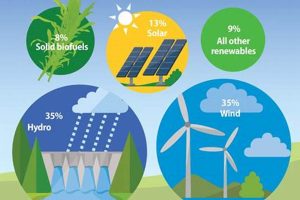
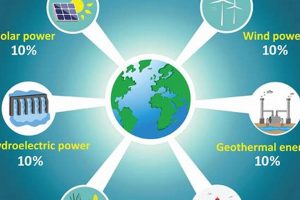
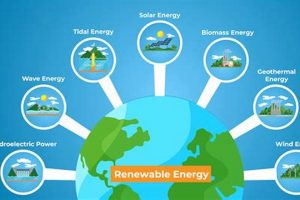
Harnessing power from naturally replenishing resources presents both positive and negative aspects. Utilizing solar, wind, hydro, geothermal, and biomass offers pathways to electricity generation that deviate from traditional fossil fuels. For example, solar panels convert sunlight directly into electricity, while wind turbines transform kinetic energy into usable power.
The growing urgency to mitigate climate change underscores the importance of these alternative energy solutions. Their potential to reduce greenhouse gas emissions, enhance energy security, and foster economic growth through technological innovation are significant benefits. Historically, reliance on finite resources led to environmental degradation and geopolitical instability, prompting a search for sustainable alternatives.
The following sections will examine the specific merits and drawbacks associated with these sources, considering factors such as environmental impact, economic viability, technological limitations, and social considerations, ultimately providing a balanced assessment of their overall value.
Effective deployment requires careful consideration of various factors. The following tips offer guidance for stakeholders involved in the transition to a sustainable energy future.
Tip 1: Conduct Comprehensive Resource Assessments: Before investing in a specific technology, thoroughly evaluate the availability and consistency of the resource. Wind and solar potential vary significantly by location, impacting overall energy production.
Tip 2: Prioritize Grid Modernization: Renewable energy sources often exhibit intermittent generation patterns. Upgrading grid infrastructure to accommodate variable power flows is crucial for reliable electricity delivery.
Tip 3: Implement Energy Storage Solutions: Battery storage, pumped hydro, and other technologies can mitigate the variability of renewables by storing excess energy for later use during periods of low production or high demand.
Tip 4: Diversify the Energy Portfolio: Relying solely on a single source increases vulnerability to resource fluctuations and technological limitations. A diversified mix of renewable technologies enhances energy security and resilience.
Tip 5: Develop Supportive Policy Frameworks: Government policies, such as feed-in tariffs, tax incentives, and renewable energy standards, play a vital role in accelerating the adoption of these technologies and attracting private investment.
Tip 6: Engage with Local Communities: Successful implementation requires the support of the local population. Transparent communication, addressing concerns, and providing opportunities for community involvement are essential for fostering acceptance.
Tip 7: Consider Lifecycle Environmental Impacts: While generally cleaner than fossil fuels, manufacturing, transportation, and disposal of renewable energy components can have environmental consequences. Evaluate and minimize these impacts through responsible practices.
Tip 8: Promote Research and Development: Continuous innovation is crucial for improving the efficiency, affordability, and reliability of renewable energy technologies. Investing in research and development drives down costs and expands the potential of these resources.
Adhering to these guidelines will contribute to a more efficient, sustainable, and equitable energy system. Careful planning and execution are paramount for realizing the full potential of naturally replenishing resources.
The subsequent section will provide a summary of key considerations.
1. Environmental Impact

The environmental consequences associated with harnessing replenishing power are pivotal in evaluating the complete profile. While often touted as environmentally benign, the environmental footprint encompasses more than just the absence of greenhouse gas emissions during electricity generation. It includes the impacts of resource extraction, manufacturing processes, land use, and end-of-life management. The extraction of raw materials for solar panel production, such as silicon and rare earth elements, can result in habitat disruption and water contamination. Wind turbine manufacturing requires significant energy inputs and materials, while hydropower projects can alter river ecosystems, impacting aquatic life and downstream water availability. Understanding these multifaceted impacts is crucial for a comprehensive comparison against conventional fossil fuel-based energy systems.
Consider the example of large-scale solar farms. While generating clean electricity, these installations often require significant land clearing, potentially displacing ecosystems and impacting biodiversity. Mitigating these impacts involves careful site selection, implementing ecological restoration measures, and promoting integrated land management practices. Similarly, the construction of hydroelectric dams, while providing a reliable source of renewable electricity, can lead to significant environmental consequences, including the inundation of land, alteration of river flow regimes, and disruption of fish migration patterns. These impacts necessitate comprehensive environmental impact assessments, the implementation of mitigation strategies such as fish ladders and reservoir management plans, and ongoing monitoring to ensure minimal ecological damage.
In summation, evaluating the environmental footprint is paramount when considering the overall profile. While generally lower than that of fossil fuels, their environmental consequences are not negligible. A lifecycle assessment approach, encompassing all stages from resource extraction to decommissioning, is essential for quantifying and minimizing environmental harm. Responsible deployment strategies, coupled with continuous technological improvements and stringent environmental regulations, are critical for maximizing the environmental benefits while minimizing the adverse impacts associated with the utilization of replenishing resources.
2. Economic Viability

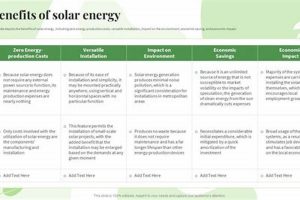
The economic viability of power generation from naturally replenishing sources represents a critical dimension in the evaluation of their merits and drawbacks. Initial capital investments often present a significant barrier to entry. Solar panel installations, wind turbine construction, and geothermal power plant development necessitate substantial upfront expenditure. These initial costs can deter potential investors and limit the widespread adoption of these technologies, particularly in developing nations or regions with limited financial resources. However, declining technology costs and evolving financing models are gradually mitigating this barrier. For instance, the price of solar photovoltaic panels has decreased dramatically over the past decade, making solar energy increasingly competitive with conventional fossil fuel-based power generation.
Operational expenses represent another key consideration. These power-generating facilities typically exhibit lower operating costs compared to conventional plants. They require minimal fuel inputs, reducing their exposure to fluctuating fuel prices and geopolitical instability. However, maintenance costs can be significant, particularly for offshore wind farms or geothermal power plants located in harsh environments. Furthermore, the intermittent nature of some, such as solar and wind, can necessitate investments in energy storage or grid modernization to ensure a reliable supply of electricity, adding to the overall system costs. Government subsidies, tax incentives, and feed-in tariffs play a pivotal role in enhancing economic competitiveness. These policies can offset the initial capital costs, reduce operational expenses, and provide revenue certainty, thereby attracting private investment and accelerating deployment.
Ultimately, the economic attractiveness is context-dependent, varying based on resource availability, technology costs, policy frameworks, and market conditions. While initial capital investments may be higher compared to conventional technologies, their lower operating expenses, reduced reliance on fuel inputs, and environmental benefits can yield long-term economic advantages. Continued technological innovation, supportive government policies, and evolving market dynamics are essential for enhancing economic attractiveness and facilitating the transition to a sustainable energy future.
3. Intermittency Challenges

The inherent variability in power output from certain naturally replenishing resources introduces significant challenges to grid stability and reliability. The intermittent nature of solar and wind energy, driven by fluctuating weather patterns and diurnal cycles, necessitates sophisticated grid management strategies and advanced technologies to ensure a consistent electricity supply. Understanding these complexities is crucial for evaluating the complete merits and drawbacks of transitioning to a renewable-dominated energy system.
- Grid Stability and Balancing
The variability of solar and wind requires constant adjustments to maintain a stable electricity frequency and voltage. Utilities must employ sophisticated forecasting techniques to anticipate fluctuations and rapidly dispatch other generation sources, or curtail usage, to compensate for these changes. Failure to maintain this balance can lead to power outages and equipment damage.
- Energy Storage Requirements
To mitigate intermittency, integrating energy storage solutions becomes imperative. Battery storage, pumped hydro, and thermal storage technologies can store excess energy generated during periods of high resource availability for later use during periods of low generation or high demand. However, the cost and scalability of these storage technologies remain a barrier to widespread deployment.
- Transmission Infrastructure Needs
Ideal locations for capturing solar and wind energy may be geographically distant from population centers, necessitating significant investments in transmission infrastructure to deliver the generated electricity. These upgrades can be costly and time-consuming, and may face environmental and social opposition, further complicating the integration of variable sources.
- Forecasting Accuracy and Reliability
Accurate forecasting of solar and wind power generation is essential for effective grid management. Improved forecasting models, leveraging weather data and machine learning algorithms, can enhance the predictability of resource availability, enabling utilities to optimize dispatch decisions and minimize the need for backup generation. However, forecasting errors remain a challenge, particularly for short-term prediction horizons.
These considerations highlight the importance of addressing the challenges associated with variability when assessing the advantages and disadvantages. While their potential to reduce greenhouse gas emissions is a significant benefit, the costs and complexities associated with maintaining grid stability and reliability must be carefully weighed against the environmental and economic advantages. Continued technological innovation, supportive policy frameworks, and strategic grid planning are essential for mitigating these challenges and unlocking the full potential of sustainable resources.
4. Technological Maturity

The degree of technological advancement fundamentally shapes the advantages and disadvantages associated with renewable power sources. Mature technologies, like hydroelectric power, exhibit established reliability and predictable performance, contributing to stable energy grids and long-term cost-effectiveness. Conversely, nascent technologies may offer theoretical benefits but face challenges in scalability, efficiency, and lifespan, affecting their immediate practicality and economic viability. The correlation is causal: technological maturity directly influences performance characteristics, economic feasibility, and integration potential.
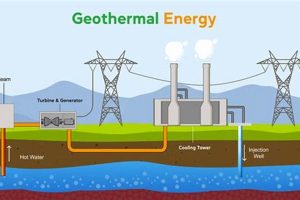
Solar photovoltaic (PV) technology provides a compelling example. Early PV systems suffered from low efficiency and high manufacturing costs, limiting their widespread adoption. Subsequent research and development led to significant improvements in cell efficiency, reduced material usage, and streamlined manufacturing processes. This technological progression resulted in a substantial decrease in solar energy costs, making it competitive with conventional energy sources in many regions. However, technologies like advanced geothermal or wave energy, while promising, require further development to overcome technical hurdles and achieve commercial viability. Investment in research and development is critical to accelerating the maturity of emerging technologies and maximizing their contribution to a sustainable energy mix.
In summary, the maturity of renewable energy technologies is a pivotal factor in determining their practical application and overall contribution to a sustainable energy future. Established technologies offer immediate benefits, while continued investment in research and development is essential for realizing the potential of emerging sources. A comprehensive understanding of this relationship is vital for informed decision-making in energy policy and investment strategies, ensuring efficient resource allocation and a realistic pathway towards a decarbonized energy system.
5. Resource Availability

The geographic distribution and abundance of renewable resources are fundamental determinants of their viability and contribute significantly to their overall advantages and disadvantages. Solar irradiance, wind speeds, geothermal gradients, and hydrological conditions vary considerably across the globe, resulting in uneven potential for different power generation technologies. Regions with high solar irradiance, such as deserts, possess a significant advantage in solar power generation, leading to higher energy yields and lower levelized costs. Conversely, regions with limited sunlight exposure may find solar energy less economically attractive. Wind energy potential is concentrated in specific locations characterized by consistent and strong winds, often coastal areas or mountainous regions. Geothermal energy extraction is restricted to areas with accessible geothermal reservoirs. Hydroelectric power generation depends on the availability of rivers and suitable topography for dam construction.
Resource constraints introduce several practical limitations. Reliance on intermittent resources like solar and wind necessitates geographic diversification or the deployment of energy storage solutions to ensure a reliable power supply. Transmission infrastructure investments may be required to transport electricity from resource-rich areas to demand centers, increasing project costs and potentially encountering environmental and social opposition. Understanding resource availability is also crucial for effective energy planning and policy development. Governments and utilities must carefully assess the potential of different resources within their jurisdiction to develop realistic targets and allocate resources efficiently. For example, countries with abundant geothermal resources may prioritize geothermal energy development, while those with limited resources may focus on other technologies.
In summary, resource availability constitutes a critical parameter when evaluating the potential benefits and limitations of renewable power sources. It dictates the suitability of different technologies in specific locations, influences project economics, and shapes energy policy decisions. A thorough assessment of resource availability is essential for maximizing the efficiency and sustainability of a renewable-dominated energy system, ensuring that resources are utilized effectively to meet energy demand while minimizing environmental impact and economic costs.
Frequently Asked Questions Regarding Renewable Energy Sources
This section addresses common inquiries concerning the attributes and drawbacks of power generation from naturally replenishing resources. The answers provided aim to offer concise and factual information for a comprehensive understanding.
Question 1: Are renewable energy sources entirely free from environmental impact?
While generating electricity with minimal emissions, the manufacturing, transportation, and disposal of components can carry environmental consequences. Lifecycle assessments are necessary for complete impact evaluations.
Question 2: How does the cost of renewable energy compare to traditional fossil fuels?
Initial capital investments can be higher, but operational expenses are typically lower due to reduced fuel costs. Government incentives and declining technology costs are enhancing economic competitiveness.
Question 3: What measures can be taken to address the intermittency of solar and wind power?
Energy storage solutions, grid modernization, geographic diversification, and improved forecasting models can mitigate the variability of these sources.
Question 4: Are all renewable energy technologies equally mature?
No. Hydroelectric and wind are relatively mature technologies, while wave energy and advanced geothermal require further development before widespread commercialization.
Question 5: How does geographic location affect the viability of renewable energy sources?
Resource availability varies significantly by location. High solar irradiance favors solar power, while consistent winds are necessary for wind energy. Geothermal and hydro power are also geographically dependent.
Question 6: What role does government policy play in promoting the use of renewable energy?
Supportive policies, such as feed-in tariffs, tax incentives, and renewable energy standards, are crucial for attracting investment and accelerating the adoption of sustainable technologies.
The advantages and disadvantages are multifaceted, requiring careful consideration of environmental, economic, and technological factors. A balanced approach is essential for effective implementation and long-term sustainability.
The following section will conclude the examination of this topic.
Conclusion
The preceding analysis reveals the complex interplay of benefits and drawbacks inherent in naturally replenishing power sources. Mitigation of climate change, coupled with enhancements in energy security, stand as compelling advantages. Yet, challenges regarding intermittency, economic viability, and environmental impact necessitate careful consideration. The “advantages and disadvantages of renewable energy sources” are not uniformly distributed; geographic location, technological maturity, and policy frameworks all exert significant influence.
Moving forward, informed decision-making and strategic investments are critical to maximizing the benefits and minimizing the risks associated with these energy solutions. Continued innovation, supportive policies, and a holistic understanding of the “advantages and disadvantages of renewable energy sources” will pave the way for a sustainable and resilient energy future. Only through such concerted efforts can the full potential of these resources be realized.