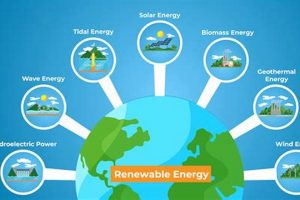
A key characteristic defining particular power sources is their ability to be replenished within a human timescale. These resources, unlike finite reserves, are naturally and continually restored. Examples include solar radiation, wind, geothermal heat, and biomass. This inherent regenerative capacity ensures their long-term availability.
The significance of utilizing resources with regenerative properties lies in their environmental and economic advantages. Dependence on these power sources mitigates reliance on fossil fuels, reducing greenhouse gas emissions and mitigating climate change. Furthermore, the utilization of such resources can foster energy independence and stimulate technological innovation, driving economic growth in related sectors.
Understanding the attributes of these sustainable energy options is crucial for shaping future energy policies and infrastructure development. Examining different forms, evaluating their potential, and addressing associated challenges will be essential for achieving a more sustainable energy future.
Adopting renewable energy sources requires careful consideration and strategic planning. The following guidelines offer insights into maximizing the benefits of such resources.
Tip 1: Assess Resource Availability: Evaluate the specific renewable resources available in a given location. Solar irradiance levels, wind patterns, geothermal potential, and biomass availability vary geographically. A thorough assessment ensures optimal resource utilization.
Tip 2: Prioritize Energy Efficiency: Implement energy-efficient technologies and practices to reduce overall energy demand. Lowering consumption makes the transition to renewable sources more manageable and cost-effective.
Tip 3: Diversify Energy Portfolio: Avoid over-reliance on a single renewable energy source. A diversified portfolio enhances energy security and mitigates the risks associated with intermittency or fluctuations in resource availability.
Tip 4: Invest in Energy Storage: Implement energy storage solutions to address the intermittent nature of some renewable sources, such as solar and wind. Battery storage, pumped hydro, and other technologies can stabilize energy supply.
Tip 5: Support Research and Development: Advocate for and invest in ongoing research and development of renewable energy technologies. Innovation is essential for improving efficiency, reducing costs, and expanding the applications of renewable resources.
Tip 6: Evaluate Life Cycle Costs: Consider the entire life cycle cost of renewable energy systems, including installation, operation, maintenance, and decommissioning. A comprehensive analysis reveals the true economic benefits and environmental impact.
Tip 7: Encourage Policy Support: Promote policies that incentivize the development and deployment of renewable energy. Tax credits, subsidies, and regulatory frameworks can accelerate the transition to a sustainable energy future.
By strategically addressing resource availability, efficiency, diversification, storage, innovation, economic analysis, and policy support, stakeholders can effectively harness the advantages and navigate the considerations inherent to sustainable power systems.
A comprehensive understanding of these strategic guidelines paves the way for a responsible transition toward a future powered by renewable energy.
1. Regeneration Rate

Regeneration rate forms a critical link in defining the renewability of an energy source. It signifies the speed at which a resource recovers or is replenished after energy extraction. A rapid regeneration rate is a key attribute for a source to be considered renewable, ensuring continuous availability for energy generation. Conversely, resources with negligible or exceptionally slow regeneration rates are deemed finite, categorizing them as non-renewable.
The impact of regeneration rate on energy sustainability is considerable. Solar energy exemplifies a nearly instantaneous rate of regeneration, as the sun’s radiation is perpetually available. Similarly, wind energy is sustained by atmospheric processes that continuously replenish wind currents. These examples contrast with fossil fuels, which require millions of years to form, rendering their regeneration rate practically non-existent within a human timescale. Consequently, high regeneration rates are essential for mitigating resource depletion and achieving long-term energy security.
Understanding regeneration rate is practically significant for guiding energy policy and infrastructure development. Accurate assessment of this characteristic allows for prioritizing investments in resources with high regeneration capacities, thereby fostering sustainable energy systems. Furthermore, it informs the development of energy storage solutions to address intermittency challenges associated with some sources, ensuring stable and reliable energy supply. Considering regeneration rates enables informed decision-making in transitioning to a sustainable and resilient energy future.
2. Natural replenishment

Natural replenishment is a defining characteristic of particular energy sources, directly influencing their classification as renewable. It refers to the ability of a resource to be restored or renewed through naturally occurring processes within a timeframe relevant to human activity. This concept forms a cornerstone in distinguishing sustainable resources from those that are finite and exhaustible.
- Hydrological Cycle and Hydropower
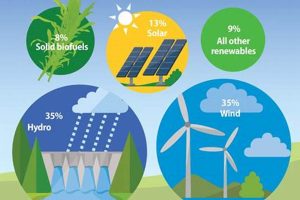
The hydrological cycle, involving evaporation, condensation, and precipitation, continuously replenishes water reservoirs. This ongoing process enables sustained hydroelectric power generation. Without this natural cycle, hydropower, while initially utilizing a natural resource, would not be considered continuously renewable.
- Atmospheric Processes and Wind Energy
Wind energy relies on atmospheric processes driven by solar radiation and the Earth’s rotation. These processes create pressure gradients that generate wind currents. The continuous nature of these atmospheric dynamics ensures the persistent availability of wind, making it a naturally replenishing energy source.
- Photosynthesis and Biomass
Biomass, as a renewable energy source, depends on photosynthesis, the process by which plants convert sunlight, water, and carbon dioxide into organic matter. Sustainable harvesting practices, coupled with ongoing plant growth, allow biomass to be a naturally replenished resource. Overexploitation without allowing for regrowth negates its renewable nature.
- Geothermal Activity and Geothermal Energy
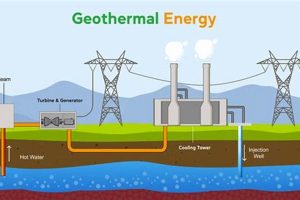
Geothermal energy taps into the Earth’s internal heat, which is continuously replenished by radioactive decay within the planet’s core. While the rate of replenishment is slower compared to solar or wind, it is still considered a naturally replenishing process on a human timescale, making geothermal a sustainable energy option in specific geological locations.
These examples illustrate how natural replenishment processes directly contribute to the categorization of energy sources as renewable. The continuous availability of these resources, facilitated by natural cycles and processes, ensures their long-term sustainability and distinguishes them from finite reserves like fossil fuels.
3. Non-depleting resource

A core characteristic of a resource qualifying as renewable lies in its classification as non-depleting. This signifies that the rate of extraction or utilization does not exceed the rate at which the resource is naturally replenished or regenerated. The inherent connection between non-depletion and renewability is causal; a resource must exhibit non-depleting properties to be considered renewable. This principle distinguishes sustainable energy sources from finite reserves, such as fossil fuels, that are consumed at a rate far surpassing their geological formation.
The significance of a non-depleting nature resides in its contribution to long-term energy security and environmental sustainability. Solar energy, wind energy, and geothermal energy serve as prime examples. Solar radiation, an essentially inexhaustible resource, continuously bathes the Earth. Wind currents, driven by atmospheric processes, are perpetually generated. Geothermal heat, emanating from the Earth’s core, offers a consistent energy source. These resources are, for practical purposes, non-depleting due to their vast scale and continuous regeneration. The understanding of this non-depleting attribute underpins the development of sustainable energy strategies aimed at mitigating climate change and ensuring a stable energy supply for future generations.
However, it is crucial to acknowledge that even resources generally categorized as non-depleting can be subject to localized depletion if mismanaged. Over-extraction of geothermal fluids, for instance, can lead to reservoir depletion, diminishing its long-term potential. Similarly, unsustainable harvesting practices can compromise the renewability of biomass. Therefore, responsible resource management and technological advancements are essential to ensure the long-term non-depleting nature of even the most inherently sustainable energy sources, furthering the goals of energy sustainability.
4. Continuous availability

Continuous availability is inextricably linked to the definition of what makes an energy source renewable. It denotes the uninterrupted or near-uninterrupted accessibility of an energy resource for utilization. This feature is critical for ensuring a stable and reliable energy supply, forming a key determinant in classifying a resource as renewable.
- Solar Energy and Daily Cycles
Solar energy’s availability is primarily dictated by daily solar cycles. While the sun rises and sets, creating periods of availability and unavailability, its continuous presence ensures daily access to solar radiation. Technological advancements in energy storage mitigate the challenges posed by the sun’s cyclical nature, enhancing solar energy’s overall continuous availability. The reliability of solar energy as a renewable source hinges on managing these daily variations effectively.
- Wind Energy and Atmospheric Dynamics
Wind energy depends on atmospheric dynamics that generate wind currents. Wind availability varies with geographical location and weather patterns, resulting in fluctuations in energy production. Despite these variations, wind resources are continuously regenerated by atmospheric processes, ensuring their perpetual availability. This continuous replenishment, albeit with intermittent fluctuations, positions wind as a renewable resource, requiring efficient management to maximize energy output.
- Geothermal Energy and Earth’s Internal Heat
Geothermal energy taps into the Earth’s internal heat, a virtually inexhaustible source continuously generated by radioactive decay. Unlike solar and wind, geothermal energy exhibits minimal fluctuations in availability, providing a consistently available energy source. This steady availability is a significant advantage, offering a reliable and predictable energy supply, further solidifying geothermal energy’s classification as a renewable resource.
- Hydropower and Water Cycle
Hydropower relies on the continuous cycling of water through evaporation, precipitation, and runoff. This water cycle sustains the flow of rivers and the availability of water reservoirs for hydroelectric power generation. Seasonal variations in precipitation may influence water availability, potentially impacting power output. However, the continuous nature of the water cycle ensures the ongoing potential for hydropower generation, making it a renewable resource that benefits from sustained water availability.
The continuous availability of these energy sources, whether constant or managed through technological solutions, underscores the core principles of what defines a renewable energy resource. Understanding the nuances of their availability patterns is essential for developing effective strategies for integrating these sources into global energy systems, thereby advancing a sustainable energy future.
5. Sustainability potential

Sustainability potential represents the capacity of an energy source to meet present energy demands without compromising the ability of future generations to meet their own energy needs. This concept is intrinsically linked to what defines a power source as renewable. High sustainability potential arises from the characteristics inherent in renewable sources: their ability to regenerate, their non-depleting nature, and their continuous availability. Solar, wind, geothermal, and sustainably managed biomass resources exemplify this potential. Their utilization minimizes reliance on finite fossil fuels, mitigating greenhouse gas emissions and reducing environmental degradation, thereby ensuring long-term environmental and societal well-being.
The practical significance of understanding sustainability potential lies in informing strategic decision-making related to energy policy and infrastructure investments. Governments and organizations must prioritize resources with high sustainability potential to ensure a stable and environmentally responsible energy future. For instance, promoting solar energy through tax incentives, investing in wind energy infrastructure, and supporting sustainable biomass practices are tangible steps towards realizing this potential. However, challenges persist. Intermittency of some sources, technological limitations, and the need for robust energy storage solutions require ongoing research and innovation. Addressing these challenges is paramount for fully leveraging the sustainability potential of renewable resources.
In conclusion, sustainability potential serves as a critical metric for evaluating the viability and desirability of energy sources. Its strong association with renewable resources highlights their role in achieving energy security and environmental stewardship. Ongoing efforts to enhance the efficiency, reliability, and affordability of renewable technologies are essential for realizing their full sustainability potential and transitioning towards a more sustainable energy future. Effective policies and investments are vital to accelerate this transition and ensure the availability of clean and reliable energy for generations to come.
Frequently Asked Questions about Renewable Energy Sources
The following addresses common questions regarding the defining characteristics of renewable energy resources.
Question 1: What fundamentally differentiates an energy source classified as renewable from one that is not?
The primary distinction lies in the resource’s capacity for natural replenishment within a timeframe relevant to human activity. Renewable resources are continuously or cyclically restored, whereas non-renewable resources are finite and deplete over time.
Question 2: Is the rate of regeneration a crucial factor in determining whether an energy source is renewable?
Yes, the regeneration rate is a significant factor. Resources with rapid regeneration or replenishment are considered renewable. A slow or negligible regeneration rate indicates a finite resource, therefore non-renewable.
Question 3: How does continuous availability contribute to the definition of a renewable energy source?
Continuous availability ensures a consistent and reliable energy supply. Resources with minimal interruptions or predictable cyclical availability are more effectively harnessed for sustained energy production, contributing to their classification as renewable.
Question 4: Does the term “non-depleting” accurately describe all sources identified as renewable?
Generally, yes. The term “non-depleting” suggests that the resource’s rate of extraction does not exceed its rate of replenishment. However, even some renewable sources can face localized depletion if mismanaged.
Question 5: How does the sustainability potential of a renewable energy source impact its overall value?
Sustainability potential is a crucial indicator of long-term viability. Resources with high sustainability potential minimize environmental impact and ensure future energy security, enhancing their value as responsible energy choices.
Question 6: Is there a singular attribute that definitively categorizes an energy source as renewable?
No, a combination of characteristics is relevant. The source’s regenerative ability, continuous availability, and non-depleting nature collectively contribute to its classification as renewable, with sustainability potential serving as an overarching measure of its long-term value.
Understanding these characteristics facilitates informed decision-making in the transition to a sustainable energy future.
The article will now explore the future prospects of renewable energy.
Understanding Renewable Energy
This exploration has elucidated the fundamental attributes defining renewable energy sources. Regeneration rate, natural replenishment, non-depleting resource characteristics, continuous availability, and sustainability potential collectively determine whether an energy source meets the criteria for renewability. A comprehensive understanding of these factors is paramount for informed decision-making in energy policy and resource management.
The transition to sustainable energy systems necessitates a commitment to harnessing resources with demonstrable regenerative capabilities and minimal environmental impact. Prioritizing the development and implementation of technologies that leverage these resources will contribute significantly to a stable and sustainable energy future for subsequent generations. Continued research, responsible resource stewardship, and strategic investment are essential to fully realizing the potential of renewable energy.