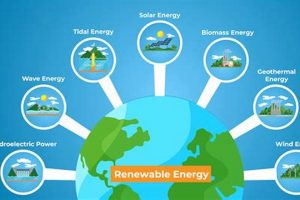
Harnessing the power of flowing or stored water offers a sustainable method for electricity generation. This approach utilizes natural hydrological cycles, transforming the kinetic energy of water into a readily usable form of power. Hydropower dams, for example, channel water through turbines connected to generators, producing electricity without depleting the original resource.
Employing this resource presents numerous advantages, including a reduction in reliance on fossil fuels, diminished greenhouse gas emissions, and the creation of long-term, stable energy supplies. Historically, civilizations have understood and utilized water’s energy potential through devices like water wheels, demonstrating a long-standing appreciation for this natural resource.
The subsequent sections will examine various aspects of this energy sector, including different technologies, environmental considerations, economic implications, and future developments poised to shape its continued evolution within the global energy landscape.
Strategic Approaches to Water-Based Energy Utilization
The following guidelines outline fundamental considerations for optimizing the contribution of hydro-based electricity generation towards a sustainable energy future. These principles address technology, policy, and resource management.
Tip 1: Prioritize Sustainable Hydropower Development: Employ rigorous environmental impact assessments before commencing construction. Mitigation strategies should address potential impacts on aquatic ecosystems, water quality, and local communities.
Tip 2: Invest in Pumped Hydro Storage: Utilize pumped hydro storage facilities to balance fluctuating energy demands and integrate intermittent renewable energy sources, such as solar and wind, into the grid. Excess energy during off-peak hours can be used to pump water uphill for later release through turbines.
Tip 3: Modernize Existing Hydropower Infrastructure: Enhance efficiency and capacity by upgrading outdated turbines and generators. Implement advanced control systems to optimize water flow and energy production.
Tip 4: Explore Small-Scale Hydro Potential: Evaluate the feasibility of developing small-scale hydro projects on rivers, streams, and irrigation canals. These decentralized systems can provide power to remote communities and reduce transmission losses.
Tip 5: Optimize Reservoir Management: Implement strategies for reservoir operation that balance power generation with other water uses, such as irrigation, flood control, and navigation. Consider downstream environmental flows to maintain healthy ecosystems.
Tip 6: Foster Collaboration and Stakeholder Engagement: Promote transparent decision-making processes that involve local communities, environmental groups, and other stakeholders in the planning and operation of water-related energy projects.
Tip 7: Advance Research and Development: Invest in innovative technologies, such as advanced turbine designs and fish passage systems, to minimize environmental impacts and enhance the economic viability of hydro-based electricity generation.
Adopting these measures will facilitate a more sustainable and responsible approach to water resource management, maximizing the contribution of hydro-based electricity generation towards meeting global energy demands while safeguarding the environment.
The subsequent sections will provide detailed analyses of specific applications and advancements in this crucial energy sector.
1. Hydropower Generation
Hydropower generation represents a significant application of water’s kinetic energy, directly linking the availability of water resources to the production of electrical power. This technology capitalizes on the continuous hydrological cycle, transforming a naturally replenishing resource into a usable energy form.
- Dam and Reservoir Systems
Dams create reservoirs, storing large volumes of water at elevated levels. This stored water is then released through turbines, converting potential energy into rotational energy, which in turn drives generators to produce electricity. The Hoover Dam, a notable example, exemplifies the scale and energy-generating capacity achievable through large-scale dam and reservoir systems.
- Run-of-River Hydropower
Run-of-river systems utilize the natural flow of a river or stream to generate electricity, minimizing or eliminating the need for large reservoirs. These systems typically have a smaller environmental footprint compared to dam-based hydropower. Numerous smaller run-of-river projects exist globally, contributing to decentralized energy production.
- Turbine Technology
Various turbine designs, such as Francis, Kaplan, and Pelton turbines, are employed depending on water flow and head (the vertical distance the water falls). Advances in turbine technology focus on increasing efficiency, reducing cavitation, and minimizing harm to aquatic life. Optimized turbine designs are crucial for maximizing electricity generation while mitigating environmental impacts.
- Pumped Storage Hydropower
Pumped storage systems act as large-scale energy storage facilities. During periods of low energy demand, water is pumped from a lower reservoir to an upper reservoir. When demand increases, this water is released back through turbines to generate electricity. This technology aids in balancing electricity supply and demand, effectively integrating intermittent renewable energy sources into the grid.
The multifaceted nature of hydropower generation underscores its importance in the renewable energy sector. Ranging from large-scale dam projects to smaller run-of-river installations, and enhanced by energy storage solutions, these different facets of this technology emphasize the possibilities of waters potential to address rising energy demands.
2. Environmental Impact
The development of water-based energy projects invariably interacts with surrounding ecosystems, demanding careful consideration of potential ecological consequences. Balancing the need for renewable energy with the imperative to preserve environmental integrity is a central challenge in this sector.
- Habitat Alteration and Fragmentation
Dam construction, a common method for hydropower generation, can significantly alter riverine habitats. Reservoirs inundate upstream areas, transforming terrestrial ecosystems into aquatic environments. Downstream, altered flow regimes can disrupt natural cycles, impacting fish migration, spawning grounds, and riparian vegetation. The fragmentation of river systems by dams impedes the movement of aquatic species, potentially leading to population declines or extinctions.
- Water Quality Degradation
Reservoirs can experience stratification, where temperature and oxygen levels vary with depth. This can lead to anoxic conditions at the bottom of the reservoir, releasing dissolved metals and creating unfavorable conditions for aquatic life. Changes in water flow can also affect sediment transport, potentially impacting downstream water quality and delta formation. Furthermore, the decomposition of submerged vegetation releases greenhouse gasses, contributing to atmospheric pollution.
- Impacts on Aquatic Species
Hydropower operations can pose significant threats to fish populations. Turbines can cause direct mortality through collisions or pressure changes. Dams impede fish migration, preventing access to spawning grounds and fragmenting populations. Altered flow regimes can disrupt spawning cues and reduce habitat availability. Effective fish passage technologies, such as fish ladders and bypass channels, are essential for mitigating these impacts.
- Greenhouse Gas Emissions
While often considered a clean energy source, reservoirs can contribute to greenhouse gas emissions. The decomposition of organic matter in flooded areas releases methane and carbon dioxide, potent greenhouse gasses. The magnitude of these emissions varies depending on factors such as reservoir size, vegetation cover, and water temperature. Careful planning and management are necessary to minimize greenhouse gas emissions from water-based energy projects.
Acknowledging and addressing these environmental impacts are paramount for ensuring the long-term sustainability of hydro-based power generation. Employing comprehensive environmental assessments, implementing mitigation strategies, and prioritizing ecological restoration are crucial steps in minimizing the negative consequences and maximizing the benefits of water as a source within the broader energy landscape.
3. Energy Storage

The intermittency of renewable energy sources poses a significant challenge to grid stability and reliability. Energy storage systems serve as crucial components in addressing this challenge, enabling the integration of variable renewable resources such as water-based energy. The ability to store energy generated from water resources allows for a more consistent and dependable supply, mitigating fluctuations caused by variations in rainfall, river flow, or operational schedules. Pumped hydro storage (PHS) exemplifies this interconnection. PHS facilities use excess electricity during off-peak hours to pump water from a lower reservoir to a higher reservoir. This stored water is then released through turbines to generate electricity during periods of high demand or when other renewable sources are unavailable. The Bath County Pumped Storage Station in Virginia, USA, stands as a prominent example, providing significant grid-balancing services. PHS’s capability to store large quantities of energy makes it a vital asset in ensuring grid stability as reliance on renewable energy sources grows.
Beyond PHS, other energy storage technologies are being explored for integration with hydro resources. Battery storage systems can complement hydro generation by providing rapid response to short-term fluctuations in demand or supply. These systems can be co-located with hydro plants or deployed at strategic points within the grid to enhance overall grid resilience. Furthermore, research into alternative storage solutions, such as compressed air energy storage (CAES) and hydrogen production via electrolysis powered by hydro energy, holds potential for further diversifying energy storage options. These technologies could provide long-duration energy storage and facilitate the use of hydro energy in sectors beyond electricity generation, such as transportation and industry. For instance, hydrogen created through hydro-powered electrolysis could be used as fuel for fuel cell vehicles or as a feedstock for industrial processes.
In summary, energy storage plays a critical role in maximizing the value and reliability of water-based energy resources. By enabling the decoupling of energy supply from water availability, storage technologies enhance grid stability, facilitate the integration of other renewable energy sources, and unlock new applications for hydro power. Overcoming the challenges associated with the cost and deployment of energy storage systems remains a key priority for realizing the full potential of water as a renewable source.
4. Resource Management

Effective resource management constitutes a cornerstone for the sustainable utilization of water for energy generation. This involves a holistic approach that considers the multifaceted demands placed upon water resources, including ecological preservation, agricultural needs, industrial requirements, and domestic consumption. The long-term viability of water as a renewable energy hinges on judicious resource allocation and responsible stewardship.
- Integrated Water Resource Management (IWRM)
IWRM provides a framework for coordinating water resource development and management across different sectors and scales. It emphasizes stakeholder participation, adaptive management, and the integration of environmental, social, and economic considerations. Implementation of IWRM principles ensures that hydropower projects are planned and operated in a manner that minimizes conflicts and maximizes benefits for all water users. The Murray-Darling Basin in Australia exemplifies a region where IWRM principles are being applied to address complex water management challenges, including balancing agricultural needs with environmental flows and hydropower generation.
- Water Allocation and Prioritization
Establishing clear water allocation rules and priorities is essential for resolving competing demands on water resources. During periods of drought or water scarcity, decisions must be made regarding the allocation of water among different uses, including hydropower generation. Prioritizing essential needs, such as drinking water and environmental flows, can help to maintain ecosystem health and social well-being. Water allocation mechanisms, such as water markets and water use permits, can facilitate efficient and equitable distribution of water resources.
- Reservoir Operations and Management
Reservoir operations play a crucial role in balancing power generation with other water uses. Optimizing reservoir releases for hydropower production while also meeting downstream water demands requires careful planning and coordination. Strategies such as adaptive reservoir management, which adjusts releases based on real-time hydrological conditions, can enhance the flexibility and responsiveness of hydropower operations. Managing sedimentation in reservoirs is also critical for maintaining storage capacity and ensuring the long-term viability of hydropower projects. The Three Gorges Dam in China, one of the world’s largest hydropower projects, highlights the complexities of reservoir operations and management, requiring careful balancing of power generation, flood control, and navigation.
- Climate Change Adaptation
Climate change poses a significant threat to water resources, potentially altering precipitation patterns, increasing the frequency and intensity of droughts and floods, and impacting water quality. Adapting to these changes requires implementing strategies such as diversifying water sources, improving water use efficiency, and enhancing water storage capacity. Climate-resilient hydropower infrastructure, designed to withstand extreme weather events, is essential for ensuring the long-term reliability of water as a renewable source. Incorporating climate change projections into water resource planning and management is crucial for mitigating the risks and maximizing the benefits of hydro-based power generation in a changing climate.
These interconnected facets of resource management underscore the necessity of a comprehensive and adaptive approach to harnessing water for sustainable energy production. Ignoring any of these elements risks compromising the long-term availability and ecological integrity of water resources, ultimately undermining the viability of water as a reliable renewable energy source. Proactive and integrated resource management strategies are, therefore, essential for ensuring that water continues to contribute to a sustainable energy future.
5. Technological Advancements
The continued evolution of technologies significantly impacts the efficiency, sustainability, and overall viability of water as a renewable energy source. Innovations across various domains are driving improvements in how effectively water’s energy potential can be harnessed while minimizing environmental impact.
- Advanced Turbine Designs
Conventional turbine designs can pose risks to aquatic life and may not always be optimized for varying water flow conditions. Advanced turbine designs, such as fish-friendly turbines and variable-speed turbines, address these limitations. Fish-friendly turbines incorporate features that reduce the risk of injury or mortality for aquatic organisms passing through the turbine. Variable-speed turbines can operate efficiently across a wider range of water flow rates, maximizing energy capture and grid stability. The Alden turbine, for example, is specifically designed to minimize fish mortality while maintaining high energy conversion efficiency.
- Hydrokinetic Energy Conversion
Hydrokinetic energy conversion technologies harness the energy of flowing water without the need for dams or reservoirs. These systems, such as underwater turbines and oscillating hydrofoils, can be deployed in rivers, tidal channels, and ocean currents to generate electricity. Hydrokinetic devices offer the potential to tap into a vast, untapped energy resource with minimal environmental impact. Verdant Power’s tidal energy project in New York City is an example of a hydrokinetic energy system that generates electricity from tidal currents in the East River.
- Smart Grid Integration
The integration of hydro energy into smart grids enables more efficient and reliable management of electricity supply and demand. Smart grids utilize advanced sensors, communication networks, and control systems to optimize energy distribution, improve grid stability, and facilitate the integration of distributed generation resources. Smart grid technologies can enhance the responsiveness of hydropower plants to fluctuating grid demands, allowing them to provide ancillary services such as frequency regulation and voltage support. Furthermore, smart grids can facilitate the integration of pumped hydro storage facilities, enabling them to act as large-scale energy storage resources for balancing intermittent renewable energy sources.
- Predictive Analytics and Optimization
Predictive analytics and optimization techniques leverage historical data, weather forecasts, and hydrological models to improve the efficiency and reliability of hydropower operations. These techniques can be used to forecast water availability, optimize reservoir releases, and predict equipment failures. By accurately forecasting water inflows, hydropower operators can optimize reservoir levels and turbine operations to maximize energy production while minimizing environmental impacts. Predictive maintenance algorithms can identify potential equipment failures before they occur, reducing downtime and improving the overall reliability of hydropower plants. The use of artificial intelligence and machine learning is becoming increasingly prevalent in optimizing hydropower operations, enabling more efficient and sustainable use of water resources.
These technological advancements collectively contribute to a more sustainable and efficient utilization of water as a renewable energy source. By mitigating environmental impacts, enhancing energy capture, and improving grid integration, these innovations are paving the way for a greater role for water in the global energy mix. Continued investment in research and development is crucial for further advancing these technologies and unlocking the full potential of water as a renewable source.
Frequently Asked Questions
This section addresses common inquiries and clarifies misunderstandings pertaining to the application of water as a sustainable energy resource. The information presented aims to provide objective and evidence-based responses to ensure a comprehensive understanding.
Question 1: Is hydro-based electricity generation truly renewable?
Hydropower relies on the continuous hydrological cycle, where water is replenished through precipitation and natural processes. However, the sustainability of specific hydropower projects depends on responsible management and mitigation of environmental impacts.
Question 2: What are the primary environmental concerns associated with hydropower dams?
Significant concerns include habitat alteration, disruption of fish migration, changes in water quality, and greenhouse gas emissions from reservoirs. Careful planning and mitigation measures are crucial to minimize these impacts.
Question 3: How does pumped hydro storage contribute to grid stability?
Pumped hydro storage facilities store energy by pumping water to a higher elevation during off-peak periods and releasing it through turbines when demand is high. This helps balance fluctuations in electricity supply and demand, especially with intermittent renewable sources.
Question 4: Can water-based energy resources be developed without dams?
Yes, technologies such as run-of-river hydropower and hydrokinetic energy conversion can harness the energy of flowing water without the need for large dams or reservoirs, reducing environmental impact.
Question 5: How does climate change affect the viability of hydro-based electricity generation?
Changes in precipitation patterns, increased frequency of droughts and floods, and altered water quality can significantly impact the reliability of hydropower resources. Climate change adaptation strategies are essential for ensuring long-term sustainability.
Question 6: What is being done to mitigate the impact of hydropower dams on fish populations?
Fish passage technologies, such as fish ladders and bypass channels, are implemented to facilitate fish migration around dams. Additionally, research is ongoing to develop turbine designs that minimize fish mortality.
Water represents a valuable and renewable energy source, provided that its utilization is approached with environmental responsibility and informed management practices. Ongoing research and technological advancements continue to improve the sustainability and efficiency of water-based energy systems.
The subsequent section will explore case studies of successful implementations of hydro-based energy projects, highlighting best practices and lessons learned.
Conclusion
The preceding discussion has illuminated the multifaceted nature of water as a renewable energy source, encompassing its inherent potential, technological applications, environmental considerations, and management challenges. Emphasis has been placed on the critical need for responsible development, integrating ecological safeguards and robust resource management strategies. The advancement and adoption of innovative technologies, from fish-friendly turbines to smart grid integration, are paramount for maximizing the sustainability and efficiency of water-based power generation.
Continued dedication to rigorous environmental assessments, strategic resource allocation, and proactive climate change adaptation is essential for ensuring that water as a renewable energy source contributes meaningfully to a global energy future that is both secure and environmentally sound. Sustained investment in research and development, coupled with stringent regulatory oversight, will ultimately determine the extent to which this valuable resource can be harnessed responsibly and effectively for generations to come.