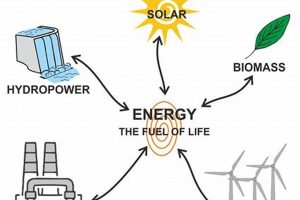
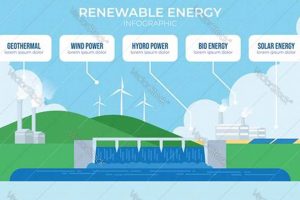
Harnessing power from naturally replenishing resources provides a sustainable alternative to traditional fossil fuels. These resources are characterized by their ability to regenerate within a human timescale, ensuring a continuous and readily available energy supply. Examples include solar radiation, captured through photovoltaic cells, and wind, converted into electricity via turbines.
The adoption of these energy generation methods offers numerous advantages. Reliance on indigenous resources enhances energy security, reducing dependence on volatile global markets. Furthermore, these technologies minimize greenhouse gas emissions, mitigating the effects of climate change and contributing to a cleaner environment. Historically, the development and deployment of these systems have spurred technological innovation and created new economic opportunities.
Delving further into specific examples will illuminate the diverse range of options available for a sustainable energy future. Examining the mechanics of harnessing sunlight and the power of moving air reveals the practical application of these environmentally conscious approaches.
Guidance on Identifying Sustainable Energy Resources
This section provides practical advice on recognizing and understanding different options for generating power sustainably. Successfully navigating this landscape requires careful consideration of resource availability, technological feasibility, and environmental impact.
Tip 1: Assess Solar Potential: Evaluate the availability of sunlight in a specific geographic location. Consider factors such as average daily irradiance, cloud cover, and seasonal variations. This assessment will determine the viability of photovoltaic systems for electricity generation or solar thermal systems for heating applications.
Tip 2: Analyze Wind Resources: Determine the average wind speed and consistency in a given area. High and consistent wind speeds are crucial for efficient wind turbine operation. Data from meteorological agencies and on-site wind measurements can provide valuable insights.
Tip 3: Investigate Geothermal Activity: Explore the presence of subsurface heat sources. Geothermal energy can be harnessed for electricity generation or direct heating applications. Geological surveys and temperature gradient measurements can identify potential geothermal resources.
Tip 4: Evaluate Hydropower Opportunities: Assess the availability of flowing water and the potential for hydroelectric power generation. Consider factors such as river flow rate, elevation drop, and environmental impact. Small-scale hydropower systems can be viable options in suitable locations.
Tip 5: Research Biomass Availability: Determine the availability of organic matter, such as wood, agricultural residues, and energy crops. Biomass can be used for electricity generation, heating, or transportation fuels. Sustainable biomass harvesting practices are essential to minimize environmental impact.
These guidelines provide a starting point for identifying and evaluating different options for power generation that minimizes environmental degradation and maximizes resource efficiency. Careful analysis of local resources and technological capabilities is essential for successful implementation.
The following sections will delve deeper into the technical and economic aspects of implementing these sustainable alternatives.
1. Sunlight

The radiant energy emitted by the sun serves as a primary driver for several methods of power generation and represents a cornerstone of replenishing energy strategies. The direct conversion of sunlight into electricity occurs through photovoltaic (PV) systems, composed of semiconductor materials that generate an electrical current when exposed to photons. Sunlight is also the catalyst for plant growth, forming the basis of biomass resources. Photosynthesis captures solar energy and converts it into chemical energy stored within plant matter.
Furthermore, solar energy indirectly influences wind patterns. Differential heating of the Earth’s surface creates temperature gradients, resulting in pressure differences and subsequent air movement. These wind currents can then be harnessed through wind turbines to generate electricity. Thus, while not a direct source itself, sunlight underpins one of the aforementioned methods through atmospheric dynamics. The importance of sunlight cannot be overstated; solar farms, for example, contribute significantly to grid-scale electricity production in sun-rich regions, whilst smaller-scale solar panels empower individual households and businesses.
In conclusion, sunlights role is multifaceted. Its direct and indirect impact on alternative energy extraction makes it a fundamental resource. While the intermittency of sunlight presents a challenge for continuous power supply, technological advancements in energy storage and grid management are progressively mitigating these limitations. Further investment in these technologies is essential to maximizing the contribution of sunlight to a sustainable energy future.
2. Wind Power

Wind power constitutes a significant component of the transition toward power generation from naturally replenishing resources. The kinetic energy of moving air is captured by wind turbines, which convert this mechanical energy into electrical energy. This process represents a direct utilization of a renewable resource, minimizing reliance on fossil fuels and mitigating greenhouse gas emissions. Modern wind turbines are strategically placed in locations with consistent and high wind speeds, often in wind farms both onshore and offshore, to maximize energy production. These installations contribute substantially to the electricity grid in numerous countries.
The integration of wind power into the energy mix necessitates careful consideration of its intermittent nature. Wind speeds fluctuate, leading to variable electricity output. To address this challenge, energy storage solutions, such as batteries or pumped hydro storage, are often paired with wind farms. Furthermore, advanced grid management techniques allow for better forecasting of wind power generation and improved integration with other power sources. Denmark, for example, consistently generates a substantial portion of its electricity from wind power, demonstrating the practical feasibility of integrating this source into a national energy system.
In conclusion, harnessing the kinetic energy of the atmosphere is essential. Its contribution to electricity grids worldwide is growing. Addressing the challenges of intermittency through technological advancements and strategic grid management is paramount to realizing the full potential of wind power as a sustainable electricity source.
3. Geothermal Heat

Geothermal heat represents a significant naturally replenishing energy source, distinct from but complementary to other renewable technologies like solar or wind. Originating from the Earth’s internal heat, this form of power generation offers a consistent and reliable energy supply, independent of weather conditions and seasonal variations.
- Geothermal Resources
Subsurface thermal energy, ranging from shallow ground temperatures to deep reservoirs of hot water and steam, varies by geological location. High-temperature reservoirs are typically utilized for power generation using steam turbines. Low-temperature resources can be exploited for direct heating applications, such as district heating systems or greenhouse heating. The accessibility and temperature of these resources significantly influence the economic viability of geothermal projects.
- Geothermal Power Plants
These facilities convert subsurface heat into electricity through various methods. In dry steam plants, steam directly drives a turbine. Flash steam plants vaporize hot water under reduced pressure to create steam. Binary cycle plants transfer heat from geothermal fluids to a secondary fluid with a lower boiling point, which then drives a turbine. The choice of technology depends on the temperature and pressure of the available geothermal resource.
- Direct Use Applications
Geothermal energy can also be utilized directly without electricity generation. This includes heating buildings, greenhouses, and aquaculture farms. Geothermal heat pumps extract heat from shallow ground, providing efficient heating and cooling for residential and commercial buildings. These direct use applications can significantly reduce reliance on fossil fuels for heating purposes.
- Environmental Considerations
While considered naturally replenishing, geothermal energy development is not without environmental impact. Potential concerns include land use, groundwater contamination, and induced seismicity. Proper site selection, reservoir management, and mitigation strategies are crucial to minimize these impacts and ensure the long-term sustainability of geothermal projects.
Geothermal energy, while less geographically ubiquitous than solar or wind, offers a reliable baseload power source. Its integration into a diversified naturally replenishing energy portfolio enhances grid stability and reduces overall carbon emissions. Technological advancements, such as enhanced geothermal systems (EGS), aim to expand the accessibility of geothermal resources and further improve its sustainability.
4. Hydropower Potential

Hydropower represents a significant element within the naturally replenishing energy sector. Its viability is intrinsically linked to geographical and hydrological factors that determine the electricity generating capacity of a specific location. Understanding the facets of this resource is critical for effective implementation and maximizing its contribution to sustainable energy portfolios.
- Geographic Factors and Water Availability
The presence of suitable rivers, lakes, and reservoirs dictates the potential for hydroelectric development. Regions with significant precipitation and consistent water flow are prime candidates. Topographical features, such as mountainous terrain, can provide natural elevation differences necessary for efficient power generation. Climate change, however, poses a threat to water availability, potentially reducing output from existing facilities. The Three Gorges Dam in China exemplifies a large-scale hydroelectric project, while smaller run-of-river systems are prevalent in mountainous regions worldwide.
- Dam Infrastructure and Technology
The design and construction of dams and related infrastructure are central to harnessing hydropower potential. Dam height, reservoir capacity, and turbine technology directly impact power output and efficiency. Conventional dams create large reservoirs, allowing for controlled water release and peak power generation. Pumped storage facilities, on the other hand, utilize excess electricity during off-peak hours to pump water uphill to a reservoir, releasing it later to generate power during periods of high demand. Hoover Dam in the United States represents a classic example of a large-scale dam with substantial generating capacity.
- Environmental and Social Impacts
Hydropower development can have significant environmental and social consequences. Dam construction can alter river ecosystems, disrupt fish migration, and displace local communities. Methane emissions from reservoirs, particularly in tropical regions, can contribute to greenhouse gas emissions. Careful environmental impact assessments and mitigation strategies are essential to minimize these negative effects. Fish ladders, for example, are often incorporated into dam designs to facilitate fish migration. The Belo Monte Dam in Brazil has faced considerable controversy due to its environmental and social impacts.
- Economic Considerations and Grid Integration
The economic viability of hydropower projects depends on factors such as construction costs, electricity prices, and grid infrastructure. Hydropower can provide a stable and predictable source of electricity, contributing to grid stability. However, the high upfront costs of dam construction can be a barrier to development. Government subsidies and long-term power purchase agreements can help incentivize hydropower projects. Norway, with its abundant hydropower resources, provides a model for integrating hydropower into a national energy system.
These components highlight the interconnected nature of hydropower, emphasizing its position within the context of securing two naturally replenishing sources of energy. While offering a mature and reliable power source, careful consideration of environmental impacts and economic feasibility is paramount for sustainable implementation. Continued innovation in turbine technology and reservoir management is essential to maximizing hydropower’s contribution to a low-carbon energy future.
5. Biomass Resources

Biomass resources, derived from organic matter, represent a significant category within the broader spectrum of power generation via naturally replenishing sources. These resources, encompassing wood, agricultural residues, and energy crops, are harnessed to produce heat, electricity, and transportation fuels. Biomass acts as a carbon sink during its growth phase, absorbing atmospheric carbon dioxide through photosynthesis. When utilized for power generation, the carbon released is theoretically offset by the carbon absorbed during growth, resulting in a near-neutral carbon cycle, assuming sustainable harvesting and management practices are employed. The utilization of biomass exemplifies one approach within the framework of employing naturally replenishing energy sources.
The integration of biomass into the energy mix involves various conversion technologies. Direct combustion, the most common method, involves burning biomass to produce heat, which can then be used to generate electricity via steam turbines. Gasification converts biomass into a combustible gas mixture, which can be used in gas turbines or internal combustion engines. Anaerobic digestion breaks down biomass in the absence of oxygen, producing biogas, a methane-rich fuel that can be used for electricity generation or heating. Biofuels, such as ethanol and biodiesel, are produced from biomass and can be used as transportation fuels, reducing dependence on petroleum-based products. Brazil, for instance, has a well-established ethanol industry based on sugarcane, while the United States produces ethanol primarily from corn. These examples illustrate the practical application of biomass as a component of a diversified portfolio.
The successful and environmentally sound use of biomass resources relies on sustainable practices. Overharvesting can lead to deforestation, soil degradation, and loss of biodiversity, negating the environmental benefits. Therefore, responsible forest management, efficient agricultural practices, and the cultivation of dedicated energy crops are crucial. Furthermore, advanced technologies, such as carbon capture and storage (CCS), can be integrated with biomass power plants to further reduce carbon emissions. In summary, biomass represents a valuable component of the naturally replenishing energy landscape, offering a versatile and potentially carbon-neutral alternative to fossil fuels, provided that sustainable practices are rigorously implemented and continuously monitored.
6. Ocean Energy

Ocean energy represents a significant, yet largely untapped, category of naturally replenishing energy sources, offering potential for electricity generation and other applications. It encompasses several distinct forms, each harnessing different aspects of the marine environment. These methods aim to convert the kinetic and thermal energy of the oceans into usable power, contributing to a more diversified and sustainable energy portfolio.
- Wave Energy Conversion
Wave energy conversion technologies capture the mechanical energy of ocean surface waves. Various devices, such as oscillating water columns, point absorbers, and overtopping devices, are employed to convert wave motion into electricity. Real-world examples include the Wave Hub project in the United Kingdom, a testing site for wave energy devices, and individual installations along coastlines worldwide. Successful and widespread implementation could provide a substantial source of power in coastal regions, reducing reliance on fossil fuels.
- Tidal Energy Extraction
Tidal energy harnesses the kinetic energy of tidal currents. Tidal turbines, similar to underwater wind turbines, are placed in areas with strong tidal flows to generate electricity. Tidal barrages, which dam estuaries and release water through turbines, are another approach. The Sihwa Lake Tidal Power Station in South Korea is a notable example. The consistent and predictable nature of tides makes tidal energy a potentially reliable source of electricity.
- Ocean Thermal Energy Conversion (OTEC)
OTEC utilizes the temperature difference between warm surface water and cold deep ocean water to generate electricity. A working fluid, such as ammonia, is vaporized by the warm surface water and used to drive a turbine. The cold deep ocean water is then used to condense the vapor. While still in the development phase, OTEC holds promise for tropical regions with significant temperature gradients. Pilot projects have been undertaken in locations such as Hawaii and Japan.
- Salinity Gradient Power
Salinity gradient power, also known as osmotic power, harnesses the energy released when water of different salinity mixes. Pressure-retarded osmosis (PRO) and reverse electrodialysis (RED) are two technologies used for this purpose. While still in its early stages of development, salinity gradient power could potentially be utilized in estuaries where freshwater rivers meet the ocean. Demonstrations have been conducted in Norway and other locations.
These facets of ocean energy illustrate the diverse potential for this class of naturally replenishing energy. Overcoming technical and economic challenges is essential for widespread adoption. Continued research and development, coupled with supportive policies, can unlock the potential of ocean energy and contribute to a sustainable energy future alongside established renewable options.
Frequently Asked Questions Regarding Renewable Energy Sources
This section addresses common inquiries concerning naturally replenishing power generation methods, providing concise and informative answers to enhance understanding and clarify misconceptions.
Question 1: What are the primary benefits of utilizing naturally replenishing sources for power generation?
The utilization of these sources reduces dependence on finite fossil fuels, mitigates greenhouse gas emissions, and enhances energy security. They offer a pathway toward a more sustainable and environmentally responsible energy future.
Question 2: How does the intermittency of solar and wind energy impact grid reliability?
The variability of solar and wind resources necessitates the implementation of energy storage solutions and advanced grid management techniques. Energy storage systems, such as batteries or pumped hydro, can buffer fluctuations in electricity supply. Smart grids enable better forecasting and integration of these sources.
Question 3: What are the environmental concerns associated with hydropower development?
Dam construction can alter river ecosystems, disrupt fish migration, and displace local communities. Methane emissions from reservoirs can contribute to greenhouse gas emissions. Careful environmental impact assessments and mitigation strategies are essential to minimize these negative effects.
Question 4: Is biomass truly carbon-neutral?
Biomass is considered carbon-neutral when sustainably harvested and managed. The carbon released during combustion is offset by the carbon absorbed during plant growth. However, unsustainable harvesting practices can lead to deforestation and net carbon emissions.
Question 5: What are the main challenges hindering the widespread adoption of ocean energy technologies?
Ocean energy technologies face challenges related to cost-effectiveness, survivability in harsh marine environments, and environmental impacts. Further research and development are needed to overcome these hurdles and unlock the full potential of ocean energy.
Question 6: What role does government policy play in promoting these alternative generation methods?
Government policies, such as subsidies, tax incentives, and renewable energy mandates, can incentivize investment in and deployment of naturally replenishing energy technologies. Supportive policies are crucial for creating a level playing field and accelerating the transition to a sustainable energy system.
In summary, understanding the nuances of each method is critical for informed decision-making and effective implementation. While challenges exist, these sources represent a vital component of a sustainable energy future.
The next section will explore future trends and innovations in the naturally replenishing energy landscape.
Conclusion
This exploration has highlighted the critical importance of sustainable power generation methods. The specific examples discussed, solar and wind power, serve as potent illustrations of readily available and environmentally conscious alternatives to fossil fuels. The successful integration of these methods into existing power grids demands continued technological advancement, strategic planning, and supportive governmental policies. Further research and development into energy storage solutions and efficient grid management are essential for maximizing the utilization of these intermittent resources.
The transition to a low-carbon economy necessitates a diversified energy portfolio that prioritizes sustainable practices and minimizes environmental impact. Active engagement and investment in naturally replenishing generation methods is vital for securing a sustainable energy future and mitigating the effects of climate change. Continued vigilance and proactive measures are paramount to ensure these technologies fulfill their potential in creating a cleaner, more secure energy landscape for generations to come.