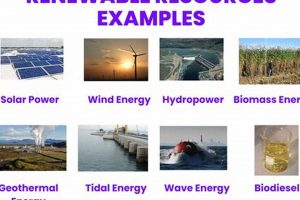
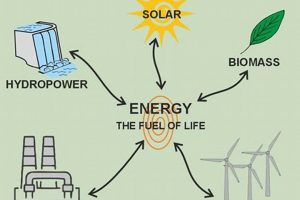
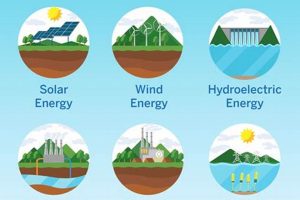
Certain energy sources are classified based on their capacity to be replenished within a human timescale. These sources naturally regenerate, rendering them practically inexhaustible. Common examples include solar radiation, wind currents, geothermal heat, and biomass from plants. The fundamental characteristic is that their consumption does not lead to a depletion of the original resource; instead, it’s continuously renewed by natural processes.
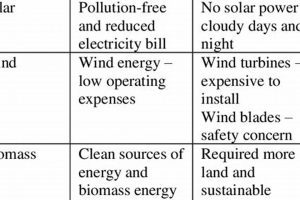
The utilization of these energy supplies presents numerous advantages. A primary benefit lies in their reduced environmental impact compared to fossil fuels, minimizing greenhouse gas emissions and air pollution. Furthermore, the long-term availability of these resources contributes to energy security, decreasing dependence on finite and geographically concentrated fuel deposits. Historically, harnessing these power sources was limited by technological constraints, but advancements are facilitating wider adoption and increased efficiency.
Therefore, the subsequent discussion will delve into the specific mechanisms of these regenerative energy systems, examining their current technological applications, economic viability, and the potential for future expansion and contribution to global energy demands. The focus will be on understanding how these resources contribute to a sustainable and secure energy future.
Considerations for Evaluating Regenerative Energy Options
The selection and implementation of regenerative energy systems require careful consideration of several key factors to maximize their effectiveness and ensure long-term sustainability.
Tip 1: Assess Resource Availability. A thorough evaluation of the local availability of the energy source is paramount. For solar energy, insolation levels must be sufficient to justify investment. Wind projects require consistent wind speeds, while geothermal options depend on accessible geothermal gradients.
Tip 2: Evaluate Environmental Impact. While generally cleaner than fossil fuels, regenerative technologies are not without environmental consequences. Large-scale hydroelectric projects can alter ecosystems, and wind turbines may pose risks to avian populations. A comprehensive environmental impact assessment is essential.
Tip 3: Analyze Economic Viability. The economic competitiveness of these systems is crucial for widespread adoption. Consider initial capital costs, ongoing operational expenses, and potential revenue streams. Government incentives and subsidies can significantly influence the financial feasibility of projects.
Tip 4: Investigate Technological Maturity. The technological readiness level of a given technology affects its reliability and performance. Established technologies like hydroelectric power offer predictable performance, whereas newer technologies like advanced geothermal systems may require more development and risk assessment.
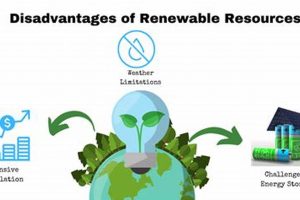
Tip 5: Consider Grid Integration Challenges. Integrating variable power sources like solar and wind into the existing electrical grid poses unique challenges. Grid infrastructure may require upgrades to accommodate intermittent power supply and maintain grid stability. Energy storage solutions can mitigate these challenges.
Tip 6: Evaluate Land Use Requirements. Certain regenerative energy systems, like large-scale solar farms and biomass plantations, require significant land areas. Careful consideration must be given to potential land use conflicts and the impact on local communities and ecosystems.
Tip 7: Factor in Social Acceptability. Public perception and community support are crucial for the successful implementation of these projects. Address concerns regarding visual impacts, noise pollution, and potential disruptions to local lifestyles through transparent communication and community engagement.
These considerations highlight the multifaceted nature of evaluating regenerative energy options. A holistic approach that accounts for resource availability, environmental impact, economic viability, technological maturity, grid integration challenges, land use requirements, and social acceptability is crucial for maximizing the benefits of these energy systems.
The following sections will explore specific examples of how these considerations have been applied in the development and deployment of diverse regenerative energy projects worldwide.
1. Natural Replenishment

Natural replenishment constitutes the core reason behind the classification of certain energy resources as renewable. The capacity of a resource to regenerate within a timeframe relevant to human usage determines its renewability. This implies a continual restoration of the energy source through naturally occurring processes, essentially balancing extraction with regeneration. Without natural replenishment, the energy source would inevitably deplete over time, rendering it unsustainable.
The sun, as a source of solar energy, exemplifies natural replenishment. Solar radiation continuously reaches the Earth, providing a persistent stream of energy independent of human extraction. Similarly, wind energy arises from atmospheric heating, a process driven by solar radiation and consistently renewing the source of kinetic energy. In contrast, fossil fuels represent finite resources due to their extremely slow formation processes over geological timescales. The rate of extraction vastly exceeds the rate of replenishment, leading to their eventual depletion. The importance of natural replenishment is clear: a resource’s renewability hinges on the equilibrium between its utilization and its capacity to be naturally restored.
Therefore, the practical significance of understanding natural replenishment lies in its implications for energy policy and sustainable development. Prioritizing resources with inherent regenerative capacities ensures long-term energy security while mitigating the environmental impacts associated with finite resource extraction. The challenge remains in developing technologies and infrastructure to efficiently harness these continuously replenished energy sources and integrate them into existing energy systems. Further research and investment in these areas are crucial for transitioning towards a truly sustainable energy future.
2. Sustainable Yield
Sustainable yield serves as a fundamental criterion for classifying energy resources as renewable. It denotes the extraction or utilization rate of a resource that can be maintained indefinitely without depleting the resource base. In the context of renewable energy, achieving a sustainable yield ensures the continuous availability of the energy source, thereby justifying its categorization as renewable. A failure to maintain a sustainable yield undermines the long-term viability of the resource and negates its renewable status. For instance, biomass energy, while derived from organic matter, ceases to be truly renewable if deforestation outpaces reforestation, resulting in a net loss of carbon sequestration and environmental degradation.
Consider the example of hydroelectric power. A hydroelectric dam may initially appear to harness a renewable energy source flowing water. However, if the river’s water flow is significantly reduced due to upstream diversions or climate change-induced droughts, the dam’s power generation capacity diminishes, potentially impacting its long-term sustainable yield. Similarly, geothermal energy, though sourced from the Earth’s internal heat, requires careful management to prevent over-extraction from specific geothermal reservoirs, which could lead to their premature cooling and reduced energy output. These examples highlight that the designation of an energy source as renewable depends not solely on its origin but also on the practices employed in its extraction and management to ensure a sustainable yield.
Understanding the link between sustainable yield and renewable energy classification has practical significance for policymaking and investment decisions. It necessitates a holistic assessment of energy projects, taking into account not only the initial energy output but also the long-term ecological and environmental consequences of resource extraction. This understanding promotes the adoption of responsible resource management practices and incentivizes the development of technologies that enhance the sustainable yield of renewable energy resources. Challenges remain in accurately predicting and monitoring the long-term impacts of energy projects on resource availability, particularly in the face of climate change and increasing global energy demand. Overcoming these challenges is essential for realizing the full potential of renewable energy and ensuring a truly sustainable energy future.
3. Inexhaustible Supply

The concept of inexhaustible supply is intrinsically linked to the designation of certain energy resources as renewable. An inexhaustible supply implies that the quantity of the resource is so vast relative to the rate of human consumption that it will not be depleted within any relevant timeframe. This characteristic is a primary reason why resources such as solar, wind, and geothermal energy are categorized as renewable; their potential for energy generation far exceeds current and foreseeable global energy demands. In essence, their continuous availability ensures a sustainable energy source for generations to come. Without this attribute, even a naturally replenishing resource could face depletion if extraction rates persistently outpace natural regeneration, thus negating its renewable status.
Consider solar energy as a practical example. The sun’s energy output is immense, and only a tiny fraction of it reaches Earth. The amount of solar energy that strikes the Earth’s surface daily is far greater than the total energy consumed by humans. This immense surplus renders solar energy practically inexhaustible from a human perspective. Similarly, wind energy, driven by solar heating of the atmosphere, is continuously generated. While local wind patterns may vary, the global wind resource remains abundant. Geothermal energy, sourced from the Earth’s internal heat, also presents a vast reservoir of energy. Although localized geothermal reservoirs can be depleted if not managed sustainably, the Earth’s overall heat content represents an effectively inexhaustible supply.
The understanding of inexhaustible supply’s role in defining renewable energy has profound implications for energy policy and investment. It justifies the prioritization of renewable energy technologies as a long-term solution to global energy needs. However, it is crucial to acknowledge that while the supply of these resources is vast, the ability to effectively harness them is contingent upon technological advancements, infrastructure development, and efficient energy storage solutions. Overcoming these challenges is essential to fully realizing the potential of renewable energy sources and transitioning towards a sustainable and secure energy future.
4. Minimal Depletion

The principle of minimal depletion is a cornerstone in categorizing certain energy resources as renewable. This characteristic indicates that the rate at which these resources are utilized is substantially lower than their natural regeneration rate. As a consequence, their availability remains largely unaffected by human consumption, ensuring a continuous supply for future use. Minimal depletion differentiates these energy sources from finite resources, where extraction demonstrably diminishes the total available stock. The extent to which a resource experiences depletion directly influences its classification as either renewable or non-renewable. Therefore, an energy source exhibiting minimal depletion inherently possesses a key attribute defining renewability.
Solar energy serves as a prime example. The amount of solar radiation reaching Earth far exceeds global energy demands. Harnessing solar power, even on a large scale, does not perceptibly diminish the total solar energy available. Similarly, wind energy, continuously generated by atmospheric processes, experiences negligible depletion through wind turbine operation. In contrast, fossil fuels such as coal and oil are subject to significant depletion upon extraction and combustion. The limited reserves of these resources and their slow formation rates render them non-renewable. The practical application of this understanding lies in prioritizing energy sources exhibiting minimal depletion to secure long-term energy independence and mitigate environmental degradation associated with finite resource extraction.
In summary, the connection between minimal depletion and renewability is direct and consequential. Energy resources characterized by minimal depletion offer a sustainable alternative to finite fossil fuels, fostering a transition towards a more resilient and environmentally responsible energy future. The challenges lie in developing and deploying technologies capable of effectively harnessing these resources and integrating them into existing energy infrastructures. Continued research and investment are essential to optimizing the utilization of renewable energy sources and minimizing reliance on depleting resources.
5. Environmental Benefits

The environmental benefits associated with certain energy sources are a primary determinant in their classification as renewable. These advantages stem from reduced emissions, decreased pollution, and lessened impact on ecosystems, contributing to long-term ecological sustainability. The classification highlights the contrast with conventional fossil fuels, which contribute significantly to environmental degradation.
- Reduced Greenhouse Gas Emissions
The utilization of solar, wind, hydroelectric, and geothermal energy significantly reduces greenhouse gas emissions compared to fossil fuels. These sources produce little to no carbon dioxide during operation, mitigating climate change impacts. For instance, replacing a coal-fired power plant with a solar farm substantially lowers carbon emissions, lessening the contribution to global warming.
- Diminished Air and Water Pollution
Unlike coal or natural gas power plants, renewable energy facilities produce minimal air pollutants, reducing respiratory illnesses and improving air quality. Hydroelectric power generation avoids water pollution associated with coal mining or oil spills. Decreased pollution levels promote healthier ecosystems and safeguard human health.
- Preservation of Ecosystems
Renewable energy systems, if implemented thoughtfully, can minimize disruption to ecosystems. Wind farms require careful placement to avoid bird migration routes, and hydroelectric projects must consider downstream impacts on aquatic life. Sustainable biomass practices ensure that forest ecosystems are not depleted. Prioritizing renewable energy aids in protecting biodiversity and preserving natural habitats.
- Waste Reduction and Resource Conservation
Many renewable energy technologies generate little to no waste during operation, conserving valuable resources. Solar panels and wind turbines have long lifespans and can be recycled at the end of their operational lives. Compared to nuclear power, renewable sources avoid the generation of radioactive waste. This focus on waste reduction and resource conservation reinforces the sustainability of these energy sources.
The cumulative effect of these environmental benefits solidifies the classification of these energy sources as renewable. This categorization acknowledges their inherent ecological advantages and promotes their adoption as a pathway towards a more sustainable and environmentally responsible energy future. However, continued innovation and responsible implementation are crucial to maximize these benefits and minimize any potential negative impacts.
Frequently Asked Questions About Renewable Energy Resources
This section addresses common inquiries regarding the classification of certain energy resources as renewable, clarifying their characteristics and benefits.
Question 1: What fundamentally differentiates a renewable energy resource from a non-renewable one?
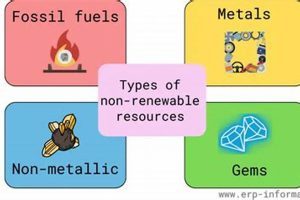
The key distinction lies in the rate of regeneration. Renewable resources, such as solar, wind, and hydro, replenish at a rate comparable to or exceeding their consumption. Non-renewable resources, like fossil fuels, accumulate over geological timescales vastly exceeding human lifespans.
Question 2: Is biomass always considered a renewable energy source?
Biomass is renewable only if managed sustainably. Deforestation or unsustainable harvesting practices can deplete biomass resources, negating their renewable designation and potentially contributing to environmental damage.
Question 3: How do government policies influence the development and adoption of renewable energy resources?
Government policies, including subsidies, tax incentives, and regulatory mandates, play a significant role in promoting renewable energy development. These measures can improve the economic competitiveness of renewable energy technologies and incentivize their adoption.
Question 4: What are some challenges associated with integrating renewable energy sources into existing power grids?
The intermittent nature of some renewable energy sources, such as solar and wind, poses challenges to grid stability. Infrastructure upgrades, energy storage solutions, and smart grid technologies are required to effectively integrate these variable energy sources.
Question 5: Does the “renewable” classification guarantee that an energy source has no environmental impact?
While generally cleaner than fossil fuels, renewable energy resources can still have environmental consequences. Hydroelectric dams can alter river ecosystems, and wind turbines may pose risks to wildlife. Comprehensive environmental impact assessments are crucial.
Question 6: How does technological innovation contribute to the advancement of renewable energy resources?
Technological innovation is essential for improving the efficiency, reliability, and affordability of renewable energy technologies. Advancements in solar panel efficiency, wind turbine design, and energy storage systems drive the expansion and competitiveness of renewable energy.
Understanding these key points facilitates informed decision-making regarding energy policy and promotes a transition towards a more sustainable and secure energy future.
The following section will explore specific renewable energy technologies in greater detail.
Renewable Energy Resource Designation
The preceding discussion elucidated the fundamental reasons underpinning the classification of specific energy resources as renewable. These resources exhibit characteristics of natural replenishment, sustainable yield, an effectively inexhaustible supply, minimal depletion, and considerable environmental benefits. These attributes, collectively, distinguish them from finite fossil fuels and other depleting energy sources. Understanding these distinctions is crucial for informed energy policy and sustainable development practices.
The ongoing transition towards increased reliance on these power sources demands continuous innovation, responsible resource management, and robust policy frameworks. While significant challenges remain in optimizing energy production, storage, and distribution, the long-term benefits of embracing these energy sources are paramount in securing a sustainable and environmentally sound future for succeeding generations. Continued diligence and investment in these resources are essential components of a responsible global energy strategy.