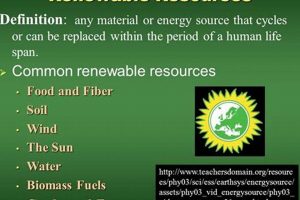
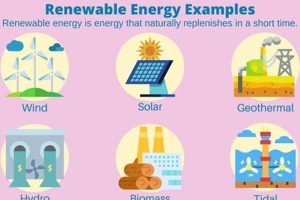
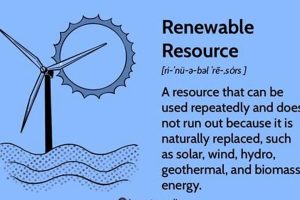
These are naturally replenished on a human timescale. Unlike finite reserves that deplete with use, these sources are continuously available, ensuring long-term sustainability. Examples include solar energy derived from sunlight, wind power harnessed from air currents, geothermal energy originating from the Earth’s internal heat, and hydropower generated from the flow of water. Biomass, derived from organic matter, also falls under this classification when managed sustainably.
Utilizing such sources offers multiple advantages. It reduces reliance on fossil fuels, mitigating greenhouse gas emissions and combating climate change. It enhances energy security by diversifying energy sources and reducing dependence on volatile global markets. Furthermore, developing related technologies can stimulate economic growth, creating employment opportunities in manufacturing, installation, and maintenance sectors. Historically, societies have relied on these resources for centuries, but modern technologies allow for more efficient and widespread utilization.
Understanding the characteristics and applications of these sources is fundamental for sustainable development and environmental stewardship. The following sections will delve into specific types, their associated technologies, and their roles in shaping a cleaner and more resilient energy future.
Optimizing the Use of Replenishable Energy Sources
Effective implementation of these energy sources requires a strategic approach encompassing technological advancements, policy frameworks, and public awareness. The following tips offer guidance for maximizing their potential.
Tip 1: Invest in Research and Development: Continuous innovation is crucial for improving the efficiency and reducing the cost of technologies that harness these resources. Prioritize funding for research into advanced materials, energy storage solutions, and grid integration techniques.
Tip 2: Implement Supportive Policy Frameworks: Governments should establish clear and consistent policies that incentivize adoption. This includes feed-in tariffs, tax credits, and renewable energy standards that create a stable investment environment.
Tip 3: Promote Grid Modernization: Integrate variable sources, such as solar and wind, into the electricity grid effectively. This requires investments in smart grids, enhanced transmission infrastructure, and advanced forecasting capabilities.
Tip 4: Encourage Public Awareness and Education: Inform the public about the benefits and potential of these energy sources. Public education campaigns can foster greater acceptance and support for their deployment.
Tip 5: Support Local Manufacturing and Job Creation: Promote the growth of domestic industries related to these energy technologies. This creates employment opportunities and strengthens the local economy.
Tip 6: Address Land Use Considerations: Plan the development of such projects carefully to minimize environmental impact and social disruption. Conduct thorough environmental impact assessments and engage with local communities.
Tip 7: Foster International Collaboration: Share knowledge and best practices with other countries to accelerate the global transition to clean energy. International cooperation is essential for addressing climate change effectively.
Adhering to these guidelines will enhance the effectiveness and maximize the beneficial impact of transitioning to a system powered by naturally replenished energy.
The subsequent sections will elaborate on the long-term impacts of these practices, including sustainability and global implications.
1. Sustainability

The concept of sustainability is inextricably linked to a definition of resources that naturally replenish. Sustainable practices ensure that present needs are met without compromising the ability of future generations to meet their own. Regarding energy, this hinges on utilizing sources that are not depleted by consumption, aligning directly with what a naturally replenishing resource entails. Without sustainable utilization, even inherently renewable sources can face degradation or exhaustion. For instance, unsustainable forestry practices can deplete biomass resources, undermining their classification as continuously available.
A key component of this resource definition is its long-term impact. For example, solar energy, when harnessed responsibly, offers a virtually inexhaustible energy source. Solar farms generate electricity with minimal environmental disruption, reducing reliance on fossil fuels and mitigating climate change. Similarly, geothermal energy, extracted from the Earth’s internal heat, provides a consistent and sustainable power source when managed correctly. These examples highlight the importance of integrating sustainability principles into the development and operation of continuous resource-based projects to ensure their ongoing viability.
Understanding the inherent connection between continuous availability and sustainability is crucial for fostering a resilient energy future. While these sources hold immense potential, their effective utilization requires careful planning, responsible management, and continuous monitoring. Challenges remain, including intermittency and the need for efficient energy storage solutions. However, by prioritizing sustainability in the development and deployment of naturally replenished resources, societies can pave the way for a cleaner, more secure, and environmentally responsible energy future.
2. Replenishment
The capacity for replenishment fundamentally defines sources deemed renewable. Without natural regeneration within a human timescale, a resource cannot be accurately categorized as such. Replenishment rate, mechanism, and susceptibility to external factors are therefore key considerations.
- Solar Energy Regeneration
Solar energy continuously regenerates as nuclear fusion within the sun perpetually emits electromagnetic radiation. This process is unaffected by human activity and will persist for billions of years. The sun’s inexhaustible supply positions solar power as an inherently renewable energy source.
- Hydrological Cycle and Water Replenishment
Freshwater resources depend on the cyclical processes of evaporation, condensation, and precipitation. The hydrological cycle continuously replenishes rivers, lakes, and aquifers. However, overuse and pollution can impair water quality and availability, impacting the resource’s practical renewability.
- Wind Power Formation
Wind energy originates from uneven solar heating of the Earth’s surface, creating atmospheric pressure differences that drive air currents. These pressure gradients are constantly reformed, ensuring a continuous supply of wind. Large-scale weather patterns are naturally occurring phenomena that contribute to the continuous regeneration of wind power.
- Biomass Regeneration and Sustainability
Biomass resources, such as forests and crops, replenish through photosynthesis. However, unsustainable harvesting practices can exceed the regeneration rate, leading to depletion. Sustainable biomass management requires balancing harvesting with natural growth rates to ensure long-term renewability.
These examples highlight the diverse mechanisms by which different resources are replenished. While some, like solar energy, are essentially inexhaustible, others, like water and biomass, require careful management to maintain their renewable status. Understanding these nuances is crucial for developing effective strategies for harnessing these resources sustainably.
3. Environmental Impact

The environmental impact of energy production is a central consideration when defining renewable resources. Transitioning from fossil fuels to continually replenished alternatives directly addresses concerns about greenhouse gas emissions, air and water pollution, and habitat destruction. While no energy source is entirely without ecological consequences, resources that naturally regenerate generally have a far smaller environmental footprint than their non-renewable counterparts. For instance, solar energy generation releases no air pollutants during operation, in stark contrast to coal-fired power plants. Similarly, wind power has a substantially lower impact on air and water quality compared to natural gas extraction and combustion.
However, even renewable technologies can have environmental effects. Large-scale hydropower projects can alter river ecosystems, impacting fish migration and water quality. Wind farms can pose risks to bird and bat populations. Solar farms can require significant land areas, potentially displacing existing habitats. Sustainable development of renewable energy requires careful planning and mitigation strategies to minimize these impacts. Environmental impact assessments are crucial for identifying potential risks and implementing appropriate safeguards. For example, wind farm developers can implement measures to reduce bird strikes, while hydropower projects can incorporate fish ladders to facilitate migration.
Ultimately, the environmental impact serves as a critical differentiator between renewable and non-renewable energy sources. By minimizing pollution, reducing greenhouse gas emissions, and protecting ecosystems, these resources contribute to a more sustainable and environmentally responsible energy future. Understanding the potential environmental effects of these technologies, and implementing mitigation strategies, is essential for maximizing their benefits and ensuring a genuinely sustainable transition.
4. Resource Availability

Resource availability is a cornerstone in defining what constitutes a naturally replenishing source. The extent to which a resource is accessible and readily obtainable for energy production directly influences its viability as a sustainable alternative to finite fossil fuels. The following considerations highlight the critical dimensions of resource availability in the context of continuously regenerating sources.
- Geographic Distribution
The uneven geographic distribution of these resources significantly impacts their overall availability. Solar irradiance levels vary greatly by latitude and cloud cover, affecting the potential for solar energy generation. Wind resources are concentrated in specific regions with favorable wind patterns. Geothermal energy is accessible primarily in areas with geothermal activity. This uneven distribution necessitates a diversified approach to energy production, tailoring technologies to the unique characteristics of each region.
- Technological Accessibility
Even when resources are geographically abundant, technological limitations can restrict their availability. The efficiency and cost-effectiveness of technologies used to harness these resources, such as solar panels, wind turbines, and geothermal power plants, directly impact their economic viability. Ongoing research and development are crucial for improving technological accessibility and reducing costs, thereby unlocking the full potential of such energy.
- Infrastructure and Storage
Adequate infrastructure for transmitting and storing energy is essential for maximizing the availability of intermittent resources, such as solar and wind power. The development of smart grids, energy storage solutions (e.g., batteries, pumped hydro), and transmission lines is critical for integrating variable sources into the energy mix. Without sufficient infrastructure, the potential of intermittent sources cannot be fully realized, limiting their practical availability.
- Seasonal Variability
The availability of many of these resources varies significantly throughout the year. Solar energy production is higher in summer months than in winter months. Hydropower generation depends on seasonal precipitation patterns. This seasonal variability necessitates a diversified energy portfolio and the implementation of energy storage solutions to ensure a consistent and reliable energy supply throughout the year.
Resource availability is therefore not simply a matter of abundance, but a complex interplay of geographic distribution, technological capabilities, infrastructure, and seasonal factors. Maximizing the contribution of continuously regenerating energy sources to the global energy supply requires a comprehensive approach that addresses these multifaceted challenges. By optimizing resource accessibility through technological innovation, infrastructure development, and strategic planning, societies can unlock the full potential of these resources and transition towards a more sustainable energy future.
5. Energy Security
The intersection of energy security and naturally replenished resources lies in the inherent ability of these sources to diversify energy supplies and reduce dependence on geopolitical volatile fossil fuels. Nations heavily reliant on imported oil or natural gas are susceptible to price fluctuations, supply disruptions, and political pressures. The integration of solar, wind, geothermal, and hydropower mitigates these risks by utilizing resources indigenous to a given geographic area. For example, countries with abundant sunshine can invest in solar energy infrastructure, reducing their reliance on foreign oil imports. This diversification bolsters energy security by creating a more resilient and self-sufficient energy system.
Furthermore, the decentralized nature of some energy technologies enhances energy security. Distributed solar generation, where individuals and businesses generate their own electricity, reduces vulnerability to large-scale grid failures or disruptions. Similarly, microgrids powered by these sources can provide reliable power to remote communities, improving energy access and reducing dependence on centralized power plants. Germany’s Energiewende, a transition toward a system powered by green energy, serves as a prominent example. Through a multi-faceted approach including wind, solar, and biomass, Germany aims to secure its energy supply while mitigating climate change.
In conclusion, the adoption of continuous energy sources is not merely an environmental imperative but a strategic necessity for enhancing energy security. By diversifying energy supplies, promoting energy independence, and fostering energy resilience, nations can insulate themselves from the risks associated with fossil fuel dependence. Overcoming challenges related to grid integration, energy storage, and intermittency is crucial for maximizing the contribution of these resources to a secure and sustainable energy future.
Frequently Asked Questions
The following section addresses common inquiries and clarifies key aspects of continually replenished resources, offering concise explanations.
Question 1: Are these resources truly inexhaustible?
While many resources that naturally replenish are vast, sustainable management is crucial. Overuse or improper practices can diminish availability. For example, while solar energy is practically inexhaustible, geothermal resources can be depleted if extraction rates exceed natural replenishment.
Question 2: How do economic factors influence the adoption of energy derived from these resources?
The economic competitiveness of continually replenished resources depends on technological advancements, government policies, and market conditions. Decreasing technology costs, supportive policies, and carbon pricing mechanisms can accelerate adoption, making them economically viable alternatives to fossil fuels.
Question 3: What role does energy storage play in harnessing the potential of variable such resources?
Energy storage is essential for addressing the intermittency of solar and wind power. Storage technologies, such as batteries and pumped hydro, store excess energy generated during peak production periods and release it when demand is high, ensuring a more reliable energy supply.
Question 4: What are the primary challenges associated with integrating a continually replenished resources into existing grids?
Integrating variable resources into existing grids poses challenges related to grid stability, transmission capacity, and forecasting. Grid modernization, smart grid technologies, and improved forecasting capabilities are necessary to manage the variability and ensure grid reliability.
Question 5: How can governments promote the development and deployment of continuous resources?
Governments can promote these types of energy through various policy instruments, including feed-in tariffs, tax credits, renewable energy standards, and carbon pricing mechanisms. These policies incentivize investment, reduce costs, and create a stable market for renewable energy technologies.
Question 6: How does public awareness and education impact the transition to a system powered by these sources?
Public awareness and education are crucial for fostering acceptance and support for a system powered by naturally regenerating resources. Informing the public about the benefits, costs, and potential of these sources can increase public demand and accelerate the transition.
Understanding these frequently asked questions provides a clearer perspective on the complexities and opportunities associated with harnessing the power of naturally replenished resources.
The following section will examine the future outlook for these types of energy, including technological advancements and policy considerations.
The Significance of Replenished Resources
This exploration has illuminated the multifaceted definition of resources that naturally regenerate. From sustainability and replenishment to environmental impact, availability, and energy security, each aspect underscores the critical role these sources play in shaping a sustainable energy future. Understanding the intricacies of each dimension is vital for effective policymaking, technological innovation, and responsible resource management.
The imperative to transition toward these sources is undeniable. Continued reliance on finite fossil fuels poses significant environmental and economic risks. Investment in and commitment to resources that naturally regenerate are essential for mitigating climate change, enhancing energy security, and fostering a more sustainable world for future generations. The path forward requires sustained effort, informed decision-making, and a global commitment to embracing a cleaner, more resilient energy paradigm.
![Guide to What Energy Resources Are Renewable [+Future] | Renewable Energy Solutions for a Sustainable Future | Clean & Green Power](https://pplrenewableenergy.com/wp-content/uploads/2026/03/th-516-300x200.jpg "Guide to What Energy Resources Are Renewable [+Future] Renewable Energy Solutions for a Sustainable Future | Clean & Green Power")