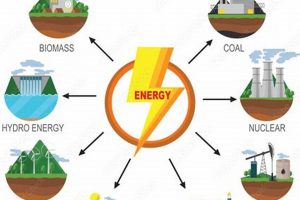
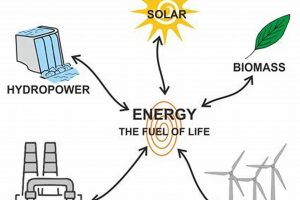
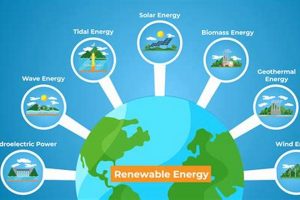
Harnessing power from naturally replenishing resources offers a sustainable alternative to traditional fossil fuels. Examples include solar radiation converted into electricity or heat, wind motion driving turbines, geothermal heat extracted from the earth, hydropower utilizing flowing water, biomass derived from organic matter, and ocean energy captured from tides and waves. These methods aim to provide energy with minimal environmental impact.
Utilizing these resources is crucial for mitigating climate change, reducing reliance on finite energy reserves, and fostering energy security. Historically, many cultures have depended on wind and water power for various tasks. Modern renewable energy technologies represent significant advancements, offering cleaner and more efficient ways to meet growing global energy demands while protecting ecosystems and human health.
This exploration delves into various methods of obtaining power from sustainable resources, analyzing their underlying technologies, current state of development, and potential impact on the future energy landscape. The following sections will examine specific technologies and their application across different sectors.
Practical Considerations for Harnessing Sustainable Energy
Implementing strategies for renewable energy utilization requires careful planning and execution. The following considerations aim to guide effective adoption and integration of environmentally sound energy solutions.
Tip 1: Evaluate Resource Availability: Before investing in any renewable energy system, conduct a thorough assessment of local resource potential. Solar irradiance, wind speeds, geothermal gradients, water flow rates, and biomass availability vary significantly by location. Accurate data ensures optimal system performance.
Tip 2: Prioritize Energy Efficiency: Reduce overall energy demand through energy-efficient building design, appliance upgrades, and optimized industrial processes. Lower energy consumption minimizes the size and cost of renewable energy installations required.
Tip 3: Explore Hybrid Systems: Consider integrating multiple energy generators to provide a more reliable and stable power supply. Combining solar and wind power, for example, can compensate for variability in either resource.
Tip 4: Implement Energy Storage Solutions: Address the intermittent nature of some energy sources through energy storage technologies like batteries, pumped hydro, or thermal storage. Storage enhances grid stability and allows power usage even when sunlight or wind is unavailable.
Tip 5: Secure Government Incentives and Policies: Research available tax credits, rebates, grants, and net metering policies to reduce upfront costs and improve the financial viability of sustainable energy projects.
Tip 6: Engage with Local Communities: Educate and involve local communities in the planning and implementation of sustainable energy projects to foster acceptance and support.
Effective adoption requires a comprehensive approach that considers both resource potential and practical implementation strategies. Integrating efficiency measures, exploring hybrid systems, and employing energy storage are essential for a successful transition.
The subsequent section will address potential challenges and mitigation strategies associated with broader implementation of these practices.
1. Solar irradiance intensity

Solar irradiance intensity, a critical factor in photovoltaic (PV) energy generation, directly influences the performance and economic viability of solar power, one of the primary forms of clean energy. It measures the power per unit area received from the sun and determines the electricity generated by PV systems.
- Geographic Variations and Energy Production
Solar irradiance varies significantly with latitude, season, and atmospheric conditions. Regions closer to the equator generally experience higher irradiance levels, leading to greater energy production from PV installations compared to higher-latitude regions. This variability necessitates careful site assessment and system design to optimize energy output.
- Impact on Photovoltaic System Design
High solar irradiance levels require PV panels to withstand greater thermal stress and higher power outputs. System designers must account for these factors to ensure the longevity and reliability of the installation. Conversely, lower irradiance regions may require larger panel arrays to achieve equivalent energy generation, impacting overall system cost and space requirements.
- Influence on Levelized Cost of Energy (LCOE)
LCOE, a key metric for evaluating the economic competitiveness of energy sources, is directly influenced by solar irradiance. Higher irradiance translates to greater energy generation, lowering the LCOE for solar projects and making them more economically attractive compared to fossil fuel-based alternatives. This drives investment and deployment of PV technology in regions with favorable solar resources.
- Role in Energy Storage Needs
Fluctuations in solar irradiance due to cloud cover or diurnal cycles create intermittency challenges. Regions with variable solar resources often require energy storage solutions, such as batteries or pumped hydro storage, to ensure a consistent and reliable power supply. Integrating storage increases the overall system cost but enhances the value and grid integration capabilities of solar energy.
In summary, solar irradiance intensity is a fundamental parameter shaping the efficiency, economics, and deployment strategies for solar energy as a key element in moving toward sustainable energy. Optimizing solar resource utilization through strategic site selection and system design, combined with advancements in energy storage, will accelerate the transition to a cleaner energy mix and mitigate climate change impacts.
2. Wind Turbine Efficiency

Wind turbine efficiency is a paramount factor in determining the overall effectiveness of wind power as a key element within the 6 renewable energy sources. This parameter quantifies the conversion rate of kinetic energy from the wind into usable electrical energy. Higher efficiency translates directly into increased power generation from a given wind resource, thereby reducing the cost per kilowatt-hour produced. Consequently, optimizing wind turbine efficiency is crucial for the economic viability and widespread adoption of wind energy, contributing substantially to sustainable energy portfolios.
The efficiency of wind turbines is influenced by multiple factors, including blade design, generator technology, and control systems. Advanced blade designs, incorporating airfoils optimized for specific wind conditions, can capture more energy from the wind. High-efficiency generators minimize energy losses during conversion, while sophisticated control systems adjust blade pitch and yaw to maximize power output under varying wind speeds. For instance, the Vestas V164 turbine, featuring large rotor diameters and advanced control algorithms, demonstrates enhanced efficiency in harnessing wind energy in offshore environments. Similarly, General Electric’s Haliade-X turbine showcases innovative blade designs that optimize energy capture in lower wind speed regions. Efficiency improvements in wind turbine technology directly impact the overall contribution of wind energy to sustainable energy targets.
In conclusion, maximizing wind turbine efficiency is essential for enhancing the competitiveness and scalability of wind energy within the broader context of these power alternatives. Continuous innovation in turbine design, generator technology, and control systems is vital for further increasing efficiency and reducing the cost of wind power. As wind energy becomes an increasingly important component of a sustainable energy mix, the relentless pursuit of improved turbine performance will play a pivotal role in achieving global climate goals and ensuring a reliable and affordable renewable energy future.
3. Geothermal Gradient Depth

Geothermal gradient depth, a critical parameter in the context of harnessing geothermal power, one of the key renewable energy resources, refers to the rate at which the Earth’s temperature increases with depth. The depth at which sufficiently high temperatures are accessible significantly affects the feasibility and economics of geothermal energy extraction. It dictates the methods required to access heat, the efficiency of energy conversion processes, and ultimately, the viability of geothermal projects as sustainable energy solutions.
- Influence on Geothermal System Types
The depth of the geothermal gradient directly influences the type of geothermal system that can be exploited. High-temperature geothermal resources, suitable for electricity generation, typically require shallower gradients or concentrated heat sources near the surface, such as volcanic areas. In contrast, regions with lower geothermal gradients may only support direct-use applications, such as heating buildings or agricultural processes, unless enhanced geothermal systems (EGS) are employed. EGS technologies enable access to geothermal energy in areas where natural permeability and fluid saturation are limited, but require deeper drilling and engineered fracturing, thereby increasing costs.
- Impact on Drilling Costs and Technology
The depth of the geothermal gradient is a primary driver of drilling costs, which constitute a significant portion of the overall project expense. Deeper drilling necessitates more advanced and expensive drilling technologies, including high-temperature-resistant drilling fluids and specialized equipment capable of withstanding extreme pressures and temperatures. Furthermore, the risk of encountering geological complexities, such as faults or impermeable rock formations, increases with depth, potentially leading to drilling delays and cost overruns. Accurate assessment of the geothermal gradient and subsurface geology is therefore essential for effective project planning and risk mitigation.
- Relationship to Energy Conversion Efficiency
The temperature of the geothermal resource, which is directly related to the geothermal gradient depth, significantly impacts the efficiency of energy conversion processes. High-temperature geothermal resources allow for the use of conventional steam turbines to generate electricity, offering relatively high conversion efficiencies. Lower-temperature resources, on the other hand, require binary cycle power plants, which utilize a secondary working fluid with a lower boiling point to extract heat and drive turbines. Binary cycle systems typically have lower conversion efficiencies compared to steam turbines, but they enable the utilization of a broader range of geothermal resources. The choice of energy conversion technology must therefore be carefully matched to the temperature characteristics of the geothermal resource to optimize energy output.
- Role in Geothermal Resource Assessment and Development
Geothermal gradient depth is a fundamental parameter in assessing the economic viability of geothermal resources. Detailed geological and geophysical surveys are conducted to map subsurface temperature distributions and identify areas with favorable geothermal gradients. These data are used to create geothermal resource maps, which guide exploration and development efforts. Accurate assessment of the geothermal gradient is crucial for estimating the potential power output of a geothermal field and determining the financial returns on investment. Furthermore, monitoring changes in the geothermal gradient over time can provide valuable insights into the long-term sustainability of geothermal resources and inform management practices.
In summary, geothermal gradient depth plays a pivotal role in shaping the technical and economic feasibility of geothermal energy projects. Its influence extends from the selection of appropriate geothermal system types and drilling technologies to the efficiency of energy conversion processes and the accuracy of resource assessments. Optimizing the utilization of geothermal resources requires a comprehensive understanding of geothermal gradient characteristics and their implications for sustainable energy development. Effective integration of geothermal energy into the renewable energy mix necessitates continuous innovation in drilling techniques, energy conversion technologies, and resource management strategies.
4. Hydropower resource volume

Hydropower resource volume, referring to the quantity of water available for electricity generation, is a primary determinant of hydropower’s potential contribution as one of the six renewable energy sources. The connection lies in a direct proportionality: a greater volume of water, given sufficient head (elevation difference), translates to increased power generation capacity. This dependency is fundamental to hydropower’s viability and deployment. A cause-and-effect relationship exists, where the availability of substantial and sustained water flow directly causes the potential for significant electricity generation. Without adequate water resource, hydropower’s role as a renewable energy source is inherently limited.
The importance of resource volume is exemplified by large-scale hydropower projects such as the Three Gorges Dam in China or the Itaipu Dam on the Brazil-Paraguay border. These facilities are predicated on the immense water volume provided by major rivers. The scale of electricity generation they achieve would be impossible without such abundant water resources. Smaller-scale run-of-river hydropower plants, while environmentally less disruptive, are equally reliant on consistent water flow, although their power output is necessarily lower. Furthermore, understanding hydropower resource volume is crucial for sustainable water resource management. Balancing electricity generation with other water uses, such as irrigation, drinking water supply, and ecosystem preservation, requires careful planning and consideration of long-term water availability and environmental impacts.
In conclusion, hydropower resource volume forms the cornerstone of hydropower’s contribution to the portfolio of renewable energy sources. Its influence on electricity generation capacity is direct and undeniable. Effective management and responsible development of hydropower resources necessitate comprehensive assessments of water availability, environmental impacts, and competing water demands. As climate change continues to alter precipitation patterns and water availability, the sustainable management of hydropower resource volume will become increasingly critical for ensuring a reliable and environmentally sound electricity supply.
5. Biomass fuel availability

Biomass fuel availability is a crucial determinant of biomass energy’s viability as a member of sustainable energy portfolios. The connection arises from the essential input that fuel availability serves in the energy conversion process. Without a consistent and adequate supply of biomass feedstock, the operation of biomass-based power plants or biofuel production facilities becomes unsustainable. The relationship is direct: an abundant and accessible biomass resource causes a greater potential for biomass energy to contribute significantly as an alternative power source. Limited or unreliable biomass availability inherently constrains biomass energy’s role.
The importance of biomass availability is evident in the varying success of biomass energy projects worldwide. Regions with well-established agricultural sectors, sustainable forestry practices, or efficient waste management systems are better positioned to utilize biomass energy effectively. For example, Brazil’s extensive sugarcane production supports a large-scale ethanol industry. Similarly, countries with significant forestry resources, such as Sweden and Finland, utilize biomass for heating and electricity generation. Conversely, biomass energy projects in areas with limited or poorly managed biomass resources often face challenges related to feedstock supply, cost, and sustainability. The availability of different biomass types, including agricultural residues, forest products, and energy crops, influences the technology choices and the economic viability of biomass energy projects. Furthermore, ensuring sustainable biomass harvesting practices is essential to prevent deforestation, soil degradation, and other negative environmental impacts.
In conclusion, biomass fuel availability is a foundational aspect of biomass energy’s contribution to the range of sustainable energy sources. Its influence on energy production capacity is undeniable. Effective management and responsible sourcing of biomass resources necessitate comprehensive assessments of feedstock availability, environmental impacts, and competing resource demands. As the global demand for renewable energy grows, sustainable and reliable biomass fuel availability will become increasingly critical for ensuring a secure and environmentally sound energy supply. This emphasis on fuel availability must be considered within the broader context of each energy source as key factors for determining overall success.
6. Ocean wave frequency
Ocean wave frequency, a characteristic of ocean waves, directly influences the efficiency and power output of wave energy converters, contributing to its viability as one of the six renewable energy sources. The relationship is rooted in the principle that higher wave frequencies, given consistent wave amplitude, deliver more energy per unit time. This increased energy flux enhances the power generation capabilities of wave energy devices. The importance of understanding wave frequency is underscored by its role in selecting appropriate wave energy technologies and optimizing device deployment to maximize energy capture. For example, devices designed to resonate with specific wave frequencies achieve higher efficiencies in those wave conditions.
Further, wave frequency is a key consideration in assessing the suitability of different coastal regions for wave energy development. Areas with consistently high wave frequencies, such as certain locations off the coasts of Europe and Australia, are more favorable for wave energy extraction. Practical applications include the design of wave farms tailored to specific wave climates. These wave farms utilize arrays of wave energy converters strategically positioned to capture the maximum amount of energy from prevailing wave conditions. Accurate measurement and prediction of wave frequency are therefore essential for optimizing the performance of wave energy systems and ensuring their long-term economic viability. In areas with more variable wave climates, robust design is crucial, and research into broadband devices which can harness energy efficiently across a wide range of frequencies are of prime importance.
In summary, ocean wave frequency plays a crucial role in determining the feasibility and efficiency of harnessing energy from ocean waves as a renewable source. Its influence extends from technology selection to resource assessment and device optimization. Sustained advancements in wave energy technologies and accurate characterization of wave climates are necessary to unlock the full potential of ocean wave energy and contribute to a sustainable energy future. Challenges exist, mainly relating to cost and device survivability in harsh ocean conditions, but there is continuous development with new materials and technologies.
7. Grid integration challenges

Integrating power generated from sustainable sources into existing electrical grids presents significant hurdles. The variable nature of many generators requires system adaptations and technological advancements to ensure grid stability and reliability, especially when considering the impact of different renewable resources.
- Intermittency and Variability
Solar and wind power exhibit variability due to weather patterns, causing fluctuations in electricity supply. This intermittency requires grid operators to balance supply and demand in real-time, often necessitating backup generation from dispatchable sources or advanced forecasting techniques to predict renewable energy output. Batteries and other energy storage technologies can assist in mitigating short-term intermittency and provide power smoothing.
- Geographical Distribution
Optimal locations for harnessing sustainable energy are often distant from population centers, leading to transmission bottlenecks and increased grid losses. Expanding transmission infrastructure to connect renewable energy resources to load centers requires significant investment and can face regulatory and environmental challenges. High Voltage Direct Current (HVDC) transmission can facilitate the transport of large amounts of electricity over long distances with reduced losses.
- Grid Stability and Inertia
Conventional power plants provide grid inertia, which helps to stabilize frequency and voltage. Replacing conventional generation with inverter-based renewable energy resources reduces overall system inertia, potentially leading to grid instability. Synchronous condensers and advanced grid control systems can provide synthetic inertia to mitigate this issue and maintain grid stability. Microgrids can also provide increased grid stability and resilience.
- Forecasting and Management
Accurate forecasting of sustainable energy output is essential for managing the grid and ensuring reliable electricity supply. Advanced weather models, machine learning algorithms, and real-time data analysis are used to predict renewable energy generation. These forecasts enable grid operators to make informed decisions about dispatching other generation resources and managing grid congestion. Better sensors and advanced algorithms are needed.
Addressing these challenges is essential for maximizing the contribution of sustainable sources to the energy mix. Technological advancements in energy storage, grid control, and forecasting, combined with strategic infrastructure investments, are crucial for achieving a reliable and sustainable electricity grid. Successfully integrating these resources necessitates a holistic approach that considers both technical and economic factors.
Frequently Asked Questions
This section addresses common inquiries regarding sustainable energy generation, providing factual responses to promote understanding.
Question 1: What constitutes a renewable energy source?
Renewable energy originates from resources that are naturally replenished, such as sunlight, wind, water flow, geothermal heat, and biomass. These sources contrast with finite fossil fuels, which deplete with use.
Question 2: Why is transitioning to sustainable energy sources important?
Adoption is essential for mitigating climate change by reducing greenhouse gas emissions, decreasing reliance on fossil fuels, and enhancing energy security. It also supports a cleaner environment and public health.
Question 3: What are the primary challenges associated with large-scale adoption of these sources?
The primary challenges include intermittency, geographical limitations, grid integration issues, infrastructure costs, and the need for advanced energy storage solutions.
Question 4: How does energy storage improve the reliability of renewable sources?
Energy storage systems, such as batteries or pumped hydro, capture excess energy generated during periods of high production and release it when production is low, ensuring a more consistent power supply.
Question 5: What role do government policies play in promoting the use of 6 renewable energy sources?
Government policies, including tax incentives, subsidies, renewable energy mandates, and carbon pricing, can significantly encourage investment in and deployment of such resources, accelerating the transition to a cleaner energy system.
Question 6: What are the long-term cost implications of adopting sustainable energy sources?
While initial investment costs may be higher, sustainable resources offer long-term cost advantages due to lower fuel costs, reduced environmental damage, and improved energy security. Technological advancements continue to drive down the costs of renewable energy technologies.
The transition to a sustainable energy future requires addressing these questions and embracing the potential of clean, renewable resources.
The subsequent section provides key takeaways from this exploration.
Conclusion
This exploration has underscored the critical role of these sustainable resources in shaping a cleaner energy future. Each sourcesolar, wind, geothermal, hydropower, biomass, and ocean energyoffers unique potential and challenges, requiring tailored strategies for effective utilization. The long-term benefits of widespread adoption extend beyond environmental preservation, encompassing economic stability and energy security.
Realizing the full potential of these resources demands sustained commitment to technological innovation, strategic policy implementation, and responsible resource management. Future progress hinges on the collective efforts of governments, industries, and individuals to prioritize sustainable practices and drive the global energy transition.