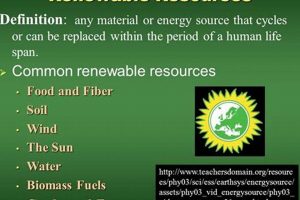
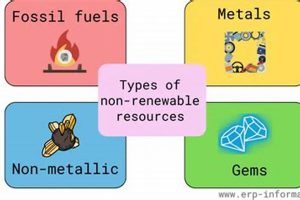
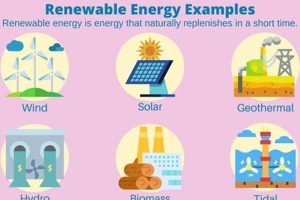
Globally, the generation of power from water sources represents the dominant form of renewable energy utilization. This involves harnessing the kinetic energy of moving water, typically through hydroelectric dams, to drive turbines and produce electricity. An example is the Three Gorges Dam in China, a large-scale installation demonstrating the significant power generation capacity of this resource.
This method of energy production offers several advantages, including a relatively low operating cost once the initial infrastructure is established and a minimal emission of greenhouse gases during operation. Throughout the 20th century, this energy source played a crucial role in electrifying many regions and continues to be a significant contributor to global electricity supply. Its widespread adoption is a result of its maturity, efficiency, and ability to provide baseload power.
The following sections will delve into the specifics of modern applications, geographic distribution, environmental considerations, and the future outlook of this prominent renewable energy source.
Maximizing the Benefits of the Predominant Renewable Energy Source
Effective management and development are essential to optimize the advantages of the most prevalent global renewable energy resource. Several key considerations can enhance its sustainability and efficiency.
Tip 1: Conduct Thorough Environmental Impact Assessments: Prior to the construction of new facilities, a comprehensive evaluation of the potential ecological consequences is imperative. This includes assessing effects on aquatic ecosystems, wildlife habitats, and water quality.
Tip 2: Implement Fish Passage Technologies: Structures can impede fish migration. The integration of fish ladders, bypass channels, or other innovative technologies can mitigate this impact and maintain biodiversity.
Tip 3: Optimize Reservoir Management: Careful regulation of water levels and flow rates can balance energy generation with environmental needs. This includes considering downstream water requirements and potential impacts on riparian zones.
Tip 4: Modernize Existing Infrastructure: Upgrading older power generation facilities can improve efficiency and reduce environmental impacts. This may involve replacing turbines with more advanced models or implementing more effective sediment management strategies.
Tip 5: Promote Community Engagement: Involving local communities in the planning and operation of facilities fosters transparency and addresses potential concerns. This can lead to more sustainable and socially responsible projects.
Tip 6: Invest in Research and Development: Continued innovation is crucial for advancing the technology and improving its environmental performance. This includes exploring new methods of power generation and mitigating environmental impacts.
Tip 7: Prioritize Dam Safety: Regular inspections and maintenance are essential to ensure the structural integrity of facilities and prevent catastrophic failures. This safeguards both the environment and downstream populations.
Adherence to these guidelines enhances the long-term viability and sustainability of the world’s most utilized renewable energy source, ensuring its continued contribution to global energy needs while minimizing environmental and social impacts.
The concluding section will summarize the main points discussed and provide a final perspective on the future of this critical energy resource.
1. Infrastructure Development

The establishment of extensive infrastructure is fundamental to harnessing and distributing the world’s most prevalent renewable energy source. The construction of dams, reservoirs, powerhouses, and transmission lines represents the physical manifestation of this energy resource’s utilization. The availability and scale of these infrastructures directly dictate the amount of power that can be generated and delivered to end-users. For instance, the Grand Coulee Dam in the United States exemplifies how significant infrastructure investment enables the large-scale harnessing of water power, transforming a river into a major electricity provider.
Efficient operation and maintenance of this infrastructure are crucial for sustained energy output and minimizing environmental impact. Regular inspections, upgrades, and the implementation of advanced control systems ensure that the facilities function optimally and that potential risks, such as dam failures or habitat disruption, are mitigated. The Itaipu Dam, a bi-national project between Brazil and Paraguay, showcases how international collaboration can facilitate the development and management of complex infrastructures for shared energy benefits. Its ongoing maintenance and technological advancements highlight the necessity of continuous investment and adaptation.
In summary, infrastructure development is not merely a prerequisite but an integral component of the world’s most utilized renewable energy resource. The effectiveness and sustainability of this energy source are inextricably linked to the planning, construction, and management of its associated infrastructure. Strategic investments in infrastructure, coupled with sound environmental practices, are essential for maximizing the benefits and minimizing the risks associated with this vital energy resource.
2. Geographical Distribution

The prevalent use of water power is inextricably linked to geographical factors. The availability and distribution of suitable water resources dictate where this form of renewable energy can be effectively harnessed.
- River Systems and Topography
The presence of substantial river systems combined with varied topography are primary determinants. Regions with steep gradients and high precipitation provide the necessary water flow and head for efficient power generation. For instance, mountainous regions like the Himalayas, the Andes, and the Alps are prime locations due to their abundant glacial meltwater and steep river courses. The geographical characteristics directly enable the establishment of large-scale facilities.
- Climatic Zones and Rainfall Patterns
Areas with consistent and reliable rainfall patterns are essential for maintaining consistent water levels in reservoirs and rivers. Tropical and temperate zones often possess the necessary precipitation to support continuous power generation. Regions experiencing prolonged droughts or erratic rainfall patterns face challenges in maintaining consistent energy production, highlighting the climate’s critical influence. The Amazon basin, with its high rainfall, is an example of a climatically favorable zone.
- Accessibility and Infrastructure
The practicality of constructing and maintaining facilities is also influenced by geography. Remote locations may possess abundant water resources but lack the necessary infrastructure for transporting equipment and transmitting electricity. Proximity to population centers and existing transmission grids is a significant factor in the economic viability of installations. The accessibility of construction sites influences project costs and timelines, playing a pivotal role in investment decisions.
- Environmental Considerations
The geographical setting also dictates environmental impact. The presence of unique ecosystems, endangered species, or culturally significant sites can limit the feasibility of construction. Careful consideration of these factors is essential to mitigate potential negative consequences. The location of facilities within or near protected areas necessitates stringent environmental management practices.
The geographical distribution of suitable water resources dictates the viability of power generation. Understanding these geographical factors is crucial for sustainable development and responsible energy planning. Uneven distribution necessitates international cooperation and innovative solutions for efficient resource management and equitable energy access.
3. Technological Advancements

The sustained prominence of power generation from water sources as the most globally utilized renewable energy resource is intrinsically linked to continuous technological advancements. These advancements have directly influenced the efficiency, reliability, and environmental impact associated with harnessing water power. Improvements in turbine design, for example, have enabled more effective conversion of kinetic energy into electricity, increasing power output from existing facilities and making lower-head sites economically viable. The development of variable-speed turbines allows for optimal performance under fluctuating water flow conditions, enhancing the adaptability and grid stability of installations. Further, advancements in materials science have led to the creation of more durable and corrosion-resistant components, extending the lifespan and reducing the maintenance costs of generating facilities. The application of computational fluid dynamics (CFD) in the design process has streamlined the optimization of turbine blades and water channels, leading to enhanced efficiency and reduced cavitation, a phenomenon that can cause significant damage to turbine components.
The integration of digital technologies and sophisticated control systems further contributes to the optimized operation of facilities. Real-time monitoring of water levels, flow rates, and equipment performance allows for proactive adjustments and predictive maintenance, minimizing downtime and maximizing energy production. Remote monitoring and control capabilities enhance the efficiency of grid management and facilitate the integration of generation with other renewable energy sources, such as solar and wind power. For example, advancements in sensor technologies and data analytics are enabling the development of “smart” reservoirs that can dynamically adjust water releases based on predicted weather patterns and electricity demand, optimizing both energy production and water resource management. The development of pumped storage technology allows excess electricity generated during off-peak hours to pump water uphill to a reservoir, which can then be released to generate electricity during periods of high demand, providing a valuable form of grid-scale energy storage and enhancing the reliability of electrical grids.
In conclusion, the sustained prevalence of energy production from water resources as a leading renewable energy source is not solely attributable to its inherent availability but is heavily dependent on ongoing technological innovation. These advancements, ranging from improved turbine designs to sophisticated control systems, contribute to enhanced efficiency, reliability, and environmental sustainability. Continued investment in research and development is essential for further optimizing water power technology and ensuring its continued contribution to global energy needs. The challenges related to environmental impact and infrastructure development can be addressed through technological innovation, underscoring its critical role in the future of sustainable energy production.
4. Environmental Considerations
The utilization of water resources for power generation, while a dominant form of renewable energy, presents significant environmental considerations that must be carefully addressed to ensure long-term sustainability. These considerations span ecological impacts, water resource management, and the alteration of natural landscapes.
- Habitat Disruption and Ecosystem Alteration
The construction of dams and reservoirs often leads to the inundation of terrestrial habitats and the fragmentation of aquatic ecosystems. This can disrupt migration patterns of fish and other aquatic organisms, leading to population declines and biodiversity loss. An example is the alteration of salmon migration routes by dams on the Columbia River in the United States, requiring extensive mitigation efforts such as fish ladders and hatchery programs. The implications include reduced ecosystem services and potential economic losses for fisheries.
- Water Quality and Hydrological Regime Changes
Reservoirs can alter water temperature, oxygen levels, and nutrient cycling, affecting downstream water quality and impacting aquatic life. Changes in flow regimes can disrupt downstream ecosystems, leading to the erosion of riverbanks and the loss of riparian habitats. The Aswan High Dam on the Nile River provides an example of how altered sediment flow can lead to coastal erosion and reduced soil fertility downstream. Addressing these impacts requires careful reservoir management and the implementation of environmental flow regimes.
- Greenhouse Gas Emissions from Reservoirs
While often considered a clean energy source, reservoirs can emit greenhouse gases such as methane and carbon dioxide due to the decomposition of organic matter in the submerged area. The magnitude of these emissions can vary depending on the size and location of the reservoir, as well as the type and amount of organic matter present. Studies have shown that tropical reservoirs can be significant sources of methane. Mitigation strategies include selective clearing of vegetation before inundation and managing reservoir water levels to minimize anaerobic decomposition.
- Sedimentation and Reservoir Capacity
The accumulation of sediment in reservoirs reduces their storage capacity and shortens their lifespan. This can impact power generation capacity and water availability for irrigation and other uses. Sedimentation can also alter downstream river morphology and disrupt aquatic habitats. The Three Gorges Dam in China faces challenges related to sediment management, requiring ongoing efforts to remove accumulated sediment and prevent further capacity loss. Addressing sedimentation requires integrated watershed management and the implementation of sediment bypass systems.
These environmental considerations highlight the complex trade-offs associated with the widespread use of water for energy production. Sustainable utilization requires careful planning, impact assessment, and the implementation of mitigation measures to minimize ecological damage and ensure the long-term viability of these vital resources. The challenge lies in balancing the need for clean energy with the imperative of protecting aquatic ecosystems and maintaining water quality for present and future generations.
5. Economic Viability

The continued global reliance on power generation from water resources as the predominant renewable energy source is fundamentally underpinned by its economic viability. This encompasses both the cost of electricity generation and the broader economic impacts associated with infrastructure development and resource management. The relatively low operating costs of facilities, once constructed, contribute significantly to its economic competitiveness. Furthermore, the long lifespan of water infrastructure allows for amortization of initial capital investments over several decades, enhancing its long-term financial attractiveness. The availability of water, a naturally replenishing resource, reduces fuel costs associated with other forms of energy production. The economic equation varies by region, dependent on factors such as geographic conditions, regulatory frameworks, and access to financing. For instance, countries with abundant water resources and supportive government policies often realize the greatest economic advantages.
The economic viability extends beyond direct electricity generation. The construction and operation of facilities create employment opportunities, stimulate regional development, and generate tax revenues. Reservoirs often provide additional benefits, including water supply for irrigation, flood control, and recreational opportunities, further enhancing their economic value. Conversely, the construction of large-scale facilities can also have negative economic consequences, such as displacement of communities, loss of agricultural land, and impacts on fisheries. A comprehensive economic assessment must therefore consider both the positive and negative externalities associated with energy generation. The economic assessment of potential projects incorporates factors such as environmental mitigation costs, community resettlement expenses, and long-term maintenance requirements. This detailed analysis assists governments and private investors in making informed decisions.
In conclusion, the sustained global prevalence of water power as the dominant renewable energy source is inextricably linked to its economic viability. While initial capital investments can be substantial, the low operating costs, long lifespan, and ancillary benefits contribute to its economic competitiveness. However, a comprehensive economic assessment must account for both the positive and negative externalities associated with energy development to ensure sustainable resource management and equitable distribution of benefits. As technological advancements continue to improve efficiency and reduce costs, and as societal awareness of environmental impacts grows, the economic viability of water power will remain a central consideration in the global energy landscape.
Frequently Asked Questions Regarding the Predominant Global Renewable Energy Resource
The following questions address common inquiries and misconceptions regarding the most widely used renewable energy resource globally.
Question 1: What precisely constitutes the most widely used renewable energy resource?
The generation of power from water sources, specifically through facilities such as hydroelectric dams, currently represents the most utilized form of renewable energy on a worldwide scale. It involves harnessing the kinetic energy of moving water to drive turbines and generate electricity.
Question 2: What are the primary benefits associated with this resource?
The benefits include relatively low operating costs after initial infrastructure investment, minimal greenhouse gas emissions during operation, and the ability to provide baseload power, meaning a consistent and reliable supply of electricity.
Question 3: What are the primary environmental concerns related to widespread use?
Environmental concerns encompass habitat disruption and ecosystem alteration due to dam construction, changes in water quality and hydrological regimes, and, in some cases, greenhouse gas emissions from reservoirs due to the decomposition of organic matter.
Question 4: How can environmental impacts be mitigated?
Mitigation strategies include conducting thorough environmental impact assessments prior to construction, implementing fish passage technologies, optimizing reservoir management, and modernizing existing infrastructure to improve efficiency and reduce environmental harm.
Question 5: Where are the regions best suited for this method of energy generation?
Regions with substantial river systems, varied topography (e.g., mountainous areas), and consistent rainfall patterns are generally best suited for harnessing water power. Proximity to transmission grids and accessibility for construction are also important factors.
Question 6: What are the future prospects for this energy source?
The future prospects depend on technological advancements that improve efficiency and reduce environmental impacts, as well as on sustainable resource management practices and responsible energy planning. Continued innovation and careful consideration of environmental factors are crucial for its long-term viability.
In summary, while offering significant advantages in terms of renewable energy production, the reliance on water power requires careful management to minimize environmental consequences and ensure sustainable utilization.
The concluding section will provide a summary and final thoughts regarding the global status and future direction of this key renewable energy resource.
Conclusion
This exploration has illuminated the multifaceted dimensions of the most widely used renewable energy resource worldwide. Key points encompass its reliance on suitable geographical conditions, infrastructural requirements, ongoing technological advancements, associated environmental considerations, and its intricate economic viability. Each of these elements contributes to a comprehensive understanding of the global energy landscape.
The sustained prominence of this energy source necessitates diligent environmental management, continuous technological improvement, and strategic resource allocation. The future trajectory of global energy production depends, in part, on responsibly harnessing this dominant renewable resource while mitigating its potential adverse consequences.
![Guide to What Energy Resources Are Renewable [+Future] | Renewable Energy Solutions for a Sustainable Future | Clean & Green Power](https://pplrenewableenergy.com/wp-content/uploads/2026/03/th-516-300x200.jpg "Guide to What Energy Resources Are Renewable [+Future] Renewable Energy Solutions for a Sustainable Future | Clean & Green Power")