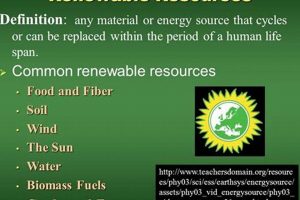
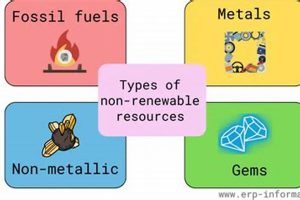
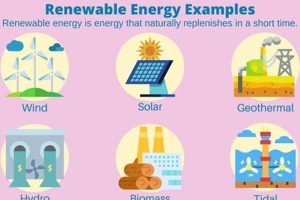
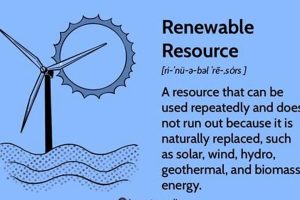
Identifying sources of energy that can be replenished naturally and are not depleted upon use is a fundamental aspect of sustainable energy practices. Examples include solar, wind, geothermal, and hydroelectric power. These resources contrast sharply with finite fossil fuels, offering a path towards environmentally responsible energy generation.
The importance of employing these replenishable sources stems from their ability to reduce carbon emissions, mitigate climate change, and enhance energy security. Historically, societies have relied on renewable forms such as water and wind power, but modern technologies allow for more efficient and widespread utilization. The shift towards these resources also fosters innovation and creates new economic opportunities.
The following sections will delve into specific types of such sustainable energy sources, examining their characteristics, advantages, and current applications. Emphasis will be placed on understanding how these options contribute to a more sustainable and resilient energy future.
Renewable Energy Resource Selection Guidelines
Careful consideration is required when evaluating which sustainable energy options are most suitable. Factors such as geographical location, environmental impact, and economic feasibility must be thoroughly assessed.
Tip 1: Conduct a Resource Assessment: Prioritize detailed analysis of available resources. The intensity of solar radiation, average wind speeds, or geothermal gradients should be quantified to determine potential energy yields.
Tip 2: Evaluate Environmental Impact: Minimize ecological disturbance. Consider the effects on local ecosystems, water resources, and land use patterns. Choose energy sources that have a low carbon footprint and limited pollution potential.
Tip 3: Analyze Economic Viability: Conduct comprehensive cost-benefit analyses. Account for initial investment, operating expenses, and long-term maintenance requirements. Consider the availability of government incentives and potential revenue streams.
Tip 4: Assess Technological Maturity: Opt for proven and reliable technologies. Prioritize established renewable energy solutions with a track record of successful implementation. Consider emerging technologies with caution, ensuring adequate research and development have been performed.
Tip 5: Consider Grid Integration: Plan for seamless integration into existing power grids. Address challenges related to intermittency and variability. Invest in energy storage solutions and grid modernization efforts.
Tip 6: Engage Stakeholders: Incorporate community feedback and local expertise. Engage with residents, businesses, and government agencies to address concerns and build consensus. Ensure that projects align with local needs and priorities.
Adhering to these guidelines facilitates the selection of sustainable energy solutions that are environmentally sound, economically viable, and socially responsible. This strategic approach ensures long-term energy security and reduces reliance on conventional fossil fuels.
The next section will discuss real-world applications and case studies demonstrating the successful implementation of diverse sustainable energy technologies.
1. Solar irradiance

Solar irradiance, as a quantifiable measure of solar power density incident on a surface, is inextricably linked to the assessment and utilization of solar energy. Its consistent measurement and analysis are fundamental to determining the viability of solar power generation in any given location, directly impacting decisions about which resources are renewable and cost-effective.
- Geographical Variance and Site Selection
Solar irradiance levels vary significantly by geographical location, latitude, and atmospheric conditions. Areas closer to the equator typically exhibit higher average irradiance, making them more suitable for solar power installations. Accurate measurement of irradiance at potential sites is essential for optimizing the design and placement of solar panels, maximizing energy capture and system efficiency. This, in turn, influences the economic return on investment and the resource’s viability as a long-term energy source.
- Technological Optimization of Solar Panels
Different solar panel technologies exhibit varying degrees of efficiency in converting solar irradiance into electricity. Polycrystalline and monocrystalline silicon panels, as well as thin-film technologies, are designed to operate effectively within specific irradiance ranges. Matching the appropriate panel technology to the anticipated irradiance levels at a given location is critical for maximizing energy output and minimizing costs. Advanced technologies, such as concentrating solar power (CSP), further enhance irradiance capture by focusing sunlight onto a smaller area, increasing energy conversion rates.
- Impact on Energy Storage Requirements
Solar irradiance is not constant; it fluctuates due to diurnal cycles, weather patterns, and seasonal variations. These fluctuations necessitate the integration of energy storage solutions, such as batteries or thermal storage, to ensure a consistent and reliable power supply. The size and type of energy storage system required are directly proportional to the variability in solar irradiance and the desired level of grid stability. Effective energy storage solutions mitigate the intermittency of solar energy, enhancing its practicality as a renewable resource.
- Predictive Modeling and Grid Integration
Advanced predictive models leverage historical irradiance data and weather forecasts to estimate future solar power generation. These models are essential for managing the integration of solar energy into the power grid. Accurate predictions allow grid operators to anticipate changes in solar power output and adjust other energy sources accordingly, maintaining grid stability and reliability. Predictive modeling enhances the efficiency and cost-effectiveness of solar energy integration, reinforcing its role as a viable and sustainable energy resource.
In summary, solar irradiance is a critical determinant in assessing the potential of solar energy, influencing site selection, technology choices, storage requirements, and grid integration strategies. A thorough understanding of irradiance patterns and their implications is essential for maximizing the economic and environmental benefits of solar power, solidifying its role as a cornerstone of sustainable energy systems.
2. Wind velocity

Wind velocity is a primary determinant of the energy obtainable from wind power, a notable example of a renewable energy source. The energy derived from wind is directly proportional to the cube of its speed, indicating that even small increases in velocity result in substantial increases in power generation. Locations with consistently high wind velocities are therefore more suitable for wind farms, influencing their efficiency and economic viability.
The practical application of this principle is evident in the strategic placement of wind farms in areas such as the Great Plains of the United States, coastal regions of Europe, and mountainous passes, all chosen for their reliable and high wind speeds. Wind turbine technology is also continuously being refined to capture kinetic energy more efficiently at varying wind velocities. Sophisticated control systems adjust turbine blades to maximize energy capture, while advanced designs aim to harness even low-speed winds, expanding the geographical applicability of wind power.
Understanding wind velocity patterns is therefore crucial for optimizing wind farm performance and maximizing energy output. Accurate wind speed measurements, predictive modeling, and continuous monitoring are essential for efficient operation and grid integration. The ongoing development and deployment of advanced wind turbine technologies, coupled with a thorough understanding of wind velocity characteristics, underscore the significance of wind power as a reliable and sustainable energy resource.
3. Geothermal gradient

The geothermal gradient, representing the rate of temperature increase with depth in the Earth’s crust, is fundamentally linked to geothermal energy, a notable type of renewable resource. This gradient dictates the accessibility and viability of harnessing geothermal heat for various applications, including electricity generation and direct heating. A higher geothermal gradient often signifies more favorable conditions for geothermal energy extraction, influencing the efficiency and economic feasibility of projects.
For example, regions with active volcanism or tectonic activity typically exhibit significantly elevated geothermal gradients. In Iceland, the high gradient enables the extensive use of geothermal energy for both electricity production and heating of homes. Conversely, areas with lower gradients may require deeper drilling and enhanced geothermal systems (EGS) to access sufficiently high temperatures. EGS technologies stimulate geothermal reservoirs to increase permeability, facilitating heat extraction in areas where natural conditions are less favorable. The measured gradient is thus critical to determining the appropriate technology and investment required for a successful geothermal project.
In conclusion, the geothermal gradient is a key parameter in assessing the potential of geothermal energy. Understanding its variations and employing appropriate extraction techniques based on the gradient are essential for effectively utilizing this sustainable resource. Challenges remain in developing cost-effective EGS technologies for areas with low gradients, but continued research and innovation will likely expand the geographical applicability of geothermal energy in the future, strengthening its contribution to the global renewable energy portfolio.
4. Hydropower potential
Hydropower potential, as a measure of the exploitable energy in moving water, directly relates to identifying a renewable energy source. The availability of water resources, combined with suitable topographical features, determines the viability of hydroelectric power generation. Significant altitude differences and consistent water flow rates are key factors in maximizing the potential energy available. This renewable resource has been harnessed for centuries, and contemporary technology enhances efficiency through the design of advanced turbines and optimized dam construction.
Examples include large-scale hydroelectric dams, such as the Three Gorges Dam in China and the Itaipu Dam on the Brazil-Paraguay border, which generate substantial amounts of electricity. Smaller-scale run-of-river hydropower systems are also employed, minimizing environmental impact by diverting a portion of a river’s flow without creating large reservoirs. The assessment of hydropower potential involves detailed hydrological studies to evaluate water availability, seasonal variations, and potential impacts on downstream ecosystems. Proper assessment is essential for sustainable development of hydropower resources.
In summary, hydropower potential is a critical factor when evaluating a region’s renewable energy resources. It represents a clean energy source with a long history of implementation. Sustainable management practices and careful consideration of environmental impacts are essential for maximizing the benefits of hydropower while minimizing adverse effects on aquatic ecosystems and local communities.
5. Biomass availability

The term “biomass availability” fundamentally defines the accessibility and sustainability of organic matter for energy production, inherently linking it to the concept of renewable energy resources. Biomass, encompassing plant-based materials, agricultural residues, and organic waste, serves as a feedstock for various energy conversion technologies. The abundance and renewability of these feedstocks directly influence the feasibility of biomass-based energy systems. Regions with ample sustainable biomass resources are better positioned to integrate biomass energy into their energy mix, thereby contributing to a more diversified and resilient energy infrastructure. For example, agricultural regions with substantial crop residues, such as corn stover or wheat straw, can utilize these materials for biofuels or biomass power generation.
Sustainable management of biomass resources is critical to ensure long-term availability and minimize environmental impacts. Overexploitation of biomass can lead to deforestation, soil degradation, and biodiversity loss, undermining its renewability. Implementing sustainable harvesting practices, promoting efficient land use, and utilizing waste streams are essential for maximizing the benefits of biomass energy while mitigating negative consequences. Furthermore, the development of advanced biomass conversion technologies, such as cellulosic ethanol production and biomass gasification, can expand the range of usable biomass feedstocks, increasing the potential for biomass energy production. Consider the integrated biorefineries that convert multiple feedstocks into a variety of bio-based products, maximizing resource utilization and minimizing waste.
In conclusion, biomass availability constitutes a critical determinant in evaluating the viability of biomass as a renewable energy resource. Sustainable management practices, coupled with technological advancements, are essential for ensuring the long-term contribution of biomass to a diversified and sustainable energy future. Properly managed, biomass offers a pathway to reduce dependence on fossil fuels and mitigate greenhouse gas emissions, solidifying its role in sustainable energy systems.
6. Ocean energy systems

Ocean energy systems represent a significant component of the broader landscape of renewable energy resources. These systems harness the energy present in ocean waves, tides, currents, and thermal gradients to generate electricity. Their importance lies in providing a predictable and geographically diverse source of clean energy, reducing reliance on fossil fuels. For instance, tidal barrage systems like the Rance Tidal Power Station in France utilize the rise and fall of tides to drive turbines, producing electricity. Wave energy converters, deployed in various coastal regions, capture the kinetic energy of waves, transforming it into usable power. The consistent nature of tides and, to a lesser extent, certain ocean currents offers a more reliable energy source compared to the intermittency associated with wind and solar power.
The practical applications of ocean energy are diverse and evolving. Wave energy converters range from floating devices to submerged pressure differential systems, each designed to operate optimally in specific ocean conditions. Ocean Thermal Energy Conversion (OTEC) plants exploit the temperature difference between surface and deep ocean water to drive heat engines, generating electricity. Challenges to the widespread adoption of these technologies include high initial costs, environmental concerns related to marine ecosystems, and the need for robust infrastructure to withstand harsh ocean conditions. Nevertheless, ongoing research and development efforts are aimed at improving efficiency, reducing costs, and minimizing environmental impacts.
In conclusion, ocean energy systems constitute a valuable asset in the renewable energy portfolio. The consistent and predictable nature of certain ocean energy resources, coupled with technological advancements, offers the potential for large-scale electricity generation. Addressing the existing challenges through continued research and investment will be critical in unlocking the full potential of ocean energy and integrating it into a sustainable energy future. Their place in the sustainable energy ecosystem is solidified by their natural replenishment qualities.
7. Resource longevity

Resource longevity, the enduring availability of a power source, is a critical determinant in defining energy sustainability, and therefore fundamentally connected to understanding options often discussed in educational platforms. Energy sources exhibiting consistent replenishing, such as solar, wind, and geothermal resources, possess inherent longevity characteristics. Their persistent availability contrasts sharply with the finite nature of fossil fuels. An energy source’s projected lifespan directly impacts investment decisions, infrastructural planning, and long-term energy security strategies. For instance, a solar farm investment necessitates assessing insolation levels over several decades, factoring in potential climate change impacts on sunlight availability. Similarly, wind farm viability relies on consistent wind patterns over the project’s operational lifespan. This long-term view is inherent in the discussion of alternatives.
The practical significance of resource longevity manifests in energy policy and technological development. Governments and energy companies prioritize sources with extended lifespans to ensure stable energy supplies for future generations. Technological advancements aim to enhance the efficiency and reliability of options like wave energy or enhanced geothermal systems, extending their applicability and reinforcing their status as sustainable options. Furthermore, grid modernization efforts focus on integrating variable options like wind and solar in a way that ensures reliable power delivery, mitigating concerns about intermittency and guaranteeing long-term energy access. An example can be found in the development of advanced battery storage which helps mitigate the variable nature of solar energy.
In conclusion, resource longevity is not merely a theoretical consideration but a practical necessity for achieving sustainable energy systems. The selection of energy sources with prolonged availability, coupled with strategic planning and technological innovation, is crucial for securing a resilient energy future. By understanding and prioritizing resource longevity, societies can transition towards energy systems that meet present needs without compromising the ability of future generations to meet their own, thus ensuring an element central to many platforms for educational questions and answers.
Frequently Asked Questions
This section addresses common inquiries and misconceptions concerning the identification and characteristics of sustainable energy options.
Question 1: What precisely defines a source of power as sustainable?
A power source is considered sustainable if it replenishes naturally at a rate equal to or greater than its rate of consumption. These sources, unlike finite fossil fuels, minimize environmental impact and ensure long-term energy availability.
Question 2: Are all naturally occurring power sources sustainable?
No. While sustainable power sources are derived from natural processes, not all natural resources are considered sustainable. For instance, while coal exists naturally, its extraction and combustion are environmentally damaging and its supply is finite.
Question 3: How does solar energy qualify as a sustainable power source?
Solar energy leverages sunlight, a perpetually available resource, to generate electricity. The continuous influx of solar radiation ensures that its utilization does not deplete the source, making it sustainable.
Question 4: What are the primary benefits of transitioning to sustainable power?
Transitioning to sustainable power offers numerous advantages, including reduced greenhouse gas emissions, decreased dependence on volatile fossil fuel markets, and the creation of green jobs.
Question 5: Can sustainable power sources meet all of current energy demands?
While the potential exists, meeting all global energy demands solely through sustainable means presents significant challenges. Technological advancements, infrastructure development, and policy support are crucial to maximizing the contribution of these sources.
Question 6: How do government policies impact the development of sustainable power?
Government policies, such as tax incentives, renewable energy mandates, and carbon pricing mechanisms, play a vital role in incentivizing investment in sustainable power and accelerating its adoption.
In summary, identifying and understanding sustainable power sources is essential for building a resilient and environmentally responsible energy future. Further exploration of specific sustainable options is encouraged.
The subsequent section will examine the role of technological innovation in enhancing the efficiency and cost-effectiveness of sustainable power solutions.
Conclusion
The preceding exploration has underscored the importance of identifying and understanding sustainable energy resources. This investigation has illuminated various sources, including solar, wind, geothermal, hydropower, biomass, and ocean energy, emphasizing their characteristics, benefits, and the factors influencing their viability.
Continued research, technological advancements, and policy support are essential to fully realizing the potential of these resources and mitigating their challenges. Strategic investment and informed decision-making will be critical in transitioning to a sustainable energy future, ensuring long-term energy security and environmental stewardship.
![Guide to What Energy Resources Are Renewable [+Future] | Renewable Energy Solutions for a Sustainable Future | Clean & Green Power](https://pplrenewableenergy.com/wp-content/uploads/2026/03/th-516-300x200.jpg "Guide to What Energy Resources Are Renewable [+Future] Renewable Energy Solutions for a Sustainable Future | Clean & Green Power")