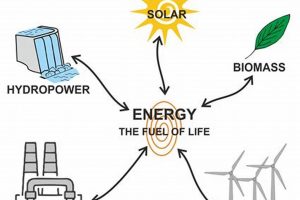
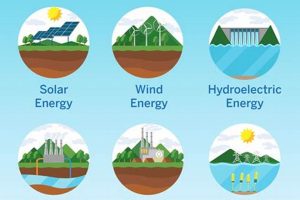
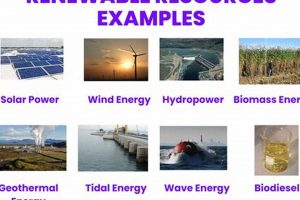
Harnessing power from naturally replenishing sources offers a sustainable alternative to traditional fossil fuels. These sources are characterized by their ability to be regenerated within a human lifespan, minimizing depletion concerns. Common examples include solar radiation, wind currents, geothermal heat, flowing water, and biomass from plants and organic matter. These exemplify methods of energy extraction that reduce environmental impact and promote long-term energy security.
The adoption of these methods presents significant advantages for both the environment and the economy. Reduced greenhouse gas emissions mitigate climate change, while diversified energy portfolios enhance national energy independence. Historically, reliance on readily available resources like firewood and watermills provided localized power. Modern technologies have expanded the scale and efficiency of these sources, offering large-scale energy production capabilities.
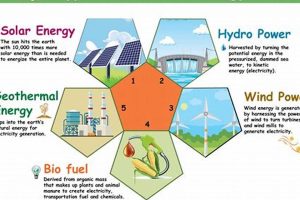
The following sections will delve into the specifics of five prominent forms of this sustainable power generation: solar, wind, geothermal, hydropower, and biomass. Each resource possesses unique characteristics, technological applications, and potential contributions to a cleaner, more sustainable energy future.
Optimizing the Utilization of Replenishable Power Sources
Effective integration of these energy options requires careful consideration of resource availability, technological advancements, and policy frameworks. The following suggestions aim to enhance the adoption and efficacy of these essential energy sources.
Tip 1: Conduct Thorough Resource Assessments: Evaluate the potential for each option in a specific geographic location. Solar insolation levels, wind speeds, geothermal gradients, hydro potential, and biomass availability vary considerably. Accurate assessments are crucial for investment decisions.
Tip 2: Prioritize Energy Storage Solutions: Intermittency is a common challenge. Battery storage, pumped hydro, and thermal storage can mitigate fluctuations in supply from solar and wind sources, ensuring a more consistent and reliable power grid.
Tip 3: Invest in Smart Grid Technologies: Modern grids that incorporate advanced sensors, communication networks, and control systems optimize energy distribution and manage supply and demand more effectively. These technologies are essential for integrating distributed resources.
Tip 4: Implement Supportive Policy Frameworks: Government incentives, feed-in tariffs, and renewable portfolio standards can stimulate investment and deployment. Clear and consistent policies are critical for fostering a stable market environment.
Tip 5: Promote Public Awareness and Education: Increased understanding of the benefits and challenges associated with these energy sources can build public support and drive adoption at the individual and community levels.
Tip 6: Foster Technological Innovation: Continuous research and development are necessary to improve the efficiency, cost-effectiveness, and reliability of these energy technologies. Funding research into next-generation solar cells, wind turbine designs, and geothermal extraction methods is vital.
Tip 7: Consider Lifecycle Environmental Impacts: Evaluate the environmental footprint of each energy option, considering manufacturing, installation, operation, and decommissioning. A comprehensive lifecycle assessment helps to identify potential environmental tradeoffs.
Tip 8: Encourage Community Engagement: Incorporating local knowledge and perspectives into energy planning processes can lead to more sustainable and equitable outcomes. Community ownership models can also foster greater acceptance and participation.
Adherence to these guidelines can accelerate the transition toward a more sustainable energy future. By optimizing the integration of various replenishable sources, the reliability and long-term viability of our power supply can be increased.
The subsequent section will offer a concluding perspective on the overall significance of these resources and their potential to shape a more environmentally conscious world.
1. Solar Energy

Solar energy represents a critical component within the framework of replenishable power generation. Its abundance and versatility position it as a cornerstone for achieving a sustainable energy future, directly influencing the viability and scalability of “5 types of renewable energy resources.”
- Photovoltaic Conversion
Photovoltaic (PV) cells directly convert sunlight into electricity through the photoelectric effect. Residential rooftop solar panels, utility-scale solar farms, and solar-powered calculators exemplify this technology. PV conversion offers a clean and silent method of electricity generation, reducing reliance on fossil fuels and contributing significantly to the overall diversification of energy resources.
- Concentrated Solar Power
Concentrated Solar Power (CSP) systems utilize mirrors or lenses to focus sunlight onto a receiver, which heats a fluid to produce steam. This steam then drives a turbine to generate electricity. CSP plants, often found in arid regions with high solar irradiance, provide a dispatchable form of solar energy, addressing the intermittent nature of solar PV and enhancing grid stability.
- Solar Thermal Applications
Solar thermal technologies employ sunlight to directly heat water or air for domestic and industrial purposes. Solar water heaters for homes and solar air heaters for industrial drying processes are common applications. These applications reduce the demand for conventional energy sources for heating purposes, thus contributing to overall energy conservation and lowering carbon emissions.
- Passive Solar Design
Passive solar design incorporates architectural techniques that maximize the use of sunlight for heating and lighting buildings. Orienting buildings to optimize solar gain, utilizing thermal mass materials, and incorporating strategically placed windows are key elements. Passive solar design reduces the need for active heating and cooling systems, decreasing energy consumption and promoting sustainable building practices.
The diverse applications of solar energy, from direct electricity generation to passive heating strategies, underscore its significance within the broader context of replenishable power. Continued advancements in solar technologies, coupled with supportive policies, are essential to unlock the full potential of solar energy and maximize its contribution to a sustainable energy future, solidifying its position as a key player among “5 types of renewable energy resources”.
2. Wind Power

Wind power represents a significant element within the scope of replenishable energy alternatives. The kinetic energy of wind is harnessed via wind turbines, converting it into electrical energy. This process directly contributes to the overall capacity of systems relying on multiple sources, including, but not limited to, solar, geothermal, hydro, and biomass. Wind energy’s impact is measurable through the reduction in fossil fuel consumption and associated greenhouse gas emissions. The operational efficiency and scalability of wind farms are key factors driving the expansion of infrastructure that utilizes this specific energy source.
The integration of wind energy introduces challenges related to intermittency and grid stability. Wind patterns are variable, influencing energy production. Technological advancements in energy storage solutions and smart grid technologies are being deployed to mitigate these fluctuations. Moreover, strategic placement of wind farms considers factors such as wind resource availability, environmental impact, and proximity to transmission infrastructure. Offshore wind farms, for example, capitalize on stronger and more consistent wind resources, albeit with increased installation and maintenance costs.
Wind energy’s contribution to sustainable power systems is not without limitations. Environmental considerations, including avian mortality and noise pollution, necessitate careful planning and mitigation strategies. Despite these challenges, wind power remains a crucial element in energy resource portfolios aimed at reducing carbon footprint and enhancing energy security. Its continued development and deployment are essential for achieving broader sustainability goals and optimizing the utilization of varied sustainable power methods.
3. Geothermal Heat
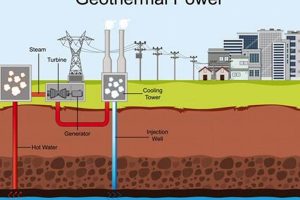
Geothermal heat, derived from the Earth’s internal thermal energy, represents a crucial component among replenishable power sources. Its sustainable nature stems from the continuous heat flow originating from the planet’s core, making it a reliable resource unlike fossil fuels. As a key part of sustainable options, geothermal applications range from direct heating and cooling to electricity generation, offering diverse solutions for energy demands. The extraction of this energy involves tapping into underground reservoirs of hot water or steam, which then drives turbines connected to generators.
Practical applications of geothermal energy are evident in numerous locations worldwide. Iceland, for example, utilizes geothermal resources extensively for heating homes and generating electricity, significantly reducing its dependence on imported fossil fuels. Similarly, in regions like the western United States and Italy, geothermal power plants contribute substantially to the electricity grid. Direct-use applications, such as heating greenhouses and aquaculture facilities, further showcase geothermal’s versatility and potential for localized energy solutions. This is crucial for integrating into a broader system of options, enhancing the adaptability of energy infrastructure.
Challenges associated with geothermal energy development include the site-specific nature of resource availability and the potential for induced seismicity in some locations. However, ongoing technological advancements in enhanced geothermal systems (EGS) are expanding the accessibility of geothermal energy by creating artificial reservoirs in previously unproductive areas. Furthermore, proper resource management and monitoring are essential to ensure the long-term sustainability of geothermal operations. The effective integration of geothermal energy into energy portfolios is vital for mitigating climate change and transitioning towards a more sustainable energy future. As part of resource diversification, it reduces over-reliance on any single power source, enhancing overall energy security.
4. Hydropower Generation

Hydropower generation constitutes a significant facet within the spectrum of renewable energy options, drawing upon the potential energy of water to drive turbines and produce electricity. As a component of the broader renewable category, hydropower’s contribution is historically established and geographically diverse. The construction of dams, while enabling large-scale electricity production and water management, necessitates careful evaluation of environmental and social impacts. Examples include the Three Gorges Dam in China, which provides substantial power while also impacting river ecosystems and displacing populations, and smaller run-of-river projects, which minimize reservoir creation and ecological disruption. The inclusion of hydropower in renewable strategies often hinges on balancing electricity needs with environmental preservation considerations. The impact of “Hydropower Generation” influence the overall efficiency of “5 types of renewable energy resources” goals.
Further analysis of hydropower reveals its potential to provide grid stability through pumped storage systems, wherein water is pumped uphill during periods of low demand and released to generate electricity during peak demand. This functionality enhances the overall reliability of power grids by compensating for the intermittency of solar and wind energy sources. Practical applications extend beyond large-scale dams to include micro-hydro systems suitable for remote communities, demonstrating the adaptability of hydropower to various scales and settings. Sustainable hydropower development mandates adherence to environmental regulations, fish passage provisions, and sediment management strategies. The sustainability of “Hydropower Generation” affect the long term success for “5 types of renewable energy resources”.
In conclusion, hydropower generation occupies a prominent position among renewable energy sources, offering a reliable and established technology for electricity production. However, responsible development requires comprehensive assessment and mitigation of environmental and social consequences. The integration of hydropower into a diversified energy portfolio necessitates careful consideration of its interactions with other renewable technologies and its overall contribution to a sustainable energy system. By understanding the potential benefits and challenges associated with hydropower, policymakers and energy planners can make informed decisions to optimize its role in meeting future energy demands while minimizing adverse impacts. The overall benefit of “Hydropower Generation” affect the implementation for “5 types of renewable energy resources”.
5. Biomass Conversion
Biomass conversion represents a significant component within the framework of replenishable energy alternatives. It involves transforming organic matterderived from plants and animalsinto usable energy forms. These forms encompass electricity, heat, and liquid or gaseous fuels. As such, biomass conversion directly intersects with sustainable energy initiatives. Its role as a replenishable resource is intrinsically linked to the broader concept, contributing to a diversified approach for diminishing reliance on fossil fuels. Practical significance is evidenced by biomass power plants that combust organic materials for electricity generation and biofuel production facilities that convert crops into transportation fuels. These applications directly reduce greenhouse gas emissions when sustainably managed, serving as a viable substitute for traditional energy sources. The efficacy of biomass initiatives influences the overall success of any diverse replenishable energy system.
The practical applications of biomass conversion span diverse sectors. In the agricultural sector, crop residues like corn stover and wheat straw can be converted into biofuels or used for combined heat and power generation. Forestry operations can utilize wood waste and logging residues for similar purposes, reducing fire hazards and generating energy. Municipal solid waste can also be processed through anaerobic digestion or gasification technologies to produce biogas or electricity, diverting waste from landfills and mitigating methane emissions. Such examples highlight the multifaceted potential of biomass conversion to address both energy and waste management challenges. The optimization of this strategy is crucial to the success of integrating more alternative energy resources.
Challenges associated with biomass conversion include ensuring sustainable sourcing of feedstocks, minimizing land-use impacts, and addressing air pollution concerns. Unsustainable harvesting practices can lead to deforestation and habitat loss, undermining the replenishable nature of biomass. Similarly, the combustion of biomass can release particulate matter and other pollutants, necessitating the implementation of emission control technologies. Overcoming these challenges requires careful planning, responsible management practices, and technological advancements in biomass conversion processes. When implemented responsibly, biomass conversion offers a valuable pathway towards a more sustainable and diversified energy future, contributing to the overall viability of broader alternative resource portfolios. The importance of biomass initiatives hinges on the mitigation of associated impact.
Frequently Asked Questions Regarding 5 types of renewable energy resources
The following section addresses common inquiries and misconceptions concerning various replenishable energy sources. The objective is to provide clear, concise, and objective responses based on current scientific understanding and industry practices.
Question 1: What are the primary limitations hindering the widespread adoption of replenishable energy technologies?
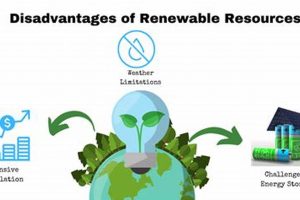
Intermittency poses a significant challenge, particularly for solar and wind power. Energy storage solutions, such as batteries and pumped hydro, can mitigate this issue, but often at a significant cost. High upfront capital costs for infrastructure development also present a barrier, along with the need for grid modernization to accommodate distributed generation.
Question 2: How does the environmental impact of different replenishable energy sources compare?
While generally lower than fossil fuels, replenishable energy sources are not without environmental consequences. Hydropower can disrupt aquatic ecosystems, biomass combustion can release air pollutants, and the manufacturing of solar panels and wind turbines requires energy and resources. A comprehensive lifecycle assessment is essential for comparing the impacts of different options.
Question 3: Is replenishable energy truly capable of meeting global energy demand?
Studies suggest that replenishable energy sources have the technical potential to meet global energy demand, but achieving this requires significant investments in infrastructure, technological advancements, and policy support. A diversified energy mix, combining various replenishable sources and addressing intermittency challenges, is crucial.
Question 4: What role does government policy play in promoting the use of replenishable energy?
Government policies, such as renewable portfolio standards, feed-in tariffs, and tax incentives, can create a stable market environment for replenishable energy technologies and stimulate investment. Carbon pricing mechanisms can also make fossil fuels less competitive, further incentivizing the adoption of alternatives.
Question 5: How can individuals contribute to the transition to a more sustainable energy system?
Individuals can reduce their energy consumption through energy efficiency measures, such as using energy-efficient appliances, insulating homes, and adopting sustainable transportation practices. Supporting policies that promote replenishable energy and advocating for sustainable development are also important steps.
Question 6: What are the emerging technologies in the field of replenishable energy?
Emerging technologies include advanced solar cells, offshore wind turbines, enhanced geothermal systems, and advanced biofuels. These technologies promise to improve the efficiency, cost-effectiveness, and reliability of existing replenishable energy sources and expand their potential applications.
In summary, while replenishable energy sources offer a promising pathway towards a sustainable energy future, realizing their full potential requires addressing technical, economic, and environmental challenges through innovation, policy support, and individual action.
The subsequent section will provide a concluding perspective on the overall significance of replenishable resources and their potential to shape a more environmentally conscious world.
5 types of renewable energy resources
The preceding discussion has explored five prominent categories of replenishable energy sources: solar, wind, geothermal, hydropower, and biomass. Each resource presents unique characteristics, deployment considerations, and contributions to mitigating reliance on fossil fuels. Sustainable integration of these resources necessitates careful planning, technological advancement, and supportive policy frameworks to address intermittency, environmental impacts, and economic viability.
The continued pursuit of diversified energy portfolios, coupled with ongoing research and development, remains crucial for achieving long-term energy security and environmental stewardship. The future energy landscape hinges on the collective commitment to embracing and optimizing these replenishable alternatives, thereby fostering a more sustainable and resilient global energy system.